Table of Contents
- The Gathering Storm: Germany on the Brink in 1934
- The Rise of Adolf Hitler and the Nazi Party: Ambitions and Allies
- The SA’s Growing Power: A Threat from Within
- Röhm and the SA: Brotherhood Turned Rivalry
- The Night of the Long Knives: June 30, 1934 — The Calm Before the Storm
- Operation Hummingbird: The Secret Plans Unfold
- The Dusk of June 30: Arrests and Executions Begin
- The Fate of Ernst Röhm: From Ally to Enemy
- The Victims Beyond Röhm: Political Rivals and Enemies Silenced
- The Role of the SS and Heinrich Himmler: Instruments of Terror
- The Official Justifications: Propaganda and Public Reaction
- The Army’s Quiet Approval: Securing Military Allegiance
- The Aftermath in Berlin: Tensions and Uncertainty
- The Transformation of Nazi Germany: From Revolution to Dictatorship
- International Reactions: Shock, Silence, and Concern
- The Legalization of Murder: How the Night Was Legitimized
- Long-term Consequences: The SA’s Decline and the SS’s Ascendance
- The Night’s Impact on Hitler’s Absolute Power
- Voices from the Time: Witnesses, Survivors, and Chroniclers
- The Memory of the Night of the Long Knives: Myths and Realities
- Lessons and Reflections: Understanding Political Purges and Authoritarianism
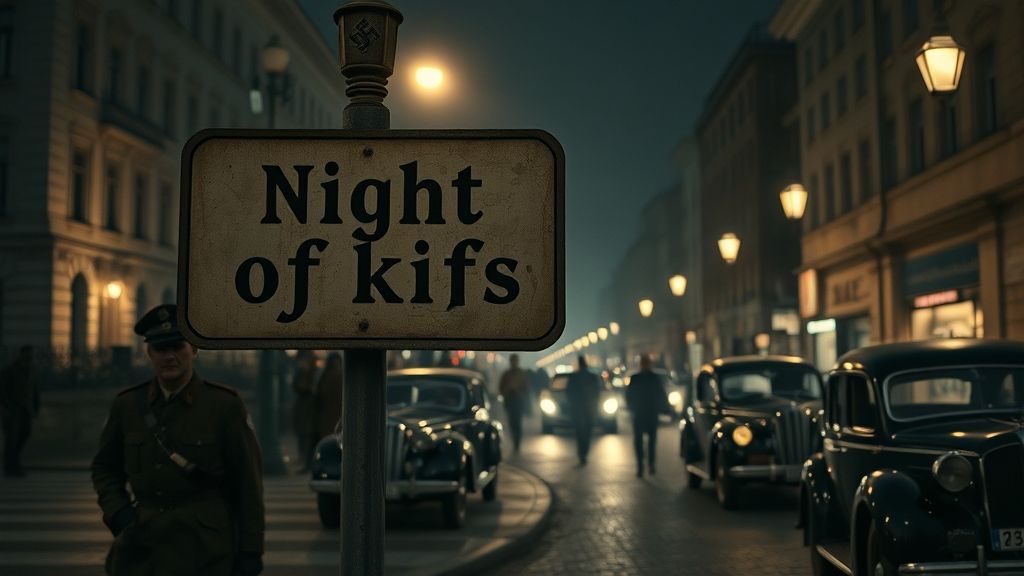
On the late, humid night of June 30, 1934, the quiet streets of Berlin echoed with an ominous tension that few dared to comprehend. Under the cloak of darkness, a ruthless campaign ignited that would forever transform the course of German history — a brutal purge that insiders chillingly dubbed the "Night of the Long Knives." Over the next days, the Nazi regime would commit an act of political violence that not only crushed dissent within its own ranks but also sent shockwaves through the fragile weave of Germany’s political and social fabric. Amidst the fog of fear and betrayal, lives were extinguished not in the heat of open combat but by covert arrests, summary executions, and disappearances that spoke of cold calculation and raw ambition.
This was not merely a political crackdown — it was the violent birth of Hitler’s personal dictatorship, a turning point when whispered warnings gave way to the irrevocable roar of tyranny. The tales of camaraderie shattered, of brothers-in-arms turned bitter foes, unfold in this historical drama. It is a story of power and paranoia, of betrayal and blood, set against the backdrop of a nation reeling from defeat in war, economic despair, and social unrest. The Night of the Long Knives was a defining moment when the Nazi regime demonstrated its capacity for savagery to anyone who dared question its ascendancy.
1. The Gathering Storm: Germany on the Brink in 1934
In the spring of 1934, Germany was poised at a pivotal crossroads. The Great Depression had ravaged its economy; millions were unemployed or impoverished, and resentment simmered across all classes. The Weimar Republic, a fragile democracy born from the ruins of the First World War, appeared incapable of controlling mounting unrest. Into this chaos rose Adolf Hitler, a figure who promised renewal and strength, his National Socialist German Workers’ Party (NSDAP) weaving a seductive narrative of national rebirth and racial purity.
The Nazis’ rapid seizure of power in January 1933, with Hitler named Chancellor, appeared to many as the dawn of a new era. Yet beneath the surface, tensions bubbled fiercely within the Nazi movement itself. The political landscape was fractured, the old elites wary, and rivalries within the party threatened its coherence.
Among these fissures, the Sturmabteilung (SA) loomed large. Originally Hitler’s paramilitary enforcers, these brownshirted stormtroopers had played a key role in intimidating opponents and securing Nazi dominance on street corners and ballot boxes alike.
2. The Rise of Adolf Hitler and the Nazi Party: Ambitions and Allies
Hitler’s charismatic rise was inseparable from his ability to harness discontent and mold it into a political machine. Charismatic, ruthless, and mesmerizing in oratory, he gained the loyalty of millions. Yet his hold on power was fragile. The conservative establishment that reluctantly placed him in office was suspicious of his radicalism. Industrialists, military generals, and aristocrats all eyed him cautiously, willing to back him — but only if he kept his wild SA stormtroopers under control.
To Hitler, the SA was both a weapon and a potential threat. Ernst Röhm, the SA's leader and a former army officer, was a close ally but also increasingly assertive, pushing for the SA to absorb the military and cement its dominance. For many in the army and among Nazi elites, this was intolerable.
3. The SA’s Growing Power: A Threat from Within
By mid-1934, the SA had swelled to over three million men. Their leaders openly advocated a "second revolution" to transform German society and economy along more radical lines. Röhm imagined the SA as the new core of German military power, threatening the position of the traditional army (the Reichswehr).
The SA’s violent tactics, untethered ambitions, and loyalty to Röhm had become a nightmare for Hitler’s other backers in government and industry. To consolidate his grip on power and keep allies like President Paul von Hindenburg and the Reichswehr on board, Hitler would have to neutralize this internal threat.
4. Röhm and the SA: Brotherhood Turned Rivalry
Ernst Röhm was, in many ways, Hitler’s comrade-in-arms from the earliest days. Yet, as Röhm’s demands grew, so did their divergence. Röhm didn’t merely want to maintain the SA’s influence — he dreamed of reshaping Germany's military and political order, promoting "socialist" elements that frightened many conservatives.
Hitler, a master strategist, understood that to ascend uncontested to absolute power, Röhm and his SA had to be tamed or eliminated. This would be no simple political maneuver; it required cold-blooded decisiveness.
5. The Night of the Long Knives: June 30, 1934 — The Calm Before the Storm
In the days leading up to June 30, Berlin’s streets held a deceptive quiet. Ordinary citizens sensed something was amiss, whispers floated of arrests and disappearances. But the scale and brutality of what was about to unfold were unimaginable.
Hitler met secretly with Heinrich Himmler, head of the SS (Schutzstaffel), and Reinhard Heydrich, chief of the Nazi intelligence service, planning a purge so total and swift it would blindside all opposition.
6. Operation Hummingbird: The Secret Plans Unfold
Code-named "Operation Hummingbird," the operation aimed to arrest and eliminate key SA leaders and other political foes between June 30 and early July 1. Agents of the SS and Gestapo were dispatched across Germany, with lists in hand naming targets, many unaware that their lives were moments from extinguishment.
The operation moved fast, with ruthless efficiency — detentions, show trials bypassed, mercy absent.
7. The Dusk of June 30: Arrests and Executions Begin
As dusk fell on June 30, the streets of Berlin transformed into hunting grounds. SA headquarters was raided; Ernst Röhm himself was arrested in a seedy hotel. Many SA men were dragged from homes and gatherings, shot without trial.
The speed and surprise of the purge paralyzed resistance. Lawyers, journalists, and politicians sympathetic to Röhm or hostile to Hitler disappeared overnight.
8. The Fate of Ernst Röhm: From Ally to Enemy
Röhm’s fate was emblematic of the night’s savagery. Held prisoner and given the choice between suicide and execution, Röhm refused to take his own life. On July 1, he was shot in the head on Hitler’s orders — a death that symbolized the end of any internal dissent within the Nazi party.
9. The Victims Beyond Röhm: Political Rivals and Enemies Silenced
The purge extended beyond SA leaders. Conservative critics, former Chancellor Kurt von Schleicher, and other perceived enemies were eradicated. The Night of the Long Knives served as both a political cleansing and a brutal warning to all who might challenge Hitler’s authority.
10. The Role of the SS and Heinrich Himmler: Instruments of Terror
The SS, once a minor protective squad, now revealed itself as the lethal instrument of Hitler’s will. Himmler and Heydrich coordinated the arrests and executions, solidifying their power and transforming the SS into a feared elite force.
11. The Official Justifications: Propaganda and Public Reaction
Hitler framed the purge as a legal necessity to save Germany from treason, claiming that Röhm and accomplices were planning a coup. Nazi propaganda flooded the nation, invoking patriotism and law and order, with many Germans accepting the narrative, weary of chaos.
12. The Army’s Quiet Approval: Securing Military Allegiance
The Reichswehr watched cautiously but approved the purge. By neutralizing the SA, Hitler secured the army’s loyalty, a crucial step in dismantling the Weimar system and cementing his dictatorship.
13. The Aftermath in Berlin: Tensions and Uncertainty
Despite public calm, the streets of Berlin carried silent grief and fear. Families of victims vanished without news, the price of survival being complicity or silence.
14. The Transformation of Nazi Germany: From Revolution to Dictatorship
The purge marked Germany’s transition from a revolutionary movement to a totalitarian regime. Hitler emerged supreme, his power unchecked, the terror apparatus growth unstoppable.
15. International Reactions: Shock, Silence, and Concern
News of the killings shocked foreign governments, although few dared openly condemn the new regime. For many, the purge foreshadowed darker days ahead.
16. The Legalization of Murder: How the Night Was Legitimized
In July 1934, Hitler obtained retroactive legal immunity for the killings from the Reichstag, giving a legal veneer to outright murder and setting dangerous precedents under the Nazi state.
17. Long-term Consequences: The SA’s Decline and the SS’s Ascendance
The SA was permanently weakened and sidelined. The SS rose as Hitler’s elite guard and secret police, a terrifying force shaping the dark future of Nazi Germany.
18. The Night’s Impact on Hitler’s Absolute Power
With rivals eliminated, alliances secured, and terror normalized, Hitler stood unchallenged. The Night of the Long Knives was the foundation stone of his dictatorship.
19. Voices from the Time: Witnesses, Survivors, and Chroniclers
Personal accounts reveal the horror and confusion. Survivors speak of midnight arrests, whispered warnings, and a pervasive atmosphere of fear.
20. The Memory of the Night of the Long Knives: Myths and Realities
For decades, this night was cloaked in propaganda. Historians have since uncovered the coldness behind the myth, underscoring its significance in understanding tyranny’s mechanisms.
21. Lessons and Reflections: Understanding Political Purges and Authoritarianism
The Night of the Long Knives remains a chilling lesson in the deadly efficiency of political purges — a cautionary tale of how power can be seized and maintained through violence and fear.
Conclusion
The Night of the Long Knives was much more than a violent act in a dark historical episode; it was the decisive moment when Adolf Hitler obliterated doubts about his vision, silenced the thunderous voices of dissent, and reshaped Germany’s destiny irrevocably. It unveiled the terrifying extent to which power, once grasped, could be wielded with ruthless cruelty against friends and foes alike.
In the shadows of that terrifying night, the ancient bonds of loyalty and brotherhood were severed, replaced by a regime that tolerated no challenge, no opposition, no hesitation. It was the crucible in which the totalitarian Nazi state was forged, with consequences that would echo across the world in the years to come. Reflecting on this event compels us to consider the human cost of political ambition and the fragile nature of democratic institutions under siege.
Understanding the Night of the Long Knives is more than remembering history: it is a vital warning etched in time about the dangers of unbridled power and the necessity of vigilance in protecting freedom and justice.
FAQs
Q1: What triggered the Night of the Long Knives?
The purge was triggered by the threat posed by the SA and its leader Ernst Röhm, whose ambitions to control the German military alarmed Hitler’s conservative allies and threatened his consolidation of power.
Q2: Who were the main victims besides Ernst Röhm?
Victims included other SA leaders, political opponents like former Chancellor Kurt von Schleicher, and various perceived enemies of Hitler within and outside the Nazi Party.
Q3: How did the SS contribute to the purge?
The SS, under Himmler and Heydrich, organized and executed the arrests and killings, emerging as the regime’s primary instrument of political repression and terror.
Q4: Why did the German military support the purge?
The Reichswehr supported the purge because it curtailed the SA’s challenge to its authority and secured its role within the new Nazi power structure.
Q5: How did the German public react to the Night of the Long Knives?
Many accepted the official propaganda framing the purge as a necessary act to protect the nation from treason, though there was also fear and silence among the population.
Q6: In what ways did this event change the Nazi Party?
It eliminated internal rivals, ended the SA’s dominance, elevated the SS, and solidified Hitler’s absolute control over Germany.
Q7: Was the Night of the Long Knives legally justified at the time?
While initially extrajudicial, Hitler later obtained retroactive legal approval for the killings, effectively legalizing political murder under Nazi law.
Q8: Why is the Night of the Long Knives significant in world history?
It exemplifies how authoritarian regimes use purges to eliminate opposition and consolidate power, serving as a dark warning about the fragility of democratic institutions.