Table of Contents
- The Dawn of September 1, 1939: A City on the Brink
- The Gathering Storm: Europe on Edge Before the Invasion
- The Rise of Nazism and Hitlers’ Calculated Gamble
- Poland Caught Between Giants: Alliances and Vulnerabilities
- The Blitzkrieg Begins: German Invasion Strategies Unleashed
- The First Shots: German Forces Cross the Border
- The Siege of Warsaw: Defiance Amid Ruins
- Stories from the Front: Soldiers, Civilians, and Unsung Heroes
- The Role of Air Power: Luftwaffe’s Devastating Impact
- The Polish Resistance: Courage under Fire
- International Reactions: From Shock to Declaration of War
- The Fall of Poland: Strategic Missteps and Overwhelming Odds
- The Human Cost: Refugees, Casualties, and Displacement
- The Holocaust Begins: Early Signs of a Darker Epoch
- The Soviet Union’s Invasion: A Second Blow to Poland
- Geopolitical Shifts: The World’s Response and Realignments
- The Legacy of September 1, 1939: Memory and Meaning
- Warsaw Rebuilds: From Ruins to Renewal
- Lessons from the Invasion: War, Peace, and Diplomacy
- Reflections Through Time: Historians’ Perspectives on 1939
- Conclusion
- FAQs
- External Resource
- Internal Link
The Dawn of September 1, 1939: A City on the Brink
As the early light seeped over the skyscrapers and historic roofs of Warsaw on that fateful September morning, few imagined the storm about to engulf them. The air carried an unnatural stillness, as if the city, the very soul of Poland, held its breath. Parents framed the day with routine—children off to school, the clatter of trams on cobblestone streets, shopkeepers readying their counters. Yet beneath this façade of calm, a far more sinister reality was about to unfold: the German Wehrmacht was preparing to invade, igniting the fuse of the deadliest conflict the world had ever witnessed.
The distant thunder of engines and the unmistakable drone of aircraft would soon puncture the fragile normalcy. Warsaw, a beacon of Polish identity and resilience, was on the brink of devastation. Homes, lives, dreams—all would be tested, shattered, or sacrificed on the altar of a war that would redefine humanity’s darkest limits.
The Gathering Storm: Europe on Edge Before the Invasion
The invasion of Poland did not come as a bolt from the blue; it was the climax of a decade marked by escalating tensions and broken promises. The Treaty of Versailles had left Germany humiliated, economically crippled, and politically unstable. Into this vacuum stepped Adolf Hitler and the National Socialist German Workers’ Party, transforming nationalist resentment into a venomous ideology aiming to overturn post-World War I order.
Europe in 1939 was a tinderbox. The Munich Agreement of 1938 had emboldened Hitler, who had annexed the Sudetenland with little resistance. The world watched nervously as Germany remilitarized the Rhineland and absorbed Austria in its Anschluss. Meanwhile, Poland stood defiantly, aware of the existential threat looming just beyond its western border.
International alliances complicated the situation: France and Britain, scarred by their previous war, adopted a policy of appeasement yet pledged to defend Poland’s sovereignty. The Soviet Union, meanwhile, wary of both the West and Nazi Germany, remained an unpredictable actor, its intentions shrouded in suspicion.
The Rise of Nazism and Hitler’s Calculated Gamble
Hitler’s vision of Lebensraum—the expansion of German territory into Eastern Europe—was the ideological core driving the invasion. Poland, situated between Germany and the Soviet Union, was both a target and a pawn in his grand strategic designs.
Hitler understood that conquering Poland would not only restore a sense of national pride but also provide a springboard for deeper territorial claims. To ensure the invasion's success, he exploited propaganda, staged provocations like the Gleiwitz incident—a false flag attack designed to justify the assault—and coordinated a rapid, overwhelming military strike.
The Führer’s gamble was predicated on the belief that Britain and France would hesitate to intervene. Despite war declarations following the invasion, their military responses were initially cautious, allowing the German war machine to ravage Poland with little immediate consequence.
Poland Caught Between Giants: Alliances and Vulnerabilities
Poland’s strategic position was both a blessing and a curse. The country had rebuilt its independence after over a century of partitions but remained vulnerable to larger powers. Allied with Britain and France, Poland had formal promises of support, yet in reality, the assistance was limited and delayed.
Internally, Poland faced its own challenges: a fragmented military, outdated equipment compared to the mechanized Wehrmacht, and political divisions that hindered rapid mobilization. The government, led by Józef Piłsudski’s successors, grappled with the impossible task of defending a long border against a well-oiled invader.
Compounding these difficulties was the Soviet Union’s secret agreement with Germany—the Molotov-Ribbentrop Pact—a non-aggression treaty that included the partition of Poland between the two totalitarian regimes.
The Blitzkrieg Begins: German Invasion Strategies Unleashed
In the early hours of September 1, 1939, the Wehrmacht launched "Fall Weiss" (Case White), a military operation that redefined warfare. Blitzkrieg, or "lightning war," combined swift mechanized infantry, tanks (Panzers), and close air support to overwhelm defenders decisively.
Hundreds of thousands of troops crossed the Polish frontier from multiple directions. The strategy aimed to encircle and incapacitate enemy forces before they could mount an effective defense. The speed and coordination were shocking in their effectiveness, and the Polish forces, though brave and resilient, struggled to respond.
It was a new kind of warfare—mobile, relentless, unforgiving. This sudden storm tore through Poland’s eastern plains and defensive lines, disrupting communication, supply, and morale with terrifying efficiency.
The First Shots: German Forces Cross the Border
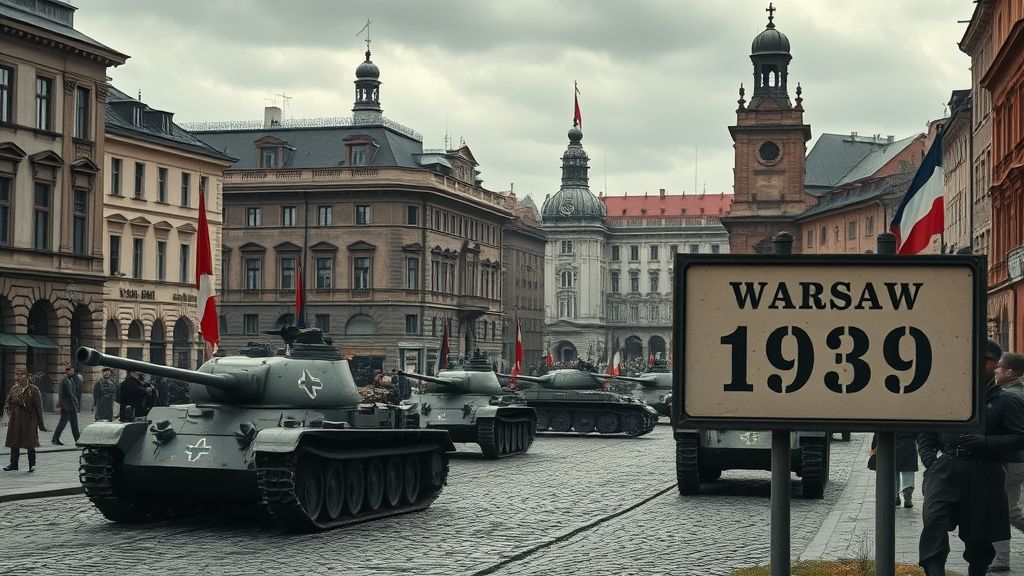
At 4:45 a.m., precisely timed, German artillery and aerial bombardments heralded the beginning of the assault. German troops, equipped with superior tanks like the Panzerkampfwagen III, advanced rapidly. The Luftwaffe unleashed waves of bombers targeting military bases, railways, and civilian infrastructure, sowing chaos and panic.
The Polish border guards and army units responded with gallantry, fighting fierce engagements that bought valuable time for civilians to flee and for the army to regroup. Towns like Wieluń, bombarded indiscriminately, became grim symbols of Nazi brutality.
Yet despite pockets of valiant resistance, the sheer scale of the invasion rendered any hope for a quick polish victory impossible.
The Siege of Warsaw: Defiance Amid Ruins
As German forces closed in on the capital, Warsaw prepared for a siege. The city’s inhabitants faced a desperate fight for survival. Civilians dug trenches, established barricades, and endured relentless shelling. The siege lasted nearly a month, during which the population endured hunger, cold, and constant bombardment.
Polish defenders, including regular troops, militia, and even civilian volunteers, refused to surrender. Their courage became legendary, a testament to national pride even as the city was reduced to rubble. Every street, every building was a battlefield.
The symbolic weight of Warsaw’s resistance resonated far beyond its borders—showing the world that Poland would not yield easily, even in the face of overwhelming odds.
Stories from the Front: Soldiers, Civilians, and Unsung Heroes
Behind the sweeping military maneuvers and strategic calculations were thousands of individual stories of bravery, loss, and resilience. Soldiers like Captain Witold Pilecki volunteered for impossible missions; civilians like young Helga Weissová faced horrors unimaginable.
These personal narratives reveal the human dimension of the invasion—the fear, determination, and tragic sacrifices endured. Nurses tended to wounded comrades under fire, families hid the injured in basements, and ordinary citizens became partisans or couriers.
Amid the chaos, moments of kindness and heroism flickered—a mother shielding her child from gunfire, a priest offering solace amid destruction—reminders of the indomitable spirit of Warsaw's people.
The Role of Air Power: Luftwaffe’s Devastating Impact
The Luftwaffe played a pivotal role in the early success of the invasion. German air superiority was absolute, with hundreds of bombers and fighters targeting airfields, communication lines, and cities.
The aerial bombardment of Warsaw was savage, aimed equally at military and civilian targets, marking a terrifying escalation in the horrors of total war. Civilians cowered in bunkers while buildings crumbled.
Polish air defenses, though brave, were quickly overwhelmed. The psychological impact of sustained bombing raids contributed to the breakdown of morale and infrastructure, amplifying the effectiveness of the ground assault.
The Polish Resistance: Courage Under Fire
Despite the overwhelming odds, Polish forces fought fiercely. Units launched counterattacks, sabotaged German supply lines, and maintained defensive lines wherever possible. The hope was not merely to survive, but to signal to the Allies Poland’s refusal to be conquered quietly.
The invasion sparked the birth of a resilient resistance movement that would endure through occupation and repression. Underground networks, secret publications, and sabotage cells would continue the struggle long after formal defeat.
This foundational resistance set the stage for Poland’s ongoing fight throughout World War II, inspiring oppressed populations throughout Europe.
International Reactions: From Shock to Declaration of War
The world watched in horror as Germany’s brutal campaign unfolded. Britain and France, bound by treaty to Poland, issued ultimatums to Germany demanding withdrawal. When ignored, they declared war on September 3, marking the official start of World War II.
Yet their initial military efforts were limited, resulting in what many historians call the "Phoney War"—a grudging standstill that allowed Germany to consolidate its gains.
The invasion exposed both the limitations of appeasement and the geopolitical paralysis gripping much of Europe in the face of aggressive expansionism.
The Fall of Poland: Strategic Missteps and Overwhelming Odds
Within weeks, Poland’s situation became untenable. German forces flanked through the north and south; Soviet troops invaded from the east on September 17, sealing Poland’s fate. The Polish government and military leaders fled or went underground as Warsaw capitulated on September 28.
Strategically, Poland was overwhelmed by a pincer movement it could neither withstand nor outmaneuver. Despite skillful leadership and immeasurable courage, the disparity in resources, mechanization, and foreign intervention sealed the country’s tragic fate.
The Human Cost: Refugees, Casualties, and Displacement
The invasion unleashed one of the first great humanitarian crises of the 20th century. Hundreds of thousands fled westward, seeking safety in neighboring countries. Millions were displaced, with families torn apart.
Casualty figures are staggering: over 66,000 Polish soldiers and upwards of 150,000 civilians lost their lives during the campaign. The destruction of towns and villages left scars that would endure for generations.
This human tragedy underscored that war’s cost is measured not just in territory gained or lost, but in shattered lives and broken societies.
The Holocaust Begins: Early Signs of a Darker Epoch
With the invasion and subsequent occupation came the dark shadow of Nazi racial policies. Ghettos were established, and anti-Semitic persecution intensified rapidly.
Poland’s Jewish population, one of the largest in Europe, was subjected to systematic humiliation, forced labor, and eventual deportation. The machinery of genocide, initially pieced together in occupied Poland, would soon engulf the continent in unimaginable horror.
The invasion of Poland thus marks not only a military crisis but the beginning of the Holocaust’s genocidal machinery.
The Soviet Union’s Invasion: A Second Blow to Poland
On September 17, 1939, the Red Army crossed Poland’s eastern border under the Molotov-Ribbentrop Pact's terms, purportedly to protect Ukrainians and Belarusians amid the chaos.
This sneak attack crushed any hopes for a strategic Polish defense and fractured the nation. The dual occupation by two totalitarian regimes was devastating culturally and politically.
This dark chapter exemplifies the brutal realpolitik of the era and the perilous position Poland faced between hostile giants.
Geopolitical Shifts: The World’s Response and Realignments
The invasion prompted worldwide reevaluation of alliances and strategies. The failure to prevent the aggression emboldened dictators elsewhere. The “phoney war” period reflected uncertainty and fear prior to the broader engulfing of Europe in conflict.
For the United States, still unwilling to intervene, Poland's fall highlighted the fragility of peace. This watershed moment reshaped diplomatic calculations and foreshadowed the global scale of the coming war.
The Legacy of September 1, 1939: Memory and Meaning
September 1 is etched into Polish collective memory as both a day of tragedy and heroic resistance. Monuments, museums, and ceremonies honor those who fell and fought.
Globally, it is recognized as the day that shattered peace and ignited the fires of World War II. The lessons from Poland’s invasion remain relevant: the dangers of appeasement, the resilience of oppressed peoples, and the devastating impact of ideological fanaticism.
Warsaw Rebuilds: From Ruins to Renewal
After the war, Warsaw lay in ruins—an urban graveyard. But the city's reconstruction became a symbol of rebirth and determination. Using historical records, survivors rebuilt facades, squares, and landmarks as if to reclaim history itself.
The process was slow, fraught with political turmoil, but Warsaw’s resurrection testifies to human tenacity and the refusal to let tyranny erase identity.
Lessons from the Invasion: War, Peace, and Diplomacy
The German invasion of Poland is a profound study in the failure of diplomacy and the consequences of unchecked aggression. It underscores the importance of early, unified response to threats and the peril of underestimating hostile intentions.
The Blitzkrieg tactics revolutionized military strategy, while the broader political fallout set the stage for international organizations post-war aimed at preserving peace.
Reflections Through Time: Historians’ Perspectives on 1939
Over decades, historians have debated causes, decisions, and outcomes surrounding the invasion. Was Poland doomed from the start? Could the Allies have done more? How did individual leaders shape the course?
These reflections enrich our understanding and remind us that history is not static, but a continuous dialogue between past and present.
Conclusion
The invasion of Poland on September 1, 1939, remains a defining moment of the 20th century—a tragic prelude to the vast human catastrophe of World War II. It is a story of aggression and resistance, of despair and courage. Warsaw’s bravery in the face of overwhelming odds inspires generations, even as the ruins remind us of war’s brutal cost.
This event is a lasting testament to the dangers of ideological fanaticism and the urgent necessity of vigilance, unity, and humanity in international relations. To gaze upon September 1 today is to confront the best and worst of human nature—courage amid destruction, hope shadowed by horror. It is a solemn reminder that peace is precious and must be fiercely protected.
FAQs
1. Why did Germany choose to invade Poland in 1939?
Germany, under Hitler, sought to reclaim lost territory and expand eastward for "Lebensraum." The invasion was also a strategic move to test Allied resolve and disrupt the balance of power in Europe.
2. How did Poland respond militarily to the invasion?
Poland mobilized quickly and fought bravely but was overwhelmed by Germany’s superior mechanized forces and coordinated Blitzkrieg tactics.
3. What was the international reaction to the invasion?
Britain and France declared war on Germany shortly after; however, their military response was limited initially, leading to the "Phoney War."
4. How did the Soviet invasion affect Poland?
The Soviet invasion from the east sealed Poland's defeat, leading to its partition and occupation by two totalitarian powers.
5. What role did Warsaw play during the invasion?
Warsaw was the center of heroic resistance, enduring a brutal siege and symbolizing the spirit of Poland’s defiance.
6. What was the impact on civilians during the invasion?
Millions faced bombing, displacement, famine, and persecution, with high civilian casualties and refugees fleeing the violence.
7. How did the invasion influence the start of World War II?
The invasion triggered the official start of WWII, breaking the fragile peace and mobilizing global conflict.
8. In what ways is the invasion of Poland commemorated today?
It is remembered through memorials, museums, and ceremonies honoring victims and heroes, serving as a reminder of the war’s costs and Poland's resilience.