Table of Contents
- Introduction
- The Canary Islands: A Volcanic Hotspot
- Cumbre Vieja and La Palma’s Volcanic History
- The 2021 Eruption Timeline
- Lava Flows and Their Path of Destruction
- Impact on Residents and Infrastructure
- Emergency Response and Evacuation
- Environmental and Agricultural Consequences
- Economic Fallout and Rebuilding Efforts
- Scientific Insights and Volcanic Monitoring
- Cultural and Social Effects
- Conclusion
- External Resource
- Internal Link
1. Introduction
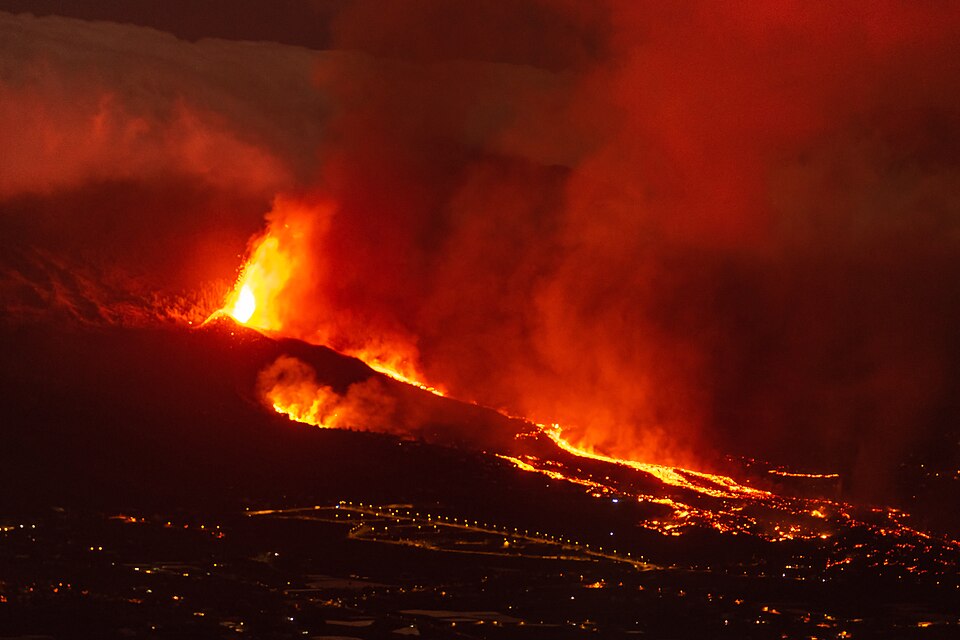
On September 19, 2021, the tranquil island of La Palma in Spain’s Canary Islands was jolted into global headlines. After weeks of seismic murmurs, Cumbre Vieja, a long-dormant volcano, exploded with fierce intensity. Lava burst forth, destroying homes, businesses, farms—and forever altering the island’s geography and daily life.
2. The Canary Islands: A Volcanic Hotspot
✔️ Formed by hotspot volcanic activity in the Atlantic Ocean
✔️ Volcanically active, but eruptions are relatively rare
✔️ La Palma considered one of the most geologically dynamic
The last major eruption before 2021 occurred in 1971—but this one would prove far more destructive.
3. Cumbre Vieja and La Palma’s Volcanic History
✔️ Cumbre Vieja is a volcanic ridge on La Palma’s southern half
✔️ Prior eruptions: 1585, 1646, 1712, 1949, and 1971
✔️ The volcano had shown increased activity in early 2021
Scientists noted more than 22,000 tremors in the week preceding the eruption.
4. The 2021 Eruption Timeline
✔️ Sept 19: eruption begins with fissures opening in El Paso
✔️ Sept 20–30: multiple vents appear, lava reaches populated areas
✔️ Oct–Nov: continuous activity displaces thousands
✔️ Dec 13: eruption declared officially over after 85 days
The eruption lasted almost three months, the longest on record for La Palma.
5. Lava Flows and Their Path of Destruction
✔️ Over 1,000 hectares of land buried
✔️ Over 2,000 buildings destroyed
✔️ Lava flowed at 700 meters/hour, forming new peninsulas
The flows consumed farmland, homes, schools, and forests.
6. Impact on Residents and Infrastructure
✔️ More than 7,000 people evacuated
✔️ Roads, water networks, and power lines damaged
✔️ Ashfall impacted health and air travel
Entire neighborhoods vanished under molten rock.
7. Emergency Response and Evacuation
✔️ Spanish government deployed military and emergency teams
✔️ Rapid evacuation saved lives
✔️ Temporary housing and aid centers established
Despite immense destruction, casualties remained low, a testament to early warnings.
8. Environmental and Agricultural Consequences
✔️ Banana plantations—key to the local economy—destroyed
✔️ Volcanic gases and ash poisoned soil and water
✔️ Biodiversity in surrounding areas affected
Recovery will take decades, both ecologically and economically.
9. Economic Fallout and Rebuilding Efforts
✔️ Estimated damages exceeded €1 billion
✔️ EU and Spain committed large financial relief packages
✔️ Reconstruction began even before the eruption ended
Many residents still await permanent relocation solutions.
10. Scientific Insights and Volcanic Monitoring
✔️ The eruption provided real-time data for volcanologists
✔️ Advanced satellite imaging and drone mapping used
✔️ Increased calls for long-term geological monitoring
La Palma now plays a key role in future eruption preparedness.
11. Cultural and Social Effects
✔️ Communities held together by resilience and solidarity
✔️ New art, literature, and media reflect collective trauma
✔️ The island’s identity now includes a living memory of lava
The volcano brought both destruction and a deeper sense of unity.
12. Conclusion
The 2021 La Palma eruption wasn’t just a natural disaster—it was a transformational moment. It tested the island’s endurance, reshaped its surface, and reminded the world that even sleeping giants can wake in an instant. Through science, preparation, and solidarity, La Palma continues to heal.
13. External Resource
🌐 Wikipedia: 2021 La Palma Eruption

