Table of Contents
- Dawn Over Hiroshima: The Quiet Before the Storm
- Japan in 1945: A Nation on the Brink
- The Manhattan Project: Birth of the Atomic Age
- Decision at the Top: Truman’s Gamble
- Early Morning of August 6: Routine Turns to Catastrophe
- “Little Boy”: The Bomb That Changed History
- The Instant Devastation: Heat, Fire, and Shockwaves
- Human Faces of Horror: Survivors and Victims
- The Aftermath: Fires, Radiation, and Medical Crisis
- Hiroshima’s Ruins: A City Transformed Forever
- Global Reaction: Awe, Horror, and Debate
- Japan’s Response and the Road to Surrender
- The Ethical Dilemma: Justification and Condemnation
- Atomic Legacy: Cold War and Nuclear Proliferation
- Hiroshima Today: Memory, Memorials, and Peace Advocacy
- Lessons from the Ashes: Humanity’s Reckoning
- Conclusion: Reflections on a World Changed
Dawn Over Hiroshima: The Quiet Before the Storm
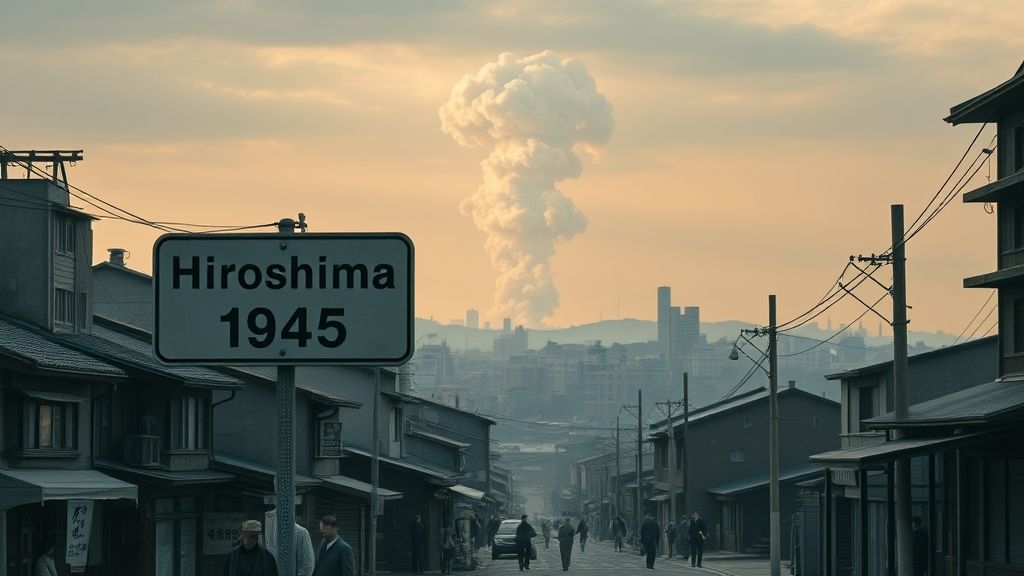
As dawn broke over the city of Hiroshima on August 6, 1945, the world seemed untouched by the unfolding global conflict. The city stirred awake beneath a sky slowly blushing with the first light of day, a typical summer morning filled with the hum of engines, morning chatter, and daily routine. Children played in narrow streets, market vendors prepared their stalls, and soldiers marched along the banks of the Ota River, oblivious to the unimaginable forces about to be unleashed above them. It was a moment frozen in time—as fragile as a breath—before the fury of a new era descended in a blinding flash.
Japan in 1945: A Nation on the Brink
By mid-1945, Japan was a nation scarred yet resolute. Years of brutal warfare had drained its cities, economy, and spirit. The relentless Pacific campaign had pushed the Empire into a defensive stance, its navy shattered, its air forces humbled. Yet, despite the destruction of Tokyo’s firebombing and relentless island invasions, the Japanese government clung tenaciously to hopes of negotiating peace terms that would preserve national honor and the imperial institution. The military elite’s grip on power, alongside the ideology of sacrifice and loyalty, cast shadows over the possibility of surrender.
But beneath this facade, Japan’s people suffered immeasurably—malnutrition, shortages, and fear intertwined daily life. The Allies’ relentless blockade and bombing runs tore through infrastructure, isolating cities and starving the war machine. The looming Soviet declaration of war hovered menacingly. In this tense landscape, the possibility of a swift, decisive end carried grave appeal for the U.S. policymakers seeking to avoid a bloody ground invasion.
The Manhattan Project: Birth of the Atomic Age
Across the ocean, a secretive American effort was nearing fruition. Since 1939, the Manhattan Project had marshaled scientific genius, vast resources, and unprecedented secrecy to unlock the ultimate destructive power—nuclear fission. Led by physicist Robert Oppenheimer and supported by figures like General Leslie Groves, the project wrestled with the profound technical and moral implications of harnessing the atom.
By mid-1945, the program had successfully tested the first atomic bomb in the New Mexico desert’s “Trinity” test, a moment that melded awe and terror: the sun rising in the dead of night, a force powerful enough to reshape warfare and geopolitics forever. For U.S. President Harry S. Truman, who had taken office only months earlier, this weapon presented a stark choice—a tool to potentially end the war swiftly, but one carrying catastrophic human costs.
Decision at the Top: Truman’s Gamble
President Truman’s decision to use the bomb was shaped by a whirlwind of military, political, and ethical calculations. Estimates of U.S. casualties in a land invasion of Japan—Operation Downfall—ran into the hundreds of thousands, and the specter of prolonged conflict loomed grim. Advisors argued that the bomb could compel Japan’s surrender without a costly invasion.
Yet, dissent persisted. Some scientists and military leaders urged caution, foreseeing the dawn of a nuclear arms race or fearing the bomb’s indiscriminate devastation. But in the fevered atmosphere of total war, the call for decisive victory drowned out many hesitations.
On July 25, the Interim Committee—a group advising Truman—recommended the bomb’s use. Still, the decision was far from universally embraced; many in the international community and even within the U.S. questioned the morality and necessity of targeting civilians in such a cataclysmic way.
Early Morning of August 6: Routine Turns to Catastrophe
As the B-29 bomber Enola Gay lifted off from Tinian Island before dawn, inside its belly rested “Little Boy”—a uranium-based atomic bomb weighing over 9,700 pounds. The mission was cloaked in urgency and secrecy. Onboard, pilot Colonel Paul Tibbets understood the gravity of their task, the weight of history and human lives balanced against the slim hope of ending years of unspeakable war.
Approaching Hiroshima, the city seemed to slumber peacefully beneath a clear sky. At 8:15 a.m., with precision born of meticulous planning, “Little Boy” was released. Moments later, a blinding flash erupted in the sky—a flash brighter than a thousand suns, followed by a roar like the end of the world.
“Little Boy”: The Bomb That Changed History
“Little Boy” was the first atomic weapon ever used in war and the only uranium bomb deployed against a population. Unlike the implosive design of its successor, Nagasaki’s “Fat Man,” “Little Boy” operated using a gun-type method, a dramatic and terrifying mechanism that slammed two subcritical masses of uranium together to initiate a chain reaction.
The bomb exploded approximately 600 meters above the city center, releasing an energy equivalent to 15 kilotons of TNT. The immediate blast vaporized everything within a radius of one mile, reducing buildings, trees, and people to ash and debris in a heartbeat. The shockwave radiated outward, flattening neighborhoods, shattering glass miles away, while a searing fireball incinerated all in its path.
The Instant Devastation: Heat, Fire, and Shockwaves
Survivors recounted the moment the world fractured: an overwhelming white light incinerating flesh, crushing bone, igniting spontaneous fires in a conflagration that would rage for days. The temperature at the blast’s center soared to millions of degrees, obliterating everything in seconds.
Many were blinded, burned, or thrown violently by the force of the explosion. Buildings crumbled as if made of paper, and the iconic dome that would later stand as Hiroshima’s haunting symbol was all but destroyed. Fires, fed by the city’s wooden architecture, consumed streets, engulfing survivors desperate to escape amid the chaos.
Human Faces of Horror: Survivors and Victims
The human toll was staggering. Of Hiroshima’s approximately 350,000 inhabitants, an estimated 70,000–80,000 perished immediately, with tens of thousands more dying in the ensuing weeks and months due to radiation sickness, burns, and untreated injuries. Among them were children, elderly, and ordinary citizens—victims of circumstances they neither caused nor controlled.
Accounts from survivors—known as Hibakusha—offer searing testimony: the “black rain” that poisoned the land, the slow agony of radiation, families ripped apart in moments of unimaginable terror. One survivor recalled, “The sky flashed like an enormous camera flash… My skin felt as though it had been scalded. I could not scream; I could only crawl."
Yet even amid the devastation, stories of courage and kindness emerged—neighbors helping neighbors, hospital nurses tending the wounded in near-hopeless conditions, and citizens struggling to care for the dying with scarce resources.
The Aftermath: Fires, Radiation, and Medical Crisis
The destruction unleashed a cascade of secondary disasters. Beyond the immediate blast, radiation exposure triggered acute and chronic illnesses: leukemia, cancers, and genetic defects plagued survivors for generations. Hospitals were overwhelmed, lacking medicines and equipment, while the collapse of infrastructure thwarted relief efforts.
Hiroshima’s underground water supply was contaminated, complicating sanitation and exacerbating disease. Thousands suffered from “atomic bomb disease,” a mysterious affliction that would puzzle medical experts. The Red Cross and international aid groups mobilized, but the scale of human need was overwhelming.
Hiroshima’s Ruins: A City Transformed Forever
In the days following the bombing, Hiroshima was a landscape of desolation. Entire neighborhoods were scorched bare; landmarks reduced to skeletal remains. The city’s population was decimated, its economy shattered, its spirit deeply wounded.
The Hiroshima Prefectural Industrial Promotion Hall, now known as the Atomic Bomb Dome or Genbaku Dome, remained partially intact and became an enduring symbol of resilience and a silent witness to the horror of nuclear warfare. Reconstruction efforts began slowly amid political, economic, and social challenges.
Global Reaction: Awe, Horror, and Debate
News of Hiroshima’s destruction rippled worldwide, triggering a mix of shock, relief, and horror. In the United States and Allied countries, the bombing was largely hailed as a necessary act to end a brutal war rapidly and save lives on both sides.
However, journalists, intellectuals, and governments voiced ethical concerns about targeting civilians and the bomb’s unprecedented destructive capacity. The Soviet Union, then allied against Japan but aware of the U.S. strategic advantage, accelerated their own atomic program.
Meanwhile, Japan reeled, facing the unbearable choice between continued resistance and unconditional surrender.
Japan’s Response and the Road to Surrender
Initially, Japan’s military leadership sought to continue fighting despite the devastation, seeing surrender as dishonorable. However, the combined shock of Hiroshima and, three days later, the atomic bombing of Nagasaki—along with the Soviet Union’s declaration of war on August 8—forced a reevaluation.
On August 15, Emperor Hirohito made a landmark radio address, urging the Japanese people to accept surrender to prevent further suffering. This marked a historic moment—the first time the Emperor’s voice was broadcast widely—signaling the formal end of hostilities.
The Ethical Dilemma: Justification and Condemnation
The atomic bombing of Hiroshima remains one of history’s most deeply contested events. Supporters argue that it hastened the end of the Pacific War, thus preventing greater bloodshed and saving countless lives that a land invasion would have cost. Detractors condemn it as an unnecessary and disproportionate use of force, targeting civilians in a manner that challenged the boundaries of warfare and human morality.
Philosophers, historians, and ethicists continue to debate the bomb’s legacy, questioning whether alternative paths toward peace were explored sufficiently, and what the true price of “victory” entailed.
Atomic Legacy: Cold War and Nuclear Proliferation
The bombing of Hiroshima—and later Nagasaki—ushered in the nuclear age and a precarious new world order. The overwhelming power displayed fueled an arms race during the Cold War, as superpowers amassed increasingly devastating arsenals.
The shadow of nuclear annihilation loomed globally, inspiring movements for disarmament amid fears of mutually assured destruction. Hiroshima’s tragedy became a rallying point for advocates of peace, nuclear abolition, and international cooperation, underscoring the urgent need for responsible stewardship of atomic energy.
Hiroshima Today: Memory, Memorials, and Peace Advocacy
Today, Hiroshima stands as a city committed to remembrance and peace. The Peace Memorial Park, museums, and annual ceremonies honor victims and educate visitors about the horrors of nuclear weapons.
Survivors’ testimonies continue to inspire movements worldwide dedicated to nuclear disarmament and humanitarian prohibition. Hiroshima’s story is told not to celebrate destruction, but to illuminate the path toward peace, reconciliation, and hope.
Lessons from the Ashes: Humanity’s Reckoning
The bombing of Hiroshima forces each generation to confront uncomfortable truths about power, conflict, and human dignity. It is a stark reminder of technology’s double-edged sword—capable of immense progress and ruin.
In the ashes lie lessons about the cost of war, the resilience of the human spirit, and the moral imperative to strive for peace. Hiroshima’s legacy implores humanity to remember the past fully in order to shape a safer future.
Conclusion: Reflections on a World Changed
The atomic bombing of Hiroshima did not just destroy a city; it shattered illusions about the nature of war and introduced a terrifying new chapter in human history. It stands as an enduring testament to the devastating potential of unchecked technological advancement and the profound human cost of conflict.
Yet amid devastation, the city and its people rose from ruin to become a voice of peace and reconciliation, reminding the world of the urgent necessity to transcend violence and forge a future where such tragedy never repeats.
As we look back on that fateful morning, we are called to remember—not only the horror but also the resilience, and the power of hope in the darkest of times.
FAQs
Q1: Why was Hiroshima chosen as the target for the atomic bomb?
Hiroshima was selected due to its military importance as a large industrial city and port with minimal previous bombing damage, making it a prime target to measure the bomb’s effect. Its size and military installations made it strategically significant.
Q2: How many people died immediately after the atomic bombing?
An estimated 70,000–80,000 people died instantly. Many more succumbed later to wounds and radiation exposure, with total deaths by the end of 1945 reaching approximately 140,000.
Q3: What was the international reaction to the bombing?
Reactions were mixed—while many in Allied countries accepted the bombing as a necessary step to end the war, global condemnation and moral debate arose, especially regarding civilian casualties and nuclear warfare’s future implications.
Q4: How did the bombing contribute to Japan’s surrender?
The sheer devastation of Hiroshima, followed by Nagasaki and the Soviet Union’s entry into the war, pressured Japan’s leadership to accept unconditional surrender, thus ending World War II.
Q5: Who were the Hibakusha?
Hibakusha are the survivors of the atomic bombings, many of whom suffered chronic health effects and social stigmatization. Their testimonies remain vital for peace education.
Q6: What is Hiroshima’s significance today?
Hiroshima symbolizes the horrors of nuclear war and the global movement for peace and nuclear disarmament, with memorials and events dedicated to educating future generations.
Q7: Could the bombing have been avoided?
Historians debate this; some argue Japan might have surrendered without atomic bombing following Soviet intervention, while others contend the bomb expedited peace. The question remains a deeply complex ethical issue.
Q8: What legacy did the bombing leave on international law and warfare?
It catalyzed discussions on warfare ethics, civilian protection, and the later establishment of treaties aimed at controlling nuclear weapons, fundamentally shaping international relations post-1945.