Table of Contents
- The Dawn of a Divided Peninsula: Korea on the Brink
- Cold War Tensions and the Seeds of Conflict
- The Political Landscape of Post-War Korea
- June 25, 1950: The Invasion That Shocked the World
- The Night Seoul Fell: Chaos and Courage
- International Reactions: The United Nations Joins the Fray
- The Role of the United States and MacArthur’s Strategy
- North Korea’s Ambitions and Soviet Backing
- South Korea’s Struggle for Survival
- The Human Cost: Civilians in the Crossfire
- The Battle of Seoul: Urban Warfare and Destruction
- The Stalemate and the Shifting Front Lines
- The Chinese Intervention: A New Chapter
- The War’s Psychological Impact on Koreans
- The Armistice and the Demilitarized Zone: A Frozen Conflict
- The Korean War’s Global Legacy and Cold War Dynamics
- Remembering Seoul 1950: Memorials and Historical Memory
- Lessons from the Korean War: Diplomacy, Division, and Defiance
The Dawn of a Divided Peninsula: Korea on the Brink
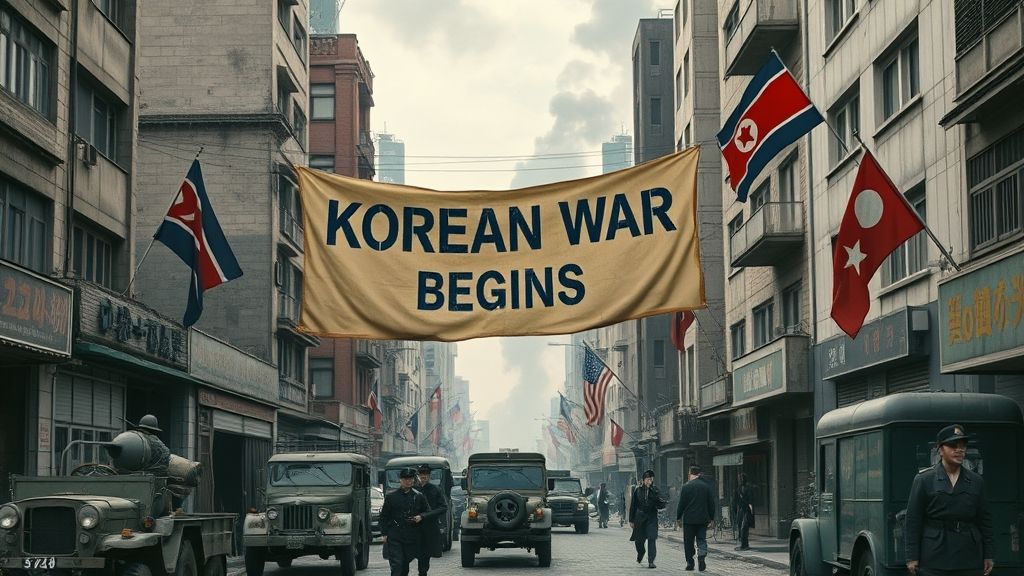
The humid summer air hung heavy over Seoul, the capital of South Korea, on the eve of June 25, 1950. Streets that had once teemed with hopeful citizens now echoed with uncertainty and whispered rumors of impending conflict. For three years, the Korean Peninsula had balanced on a knife’s edge—a scarred land, split by ideology and foreign powers. But as dawn cracked the darkness, that balance shattered with the roar of artillery and the thunder of tanks crossing the 38th parallel.
Seoul, steeped in centuries of history, its palaces and bustling markets, was about to become the crucible of a war that would reshape not only Korea but the entire geopolitical map. The Korean War—the first major armed clash of the Cold War era—had begun. The consequences of that early morning invasion would echo across continents and through generations.
Cold War Tensions and the Seeds of Conflict
To understand the invasion, one must look beyond the peninsula’s rugged mountains and narrow rice paddies to the global chessboard that was mid-20th century geopolitics. World War II had left Korea divided along the 38th parallel as a temporary measure, Soviet forces occupying the North, and American troops stationed in the South. But “temporary” transformed into permanent as Cold War ideologies hardened into territorial claims.
The Democratic People’s Republic of Korea, led by Kim Il-sung, emerged in the North with Soviet and Chinese Communist backing. In the South, Syngman Rhee’s Republic of Korea was established under U.S. influence, united by nationalism but fragmented by opposing visions of governance. The peninsula transformed into a frontline for a global ideology war — democracy versus communism.
The Political Landscape of Post-War Korea
Korea in 1950 was a nation bruised by decades of foreign occupation, especially the brutal Japanese colonial era. Both North and South claimed to represent the legitimate government of the entire peninsula. In the South, political instability reigned: corruption, political repression, and poverty plagued the fledgling republic. Yet, beneath the surface, a fierce desire for reunification simmered—albeit under conflicting banners.
Kim Il-sung, emboldened by Stalin’s reluctant support and believing that South Korean forces were weak and disorganized, nurtured plans to reunify Korea by force. The political calculus was risky, but for Kim and his allies in Moscow and Beijing, a swift offensive might consolidate the communists’ hold over the peninsula—and send a clear message to the West.
June 25, 1950: The Invasion That Shocked the World
In the early hours of June 25, 1950, without formal declaration of war, approximately 75,000 North Korean soldiers crossed the 38th parallel. Their attack was swift, coordinated, and ruthless. Artillery barrages rained on border towns while armored columns surged forward, overwhelming ill-prepared South Korean units.
Seoul, only 35 miles south of the division line, became the immediate target. Communications were cut, and panic spread among civilians and military alike. The North Korean Korean People’s Army aimed to decapitate South Korea's government before the world could respond.
The invasion not only stunned South Korea but jolted the international community, igniting fears of communist expansion far beyond the peninsula.
The Night Seoul Fell: Chaos and Courage
Seoul fell quickly—within three days of the invasion, on June 28. The chaos was palpable. Families scrambled to flee, trampling streets with their belongings. Government officials abandoned positions, and South Korean defenses crumbled beneath relentless enemy fire.
Yet, amidst the darkness, stories of courage emerged. Civilian volunteers, irregular militias, and scattered military units mounted desperate resistance, buying precious time for evacuation and regrouping. The city’s beautiful palaces, temples, and homes endured shelling and flame, marking one of the most devastating early chapters of the war.
The fall of Seoul sent shockwaves through the South Korean people. To many, it felt like the very soul of their nation was being torn apart.
International Reactions: The United Nations Joins the Fray
Just as Seoul’s skyline was consumed by the smoke of war, the United Nations Security Council convened in emergency session. The Soviet Union, ironically absent after boycotting the UN over the exclusion of Communist China, could not veto resolutions condemning the invasion.
The Council called for a ceasefire and, crucially, authorized member states to assist South Korea “to repel the armed attack.” This marked the first collective military response to aggression under UN auspices and underscored the Korean conflict’s place as a Cold War flashpoint.
The Role of the United States and MacArthur’s Strategy
President Harry Truman, caught between the desire to contain communism and the reluctance to trigger a wider war, rapidly decided to support South Korea. U.S. forces already stationed in Japan prepared to intervene.
General Douglas MacArthur, commander of U.S. forces in the Far East, masterminded the counteroffensive strategy. His bold but risky plan involved a surprise amphibious landing at Incheon—a narrow port near Seoul—aimed at cutting North Korean supply lines and recapturing the capital.
Although controversial at the time, MacArthur's plan would prove pivotal in shifting the tide, at least temporarily.
North Korea’s Ambitions and Soviet Backing
Behind the scenes, Kim Il-sung had navigated the intricacies of dealing with two powerful Communist patrons—Joseph Stalin and Mao Zedong. Stalin’s support was cautious but significant, providing military equipment while pushing Kim to proceed carefully to avoid direct American retaliation that might escalate.
Mao’s China was less openly involved at this stage, yet concerned about U.S. presence on its borders. For North Korea, the invasion was a high-stakes gamble intended to reunify the peninsula under communism before international opposition could solidify.
South Korea’s Struggle for Survival
The South Korean military, though larger in numbers, was poorly equipped, inexperienced, and hampered by internal political strife. Yet under immense pressure, it fought tenaciously to delay the North’s advance.
Civilian populations bore immense burdens—forced evacuations, shortages of food and medicine, and widespread fear. The war was not just a military conflict but a deeply personal tragedy affecting millions.
The Human Cost: Civilians in the Crossfire
It is impossible to recount the beginning of the Korean War without acknowledging the immense human suffering. Estimates suggest that by the end of the war, millions of civilians had died or been displaced. Early months in Seoul and surrounding regions were marked by massacres, executions, and atrocities committed by both sides.
Families were split; homes were lost; futures were violently disrupted. The agony of Seoul’s residents who experienced occupation, liberation, and counterattacks underscores the harrowing nature of war beyond battlefield statistics.
The Battle of Seoul: Urban Warfare and Destruction
Seoul’s fall and subsequent recapture became one of the fiercest urban battles of the war. The city’s narrow streets, traditional architecture, and dense population made it a crucible for brutal hand-to-hand combat.
Historic landmarks like Gyeongbokgung Palace stood damaged; neighborhoods were reduced to rubble. The destruction was not only strategic but symbolic, as Seoul was a tangible expression of Korean sovereignty and identity.
The Stalemate and the Shifting Front Lines
After the initial invasion and South Korean collapse, UN forces’ counteroffensive regained lost territory, culminating in the recapture of Seoul in September 1950. But the front lines soon began shifting again, as Chinese forces entered the fray and the war dragged into stalemate.
What began as lightning warfare evolved into a grinding conflict of attrition, trench lines, and high casualties. Seoul itself would change hands multiple times, emblematic of the peninsula’s divided fate.
The Chinese Intervention: A New Chapter
China’s intervention in late 1950 marked a critical turning point. Beijing’s fears of hostile U.S. forces near its border drove the decision to send hundreds of thousands of “volunteers” to fight alongside North Korea.
This raised the stakes dramatically, transforming the conflict into a major proxy war that prolonged fighting for nearly three more years. It also exposed the limits of American military power and challenged UN-commanded forces in unprecedented ways.
The War’s Psychological Impact on Koreans
Beyond physical destruction, the war inflicted psychological scars that resonate even today. The fear of invasion, the trauma of family separations, and the uncertainty created lasting wounds.
In Seoul, survivors recounted nightmares, loss, and the bitter experience of occupation. The Korean War shaped national identities by embedding themes of resilience, suffering, and unresolved division into the collective memory.
The Armistice and the Demilitarized Zone: A Frozen Conflict
The Korean War did not conclude with a peace treaty but an armistice in July 1953. The Demilitarized Zone (DMZ) was established near the 38th parallel—one of the most fortified borders in the world.
Seoul, positioned just south of the DMZ, remained the capital of South Korea, growing resilient yet marked by the proximity of constant threat. The armistice froze the war but left many questions open: the fates of prisoners, displaced persons, and the political status of Korea.
The Korean War’s Global Legacy and Cold War Dynamics
The war was not a localized skirmish but part of the broader Cold War vortex. It confirmed the division of the world into blocs, intensified U.S. military commitments in Asia, and shaped global alliances.
Its brutal lessons influenced policy in Vietnam, shaped arms races, and left an uneasy peace that persists today. Seoul’s early 1950 ordeal was the ignition point of this transformative epoch.
Remembering Seoul 1950: Memorials and Historical Memory
Decades later, Seoul bears markers of its painful past—memorials, museums, and historical sites educate new generations. The names of villages lost, civilians massacred, and soldiers fallen are inscribed in collective memory.
Yet, the event remains complex: a story of invasion, resistance, foreign intervention, and the painful endurance of a city—and a nation—caught between superpowers.
Lessons from the Korean War: Diplomacy, Division, and Defiance
The Korean War’s beginning in Seoul teaches bitter lessons about division and diplomacy. It warns of the dangers when ideological rifts harden into warfare and when global struggles exploit local tensions.
Yet, it also reveals the enduring spirit of people striving for peace and stability, even amid devastation. Seoul in June 1950 is a testament to human realities behind geopolitical headlines—a moment when history’s tides swept a city into an uncertain future.
Conclusion
The Korean War’s outbreak on that fateful June morning in 1950 remains a defining moment for Seoul and the Korean Peninsula. It was more than a military invasion—it was the eruption of decades-long tension between ideologies, almost forgotten hopes for reunification, and the inescapable shadow of the Cold War.
Seoul, battered but unbroken, became the symbol of survival amidst overwhelming odds. The city’s fall and retrieval spoke to a human story of loss and resilience, a microcosm of a world divided but yearning for reconciliation.
Today, as skyscrapers soar over the same streets once smoldering under bombardment, the legacy of those first days reminds us that history is alive—not just in textbooks but in the hearts of those who remember, rebuild, and dream of peace.
FAQs
Q1: Why did North Korea decide to invade South Korea in 1950?
North Korea, led by Kim Il-sung, aimed to reunify the peninsula under communist control. Encouraged by Soviet support and seeing South Korea’s weaknesses, Kim launched a surprise invasion hoping for a swift victory.
Q2: What role did the United Nations play after the invasion?
The UN condemned the attack and authorized a coalition of member states, primarily led by the United States, to provide military support to South Korea. This marked an early effort at collective security under UN auspices.
Q3: How did the invasion impact the residents of Seoul?
Residents endured displacement, violence, and destruction. Many fled in panic, and the city’s infrastructure suffered heavy damage. The human cost was immense, including casualties and psychological trauma.
Q4: Why was the fall of Seoul so significant?
Seoul was South Korea’s capital and symbol of sovereignty. Its rapid fall demonstrated the vulnerability of South Korea and marked a major strategic and psychological blow to the UN forces.
Q5: How did international powers influence the start of the Korean War?
The war’s origins lie in Cold War dynamics, with the Soviet Union and China backing North Korea, and the United States supporting South Korea. Their rivalry intensified local tensions into open conflict.
Q6: What was General MacArthur’s strategy to recapture Seoul?
MacArthur planned an amphibious landing at Incheon to cut North Korean supply lines and encircle their forces. This audacious move eventually led to the recapture of Seoul, turning the tide temporarily.
Q7: What lasting impacts did the Korean War have on global politics?
The war entrenched East-West divisions, increased Cold War militarization, and influenced later conflicts in Asia. It also solidified South Korea’s alliance with the West and shaped North Korea’s isolationist policies.
Q8: How is the Korean War remembered today in Seoul?
Seoul commemorates the war through memorials, museums, and education, honoring those who suffered and fought. The war remains a powerful symbol of division and resilience in Korean consciousness.