Table of Contents
- Dawn of a New Era: The Proclamation of Bangladesh’s Independence
- The Heartbeat of Dhaka on March 26, 1971
- The Fateful Partition: Roots of Bengal’s Divisions
- Language, Identity, and the Seeds of Dissent
- The Political Landscape: Awami League’s Rise and East-West Pakistan Divide
- The 1970 General Elections: A Landslide and a Fractured Union
- Tensions Escalate: From Negotiations to Breakdown
- Operation Searchlight: The Dark Night of March 25, 1971
- Sheikh Mujibur Rahman’s Defiant Call: The Spark of Independence
- The Proclamation Day: March 26, 1971, and the Birth of Bangladesh
- The Role of Dhaka: From Capital to War Front
- Mobilizing the Masses: The Birth of Mukti Bahini
- International Reactions: The World Watches a Nation Being Born
- The Liberation War: A Tale of Brutality and Bravery
- The Refugee Crisis and Human Cost of the Struggle
- The End of the War and the Emergence of Bangladesh
- Political and Social Aftermath: Building a Nation from Ruins
- The Legacy of Independence: Identity, Memory, and Celebration
- How Bangladesh’s Birth Changed South Asia’s Geopolitical Map
- Remembering March 26: Official Commemorations and Popular Memory
In the chill of night on March 25, 1971, a shadow fell over Dhaka, the capital of East Pakistan. The city, pulsing with the hopes of millions, was shaken to its core. The deafening silence that followed was soon pierced by shots, tear gas, and fire — a ruthless military operation that sought to crush a dream. Yet, in the early hours of March 26, a different kind of sound broke through the darkness: a voice of defiance, resilience, and unyielding hope, as Sheikh Mujibur Rahman declared the independence of Bangladesh. It was a moment heavy with pain, fury, and boundless courage. And in that instant, a nation was born.
Dawn of a New Era: The Proclamation of Bangladesh’s Independence
The declaration of independence on March 26, 1971, was not merely a political statement; it was the culmination of decades of struggle, longing, and identity politics that had simmered beneath the surface of what was then Pakistan. It was the moment when millions of Bengalis dared to envision a homeland built on their language, culture, and democratic rights — a homeland that would soon be carved out from one of the most turbulent geopolitical landscapes of the 20th century.
This proclamation unfurled against a backdrop of shattered promises and brutal reprisals. It signaled the birth of Bangladesh but also the onset of a war so savage and resolute that its echoes reshape the region’s history even today.
The Heartbeat of Dhaka on March 26, 1971
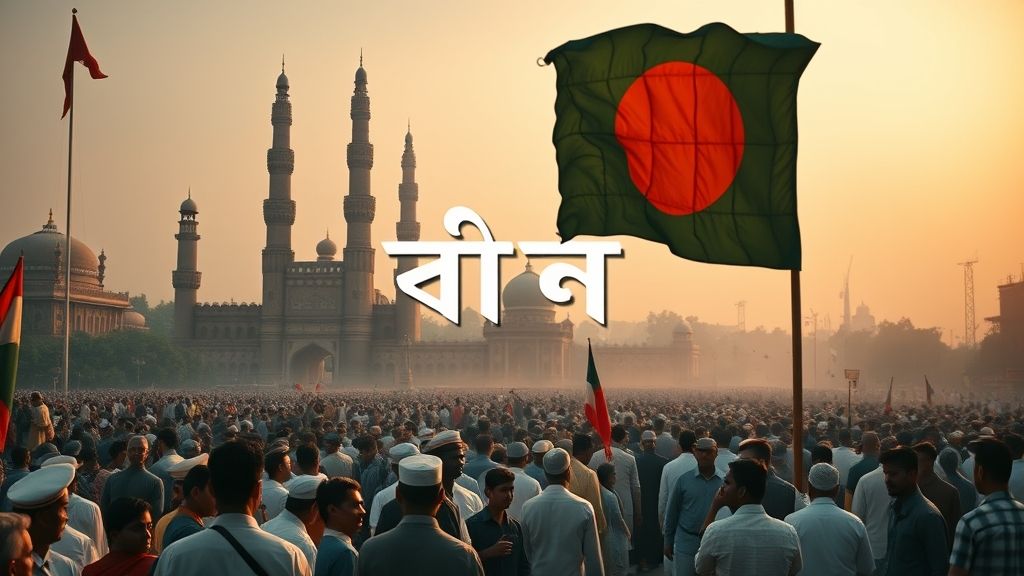
The streets of Dhaka in early 1971 were alive with urgency, tension, and anticipation. News spread like wildfire through the city’s crowded bazaars and narrow lanes. When Sheikh Mujib’s message was broadcast—though he himself had been arrested hours earlier by West Pakistani forces—his words ignited the hearts of millions who had long endured the humiliations and injustices meted out by the ruling regime in West Pakistan.
March 26 was not just a date; it became a symbol — a rallying cry that resonated in villages, urban centers, and refugee camps. To some, it marked the point of no return, the irrevocable act of self-determination. To others, it underscored the immense sacrifices to come.
The Fateful Partition: Roots of Bengal’s Divisions
To understand this moment, one must journey back to 1947, when British India was cleaved into two dominions: India and Pakistan. Pakistan was an ambitious idea—a state created for Muslims, but its geography was fragmented. East Bengal (East Pakistan) was separated from West Pakistan by over a thousand miles of Indian territory, straining any sense of national unity.
Within East Bengal, the Bengali identity was profound, nurtured by a rich literary tradition, distinct language, and unique culture. Yet politically, it was tied to a distant capital more concerned with its own affairs. This separation birthed a paradox — a nation divided in geography and spirit but unified on paper.
Language, Identity, and the Seeds of Dissent
Language proved to be the first and fiercest battlefield. In 1948, when Urdu was proclaimed the sole national language of Pakistan — despite Bengali being spoken by the majority — unrest exploded. The Language Movement of 1952 bore witness to clashes where many Bengali students died defending their right to mother tongue recognition.
This struggle was emblematic of a deeper cultural and political divide. For East Pakistanis, politics was about survival, recognition, and dignity, while West Pakistan’s elite often saw them as subordinate, even alien.
The Political Landscape: Awami League’s Rise and East-West Pakistan Divide
By the 1960s, the chasm between East and West Pakistan only widened. The Awami League, led by Sheikh Mujibur Rahman, championed the cause of East Pakistani autonomy. Under his leadership, the party grew into a formidable force advocating for the Six Point Movement — demands for greater regional autonomy, economic control, and political representation.
Meanwhile, West Pakistan’s military and political elite remained determined to maintain centralized control. Dhaka’s explosive political ferment contrasted dramatically with the calm façade of Karachi and Islamabad.
The 1970 General Elections: A Landslide and a Fractured Union
The general elections of December 1970 became the critical turning point. The Awami League won a stunning 160 of 162 seats allocated to East Pakistan in the National Assembly, securing an absolute majority to govern Pakistan. This victory was a public mandate for autonomy — or as many hoped, true independence.
Yet, instead of accepting the results, the West Pakistani leadership, led by President Yahya Khan and Zulfikar Ali Bhutto, stalled and obstructed the transfer of power. Their refusal deepened the crisis, fueling anger and despair in the Eastern wing.
Tensions Escalate: From Negotiations to Breakdown
Throughout early 1971, negotiations ensued but quickly collapsed. The political deadlock intensified. The people of East Pakistan felt betrayed. As months passed, frustration transformed into resolve, and whispers of independence grew louder.
Meanwhile, the military prepared for a violent crackdown, convinced that force would quell the turbulence and assert dominance. But they gravely underestimated the Bengali will to resist.
Operation Searchlight: The Dark Night of March 25, 1971
Just past midnight on March 25, 1971, the Pakistani Army initiated Operation Searchlight, a brutal military campaign targeting Dhaka and other major cities. Its aim was chillingly clear — to suppress the Bengali nationalist movement by any means necessary.
Intense brutality characterized the assault: indiscriminate shootings, arson, mass arrests, and widespread atrocities. The streets ran red with blood. Estimates suggest that tens of thousands were killed within days, sparking one of the most harrowing genocidal campaigns in modern history.
Sheikh Mujibur Rahman’s Defiant Call: The Spark of Independence
Amid the chaos, Sheikh Mujibur Rahman broadcast a succinct yet profoundly powerful message of independence just after midnight on March 26. Despite being under house arrest, his voice reached millions: "The struggle this time is the struggle for our emancipation! The struggle this time is the struggle for our independence!"
This proclamation was more than a declaration—it was a beacon lighting the way for resistance and hope. It galvanized ordinary citizens to take up arms and defend the idea of a free Bangladesh.
The Proclamation Day: March 26, 1971, and the Birth of Bangladesh
March 26 became the official date commemorating Bangladesh’s independence, a day of defiant celebration. It marked the formal rupture with West Pakistan and the birth of a new nation — one forged in the crucible of oppression and struggle.
With leaders imprisoned or exiled and cities under siege, ordinary Bengalis assumed the mantle of freedom fighters. The fragile yet unbreakable spirit that emerged on that day would define the nation’s character forever.
The Role of Dhaka: From Capital to War Front
Dhaka was both a symbol and a battlefield in this conflict. Once the thriving political and cultural center of East Pakistan, it transformed into the nerve center of rebellion and resistance.
The city witnessed mass protests, underground movements, sabotage, and fierce confrontations. The urban landscape bore the scars of war, but also the fiery resolve of a population refusing to be crushed.
Mobilizing the Masses: The Birth of Mukti Bahini
Out of the chaos emerged the Mukti Bahini — the liberation army composed of defected military personnel, students, peasants, and ordinary citizens. Their guerrilla warfare tactics, bravery, and knowledge of local terrain relentlessly challenged the Pakistani forces.
The Mukti Bahini became a symbol of hope, representing not just military might, but the collective will of a people determined to achieve sovereignty.
International Reactions: The World Watches a Nation Being Born
The world responded with a mixture of shock, sympathy, and strategic calculation. Neighboring India, overwhelmed by a flood of refugees and sympathetic to the Bengali cause, played an essential role in supporting the liberation struggle.
Meanwhile, Cold War dynamics complicated global responses; major powers hesitated, focusing on geopolitical interests rather than humanitarian cries.
The Liberation War: A Tale of Brutality and Bravery
The nine-month liberation war that followed was full of both horrific violence and extraordinary heroism. Battles raged across forests, rivers, and cities, with countless civilians caught in the crossfire.
Yet, the spirit of resistance typified the struggle — underground newspapers circulated, cultural expressions of freedom blossomed, secret networks thrived, and the global Bengali diaspora mobilized support.
The Refugee Crisis and Human Cost of the Struggle
The conflict created a humanitarian catastrophe. Over 10 million refugees fled to India, triggering one of the largest refugee crises of the century. Those who stayed faced starvation, violence, and displacement.
The human cost was staggering — estimates of deaths range from several hundred thousand to three million. Families were torn apart, entire villages destroyed, and a generation marked by trauma and loss.
The End of the War and the Emergence of Bangladesh
In December 1971, after India’s intervention and decisive military campaigns, Pakistani forces surrendered. The Liberation War ended with the emergence of Bangladesh as an independent, sovereign nation.
Sheikh Mujibur Rahman was released and returned to Dhaka as a hero, greeted by jubilant crowds eager to rebuild their shattered land.
Political and Social Aftermath: Building a Nation from Ruins
Independence was just the beginning. Bangladesh faced monumental challenges — reconstructing infrastructure, healing divisions, establishing political stability, and addressing widespread poverty.
Yet, the foundation laid by the liberation movement proved resilient. The country embarked on a difficult but ambitious journey toward democracy, development, and cultural affirmation.
The Legacy of Independence: Identity, Memory, and Celebration
March 26 remains ingrained in the Bengali psyche as a day of pride and remembrance. It symbolizes resilience, sacrifice, and the triumph of aspiration over oppression.
Decades later, the legacy of independence influences Bangladesh’s political culture, literature, arts, and education. It is commemorated annually with reverence, parades, and cultural programs that keep the flame of freedom alive.
How Bangladesh’s Birth Changed South Asia’s Geopolitical Map
The creation of Bangladesh altered South Asia’s geopolitical contours. It ended Pakistan’s two-wing structure and forced neighboring states to reconsider alliances and strategies.
The war also highlighted the limits of centralized authoritarianism and inspired other movements for self-determination worldwide. Bangladesh’s emergence underscored the potency of language, culture, and democratic rights in defining nationhood.
Remembering March 26: Official Commemorations and Popular Memory
In Bangladesh today, March 26 is a national holiday observed with solemn ceremonies at Shaheed Minar and other monuments. The nation honors martyrs, war veterans, and the countless heroes whose sacrifices made independence possible.
Beyond official acts, families share stories, schools teach the struggle, and artists invoke this historic day to inspire new generations. The memory of independence remains a living, breathing part of Bangladesh’s soul.
Conclusion
The proclamation of Bangladesh’s independence on March 26, 1971, shines as an enduring beacon of hope, courage, and the indomitable human spirit. Born from oppression and conflict, it tells a story not just of political change, but of a people’s profound yearning for dignity, culture, and self-determination.
It reminds us that nationhood is more than borders and power; it is a shared dream, painstakingly forged through sacrifice and resilience. As Bangladesh continues to grow and thrive, March 26 stands as a testament to the power of unity in the face of adversity, an eternal symbol of freedom that resonates far beyond its own land.
FAQs
Q1: Why did Bangladesh declare independence on March 26, 1971?
A: March 26 marks the day Sheikh Mujibur Rahman declared independence after a brutal military crackdown by the Pakistani army. Operation Searchlight had begun the night before, aiming to suppress Bengali aspirations, pushing the region to sever ties with West Pakistan.
Q2: Who was Sheikh Mujibur Rahman, and what was his role?
A: Sheikh Mujibur Rahman was the charismatic leader of the Awami League and the father of Bangladesh. He united the Bengali people and led the movement for autonomy and independence, ultimately becoming the country’s founding president.
Q3: What caused the tensions between East and West Pakistan?
A: Differences in language, culture, political representation, and economic disparity created tension. East Pakistan, despite having a majority population, was marginalized politically and economically by the West Pakistani elite, leading to increasing demands for autonomy.
Q4: How did the world react to Bangladesh’s declaration of independence?
A: Global reaction was mixed. India provided significant support to the independence movement, especially hosting refugees and later intervening militarily. Many Western countries hesitated due to Cold War considerations, with some supporting Pakistan politically.
Q5: What was the impact of Operation Searchlight on the Bengali population?
A: Operation Searchlight caused widespread atrocities, including mass killings, rape, and destruction of property. It devastated the population, catalyzed the liberation war, and attracted international condemnation — marking one of the darkest chapters in South Asia’s history.
Q6: How did the Liberation War affect South Asia politically?
A: The war led to the creation of Bangladesh, reshaping the geopolitical landscape by dissolving Pakistan’s eastern wing. It also strengthened India’s regional role and highlighted ethnic and linguistic rights as central to nationhood globally.
Q7: How is March 26 commemorated in Bangladesh today?
A: March 26 is a national holiday with ceremonies, cultural programs, and educational activities throughout Bangladesh, honoring those who fought and died for independence and celebrating the birth of the nation.
Q8: What were the human costs of Bangladesh’s independence?
A: The struggle incurred millions of deaths, massive displacement, and untold suffering. Refugee crises and atrocities left deep scars, yet these sacrifices cemented a national identity rooted in resilience and hope.