Table of Contents
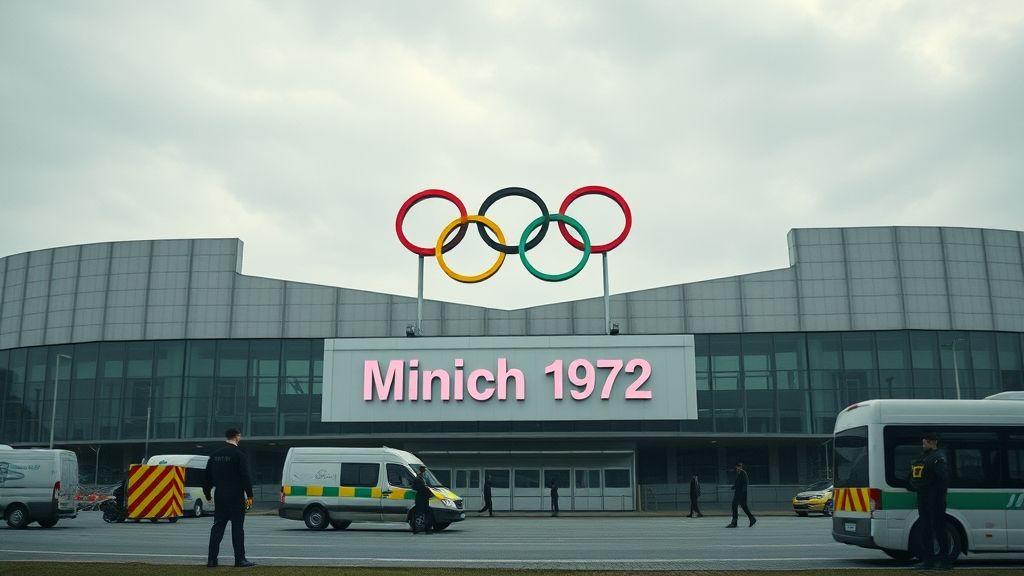
- The Dawn of a Fateful Day: Munich, September 5, 1972
- The Olympic Spirit Under Siege
- The Origins of the Munich Hostage Crisis
- Black September: A Shadow from the Middle East
- The Camp of Champions: Inside the Olympic Village
- The Attack Unfolds: The Breaking of the Peace
- Surprised and Unprepared: German Authorities React
- The Hostage Situation: Tense Negotiations Begin
- Global Shockwaves: The World Watches in Horror
- Plans for Rescue: The High-Stakes Gambit at Fürstenfeldbruck
- The Tragic Night: Failure at the Airbase
- The Cost in Blood: Lives Lost and Pain Endured
- Media, Messaging, and Propaganda: The Battle of Narratives
- The Aftermath in Germany: Political and Social Reverberations
- Olympic Games of Terror: How Munich Changed Security Forever
- Black September’s Legacy: Terrorism Meets Global Spotlight
- Memory and Memorials: Remembering the Fallen
- The Shadow Over the Olympic Ideal: Security vs. Openness
- Lessons Learned and Unlearned: The Long Reach of Munich
- Conclusion: A Tragedy That Transcended Time
- Frequently Asked Questions about the Munich Olympic Attack
- External Resources
- Internal Link: Visit History Sphere
1. The Dawn of a Fateful Day: Munich, September 5, 1972
The sun rose gently over the serene city of Munich, bathing the Olympic Village in a golden light that promised celebration, unity, and peace. The world’s finest athletes had come together for the XX Olympiad, an event meant to symbolize reconciliation and hope after decades marked by war and division. Yet, as daylight touched the Bavarian skyline on that early September morning, an ominous shadow was already creeping—an ominous portent of violence and heartbreak.
The tranquil mood shattered with cold brutality. Seemingly out of nowhere, a group of armed men scaled the perimeter fences, moving swiftly and silently through the fields of dreams. The twenty-two hostages, members of the Israeli Olympic team, were caught in a nightmare that would forever alter the course of international sport and global politics. It was no ordinary hostage crisis—it was an assault on innocence and the promise of peaceful competition.
2. The Olympic Spirit Under Siege
The 1972 Munich Olympics were meticulously planned to present a new, peaceful Germany—distinctly different from the somber memories of the 1936 Berlin Games shadowed by Nazism. The West German government sought to showcase openness, freedom, and renewal. Athletes and spectators embraced the spirit of camaraderie; flags waved, cultures mingled, and the city pulsed with joyful anticipation.
For the participants, the Olympics were a respite from the world's pressures, from ideological battles and geopolitical tensions—at least temporarily. But lurking beneath the euphoric facade was a stark reminder: global conflicts were far from over. The Middle East was a tinderbox of grievances and unresolved struggles, and Munich’s international stage was about to become the epicenter of a deadly protest.
3. The Origins of the Munich Hostage Crisis
To understand the Munich massacre, one must unravel the complex tangle of historical grievances, nationalism, and desperation that motivated the attackers. The perpetrators belonged to Black September, a radical Palestinian faction born out of the tumultuous aftermath of the 1948 Arab-Israeli war and the repressive measures taken against Palestinians by Jordan's regime in the early 1970s.
The group sought to leverage international platforms to draw attention to the plight of Palestinians and the existence of the Israeli state, which they vehemently opposed. The Olympic Games, broadcast worldwide, presented a rare opportunity to force the world to look at a conflict often relegated to distant headlines. What the perpetrators planned would shock the conscience of the world.
4. Black September: A Shadow from the Middle East
Black September was not merely a terrorist cell; it was an expression of radicalization born from decades of dispossession, displacement, and violence. Its name commemorates the bloody conflict between the Palestine Liberation Organization (PLO) and the Jordanian army in September 1970 that led to thousands of Palestinian deaths and a diaspora further scattered.
Led by individuals driven as much by ideology as by fury and pain, Black September was determined to fight Israel not just on the battlefield but symbolically, through acts that would force global recognition of their cause. Their choice of targets—a team of athletes, unarmed and innocent—revealed a cruel calculus: sow terror to gain visibility.
5. The Camp of Champions: Inside the Olympic Village
The Munich Olympic Village was designed as a symbol of openness and fraternity. Athletes lived in shared apartments without heavy security or isolation, reflecting a trust and a desire to build bridges. This openness, however, would prove tragically vulnerable.
Israeli athletes stayed in a relatively small compound, unaware of how close danger lurked. Their camaraderie was palpable, their dreams filled with medals and personal triumphs. They were among the best in the world, shielded only by the illusion of safety within an environment built on mutual respect.
6. The Attack Unfolds: The Breaking of the Peace
Shortly before dawn on September 5, eight Black September militants disguised as athletes crossed into the Olympic Village, overpowering the unsuspecting athletes’ security. In a swift operation that lasted less than an hour, they stormed the Israeli team’s quarters, killing two athletes immediately and taking nine more hostage.
The scene was chaotic, terrifying. The cries for help mixed with the cold commands of the attackers. In those moments, the Olympic ideal of harmony and brotherhood was violently upended. The peaceful festival had become a bloodied siege.
7. Surprised and Unprepared: German Authorities React
The West German authorities were caught off guard. The Munich police were unprepared for a crisis of this magnitude. Their inexperience with anti-terror operations, lack of specialized units, and initial miscommunication meant precious moments were lost.
The government and security services faced an agonizing dilemma: negotiate to save lives or attempt a risky rescue. As hours passed, the tension in Munich became unbearable. The world awaited news, breathless.
8. The Hostage Situation: Tense Negotiations Begin
Over the next hours, negotiations between the German police and the hostage-takers were fraught and tense. The militants demanded the release of over 200 Palestinian prisoners held in Israeli jails, making their demands both politically charged and practically unfeasible.
Meanwhile, the hostages were held in terrifying conditions. The Israeli team members were stripped of their dignity, fearing for their survival. Meanwhile, outside, the world watched, helpless, as the fate of twelve innocent lives hung precariously in balance.
9. Global Shockwaves: The World Watches in Horror
As news of the crisis broke globally, the image of the Olympic Games as a symbol of global peace was shattered. Headlines across continents broadcast the terrible reality: terrorism had reached the world’s grandest stage.
Solidarity messages poured in for the hostages and Israel. Governments scrambled to coordinate. Media teams raced to Munich, while millions of TV viewers, many of whom had never before seen live coverage of such violence, waited anxiously for word.
10. Plans for Rescue: The High-Stakes Gambit at Fürstenfeldbruck
As dawn approached on September 6, German officials decided to enact a rescue attempt at Fürstenfeldbruck airbase. The militants planned to hijack a plane to fly the hostages and themselves to safe haven.
The rescue plan was hasty and ill-prepared. Unarmed or lightly armed policemen would confront hardened terrorists trained in guerrilla warfare. Communication failures, tactical missteps, and insufficient planning spelled disaster. The stage was set for tragedy.
11. The Tragic Night: Failure at the Airbase
What followed was a catastrophic firefight leaving eleven Israelis, five terrorists, and one German policeman dead. The rescue team was overwhelmed, unable to neutralize the attackers quickly enough to prevent the slaughter of the hostages.
Moments of terrifying confusion and courage played out under the night sky. Attempts by some hostages to fight back, desperate calls, and the chaos of gunfire painted a harrowing tableau that would be etched forever in history.
12. The Cost in Blood: Lives Lost and Pain Endured
By the morning of September 6, hope had turned to mourning. Eleven Israeli athletes and coaches lay dead, including the team’s weightlifter, wrestler, and fencing champions. Two members of the German police also died, along with five of the terrorists.
Families were shattered, the Israeli nation plunged into grief, and the world confronted a violent breach to a space meant for peace. The cost was more than lives—it was a blow to the belief in global cooperation and safety.
13. Media, Messaging, and Propaganda: The Battle of Narratives
The hostage crisis unfolded against a backdrop of fierce media coverage. Television cameras captured every moment, bringing the horror into living rooms worldwide. Both sides sought to control the narrative: Black September framed their actions as heroic resistance; Israel and its allies condemned the attack as barbaric terrorism.
In the days that followed, propaganda battles shaped perceptions—on motivations, morality, and the legitimacy of violence. The crisis revealed the media’s power to shape history as much as to reflect it.
14. The Aftermath in Germany: Political and Social Reverberations
In Germany, the tragedy sparked intense criticism of security failures and government response. Questions about national preparedness and responsibility roared through Parliament and the press.
The crisis also challenged German society’s post-war aspirations. How could a nation determined to show its peaceful face allow such a calamity on its soil? Munich became a symbol not just of attack, but of vulnerability.
15. Olympic Games of Terror: How Munich Changed Security Forever
The Munich massacre became a turning point for security protocols in international sports. The Olympic ideal clashed with realistic threats. Countries revamped their policing, intelligence, and counterterrorism measures.
The Games would never again be the carefree festival of athletes alone. Armed security, surveillance, and secret service collaboration became standard, forever changing the Olympic experience.
16. Black September’s Legacy: Terrorism Meets Global Spotlight
Black September’s violent act forced global recognition of Palestinian nationalist struggles but also ignited debates on terrorism and international law.
Their tactics inspired future groups – both as cautionary tales and grim formulas for media impact. The tension between political causes and violent methods became central to the “war on terror” narratives decades later.
17. Memory and Memorials: Remembering the Fallen
For years, memorials and remembrance ceremonies honored those lost in Munich. Initially, official silence and discomfort clouded acknowledgment, but eventually, monuments were erected worldwide.
At the Olympic Stadium, at Yad Vashem, and around the world, their stories serve both as tribute and warning. Each year, the world pauses to remember not only victims but the fragility of peace.
18. The Shadow Over the Olympic Ideal: Security vs. Openness
Munich posed profound questions: could the world balance ideals of openness and international fellowship with the need for safety?
The feeling of Olympic innocence was forever altered. The Games became a symbol caught between hope and fear, inspiring a constant negotiation between welcoming diversity and protecting life.
19. Lessons Learned and Unlearned: The Long Reach of Munich
The tragedy provoked changes, but also revealed stubborn gaps in political will and international cooperation.
Despite improved security, terror strikes continue—Paris 1995, Atlanta 1996, Sochi 2014—echoing echoes of Munich’s warnings unheeded.
How the world remembers Munich shapes responses to crises today.
20. Conclusion: A Tragedy That Transcended Time
The Munich Olympic attack was more than an act of terrorism—it was a shattering rupture in the dream of global unity through sport.
In those terrifying hours, innocence was lost, and the world saw the limits of peace amidst political strife.
Yet from this darkness emerged a resolve never to forget, to guard the fragile flame of human connection against hate.
Munich teaches us the cost of division—and the enduring power of memory.
Frequently Asked Questions about the Munich Olympic Attack
Q1: Who were the perpetrators of the Munich Olympic attack?
A1: The attackers belonged to Black September, a Palestinian militant group seeking to highlight their political cause by taking Israeli athletes hostage.
Q2: What were the main demands of the hostage-takers?
A2: They demanded the release of over 200 Palestinian prisoners held in Israeli jails.
Q3: How did the German authorities respond to the crisis?
A3: Initially unprepared, German police attempted negotiations before a failed rescue operation at Fürstenfeldbruck airbase resulted in the deaths of the hostages.
Q4: What impact did the attack have on Olympic security?
A4: The massacre led to a complete overhaul of security at the Olympic Games, including increased armed presence, intelligence cooperation, and tighter access controls.
Q5: How is the Munich massacre remembered today?
A5: Through memorials, ceremonies, and education, the victims are honored worldwide as a solemn reminder of the cost of terrorism and the value of peace.
Q6: Did the attack influence global counterterrorism policies?
A6: Yes, it marked a turning point in international awareness of terrorism and led to advancements in security strategies and cooperation among nations.
Q7: Were all the hostages Israeli athletes?
A7: Yes, the murder victims and hostages were members of the Israeli Olympic team.
Q8: What lessons from Munich remain relevant today?
A8: The need for preparedness, the balance between security and openness, and the human cost of political violence remain central challenges.