Table of Contents
- The Dawn of October 6, 1973: Endless Vigil on the Suez
- The Fragile Calm Before the Storm: Middle East Tensions in Early 1973
- Egypt and Syria’s Gamble: Planning the Surprise Offensive
- The Israeli Mindset: Confidence and Complacency
- The Yom Kippur Holiday and the Moment of Truth
- The First Blows: Crossing the Suez Canal and the Golan Heights Assault
- The Shock of the Israeli Defense Forces
- Air and Artillery: The Battle Evolves
- The Role of Intelligence and the Failure of Early Warning
- The Political Chessboard: Nixon, Kissinger, and Global Stakes
- War in the Sinai: The Struggle for the Canal Line
- The Syrian Front: Clashes in the Golan Heights
- The Turning Point: Israeli Counterattacks and the Encirclement of the Third Army
- Human Stories: Soldiers, Civilians, and the Cost of War
- Ceasefire and Aftermath: From Armistice to Diplomatic Maneuvers
- The Psychological Impact: Shock, Mourning, and Resilience in Israel and Its Neighbors
- The Oil Weapon: Arab States’ Response and the Global Economy
- Political Repercussions in Egypt and Israel
- Legacy of the Yom Kippur War: Memory, Lessons, and the Road to Peace
- Revisiting 1973: Historical Interpretations and Contested Narratives
- Conclusion: The Enduring Echoes of a Sudden War
- FAQs: Understanding the Yom Kippur War
- External Resource
- Internal Link
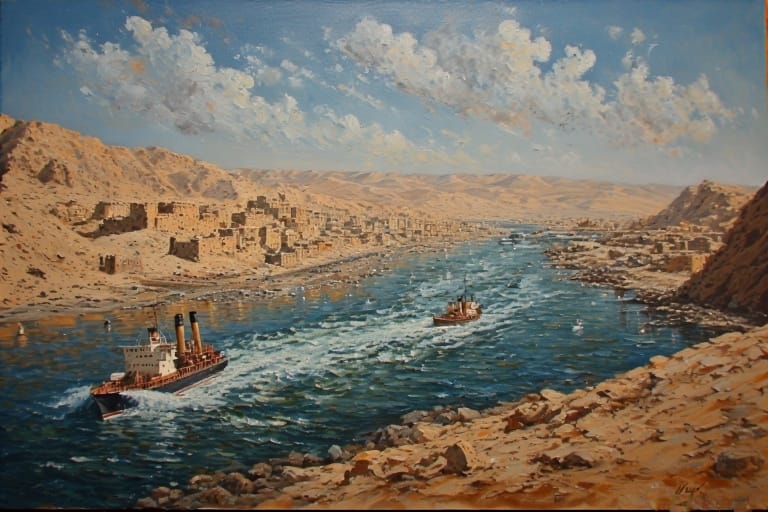
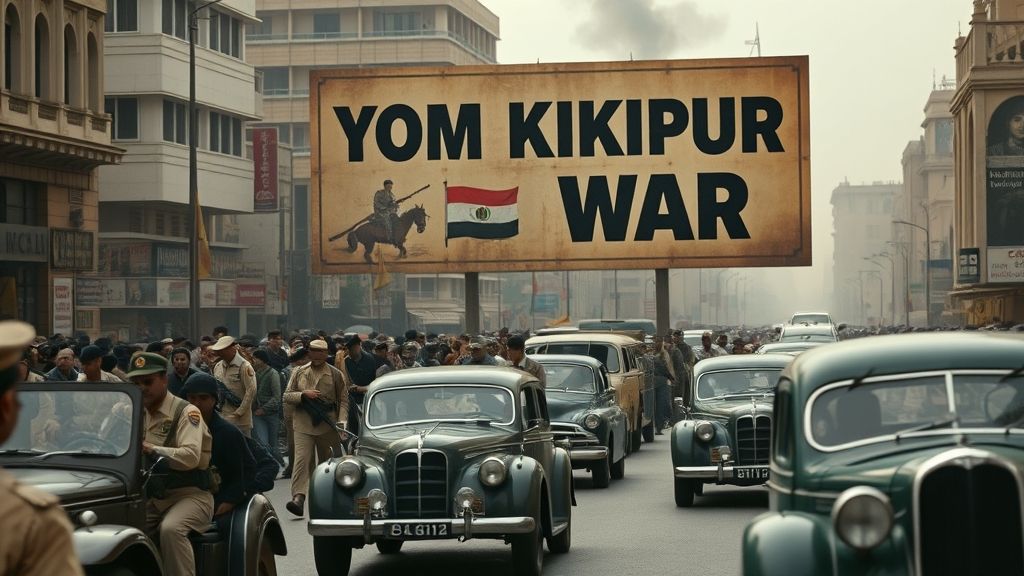
The sun rose over the eastern horizon of October 6, 1973, casting a golden light over the banks of the Suez Canal. Cairo was silent, contemplative, the city carrying its usual warmth in the autumn air. But beneath this serene facade lay a continent gripped by tension and wishful anticipation — the long-awaited moment that many had predicted but none truly expected to unleash was at hand. As millions of Jews began observing Yom Kippur — the holiest day of the year, marked by fasting and prayer — a surprise strike would shatter the calm. Thus began one of the most dramatic and consequential conflicts of the 20th century: the Yom Kippur War.
The Dawn of October 6, 1973: Endless Vigil on the Suez
The early morning hours in Egypt and Syria were electric with suppressed excitement and anxiety. Across the borders, soldiers prepared in uneasy silence, weapons ready, hearts pounding. On the Israeli side, many were caught off guard, their confidence seduced by years of military dominance since the Six-Day War in 1967. The ancient lands between the Red Sea and the Mediterranean were about to once again bear witness to profound violence, raw courage, and heartbreaking losses. But for the soldiers stationed on the front lines, it was not history in the making — it was a struggle for survival.
The Fragile Calm Before the Storm: Middle East Tensions in Early 1973
To understand the eruption of war in 1973, one must travel back through a decade of mounting animosity, broken promises, and fragile ceasefires that barely masked the deep wounds inflicted during the 1967 Six-Day War. After Israel’s rapid and decisive victory that year, it occupied territories it had never controlled before — the Sinai Peninsula from Egypt, the Golan Heights from Syria, and the West Bank and Gaza Strip. These losses stung deeply in the Arab world, feeding a narrative of humiliation and a burning desire to reclaim lost honor.
Egyptian President Anwar Sadat had inherited a nation bristling with resentment but also wearied by years of stalemate following the 1967 disaster. Determined to restore Egypt’s sovereignty and global standing, Sadat began an ambitious military buildup and sought allies to challenge Israel’s supposed invincibility. Syria, crushed by the loss of the Golan Heights, found common cause, despite complex inter-Arab rivalries. The Soviet Union, aligned with many Arab states, supplied weapons and training, while the United States increasingly backed Israel, embedding the conflict within Cold War rivalries.
Egypt and Syria’s Gamble: Planning the Surprise Offensive
The decision to wage war after years of stalemate was not undertaken lightly. It culminated in painstaking planning, months of preparation, and a risky promise to catch Israel unprepared. Egypt’s General Mohamed Abdel Ghani el-Gamasy and Chief of Staff Saad el-Shazly plotted a daring crossing of the Suez Canal — a natural and formidable barrier — using new tactics and innovations designed specifically to dismantle the Israeli defensive line known as the Bar Lev Line.
Meanwhile, Syrian forces focused on a renewed push to retake the Golan Heights, fortified with advanced Soviet tanks and artillery. The two fronts would be coordinated simultaneously — a strategy designed to divide and strain Israeli military responses. The stakes were enormous: reclaiming lost territories and stamping an indelible mark on national pride.
The Israeli Mindset: Confidence and Complacency
Israel had built an aura of military invincibility following its stunning victory six years earlier. The Israeli Defense Forces (IDF) were widely regarded as the most battle-hardened and capable army in the Middle East. This conviction bred a sense of complacency on all sides of the command. Intelligence warnings were often underestimated or dismissed, partly because the scale and timing of an Arab offensive seemed improbable, especially on Yom Kippur, when many soldiers were observing the fast and prayer.
The political leadership, including Prime Minister Golda Meir and Defense Minister Moshe Dayan, were caught in a difficult calculus — balancing alertness with the risk of escalating tensions prematurely. It was a gamble that would come at a steep price.
The Yom Kippur Holiday and the Moment of Truth
In the quietude of Synagogues across Israel and Jewish communities worldwide, worshipers mourned and reflected. But unbeknownst to many, Egyptian and Syrian forces launched their attacks in the pre-dawn darkness of October 6. Massive artillery barrages signaled the beginning of a brutal fight for survival, hope, and redemption.
On the Sinai front, Egyptian sappers crossed the canal using inflatable bridges under withering fire. On the Golan Heights, Syrian troops launched a massive armored assault, penetrating Israeli defenses. The surprise was overwhelming — a stunning reminder that even the best-laid plans can be undone by unforeseen determination.
The First Blows: Crossing the Suez Canal and the Golan Heights Assault
Egypt’s crossing of the Suez was a military feat remembered for its audacity and innovation. The sturdy Bar Lev Line, which many believed impenetrable, was shattered within hours. Egyptian troops deployed water pumps to erode sand ramparts and then poured across in waves of infantry and armor. Israeli forces, initially stunned, scrambled to contain the breach.
Simultaneously, in the Golan Heights, Syrian armor rolled downhill like a thunderstorm, threatening to overrun the thin Israeli defenses. The rugged terrain favored defenders, but the overwhelming numbers on the Syrian side forced brutal close-combat battles. For days, the fate of this strategically vital plateau remained uncertain, with both sides paying a heavy price.
The Shock of the Israeli Defense Forces
For the Israeli public and command structure, the timing and intensity of the initial attacks were a bitter shock. The IDF was stretched thin—many reserves still hadn’t been fully mobilized. Lines faltered; communication broke down. The sense of urgency was palpable: failure to hold the defensive positions could open the gates to Tel Aviv and Jerusalem themselves.
Yet, Israel’s military culture of rapid mobilization and deep reserves slowly turned the tide. Weeks of frenetic and violent fighting, combined with reorganization and counterstrikes, would mark the transformation of the battle from disaster toward survival.
Air and Artillery: The Battle Evolves
The Yom Kippur War was as much a war of technology and airpower as of ground troops. Both sides utilized aircraft extensively, with the skies above Sinai and the Golan witnessing battles of their own. Israeli pilots, though initially overwhelmed, began to leverage their superior tactics and experience.
Artillery barrages were relentless, flattening villages and reshaping the desert landscape. Tanks clashed in open fields, metal snarling against metal, while infantry fought desperately in the shadows. The human cost was staggering; hospitals in Israel and Syria alike were overflowing with wounded, and the air was heavy with smoke and sorrow.
The Role of Intelligence and the Failure of Early Warning
A central question that haunted Israelis post-war was about how the surprise attack could have succeeded. Reports indicated multiple intelligence signals that were downplayed or ignored in the lead-up to the war. The concept of the "conceptzia" — Israel’s strategic assumption that Egypt would not wage war before achieving certain capabilities — proved disastrously wrong.
Intelligence failures, combined with psychological factors like wishful thinking and political pressures, created a perfect storm of unreadiness. Analysts remain divided on the extent to which this was negligence, strategic deception by Arab forces, or simply misinterpretation.
The Political Chessboard: Nixon, Kissinger, and Global Stakes
As fighting escalated, the Cold War superpowers swiftly moved to contain the broader conflict. The United States, led by President Richard Nixon and National Security Advisor Henry Kissinger, launched Operation Nickel Grass — a massive airlift delivering weapons and supplies to Israel, bolstering its capacity to resist.
The Soviet Union, in turn, supplied Arab states and warned of intervention. The world teetered perilously close to a superpower confrontation. Diplomacy intertwined desperately with battle strategy, culminating in tense United Nations debates and a race against time to avoid escalation.
War in the Sinai: The Struggle for the Canal Line
The Sinai Peninsula became the war’s central theater. After initial Egyptian gains, the Israeli counterattack, led by General Ariel Sharon, famously involved crossing the Suez Canal at a dangerous and unexpected point, encircling the Egyptian Third Army.
This maneuver reversed fortunes, trapping Egyptian forces and exposing weaknesses in Cairo’s strategy. Yet, the fight was brutal — both sides suffered huge casualties, and the desert itself was carved by blasted armor and scorched earth.
The Syrian Front: Clashes in the Golan Heights
While Sinai drew international focus, the battle for the Golan Heights was no less fierce. The Israeli counteroffensive eventually halted Syrian advances and then pushed to reclaim lost positions. Commanders showed remarkable adaptability, coordinating infantry, armor, and air support in increasingly complex operations.
The Golan battles were synonymous with the grit and grim determination of IDF troops, fighting in unforgiving mountainous terrain and winter cold.
The Turning Point: Israeli Counterattacks and the Encirclement of the Third Army
By late October 1973, the Israeli military momentum began shifting. The crossing of the Suez Canal into Egypt and the steadily regained ground in the Golan meant the initial Arab surprise was waning. However, the encirclement of the Egyptian Third Army threatened to ignite further escalation.
Diplomatic efforts intensified to impose a ceasefire before the conflict spun further out of control. Yet, military achievements on both sides complicated negotiations, as each sought the best terms possible before laying down arms.
Human Stories: Soldiers, Civilians, and the Cost of War
Amid strategy and geopolitics were countless personal tragedies and acts of heroism. Diaries reveal soldiers’ fears and hopes; letters home tell stories of fathers, sons, and brothers caught in brutal warfare. Civilians on both sides endured air raids, displacement, and the anxiety of an uncertain future.
One striking account is that of an Egyptian sapper who struggled across the canal amid machine-gun fire, or the Israeli nurse tirelessly tending the wounded despite exhaustion. The human dimension is the most enduring legacy of this conflict — a reminder of the cost of war beyond maps and treaties.
Ceasefire and Aftermath: From Armistice to Diplomatic Maneuvers
Finally, on October 25, 1973, a United Nations-brokered ceasefire took effect. The fighting stopped, but wounds remained fresh and deep. Subsequent months saw intense diplomatic efforts, culminating in historic peace negotiations, including the 1978 Camp David Accords.
The war’s end did not resolve all conflicts but set frameworks for dialogue and uneasy cessation of hostilities. Yet the memories of October remained raw, shaping political discourse for decades.
The Psychological Impact: Shock, Mourning, and Resilience in Israel and Its Neighbors
Israel faced a collective trauma. The initial shock shattered national pride and confidence. Public debates scrutinized leadership decisions and military readiness. Yet, resilience emerged — memorials were built, and heroes honored, weaving the war into the national consciousness.
In Egypt and Syria, victories in the early days fueled pride despite subsequent losses. Leaders leveraged the war to reinforce their positions and national unity. The psychological imprint shaped societies and their vision of security for generations.
The Oil Weapon: Arab States’ Response and the Global Economy
In a striking geopolitical twist, the Arab oil-producing states used their resources as leverage. The 1973 oil embargo targeted countries supporting Israel, precipitating an energy crisis and soaring prices worldwide. The conflict’s reverberations extended beyond battlefields, shaking global economies and highlighting the Middle East’s strategic importance.
Nations felt the ripples — lines at gas stations, inflation, and political debates — all tied back to the war that began quietly at dawn on Yom Kippur.
Political Repercussions in Egypt and Israel
In Israel, the bitter lessons led to political upheaval, including the resignation of Prime Minister Golda Meir and Defense Minister Moshe Dayan. The war exposed vulnerabilities and sparked debates over military doctrine and intelligence.
In Egypt, despite subsequent setbacks, Sadat’s gamble restored international legitimacy and paved the way for peace with Israel, a historic shift that reshaped regional politics irrevocably.
Legacy of the Yom Kippur War: Memory, Lessons, and the Road to Peace
More than a conflict, the Yom Kippur War remains a defining moment in Middle Eastern history. It underscored the dangers of miscalculation, the complexities of national pride, and the necessity of diplomacy. The war’s lessons echo in modern military doctrine, peace efforts, and cultural memory.
Anniversaries are celebrated and mourned alike, as a testament to how history shapes identity and future hopes.
Revisiting 1973: Historical Interpretations and Contested Narratives
To this day, historians debate the war’s causes and turning points. Israeli memoirs differ from Arab perspectives; Western and Soviet archives unveil new angles. The war’s narrative is never simple or settled — it is a prism through which one views rivalry, courage, failure, and survival.
Understanding these competing stories enriches the larger quest for peace and reconciliation.
Conclusion: The Enduring Echoes of a Sudden War
The Yom Kippur War began quietly in the stillness of a sacred day, only to erupt into one of the most intense and transformative conflicts of the modern era. Its legacy is woven into the fabric of Middle Eastern history, symbolizing both the destruction war brings and the occasional necessity of chance and change. Above all, it remains a humbling reminder of the human capacity to face existential trials and strive toward peace.
FAQs: Understanding the Yom Kippur War
Q1: What triggered the start of the Yom Kippur War?
The war was triggered by a coordinated surprise attack from Egypt and Syria on October 6, 1973, aimed at reclaiming territories lost in the 1967 Six-Day War, catching Israel off-guard during its holiest day, Yom Kippur.
Q2: Why was the war a surprise to Israel?
Despite some intelligence warnings, the Israeli leadership underestimated the likelihood of an attack during Yom Kippur due to overconfidence and the belief that Egypt and Syria were not ready militarily.
Q3: How did global powers influence the conflict?
The US and the Soviet Union were deeply involved, supplying their respective allies with weapons and political support, risking escalation amidst Cold War tensions. The US airlift of supplies was critical to Israeli defense.
Q4: What was the significance of the Suez Canal crossing?
Egypt’s successful crossing symbolized a strategic and psychological victory, breaking the Israeli Bar Lev Line and proving their military capability despite later being encircled by counterattacks.
Q5: What were the human costs of the war?
The war caused tens of thousands of casualties on both sides, including military and civilian victims, leaving deep scars and memories embedded in families and nations.
Q6: How did the war impact Israeli and Egyptian politics?
In Israel, the aftermath led to political change and military reforms. For Egypt, it enhanced Sadat’s prestige and paved the way for eventual peace negotiations with Israel.
Q7: Why is the war still relevant today?
It offers enduring lessons about intelligence failures, military preparedness, diplomacy, and the complex quest for peace in the Middle East, influencing current policies and historical memory.
Q8: What were the long-term economic effects of the war?
The Arab oil embargo, in response to Western support for Israel, triggered a global energy crisis, raising oil prices worldwide and showing the interconnectedness of regional conflicts and global markets.