Table of Contents
- A Turning Point in the Sahara: The Madrid Accords Signed
- Colonial Shadows and Rising Tensions
- Spain’s Waning Empire and the Question of Western Sahara
- The Rise of Moroccan and Mauritanian Claims
- The Emergence of the Polisario Front and Sahrawi Aspirations
- The Geopolitical Chessboard of 1970s North Africa
- The Madrid Conference: Behind Closed Doors
- November 14, 1975: The Signing in Madrid
- Dissecting the Accords: Territories, Powers, and Promises
- The Exclusion of the Sahrawi Voice
- The Immediate Fallout: Political Turmoil and Military Moves
- The Green March: Morocco’s Show of Force and Nationalism
- Spain’s Final Withdrawal and the Vacuum Left Behind
- The Spark of an Armed Struggle: Polisario versus Morocco and Mauritania
- International Responses: Cold War Intrigues and UN Resolutions
- Human Consequences: Displacement and Refugee Crises
- The Long Shadow: Western Sahara in International Law and Politics
- The Madrid Accords’ Impact on Sahrawi Identity and Resistance
- The Persistence of a Frozen Conflict: Decades of Stalemate
- Lessons from Madrid: The Challenges of Decolonization and Self-Determination
- Conclusion
- FAQs
- External Resource
- Internal Link
1. A Turning Point in the Sahara: The Madrid Accords Signed
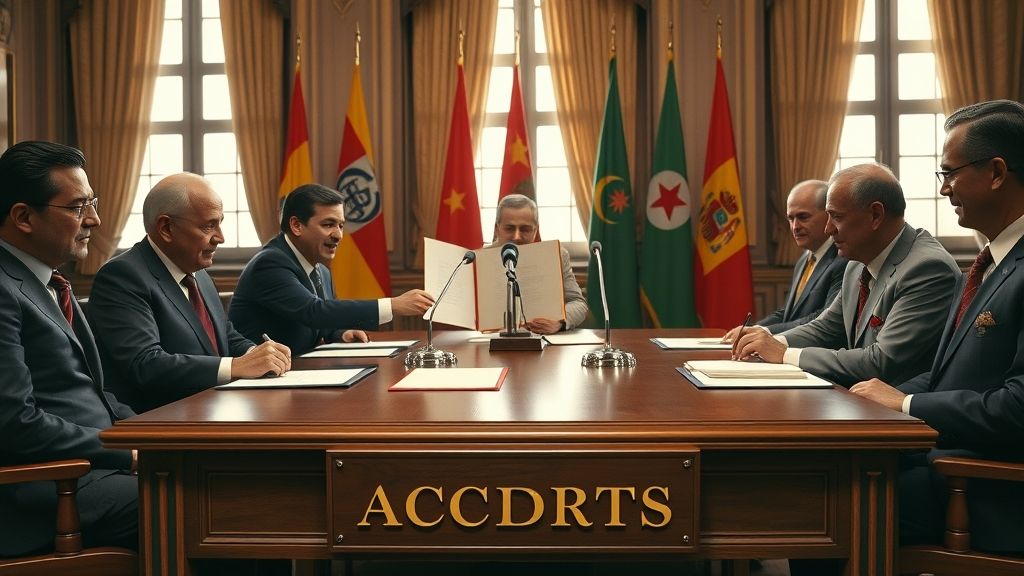
On a chilly November day in 1975, the atmosphere inside the Spanish Foreign Ministry in Madrid was thick with tension and veiled ambitions. Beneath the ornate ceilings of a city accustomed to the rise and fall of empires, three nations—Spain, Morocco, and Mauritania—finalized a secret agreement that would echo across decades and deserts. This was no ordinary treaty; it was the Madrid Accords, a pact that would redraw the maps, reshape lives, and ignite a protracted conflict over the windswept sands of Western Sahara.
The moment seemed both momentous and furtive. Delegates sat across polished mahogany tables, signatures inked under the scrutiny of diplomats and shadowy military advisors. Yet, absent from that room were the indigenous Sahrawi people whose fate was being decided without their presence or consent.
As the ink dried, a new chapter in the struggle for Western Sahara had begun—one tangled with colonial legacy, nationalist fervor, and Cold War politics. But above all, it was a story about identity, justice, and resilience.
2. Colonial Shadows and Rising Tensions
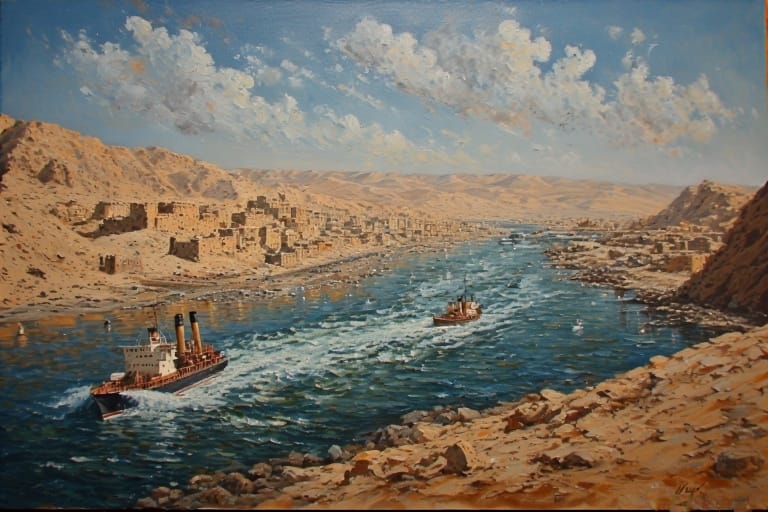
To appreciate the gravity of the Madrid Accords, one must first understand the colonial backdrop from which this crisis emerged. Western Sahara, a vast arid expanse along the northwest coast of Africa, had been under Spanish control since the late 19th century. Known as Spanish Sahara, the territory was one of the last remnants of European colonialism in Africa by the 1970s.
But colonial claims were just the surface of a more complex reality. The Sahrawi people, nomadic and fiercely independent, had long resisted foreign domination—be it from Moroccan sultans, French colonialists in neighboring Mauritania, or the Spaniards themselves. Their identity was forged by the desert’s harshness and a deeply rooted sense of community and autonomy.
By the early 1970s, winds of change swept across Africa. Decolonization was reshaping the continent’s political map. Yet, Spain showed reluctance to relinquish its Saharan territory, seeing it as economically valuable and strategically important. At the same time, Morocco and Mauritania were watching closely, each motivated by a mix of historical claims and nationalist aspirations.
3. Spain’s Waning Empire and the Question of Western Sahara
The 1970s found Spain at a crossroads. The dictatorship of Francisco Franco was nearing its end, and the country was grappling with internal unrest and external pressures. Internationally, the United Nations was pressing Spain to end its colonial rule in Western Sahara and facilitate a process of self-determination for the Sahrawis.
Yet, Franco’s regime was not ready to simply hand over the territory. Economic interests—phosphates in Bou Craa, rich fishing waters, and potential mineral resources—made Spanish Sahara a prize worth contesting. Domestically, losing the territory was seen as a blow to national pride amid fears of destabilization.
However, Spain’s grip was loosening. By 1975, Spain was caught between international condemnation, nationalist movements from Morocco and Mauritania, and the burgeoning Sahrawi independence movement, the Polisario Front, founded in 1973 and quickly gaining support.
4. The Rise of Moroccan and Mauritanian Claims
Morocco’s claim to Western Sahara was rooted in historical assertions that the territory formed part of the ancient Moroccan sultanate before European intervention. King Hassan II saw reclaiming Western Sahara as a unifying nationalist cause, a means to consolidate legitimacy and assert Morocco’s place in post-colonial Africa.
Mauritania, a newly independent nation since 1960, asserted its own claim based on ethnic and tribal affiliations, particularly with Sahrawi tribes in the southern part of the territory. Though less populous and economically powerful than Morocco, Mauritania sought to expand its influence and secure its borders.
Both nations presented their claims on the international stage, capitalizing on Spain’s hesitation and the broader context of Cold War rivalries, where Western and Eastern blocs watched Africa for strategic allies and resources.
5. The Emergence of the Polisario Front and Sahrawi Aspirations
Amid competing claims from Morocco, Mauritania, and Spain, a new actor was rapidly gaining prominence: the Polisario Front (Frente Popular de Liberación de Saguía el Hamra y Río de Oro).
Founded by a group of Sahrawi activists led by Mohamed Abdelaziz, the Polisario Front represented the aspirations of the Sahrawi people for genuine independence—a break from colonial and regional subjugation. Their call was clear: self-determination and sovereignty, as envisaged within the UN framework.
The movement combined nationalist fervor with grassroots mobilization. Yet their resources were limited, and the geopolitical currents seemed stacked against them. As Spain prepared for an exit strategy, the Polisario faced imminent marginalization.
6. The Geopolitical Chessboard of 1970s North Africa
The Western Sahara issue did not unfold in isolation. The broader geopolitical context shaped decisions in Madrid in 1975.
The Cold War loomed large: the US and allies monitored developments carefully, wary of Soviet influence expanding in Africa through liberation movements, including the Polisario, rumored to receive material support from Algeria and Soviet proxies.
Algeria, key regional border nation, staunchly supported the Polisario, viewing Moroccan and Mauritanian territorial ambitions as a threat to regional stability. The rivalry between Algeria and Morocco thus intensified, turning Western Sahara into a proxy battleground.
Spain found itself squeezed, losing relevance, under pressure from Western allies to decolonize responsibly while balancing nationalist claims from Morocco and Mauritania.
7. The Madrid Conference: Behind Closed Doors
By November 1975, a resolution seemed urgently needed. In broad daylight, the Madrid Conference promised multilateral talks to find a peaceful solution. Yet behind closed doors, the stakes were high, and transparency was limited.
Spain, Morocco, and Mauritania entered negotiations with divergent but overlapping ambitions. Spain sought to exit without igniting conflict or loss of face. Morocco and Mauritania aimed to partition the territory, dividing control to expand their influence.
Notably absent: any formal representation of the Sahrawi people or the Polisario Front. The exclusion sowed the seeds for future unrest.
8. November 14, 1975: The Signing in Madrid
On November 14, the Madrid Accords were signed. The agreement stipulated the transfer of administrative control over Western Sahara from Spain to Morocco and Mauritania, with Spain agreeing to withdraw.
The deal carved up the territory: Morocco would take the northern two-thirds, Mauritania the southern third. The agreement also included clandestine provisions regarding military cooperation and resource exploitation.
Spain’s signature symbolized the end of its colonial chapter, but the terms revealed a pragmatic, if flawed, attempt to manage decolonization by appeasing regional powers.
9. Dissecting the Accords: Territories, Powers, and Promises
At first glance, the Madrid Accords seemed a neat partition, but beneath the lines on the map were complex realities.
The division ignored tribal boundaries, ecological zones, and most critically, the political will of the Sahrawi people. The accords effectively legitimized foreign claims without addressing self-determination.
Spain retained control over certain installations temporarily but posed no real obstacle to Moroccan and Mauritanian influence. Morocco quickly moved to enforce its territorial claims, emboldened by the treaty.
10. The Exclusion of the Sahrawi Voice
One of the most glaring features of the Madrid Accords was the absence of the Sahrawi people themselves in negotiations. The Polisario Front was neither invited nor consulted, a marginalization that would prove disastrous.
This exclusion fostered bitterness and distrust. The accords were perceived as a betrayal by many Sahrawis who had hoped for real independence, not division under foreign rule.
This sidelining exemplified a broader pattern of colonial-era powers deciding territories without local participation, sowing the seeds of long-term conflict.
11. The Immediate Fallout: Political Turmoil and Military Moves
Spain’s withdrawal created a power vacuum. Moroccan and Mauritanian forces began to assert control, met immediately with resistance from the Polisario Front, which declared the Sahrawi Arab Democratic Republic (SADR) in exile.
The ensuing confrontation escalated rapidly. Skirmishes turned into full-fledged guerrilla warfare, destabilizing the region.
Meanwhile, internally, Morocco faced opposition and court challenges, and Mauritania grappled with the complexities of governing part of the harsh desert terrain.
12. The Green March: Morocco’s Show of Force and Nationalism
Just days after the signing, Morocco organized the famous Green March, where some 350,000 unarmed Moroccan civilians advanced into Western Sahara to assert claims peacefully but assertively.
It was a brilliant display of nationalist zeal, designed to pressure Spain and the international community. King Hassan II framed it as a “march of dignity,” a unifying moment for Moroccans.
Yet, this mass mobilization inflamed tensions, hardening stances among Sahrawi groups and the Polisario, and signaled Morocco’s uncompromising position.
13. Spain’s Final Withdrawal and the Vacuum Left Behind
By February 1976, Spain had completed its military withdrawal. The empire’s flag lowered for the last time over Western Sahara, ending an era but triggering a new phase of turmoil.
Spain attempted to maintain nominal control over certain areas but was effectively out of the picture, leaving Morocco and Mauritania to manage contested lands and populations.
Spain’s exit was viewed by Sahrawis as abandonment, a last colonial act that denied them their right to decide their future peacefully.
14. The Spark of an Armed Struggle: Polisario versus Morocco and Mauritania
The Madrid Accords failed to pacify the region. The Polisario Front intensified guerrilla tactics, effectively challenging Moroccan and Mauritanian forces through hit-and-run attacks and control of desert areas.
Mauritania, weakened politically and militarily, eventually withdrew from its portion in 1979 after sustained Polisario pressure.
Morocco, however, escalated its military investment, turning Western Sahara into a contentious war zone, building the famous berm—a sand wall—to control rebel movement.
15. International Responses: Cold War Intrigues and UN Resolutions
The global community watched with mixed responses. The United Nations consistently affirmed Sahrawi rights to self-determination and called for referenda.
However, Cold War rivalries complicated interventions. Algeria's support for the Polisario added a proxy dimension, while Western powers were cautious not to alienate Morocco.
The International Court of Justice issued an advisory opinion in 1975 finding no sovereign ties strong enough to trump Sahrawi self-determination, a legal nuance overlooked in Madrid.
16. Human Consequences: Displacement and Refugee Crises
Beyond maps and treaties, the human toll was immense. Thousands of Sahrawis fled the conflict, seeking refuge primarily in Algerian camps near Tindouf.
Families were separated, traditional nomadic lifestyles disrupted, and generations grew up exiled, fostering a deep sense of loss and yearning for homeland.
Camps became centers of political organization but also of hardship, reliant on international aid.
17. The Long Shadow: Western Sahara in International Law and Politics
Decades later, Western Sahara remains the world’s “last colony,” a disputed territory with unresolved status, recognized by many states as occupied by Morocco.
The Madrid Accords live on as a controversial historical pivot—condemned by Sahrawi nationalists, scrutinized by international legal scholars.
The conflict challenges concepts of sovereignty, decolonization, and self-determination in the late 20th and early 21st centuries.
18. The Madrid Accords’ Impact on Sahrawi Identity and Resistance
Far from extinguishing Sahrawi nationalism, the accords galvanized a stronger sense of identity.
The Sahrawi have forged a distinctive political and cultural identity through resistance, exile, and community solidarity.
Art, poetry, and political activism emerged from the diaspora, keeping the spirit of independence alive despite adversity.
19. The Persistence of a Frozen Conflict: Decades of Stalemate
More than 40 years later, conflicts flare intermittently, but peace remains elusive. Ceasefires, brokered by the UN, have held tenuously, yet political solutions remain stalled.
Western Sahara continues to symbolize the complexities of post-colonial legacies, nationalism, and international diplomacy.
20. Lessons from Madrid: The Challenges of Decolonization and Self-Determination
The story of the Madrid Accords teaches us about the fragile balance between power politics and human rights.
It reminds historians, policymakers, and citizens alike that negotiated settlements without inclusive participation sow seeds of future conflict.
The accords embody the painful realities facing many post-colonial states, where borders are drawn not always by those who live on the land.
Conclusion
The Madrid Accords of November 14, 1975, stand as a dramatic testament to the complexities of decolonization, nationalism, and international diplomacy in a world caught between empires and ideologies. What was meant to be a peaceful transfer of power morphed into a protracted struggle for identity, sovereignty, and justice for the Sahrawi people.
This pivotal moment, penned far from the deserts it governed, forever altered the lives of thousands, shaping narratives of resistance and survival amidst political machinations. The echoes of Madrid continue to resonate today, urging us to remember that history is never just about lines on maps, but about people, their dreams, losses, and unyielding hopes.
FAQs
Q1: What were the Madrid Accords, and why were they significant?
The Madrid Accords were a 1975 agreement transferring administrative control of Western Sahara from Spain to Morocco and Mauritania, effectively ending Spanish colonial rule but excluding Sahrawi participation. This set the stage for continuing conflict over the territory.
Q2: Why was Spain withdrawing from Western Sahara in 1975?
Spain was under internal and international pressure to decolonize amid economic difficulties and the impending death of Franco. Maintaining the territory was untenable, prompting a negotiated exit.
Q3: Who are the main actors involved in the Western Sahara conflict originating from these accords?
The key players include Spain (former colonial power), Morocco and Mauritania (claimant states), the Sahrawi Polisario Front (independence movement), and regional actors like Algeria.
Q4: How did the local Sahrawi population react to the Madrid Accords?
They largely rejected the accords, feeling betrayed and excluded, which led to increased support for the Polisario Front’s struggle for independence.
Q5: What is the legacy of the Madrid Accords in international law?
Internationally, the accords are criticized for ignoring Sahrawi self-determination. The UN and International Court of Justice emphasize the Sahrawis’ right to a referendum, which remains unfulfilled.
Q6: What role did the Green March play following the accords?
The Green March was Morocco’s mass civilian march into Western Sahara to assert sovereignty, heightening tensions and solidifying Morocco’s territorial claims.
Q7: Why did Mauritania withdraw from Western Sahara?
Mauritania faced ongoing Polisario attacks, economic strain, and political instability, leading to their 1979 withdrawal and renunciation of claims.
Q8: Why does the conflict over Western Sahara persist today?
Unresolved sovereignty issues, Moroccan occupation, Sahrawi demands for independence, and complex regional politics perpetuate the conflict, despite ongoing UN-led efforts.