Table of Contents
- The Dawn of Resistance: Soweto, June 16, 1976
- South Africa under Apartheid: A Nation Divided
- The Seeds of Dissent: Educational Policies and Afrikaans Medium
- The Youth as Vanguard: Students Rise in Defiance
- The Spark Ignites: The March Begins
- A Day of Shadows: The Police Open Fire
- Chaos and Courage: Soweto’s Streets in Turmoil
- The Media and Global Echoes: From Local to Worldwide Outcry
- The Martyrs of June 16: Remembering Those Lost
- The Apartheid Regime’s Response: Repression and Retaliation
- The Uprising Spreads: Soweto as a Catalyst for National Revolt
- Beyond Soweto: The International Anti-Apartheid Movement Gains Momentum
- The Psychological Impact: Trauma and Resilience in a Fractured Society
- The Role of Youth Leadership: Figures of Change and Defiance
- Legacy in Stone and Memory: Commemorations and Historical Narratives
- Soweto’s Enduring Symbolism in Post-Apartheid South Africa
- Lessons from the Uprising: Education, Language, and Power
- The Struggle Continues: Soweto’s Place in Contemporary South African Identity
- Conclusion: Courage, Memory, and the Quest for Justice
- FAQs: Understanding the Soweto Uprising
- External Resource
- Internal Link
1. The Dawn of Resistance: Soweto, June 16, 1976
The first light of dawn seeped reluctantly over Soweto’s ramshackle rooftops on June 16, 1976. The usual hum of a township waking was pierced by the sharp voices of thousands of young students, their footsteps gathering in a resolute march that would etch itself into the annals of history. These were not children playing in the dirt; they were young South Africans, resolute and terrified in equal measure, walking toward a confrontation that would expose the raw brutality of apartheid and ignite a fire beneath the surface of a nation welded by resentment and repression.
The air was thick—heavy with the scent of dust, sweat, and a simmering rage. Mothers stayed inside, clutching their belongings, eyes wide with the dread of what they knew might come. The students, the vanguard of Soweto’s rebellion, did not march to celebrate, but to resist. They were armed only with determination and a simple yet profound demand: freedom to learn in their own language, freedom to breathe beyond the suffocating clutch of apartheid.
June 16 was no ordinary day. It became a day of reckoning, a loud declaration that the youth of South Africa would no longer be silenced, and that the violent machinery of apartheid, no matter how well-oiled, could be challenged.
2. South Africa under Apartheid: A Nation Divided
To understand the Soweto Uprising, one must first grasp the enormity of the apartheid regime that choked South African society. Apartheid—a system of institutionalized racial segregation and oppression—had been systematically engineered since 1948 by the National Party government to enforce white supremacy. Black South Africans, comprising the majority of the population, were relegated to second-class status, stripped of political rights and human dignity through a labyrinth of laws regulating land, education, movement, and employment.
By the mid-1970s, the cracks in apartheid were deepening, though the government remained defiant. The Bantustan policy attempted to fragment black South Africa, pushing communities into homelands to ‘separate’ races physically and politically. Soweto—short for South Western Townships—was a sprawling, overcrowded urban area where millions of black South Africans lived, beyond the city limits of Johannesburg but geographically inseparable from its economic life.
Economic exploitation and social marginalization converged in Soweto’s dusty streets. Residents labored in mines and factories under grueling conditions, their children brought up in a system designed to restrict advancement. Education was a central battleground because it determined the future, anchored in a policy meant to limit black South Africans to menial jobs.
3. The Seeds of Dissent: Educational Policies and Afrikaans Medium
In this crucible of injustice, the South African government introduced a new requirement: black South African students had to be taught in Afrikaans—the language of their oppressors. This was not a mere policy change; it was a deliberate act of linguistic domination. Afrikaans was the tongue of the apartheid regime’s architects and security police, viewed by many black South Africans as the language of repression.
The decree enraged students and teachers alike. Schools were underfunded and overcrowded; educators struggled to maintain dignity amidst crumbling classrooms and scarce resources. The forced imposition of Afrikaans as a medium of instruction was seen as an attempt to silence intellectual growth and political awareness among black youth.
The situation became a tinderbox, and the youth of Soweto became its sparks.
4. The Youth as Vanguard: Students Rise in Defiance
The youth were no longer willing to accept passivity. Student organizations, such as the South African Students Movement (SASM), had been simmering with ideas of resistance and empowerment. They saw education as a battleground for liberation and recognized that apartheid’s control over language was a tool of intellectual subjugation.
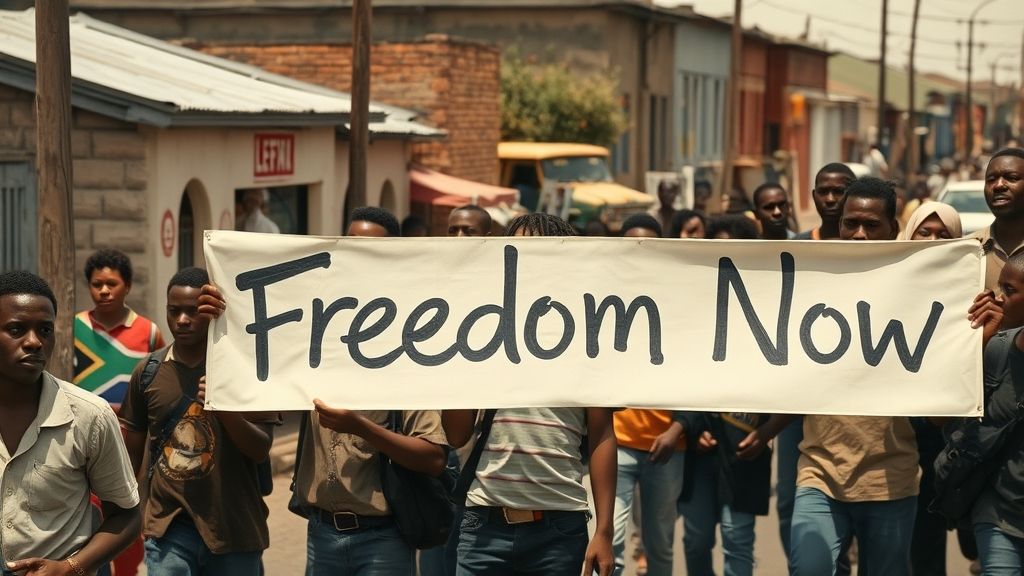
On the morning of June 16, thousands of students from several Soweto schools assembled in defiance. They organized a peaceful march to protest the Afrikaans Medium Decree, a demonstration designed to assert their rights and challenge apartheid’s suffocating grip.
The participants were young—some barely teenagers—yet their resolve was steel. They carried placards with slogans like “Down with Afrikaans” and “Free our minds.” Their mothers and fathers watched anxiously as they stepped off, marching not just for themselves, but for the future of generations to come.
5. The Spark Ignites: The March Begins
The march started quietly, almost optimistically. The students walked in disciplined ranks, their voices rising in song and chant. The streets filled with energy and hope, a growing momentum that seemed to promise change.
But the government was watching, and it saw a threat. Police units were deployed, their tactics anticipating confrontation. When the first line of students reached Orlando West, the mood shifted palpably.
Suddenly, the police ordered the crowd to disperse. Tensions escalated. The standoff intensified, and then, without warning, the police fired tear gas to break the march.
The students scattered, but as fear and confusion took root, the authorities escalated their response further.
6. A Day of Shadows: The Police Open Fire
What followed was a tragedy that seared itself into the collective memory of South Africa and the world. The police, armed with rifles and brutality, began shooting live ammunition directly into the crowd of unarmed children and teenagers.
One shot, then hundreds. Panic exploded as students fell, cries for help ringing through the streets. It is estimated that between 176 and 700 people were killed during the uprising (official numbers remain contested), many of them young students. Thousands more were injured.
The sight of young bodies riddled with bullets horrified observers worldwide. Images of the 12-year-old Hector Pieterson, carried in unconsciousness and whose death was captured by photojournalist Sam Nzima, became emblematic of the relentless violence of apartheid.
7. Chaos and Courage: Soweto’s Streets in Turmoil
Despite the bloodshed, the uprising did not die. Rather, it erupted into days of unrest, with Soweto’s streets roiling with anger and grief. Fires raged, windows shattered, and clashes with police became daily occurrences.
The people of Soweto, young and old, demonstrated a courage born of desperation and hope. Mothers shielded children, teachers acted as marshals, and community members tended wounds with whatever they had.
This was no spontaneous riot; it was a popular uprising fueled by years of systemic denial and humiliation.
8. The Media and Global Echoes: From Local to Worldwide Outcry
Information was tightly controlled by the apartheid government, but foreign reporters and activists ensured the images and stories of Soweto’s pain spread rapidly. International media coverage brought the brutal realities of apartheid into the homes of people around the world.
This media exposure incited global condemnation. Governments, civic groups, and human rights organizations renewed calls to isolate and sanction South Africa.
The Soweto Uprising transformed from a local protest into a global symbol of resistance—a rallying cry against racial injustice.
9. The Martyrs of June 16: Remembering Those Lost
Among the countless victims, some names stand out and haunt history. Hector Pieterson’s death became the face of sacrifice. His image, immortalized in the photograph by Sam Nzima, showed a lifeless boy in the arms of a fellow student, stirring empathy and outrage internationally.
Other young heroes like Tsietsi Mashinini, a student leader and eloquent voice of the youth, embodied the spirit of resistance.
The memory of the martyrs lives on, not just in monuments but in the consciousness of a nation that refuses to forget their price paid for freedom.
10. The Apartheid Regime’s Response: Repression and Retaliation
Instead of calming the unrest, the government intensified repression. Emergency laws were tightened, arrests of leaders surged, and brutal crackdowns continued for months. The violence extended beyond Soweto as the uprising inspired rebellion nationwide.
Apartheid’s security apparatus wielded detentions without trial, torture, and censorship to crush dissent.
Yet each act of repression sowed further resistance, revealing the regime’s fragility and violence-driven insecurity.
11. The Uprising Spreads: Soweto as a Catalyst for National Revolt
What began as a protest sparked by education policy rapidly expanded into a broad-based struggle encompassing demands for political rights, economic equality, and social justice.
Communities across South Africa erupted in solidarity, with protests, strikes, and defiance challenging apartheid in every corner.
Soweto became the epicenter of a revolution in consciousness, where youth leadership and community resilience reshaped the anti-apartheid movement.
12. Beyond Soweto: The International Anti-Apartheid Movement Gains Momentum
Internationally, the Soweto Uprising galvanized anti-apartheid activists and organizations. Campaigns for divestment from South Africa intensified, and cultural boycotts grew.
Solidarity movements in Europe, the United States, and beyond kept the spotlight on apartheid’s atrocities, helping to erode the regime’s economic and political support.
The world, confronted with the images of children under fire, became more determined to act.
13. The Psychological Impact: Trauma and Resilience in a Fractured Society
The trauma inflicted by the uprising was profound. Families mourned children lost, many of whom were future leaders cut down. Survivors carried scars of violence, both physical and psychological.
Yet amidst despair was resilience. Soweto’s community nurtured hope, rebuilding schools, organizing memorials, and cultivating new generations dedicated to justice.
The uprising changed minds and hearts, forging a collective identity intertwined with pain and pride.
14. The Role of Youth Leadership: Figures of Change and Defiance
Central to the uprising’s story are the figures who organized, inspired, and led. Tsietsi Mashinini, charismatic and thoughtful, became a beacon for the students’ cause. His speeches implored unity and non-violence, even as the struggle intensified.
Youth organizations like SASM and the Black Consciousness Movement shaped ideology and tactics, injecting a radical vision for a non-racial future.
Their courage offered a blueprint for subsequent generations challenging oppression.
15. Legacy in Stone and Memory: Commemorations and Historical Narratives
Soweto’s rebellion is etched into South Africa’s landscape and consciousness. The Hector Pieterson Museum in Orlando West stands as a solemn memorial, inviting reflection and education.
June 16 is now commemorated annually as Youth Day, a national holiday honoring the bravery and sacrifices of the student protesters.
Memory work continues, as South Africans seek to confront their past and forge unity.
16. Soweto’s Enduring Symbolism in Post-Apartheid South Africa
In democratic South Africa, Soweto is both a physical place and a metaphor for resistance and renewal. The uprising continues to shape political discourse and identity.
It serves as a reminder of the costs of freedom and challenges contemporary South Africans to engage with their history honestly.
Soweto, once a symbol of oppression, now pulses with vibrant culture and hope, a testament to the enduring spirit of its people.
17. Lessons from the Uprising: Education, Language, and Power
The Soweto Uprising underscored education’s central role in both oppression and liberation. It demonstrated how language policies are deeply political, capable of either alienating or empowering.
The legacy urges continual vigilance about who controls knowledge and how histories are told.
It reminds us education can be a weapon or a shield in the struggle for human rights.
18. The Struggle Continues: Soweto’s Place in Contemporary South African Identity
While apartheid has ended, many legacies of inequality persist in South Africa’s educational and social systems.
Soweto remains a potent symbol in ongoing debates about economic justice, racial reconciliation, and youth empowerment.
Its story continues to inspire activists committed to creating a fairer society, grounded in dignity and hope.
19. Conclusion: Courage, Memory, and the Quest for Justice
The Soweto Uprising was not merely a protest— it was a profound assertion of humanity by those who had long been denied it. Faced with brutal repression, young South Africans refused to be silenced.
Their courage carved a pathway toward a more just and inclusive society, their sacrifice a reminder of the cost of freedom.
As the world reflects on this pivotal moment, Soweto stands as a testament to the resilience of the human spirit, and the enduring power of youth to challenge injustice and change history.
20. FAQs: Understanding the Soweto Uprising
Q1: What triggered the Soweto Uprising in 1976?
A1: The immediate trigger was the South African government’s policy mandating Afrikaans as a medium of instruction in black schools, which students opposed as a symbol of oppression.
Q2: Why was language such a significant issue in the uprising?
A2: Language was tied to identity and power; teaching in Afrikaans—a language associated with the apartheid regime—was seen as a tool to suppress black South Africans’ intellectual and political growth.
Q3: Who was Hector Pieterson, and why is he important?
A3: Hector Pieterson was a 12-year-old student shot and killed during the early protests. His death became an iconic symbol of the uprising, immortalized in a famous photograph.
Q4: How did the apartheid government respond to the uprising?
A4: The government responded with violent repression, including police shootings, arrests, and increased security measures aimed at crushing resistance.
Q5: What was the international reaction to the Soweto Uprising?
A5: Global outrage led to increased anti-apartheid activism, sanctions, and diplomatic pressure on South Africa to end its racial policies.
Q6: What is the legacy of the Soweto Uprising today?
A6: The uprising is commemorated annually as Youth Day in South Africa and remains a powerful symbol of resistance, youth activism, and the struggle for freedom.
Q7: How did the uprising influence the broader anti-apartheid movement?
A7: It energized nationwide protests, elevated youth leadership, and led to greater international solidarity against apartheid.
Q8: Are there memorials or museums dedicated to the uprising?
A8: Yes, notably the Hector Pieterson Museum in Soweto, which educates visitors about the events and legacy of June 16, 1976.