Table of Contents
- The Quiet Calm Before the Storm: Washington, September 1978
- A World on Edge: The Middle East in the 1970s
- The Leaders at the Table: Carter, Sadat, and Begin
- Paths That Crossed: Egypt and Israel Before Camp David
- A Meeting of Minds or a Clash of Titans? The Opening Days at Camp David
- The Weight of History: Emotional Highs and Political Pressures
- Behind Closed Doors: Negotiation Tactics and Breakthroughs
- The Role of the United States: Carter’s Vision and Diplomacy
- The Camp David Encampment: Isolation and Intensity
- The Breakthrough Agreement: Content and Controversies
- The Agreement’s Immediate Reception: Hope and Skepticism
- Ripples Across the Region: Arab World Reactions
- The Aftermath for Egypt and Israel: A New Diplomatic Dance
- The Role of the United Nations and Global Powers
- The Legacy of Camp David: Peace, Pain, and Precedent
- Revisiting Camp David: How History Remembers the Accords
- Lessons in Peace Negotiation: What Camp David Taught the World
- Conclusion: The Unfolding Journey from Conflict to Coexistence
- FAQs
- External Resource
- Internal Link
1. The Quiet Calm Before the Storm: Washington, September 1978
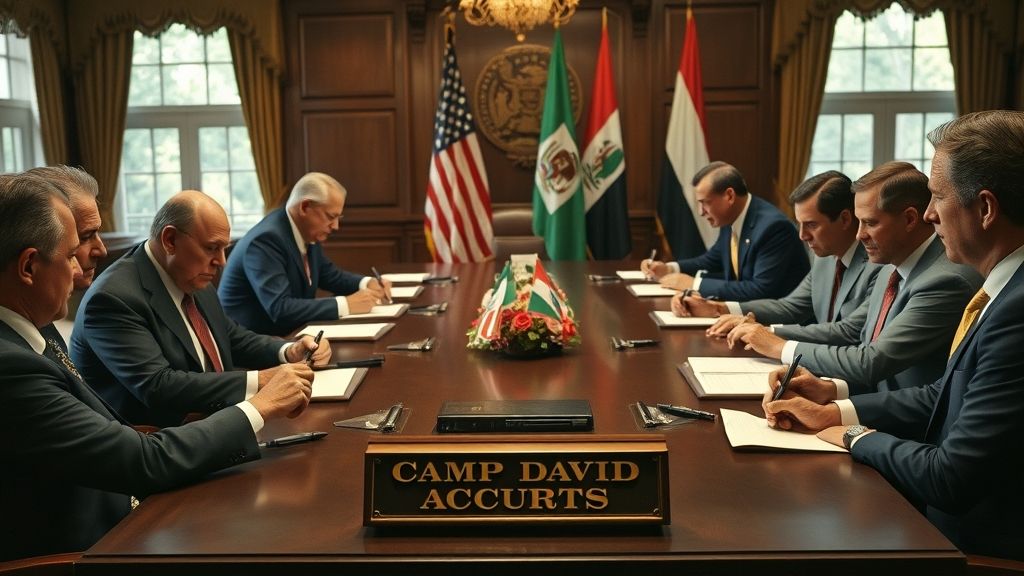
As the sun dipped behind the trees of Camp David on that late September day, a unique and unprecedented quiet filled the Maryland countryside—a quiet stirred by hope, anxiety, and the heavy weight of history. In the secluded presidential retreat, three figures sat in a fragile truce, their conversations destined to change the course of the Middle East forever. The Camp David Accords would soon be signed, a breakthrough accord between two ancient adversaries, Egypt and Israel. But the serenity of that moment belied the storm of distrust, sacrifice, and ambition that had swept the region for decades.
Picture the scene: Jimmy Carter, the earnest and determined President of the United States, acting not just as a mediator but as an active, emotional participant calling for peace where war had ruled for centuries. Anwar Sadat of Egypt, daring to extend a hand toward former enemies amid criticism at home and beyond. Menachem Begin of Israel, a leader forged in the fires of resistance and politics, balancing security fears with a possible new dawn. The stakes were colossal, the risks monumental.
But this was no ordinary diplomatic meeting. It was a crucible where history was debated, hopes kindled, and a fragile promise forged.
2. A World on Edge: The Middle East in the 1970s
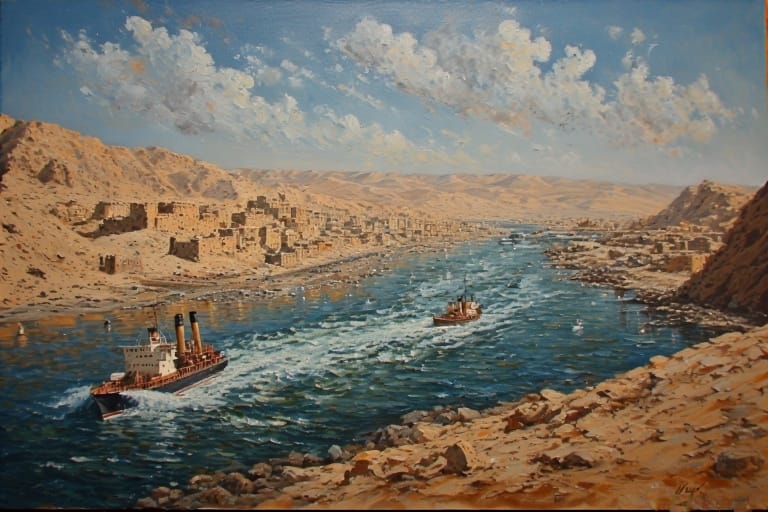
The 1970s were an era of tension, mistrust, and conflict in the Middle East. The scars of the 1967 Six-Day War, where Israel struck a decisive military victory and occupied territories, including the Sinai Peninsula, still ran deep. Arab states, humiliated and fractured, harbored bitter resentment, war weary yet bristling with nationalism and revenge. The Yom Kippur War of 1973 had once again plunged the region into bloodshed, where surprise attacks by Egypt and Syria temporarily stunned Israel but ultimately failed to turn the tide.
Behind the violence lay deeper struggles: colonial legacies, competing ideologies from pan-Arabism to Zionism, the unresolved Palestinian question, and Cold War rivalries pulling strings in the shadows. Meanwhile, oil wealth empowered some Arab states, shifting global power and economics. The world watched apprehensively, aware that every flare-up risked a broader conflict.
In this powder keg of politics, the idea of peace between Israel and an Arab state was almost unimaginable.
3. The Leaders at the Table: Carter, Sadat, and Begin
Three men would shape the possibility of transformation.
Jimmy Carter, the 39th President of the United States, brought a new style of human-driven diplomacy. Unlike his predecessors, Carter entered the Middle East peace process not just as a broker but with a palpable personal commitment. His belief in moral clarity and dialogue underpinned his relentless efforts.
Anwar Sadat, Egypt’s President since 1970, was a political enigma. Bold, unpredictable, deeply nationalistic, he shocked many when, in a historic move two years earlier, he became the first Arab leader to visit Jerusalem. This bold gesture signaled his willingness to negotiate, despite resistance from neighboring countries and domestic factions.
Menachem Begin, leader of the Likud party and Prime Minister of Israel since 1977, had his own complex background—once a militant against British rule and Holocaust survivor, now a leader haunted by security concerns and distrust toward Arab neighbors. His rise to power indicated a right-leaning political shift in Israel, complicating but also offering new dynamics to peace talks.
These three figures bore the hopes and suspicions of millions, their interactions at Camp David destined to be etched in history.
4. Paths That Crossed: Egypt and Israel Before Camp David
Before Camp David, Egypt and Israel’s relationship was defined by hostility and war. The 1948 Arab-Israeli War saw the birth of Israel but at great cost to Palestinians and neighboring states. Egypt, under the leadership of Gamal Abdel Nasser, became a leading voice against Israel’s existence and western influence in the Arab world.
The wars of 1956, 1967, and 1973 reinforced antagonism—each conflict leaving deep wounds and territorial disputes, particularly focused on Sinai. For Egypt, regaining Sinai was a symbol of restoring national pride. For Israel, maintaining territorial security was paramount.
Despite occasional diplomatic overtures and indirect talks, official peace was unthinkable. Both societies viewed the other as the enemy; suspicion and propaganda hardened public opinion. Before Camp David, peace seemed a distant dream, a fragile hope buried beneath decades of hostility.
5. A Meeting of Minds or a Clash of Titans? The Opening Days at Camp David
When Sadat and Begin arrived at Camp David in early September 1978, expectations were muted. Few believed sustained talks were possible. Carter had invited the two leaders with the faithful ambition to mediate a lasting peace, but even he would later recall how difficult the initial days were.
They came from vastly different worlds—both literally and figuratively—each carrying their own diplomatic baggage and rigid positions. Initial discussions were fractious, marred by suspicion, cultural misunderstandings, and entrenched stances over key issues like borders, recognition, and security guarantees.
Yet, under the stern watch of the American host, dialogues slowly peeled layers of mutual hatred and fear. Carter’s painstaking efforts to keep the leaders engaged, often mediating with long nights and one-on-one conversations, set the tone for painstaking progress.
History would remember these days not just for what was said, but how fragile the process was, balanced on trust just barely held.
6. The Weight of History: Emotional Highs and Political Pressures
Negotiating peace in the Middle East was never just about borders; it was about identity, memory, justice, and survival.
At Camp David, every discussion echoed with the ghosts of past wars and losses. Sadat bore the pressure from Egyptian nationalists and pan-Arab voices who accused him of betrayal simply for speaking to Begin. Begin, meanwhile, had to answer to a wary Israeli public and political rivals threatening that peace might come at too high a cost.
President Carter understood this intensely human drama. His evenings were spent not just mediating policy but offering emotional reassurance. Accounts from those present describe moments of exhaustion, tears, frustration, and rare glimpses of genuine empathy between the adversaries.
This psychological dimension was as critical as any written clause.
7. Behind Closed Doors: Negotiation Tactics and Breakthroughs
The negotiation itself was a study in patience and strategic patience. Both Begin and Sadat made tough concessions, but only after decades of conflict. The Sinai Peninsula’s future was a particularly fraught issue; Egypt demanded full withdrawal, while Israel sought safeguards.
Through marathon sessions, the parties delineated terms for peace—frameworks covering security arrangements, normalization of relations, and the recognition of sovereign rights. Carter’s role as a facilitator involved shuttling between demands, reframing positions, and pushing for compromise.
Behind the closed doors of Camp David, personal rapport and political calculation mingled. It was a careful dance where trust was built brick by brick—sometimes collapsing, then rebuilt anew.
8. The Role of the United States: Carter’s Vision and Diplomacy
Carter’s personal investment in the peace process was extraordinary. He transformed the role of the U.S. president from passive observer to an active, hands-on negotiator. Hosting the talks at Camp David, he created an environment far removed from formal politics, encouraging frank exchange.
Moreover, Carter viewed the Accords as a moral imperative, a step toward greater American interests in stable, peaceful Middle East. Unlike the cold calculations of his predecessors, his approach mixed idealism and realpolitik.
The meticulous preparation by his foreign policy team, combined with his own diplomatic skill, proved decisive. The United States catapulted itself from mere mediator to indispensable peacemaker.
9. The Camp David Encampment: Isolation and Intensity
Camp David itself was more than a backdrop—it was part of the process. The choice of this isolated presidential retreat signaled a break from traditional diplomacy. Surrounded by nature, cut off from media and interference, the leaders could focus solely on negotiation.
This physical seclusion added emotional intensity. Days bled into nights with extended conversations, walks, and moments of candid reflection. It was a bubble where history was being crafted step by step, and where egos, fears, and hopes collided intimately.
Testimonies from aides and journalists highlight how the remote setting allowed for breakthroughs that would have been impossible under public scrutiny.
10. The Breakthrough Agreement: Content and Controversies
On September 17, 1978, the Camp David Accords were signed—a framework for peace between Egypt and Israel that stunned the world.
The Accords had two main components: a "Framework for Peace in the Middle East" dealing with Palestinian territories and regional peace, and a bilateral agreement on Egyptian-Israeli peace detailing troop withdrawals and normalization.
Significantly, the treaty recognized Israel’s right to exist peacefully—a historic concession from an Arab state. Egypt regained the Sinai Peninsula, setting the stage for the first peaceful transfer of territory after war.
Yet, the Accords were not without controversy. Many criticized them for sidelining the Palestinian issue and causing divisions within the Arab League. Some Israelis thought Begin had conceded too much, while Egyptian hardliners condemned Sadat.
Despite this, the fundamental breakthrough in diplomacy remained undeniable.
11. The Agreement’s Immediate Reception: Hope and Skepticism
News of the Accords reverberated worldwide. Leaders praised the courage and statesmanship involved; newspapers declared a potential new era.
However, skepticism lingered. Many questioned whether deeply rooted hostilities could truly be overcome by ink on paper. Arab nations, feeling betrayed, reacted with hostility. Egypt was suspended from the Arab League, and Sadat faced assassination attempts. Israel’s opposition parties remained wary.
The public in both countries remained divided. For some, it was a beacon of peace; for others, the pain of compromise.
12. Ripples Across the Region: Arab World Reactions
The Accords fractured the Arab world. Most Arab nations condemned Egypt’s move, viewing it as a betrayal of Arab unity and the Palestinian cause. The Arab League took punitive steps, isolating Egypt diplomatically.
Countries like Syria and Iraq hardened their stances against Israel, leading to renewed tension in the region. Meanwhile, Palestinians felt marginalized, their struggle overshadowed in the process.
Yet, the peace showed a new possibility—it forced Arab states to reckon with realpolitik versus ideological maximalism.
13. The Aftermath for Egypt and Israel: A New Diplomatic Dance
For Egypt, the peace treaty meant economic aid from the West, restoration of Sinai, but also internal political risk and regional isolation. Sadat’s gamble cost him dearly, eventually leading to his assassination in 1981.
For Israel, the treaty meant a reduction in one front’s hostilities, renewed international legitimacy, but persistent doubts about lasting peace.
Nevertheless, both countries maintained the treaty, a rare achievement in the volatile Middle East. It provided a durable framework for future negotiations.
14. The Role of the United Nations and Global Powers
The Camp David Accords were eventually endorsed by the United Nations, embedding them in international law. The accords shifted Cold War dynamics as the U.S. solidified its role in Middle Eastern diplomacy, while the Soviet Union’s influence waned.
Global powers took note that peace was achievable through determined diplomacy—a stance that shaped subsequent efforts in conflict resolution.
15. The Legacy of Camp David: Peace, Pain, and Precedent
Over four decades later, the Camp David Accords remain a landmark achievement. They ended the official state of war between Egypt and Israel, proving that dialogue could substitute for bullets.
They also offer a cautionary tale about the complexities of peace—how agreements can uplift but also alienate, and how peace is an ongoing process, not a final destination.
It set a precedent for Arab-Israeli negotiations and inspired future peace efforts, though the wider Middle East peace remains elusive.
16. Revisiting Camp David: How History Remembers the Accords
The narrative around Camp David has evolved. Initially hailed as a diplomatic miracle, historians now situate it in the context of regional politics, power plays, and the personalities involved.
Documentaries, memoirs, and scholarly works paint a rich, nuanced picture—not just of policy but of human courage and frailty.
17. Lessons in Peace Negotiation: What Camp David Taught the World
Camp David showed that peace requires more than just political will: it demands time, patience, empathy, and personal commitment. The isolation, the personal diplomacy, the willingness to listen—all remain lessons for negotiators worldwide.
It also highlighted the importance of third-party mediation underpinned by moral courage.
18. Conclusion: The Unfolding Journey from Conflict to Coexistence
The Camp David Accords of 1978 stand as a monumental chapter in modern history—a moment when enemies dared to meet, speak, and imagine a different path forward. Though imperfect, the accords disrupted cycles of war and demonstrated that with determination and dialogue, even the most entrenched conflicts have openings for peace.
Their legacy is not a neat peace but an ongoing challenge: to continue building bridges where walls once stood, to seek understanding where suspicion lingers, and to remember that peace is ultimately about people.
Conclusion
The Camp David Accords were neither a magic wand nor an end to all conflict, but a pivotal symbol of what diplomacy can achieve when driven by courage and compassion. Through the exhausting but sincere efforts of Carter, Sadat, and Begin, two nations at war dared to imagine peace. This fragile promise endured political storms, public skepticism, and regional upheaval, yet it laid the foundation for coexistence and inspired generations to believe in the possibility of peace.
In the complex tapestry of Middle Eastern history, Camp David remains a beacon—a testament to the human capacity to turn rivalry into dialogue and enmity into understanding. It invites us all to remember that peace is never given; it is painstakingly built, moment by moment, across divides that seem insurmountable.
FAQs
Q1: What were the main causes that led to the Camp David Accords?
A: The enduring Arab-Israeli conflict, especially the outcomes of the 1967 and 1973 wars, territorial disputes over Sinai, and a desire by Egypt and Israel to end decades of hostility set the stage. Jimmy Carter’s active mediation was also crucial.
Q2: Who were the key figures in the Camp David negotiations?
A: President Jimmy Carter of the United States, Egyptian President Anwar Sadat, and Israeli Prime Minister Menachem Begin.
Q3: What were the main agreements made at Camp David?
A: Egypt recognized Israel’s right to exist and agreed on peace in exchange for the return of the Sinai Peninsula. The accords also included frameworks for ongoing peace in the region and addressed broad questions of Palestinian autonomy.
Q4: How did the Arab world react to the Camp David Accords?
A: Many Arab states condemned Egypt for breaking Arab unity, resulting in Egypt’s temporary isolation from the Arab League and intensified regional tensions.
Q5: What were the long-term consequences for Egypt and Israel?
A: The treaty ended state-of-war between the two countries, restored Sinai to Egypt, and led to economic and military aid from the West. Sadat’s peace efforts made him a target domestically, eventually leading to his assassination.
Q6: How did the United States influence the Camp David Accords?
A: The U.S., under Carter’s leadership, provided the venue, mediation, and political pressure necessary to bring the parties together and shape the final agreement.
Q7: Why is Camp David considered a milestone in peace negotiations?
A: It was the first time an Arab country formally recognized Israel, breaking decades of hostility and demonstrating that negotiation and dialogue could overcome entrenched conflicts.
Q8: How is the Camp David Accords remembered today?
A: As a historic but complex achievement—both a triumph of diplomacy and a reminder of the ongoing challenges in Middle Eastern peacebuilding.