Table of Contents
- The World on Edge: Setting the Stage for Panama’s Struggle
- The Birth of the Panama Canal: A Symbol of Empire and Innovation
- Early Tensions: Panama’s Growing Demand for Sovereignty
- The 1903 Treaty and Its Controversies
- Mid-Century Challenges: Geopolitics and the Cold War Shadow
- Rise of Panamanian Nationalism and Diplomatic Pressures
- Jimmy Carter’s Vision and the Quest for a New Agreement
- Negotiations Begin: Diplomacy in a Time of Distrust
- The Panama Canal Treaties: Key Provisions and Innovations
- Washington’s Political Storm: The Senate Debates and Divisions
- The Ratification Vote: Triumph Amidst Turmoil
- Panama’s Reaction: Celebration and Uneasy Optimism
- The Canal’s Transition: Administrative and Practical Challenges
- Global Reactions and the Shaping of U.S.-Latin America Relations
- Legacy of the Treaties: Sovereignty Restored, but at What Cost?
- The Canal Today: Economic Lifeline and Political Symbol
- Lessons Learned: Diplomacy, Power, and National Identity
- Conclusion: Understanding the Panama Canal Treaties’ Enduring Impact
- FAQs: Key Questions About the Panama Canal Treaties
- External Resource: Wikipedia Entry on the Panama Canal Treaties
- Internal Link: Visit History Sphere
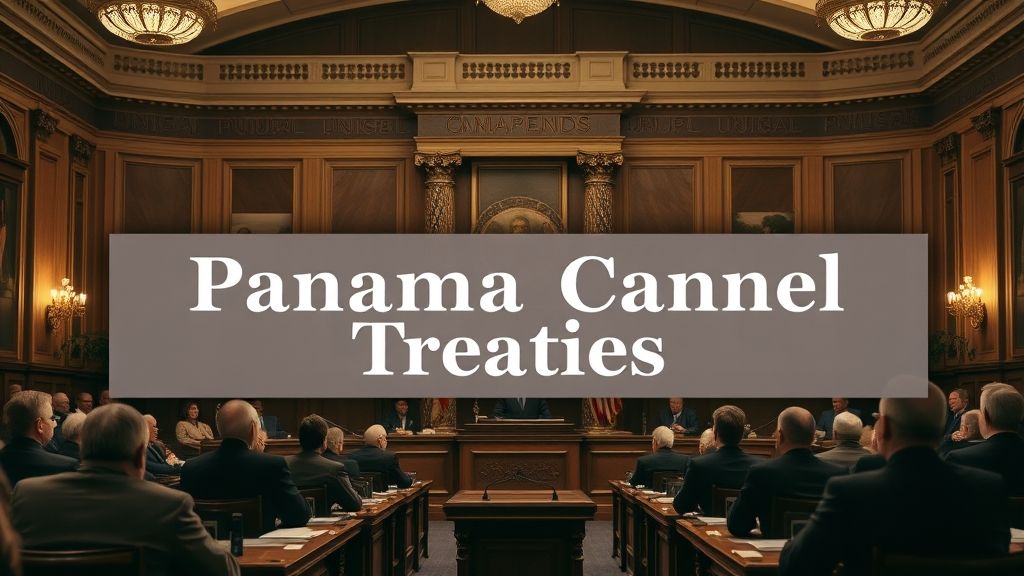
It was a sultry spring evening in Washington, D.C., in April 1978. Inside the marble halls of the United States Senate, tension hung as heavily as the tropical humidity across the Americas. Senators, draped in their familiar suits and ties, debated fiercely under the towering chandeliers, their voices both passionate and controlled. At stake was more than mere legislation; this was a moment of reckoning — the fate of one of the world’s most strategic waterways, and the question of American influence in an era growing increasingly uncomfortable with colonial legacies. The Panama Canal Treaties, complex and contentious, were on the verge of ratification. For more than seventy years, the United States had controlled the Canal Zone, a narrow strip of land slicing through Panama, crucial not only for commerce but for geopolitical power. This treaty aimed to transfer that control back to Panama by the end of the twentieth century — a gesture to correct historical grievances, reshape hemispheric relations, and reframe U.S. identity in Latin America.
But the path to that April vote was riddled with mistrust, opposition, and a clash of visions about sovereignty, nationalism, and security. What seemed like a simple treaty was, in fact, a battle of narratives: empire against independence, legacy against progress, and pragmatism against passion. When the Senate finally cast its votes, it was more than a legislative victory; it was a profound moment of transformation, yet only the beginning of a new chapter for both nations.
The World on Edge: Setting the Stage for Panama’s Struggle
The mid-1970s were a time of immense global change. The Cold War had cast long shadows over international policies. Latin America simmered with social movements, political upheavals, and a rising tide of nationalism. For Panama, a tiny nation saddled with the colossal presence of the Canal Zone — a 10-mile-wide strip controlled by the U.S. since 1904 — the call for sovereignty became a matter of national pride and identity.
The origins of this conflict reached back decades. The United States' decision to build and control the canal — a marvel of engineering connecting the Atlantic and Pacific oceans — was couched in the language of progress and security but impregnated with imperial ambition. For Panama, the canal had long been both a blessing and a curse: an economic boon, yes, but also a wound symbolizing foreign domination.
By the 1970s, Panamanians were increasingly vociferous in demanding the return of the Canal Zone. The U.S., under President Jimmy Carter, faced the dilemma of balancing strategic interests with the shifting sentiments of a hemisphere wary of American interventionism.
The Birth of the Panama Canal: A Symbol of Empire and Innovation
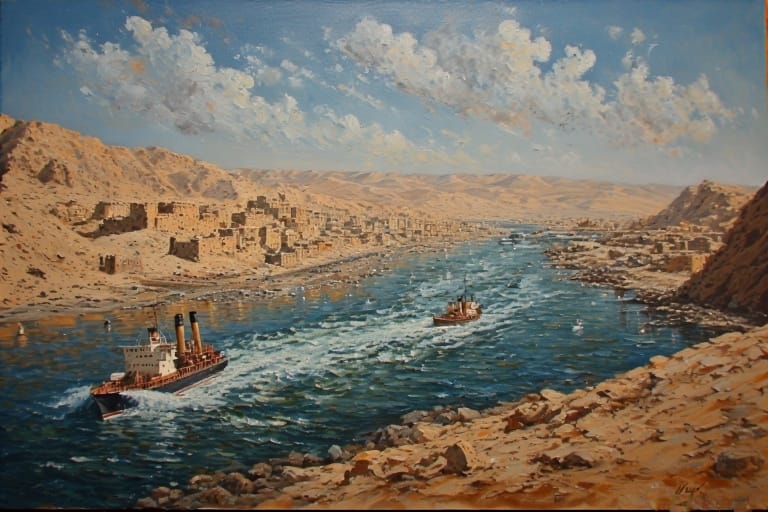
The Panama Canal’s story begins in the early 20th century, a tale woven into the very fabric of American expansionism and technological triumph. Following the failure of the French project led by Ferdinand de Lesseps, the U.S. stepped in under President Theodore Roosevelt’s assertive foreign policy. The 1904 acquisition of the Canal Zone was orchestrated through the Hay–Bunau-Varilla Treaty, an agreement forged under dubious circumstances that granted the U.S. sovereign rights to the zone “in perpetuity.”
This treaty effectively erased Panamanian sovereignty over its own soil in the Canal Zone and planted the seeds for decades of diplomatic friction. The Canal itself became an engineering marvel, shortened sea routes dramatically, and was crucial to the U.S. Navy’s mobility. However, its possession symbolized America’s willingness to exert control over its neighbors.
Early Tensions: Panama’s Growing Demand for Sovereignty
For the first half of the 20th century, Panama lived with the uneasy reality of a foreign enclave slicing through its heartland. The Canal Zone was administered by the U.S., with its own laws, police, and infrastructure. This created a cultural and political rift — Panamanians often felt second-class in what should have been their own homeland.
Resistance simmered. In the 1950s and 1960s, calls for renegotiating the treaty grew louder. Incidents at the Canal, from labor disputes to border skirmishes, underscored the friction. Panamanian leaders sought greater control, arguing that retaining U.S. sovereignty was an anachronism that undermined their nation’s dignity and development.
The 1903 Treaty and Its Controversies
The foundation of the eventual conflict was the 1903 Hay–Bunau-Varilla Treaty. Signed just weeks after Panama’s independence from Colombia — a country rumored to have been covertly supported by the U.S. — the treaty granted extensive rights to the United States over the Canal Zone, including the right to intervene militarily.
Many Panamanians regarded the treaty as illegitimate, signed without sufficient Panamanian representation and under duress. For decades, this grievance lingered, fueled by nationalist rhetoric and international criticism.
Mid-Century Challenges: Geopolitics and the Cold War Shadow
The Cold War intensified the strategic importance of the canal, as the U.S. sought to ensure security in the Western Hemisphere. Amid rising tensions with the Soviet Union, control over the canal seemed indispensable. As a result, Washington was reluctant to cede authority or entertain talks that might weaken its strategic position.
However, the political landscape in Latin America was shifting. The 1964 “flag riots,” which erupted after Panamanians tried to raise their flag in the Canal Zone and were met with violent suppression, starkly demonstrated the depth of resentment. International opinion increasingly sided with Panama’s demands.
Rise of Panamanian Nationalism and Diplomatic Pressures
By the 1970s, the leadership of General Omar Torrijos had crystallized Panama’s nationalistic aspirations. His government adopted a firm stance on reclaiming sovereignty and used diplomatic channels masterfully to pressure the United States — including through appeals to the United Nations and the Organization of American States.
Meanwhile, Washington’s image in Latin America was suffering from Cold War interventions elsewhere, and President Jimmy Carter’s administration sought a new direction — one emphasizing human rights, respect for sovereignty, and reconciliation.
Jimmy Carter’s Vision and the Quest for a New Agreement
President Carter, elected in 1976, was determined to resolve the Canal issue. His vision extended beyond geopolitics; he saw the treaties as a means to heal hemispheric relations and redefine U.S. leadership.
Negotiations began in 1977 after years of stop-start talks. Carter appointed Secretary of State Cyrus Vance to lead the charge. The result was two treaties: the Panama Canal Treaty, which would transfer the canal to Panama by 1999, and the Neutrality Treaty, ensuring the canal would remain open and neutral for all nations.
Negotiations Begin: Diplomacy in a Time of Distrust
Negotiations were fraught. U.S. conservatives feared losing a strategic asset; many Panamanians wanted immediate, unconditional control. Talks often stalled over security guarantees, the timeline for transfer, and the status of U.S. military installations.
Yet behind the scenes, mutual concessions were crafted. Panama’s promise of canal neutrality and safety reassured U.S. officials; the gradual transfer schedule eased congressional fears. Though imperfect, the framework represented a historic compromise.
The Panama Canal Treaties: Key Provisions and Innovations
Signed on September 7, 1977, the treaties outlined a phased transition:
- The Panama Canal Treaty revoked the 1903 treaty, returning the Canal Zone to Panama by December 31, 1999.
- The Neutrality Treaty guaranteed worldwide access to the canal and allowed the U.S. to intervene if neutrality was threatened.
- Joint Canal Commission oversight during the transition period ensured operational continuity.
- The transfer included the Canal’s infrastructure, property, and personnel controls.
This careful balance sought to acknowledge Panama’s sovereignty while preserving international and American interests.
Washington’s Political Storm: The Senate Debates and Divisions
Back in Washington, ratification was anything but assured. The Senate engaged in one of the most intense debates of the era. Opposition ran deep across party lines. Figures like Senator Barry Goldwater denounced the treaties as “giving away the store,” while others warned of emboldening communism.
Supporters, including President Carter, argued the treaties were the right moral and pragmatic choice. They highlighted Panama’s sovereignty, the improvement of U.S. image abroad, and the inevitability of change.
Ultimately, on April 18, 1978, after weeks of deliberation, the Senate ratified the treaties by a narrow margin of 68 to 32 — a political and symbolic victory.
The Ratification Vote: Triumph Amidst Turmoil
The vote was met with jubilation in Panama and relief in Washington. Carter declared it “a new era in relations with Latin America.”
Across the political spectrum, the moment was understood as a pivot away from imperial control toward partnership and respect. Still, opposition remained, foreshadowing the challenges ahead.
Panama’s Reaction: Celebration and Uneasy Optimism
For many Panamanians, ratification was a cause for celebration. Streets filled with cheering crowds. The treaties were heralded as the restoration of national dignity, a reclaiming of their rightful inheritance.
Yet a cautious optimism pervaded. Some feared economic disruption, others doubted whether the U.S. would honor the spirit of the treaties fully. The canal’s huge role in Panama’s economy was a source of both hope and anxiety.
The Canal’s Transition: Administrative and Practical Challenges
Over the two decades after ratification, Panama and the U.S. undertook major efforts to manage the transfer smoothly. Training Panamanian personnel, upgrading infrastructure, and maintaining canal operations required unprecedented cooperation.
The gradual process was not without hiccups: political fluctuations, security concerns, and economic dependencies complicated the transition. Yet the eventual handover on December 31, 1999, marked a historic culmination.
Global Reactions and the Shaping of U.S.-Latin America Relations
Internationally, the treaties signaled a shift in American approaches to Latin America. Respect for sovereignty and diplomacy gained ground over heavy-handed intervention.
Allies and competitors watched closely. For the rest of Latin America, the agreement was an encouraging sign that colonial legacies could be overcome through negotiation.
Legacy of the Treaties: Sovereignty Restored, but at What Cost?
The treaties' legacy is complex. Panama reclaimed control of its most prized resource, an achievement that bolstered national pride and identity. The Canal remains vital to Panama’s economy and global trade.
At the same time, questions linger about dependence on the United States and the uneven effects on Panama’s political development. The Canal’s neutrality has been tested by regional conflicts and global politics.
The Canal Today: Economic Lifeline and Political Symbol
Today, the Panama Canal is a bustling artery for the global economy, expanded in 2016 to accommodate larger ships. It stands as a monument to Panama’s resilience and diplomatic success.
Its story continues to resonate in debates on sovereignty, globalization, and the legacies of empire.
Lessons Learned: Diplomacy, Power, and National Identity
The Panama Canal Treaties show that power can be negotiated, that respect for sovereignty can coexist with strategic interests. They remind us that history is never static: empires recede, and nations rise.
As today’s world grapples with questions of influence and independence, the treaties offer lessons in humility, patience, and justice.
Conclusion
The ratification of the Panama Canal Treaties in April 1978 was much more than a legislative event. It was a turning point in the collective story of two nations bound by history, geography, and ambition. This treaty reflected the shifting tides of global politics, the enduring yearning for sovereignty, and the capacity of human diplomacy to reconcile conflicting visions.
Yet behind the legal pages and senate votes lives a deeper human narrative — of pride reclaimed, wounds healed, and futures forged. The canal itself, a narrow ribbon of water, symbolizes the delicate balance between control and cooperation, power and partnership. The treaties remind us that history’s true drama unfolds in the spaces between nations, where courage and compromise meet to shape generations.
In the end, the Panama Canal Treaties stand as a testament to the possibility of peaceful change, even against a backdrop of suspicion and struggle — an enduring chapter in the story of the Americas and the world.
FAQs
Q1: Why were the Panama Canal Treaties necessary?
A1: The treaties were necessary to transfer control of the Panama Canal from the U.S. to Panama, addressing longstanding grievances over sovereignty and improving U.S.-Latin America relations during a time of shifting geopolitical realities.
Q2: What did the 1903 treaty establish, and why was it controversial?
A2: The 1903 Hay–Bunau-Varilla Treaty granted the U.S. sovereign rights over the Canal Zone “in perpetuity.” It was controversial because Panama had little say in its signing, and it effectively ceded national territory, fueling decades of resentment.
Q3: How did the U.S. Senate react to the treaties?
A3: The Senate was deeply divided, with significant opposition fearing loss of strategic control. The treaties were ratified by a narrow margin after intense debate, reflecting the contentious nature of the decision.
Q4: What was Panama's reaction to the ratification?
A4: Panama celebrated the treaties as a restoration of sovereignty and national pride, although there was some caution about the transition’s implications.
Q5: How did the treaties affect the canal’s operation?
A5: The treaties created a 22-year transition period with joint U.S.–Panama management, ensuring operational stability while gradually transferring control to Panama by 1999.
Q6: What impact did the treaties have on U.S.-Latin America relations?
A6: The treaties marked a move away from interventionist policies toward greater respect for sovereignty, improving U.S. relations across Latin America and setting a diplomatic precedent.
Q7: Are the treaties still relevant today?
A7: Yes. They symbolize successful diplomacy and sovereignty restoration, and the canal itself remains a critical economic and geopolitical asset.
Q8: Who were the key figures in negotiating the treaties?
A8: U.S. President Jimmy Carter and Panamanian leader General Omar Torrijos were pivotal, with Secretary of State Cyrus Vance playing an essential role in negotiations.