Table of Contents
- The Dawn of a New Era: Managua, July 19, 1979
- Nicaragua in the Shadow of Somoza
- Birth of the Sandinista National Liberation Front (FSLN)
- The Roots of Rebellion: Social and Economic Inequality
- The Cold War Chessboard: International Stakes in Nicaragua
- The Spark Ignites: The Assassination and Growing Dissent
- Escalation of Conflict: Guerrilla Warfare and Urban Struggles
- The Fall of Somoza: Flight and Final Days of a Dictator
- Victory in Managua: Sandinistas Take Control
- Faces of the Revolution: Key Figures and Their Visions
- Dreams and Realities: The Initial Reforms and Social Policies
- Voices from the People: Hope, Fear, and the Cost of Change
- The Contra War Emerges: External Intervention and Internal Division
- International Reactions: Supporters and Opponents of the Revolution
- The Cultural Renaissance: Art, Music, and Identity Post-Revolution
- Women in the Revolution: From Margins to Frontlines
- The Economic Struggles: Challenges for a New Government
- Education and Health: Building a Society from the Rubble
- Memory and Myth: How Nicaragua Remembers 1979 Today
- The Sandinista Legacy: From Revolutionary Triumph to Modern Politics
- Conclusion
- FAQs
- External Resource
- Internal Link
The Dawn of a New Era: Managua, July 19, 1979
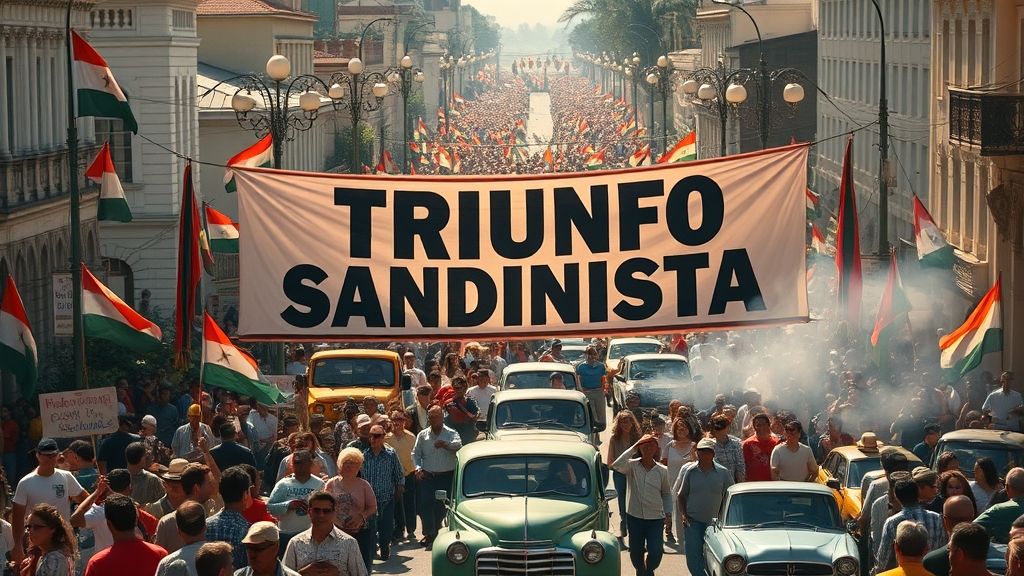
The air was thick with anticipation, ripe with the dust of distant gunfire and the scent of revolution. In the streets of Managua, a weary yet jubilant crowd surged forward, their voices blending into an unyielding roar of freedom. The once impenetrable walls of Somoza’s regime were crumbling in real time, and the Sandinista fighters—ragged, determined, and unstoppable—marched into the heart of the city. This was no mere victory; it was the birth of a new Nicaragua.
July 19, 1979, marked the end of an era of brutality and the beginning of a fervent attempt to remake a country scarred by decades of dictatorship, injustice, and repression. The Sandinista Revolution, borne from the ashes of despair, had triumphed. The streets echoed with cries of “¡Viva la Revolución!”—a testament not just to victory in battle but to the relentless hope of a people long silenced.
Yet, amidst the jubilation, shadows lingered. The revolution’s promise was immense, but so were its challenges. For Nicaragua, July 19 was not an endpoint but a threshold into an uncertain future.
Nicaragua in the Shadow of Somoza
To understand the magnitude of the Sandinista victory, one must first peer into the long shadow cast by the Somoza dynasty. Since the 1930s, the Somoza family had woven itself into the very fabric of Nicaraguan life—militarily, politically, economically. Beginning with Anastasio Somoza García, assassinated in 1956, the family’s grip tightened under his sons Luis and later Anastasio Somoza Debayle, the very man who fled Managua in 1979.
Their governance was not just authoritarian; it was deeply corrupt and brutal. Human rights abuses were rampant, dissent was crushed mercilessly, and the country became synonymous with repression. Nicaragua’s wealth, largely derived from agriculture and foreign investments, was concentrated in the hands of a privileged few tied to the regime, leaving the majority—especially peasants and indigenous communities—in poverty.
This brutal inequality and repression sowed deep resentment, creating fertile ground for dissent and revolutionary ideals. The Somoza regime was a colossus built on fear and injustice, yet cracks were beginning to form beneath its surface.
Birth of the Sandinista National Liberation Front (FSLN)
Emerging in 1961, the Sandinista National Liberation Front was named after Augusto César Sandino, the legendary guerrilla leader who had fought tirelessly against U.S. occupation in the 1920s and 1930s. His legacy was heroic and symbolic—a symbol of defiance against imperialism and tyranny.
The FSLN began as a small group of students, intellectuals, and workers united by socialist ideals and a vision of overturning the Somoza dictatorship. Over the years, it evolved from idealistic young radicals into a formidable political and military force, blending Marxist-Leninist ideology with a uniquely Nicaraguan revolutionary identity.
Their struggle was not only against a regime but against broader structures of exploitation—a fight for land reform, social justice, and national sovereignty. The Sandinistas' message resonated profoundly among Nicaragua's impoverished masses.
The Roots of Rebellion: Social and Economic Inequality
The revolution was born from deep grievances. Nicaragua of the 1970s was a nation starkly divided. While the Somoza family and their coterie enjoyed lavish lifestyles—mansions, investments abroad, and control over major industries—most Nicaraguans lived in abject poverty.
Rural peasants, who worked the fertile lands, often found themselves dispossessed or trapped in quasi-feudal relationships dependent on powerful landowners allied with the regime. Urban workers faced repression and stagnation, while indigenous populations were marginalized and neglected.
This economic disparity was coupled with a lack of political freedom, brutal policing, and systematic human rights abuses. The 1972 Managua earthquake had devastated the capital, and Guatemala diverted much of the international aid meant for reconstruction into the pockets of Somoza’s cronies—further inflaming popular anger.
The Cold War Chessboard: International Stakes in Nicaragua
Nicaragua’s revolution unfolded during the height of the Cold War, transforming a national conflict into a battleground of global ideologies. Washington viewed Latin America as its backyard—red lines drawn firmly against the spread of communism.
The Sandinistas, with their Marxist orientation and ties to Cuba and the Soviet bloc, alarmed American strategists and policymakers. The United States had backed Somoza for decades, viewing him as a bulwark against leftist insurgencies.
Conversely, the FSLN drew support from socialist countries and sympathizers worldwide, framing their struggle as part of a larger fight against imperialism and for social justice. Nicaragua was, therefore, not merely a local crisis but a proxy in the Cold War’s ideological battlefield. The looming specter of international interference would shape the revolution's unfolding and aftermath.
The Spark Ignites: The Assassination and Growing Dissent
The revolution was propelled by moments of tragedy and defiance. The assassination of figures like Pedro Joaquín Chamorro, the editor of the opposition newspaper La Prensa, in 1978 galvanized public outrage. Chamorro’s murder at the hands of regime forces exposed the extent of Somoza’s brutality and reaffirmed the necessity of revolution to many Nicaraguans.
At the same time, student protests, worker strikes, and guerrilla attacks intensified. The country was engulfed in unrest, with an increasingly organized resistance under the umbrella of the FSLN gaining momentum. The regime’s attempts to suppress dissent only deepened the fissures in society.
Escalation of Conflict: Guerrilla Warfare and Urban Struggles
The revolution took shape both in the mountains and in the cities. The FSLN’s guerrilla fighters launched daring attacks in rural areas, disrupting regime supply lines and eroding Somoza’s control over the countryside.
Simultaneously, urban centers witnessed protests, riots, and strikes that brought daily life to a standstill. The Sandinistas’ ability to coordinate a multi-front struggle made their movement difficult to quell.
Their tactics combined classical guerrilla warfare with political mobilization—a method that not only challenged military targets but aimed to convince the populace that a new system was possible. Each day of conflict heightened the stakes; each skirmish edged Nicaragua closer to a historic turning point.
The Fall of Somoza: Flight and Final Days of a Dictator
By mid-1979, the walls around the Somoza regime were closing in. The international community, including the United States, signaled withdrawal of support after protracted criticism and growing guerilla strength.
Somoza’s final days were marked by frantic attempts to cling to power—deploying violence, seeking exile, and negotiating ceasefires that were ignored by his enemies. On July 17, 1979, Somoza fled Managua aboard a U.S.-supported plane, leaving chaos in his wake.
His departure symbolized not just the fall of a man but the collapse of an oppressive system. For many Nicaraguans, it was a cathartic moment—the moment freedom seemed within reach.
Victory in Managua: Sandinistas Take Control
The streets of Managua on July 19 were alive with jubilation and cautious optimism. Sandinista fighters entered the city; barricades fell; the people reclaimed their capital.
The triumph was visually stark—posters of Sandino adorned walls, revolutionary flags waved fiercely, and the scarred populace dared to hope. Yet, questions loomed: How would governance be organized? What path would the revolution take from here?
The Sandinistas proclaiming the birth of a new democratic and just Nicaragua initiated a process of profound social transformation, but they also faced the monumental task of healing a nation divided and damaged by decades of tyranny.
Faces of the Revolution: Key Figures and Their Visions
Behind this popular uprising stood visionary leaders whose trajectories would shape Nicaragua’s fate. Daniel Ortega, a youthful yet charismatic commander, emerged as the face of the revolution.
Other figures, like Tomas Borge and Sergio Ramírez, brought ideological depth and pragmatic leadership. Each carried a distinct vision for Nicaragua, blending revolutionary zeal with the pressing demands of governing.
Their complex personalities, alliances, and rivalries shaped the post-revolutionary landscape, illustrating that victories on the battlefield are only the beginning of political struggle.
Dreams and Realities: The Initial Reforms and Social Policies
Upon seizing power, the Sandinistas embarked on radical reforms aiming to dismantle the old order.
Land reforms redistributed estates to peasants, literacy campaigns sought to eradicate illiteracy, and health initiatives expanded access. Education was infused with revolutionary content, imbuing a new generation with ideals of justice and equality.
But these policies required resources, expertise, and stability—luxuries in short supply in a war-torn country. Moreover, they encountered resistance from entrenched elites and portions of the middle class wary of sweeping changes.
Voices from the People: Hope, Fear, and the Cost of Change
For many Nicaraguans, the revolution was a beacon of hope, a promise of dignity long denied. Yet, even amid celebration, fear lingered.
War had left families shattered. The gains of the revolution were fragile. Some citizens, especially in urban areas, questioned the FSLN’s socialist orientation and worried about new restrictions. The nation was at a crossroads—the joy of liberation mingling with uncertainty over the revolution’s consequences.
Anecdotes from survivors tell of complex emotions—gratitude for peace, sorrow for lost loved ones, and the daily struggle to build a better society.
The Contra War Emerges: External Intervention and Internal Division
Tragically, the Sandinista victory was soon challenged by a brutal counterinsurgency. The U.S. government, under the Reagan administration, covertly funded and armed the Contras—former National Guard members and anti-Sandinista rebels.
This intervention plunged Nicaragua into a renewed conflict that lasted through the 1980s, devastating the country again and polarizing society. The civil war sapped resources, claimed thousands of lives, and crushed hopes for rapid reconstruction.
It is said that revolutions feed on hope, but protracted conflict breeds disillusionment—a painful truth for Nicaragua’s people.
International Reactions: Supporters and Opponents of the Revolution
Global reactions to the Sandinista triumph were mixed and often divided along ideological lines. Socialist countries celebrated the revolution as a victory for the oppressed, offering support and solidarity.
Western governments, wary of communist expansion, condemned it and backed counterrevolutionary forces. International organizations and NGOs provided aid aimed at humanitarian relief and social development, often navigating complex political landscapes.
This polarizing international environment made Nicaragua both a symbol of revolutionary potential and a battleground of global contestation.
The Cultural Renaissance: Art, Music, and Identity Post-Revolution
Yet, amidst war and political upheaval, Nicaragua experienced a cultural awakening. Sandinista ideals inspired poets, musicians, and artists to articulate the revolution’s spirit.
Vzla popular music like the nueva canción genre intertwined with political consciousness, street murals depicted heroic struggles, and literature documented the turbulent era. Culture became both a space for resistance and for hope—collective storytelling weaving identity from trauma and aspiration.
Women in the Revolution: From Margins to Frontlines
Women played vital yet often underappreciated roles in the revolution. From fighters to organizers, educators to health workers, their contributions were instrumental.
The Sandinistas promoted gender equality as part of their social agenda, challenging traditional patriarchal norms. But tensions remained between revolutionary ideals and cultural realities—a push and pull over women’s rights in rural and urban Nicaragua.
Female revolutionaries’ stories offer powerful insights into the complexities of social transformation during moments of upheaval.
The Economic Struggles: Challenges for a New Government
Despite ambitious reforms, the economy presented immense challenges. The country was burdened by war damage, capital flight, and declining agricultural production—especially as the Contra War disrupted rural life.
Economic sanctions and embargoes imposed by foreign powers exacerbated hardship. Inflation soared; unemployment rose. The government balanced ideology with pragmatism but often stumbled, revealing the difficulty of running a revolution amid scarcity.
Education and Health: Building a Society from the Rubble
Among the revolution’s proudest achievements were literacy and healthcare campaigns that dramatically improved living standards. The massive National Literacy Crusade of 1980 reduced illiteracy from nearly 50% to around 12% within months—a remarkable feat.
Health centers proliferated, vaccinations increased, and infant mortality dropped. These efforts symbolized a commitment to social justice that transcended mere rhetoric.
They created optimism but required sustained resources increasingly threatened by geopolitical conflicts.
Memory and Myth: How Nicaragua Remembers 1979 Today
Forty-plus years later, the triumph of 1979 remains etched in Nicaragua’s collective memory. For some, it is a sacred moment of emancipation and national pride.
For others, it is fraught with ambivalence—marked by unmet expectations, civil war, and ongoing political disputes. Public commemorations, museums, and oral histories keep the revolution alive as both history and symbol.
Memory itself has become contested terrain, reflecting continuing debates over identity, justice, and the nation's direction.
The Sandinista Legacy: From Revolutionary Triumph to Modern Politics
The Sandinista Revolution’s impacts ripple far beyond 1979. While the FSLN lost power in democratic elections in 1990, it returned to prominence under Daniel Ortega’s leadership.
The movement transformed from a liberation front into a ruling party navigating the complexities of governance, authoritarian tendencies, opposition, and popular support. Its legacy is both celebrated and scrutinized, representing enduring themes of revolution, reform, and resistance in Latin America.
Conclusion
The Sandinista Revolution’s triumph on July 19, 1979, was a moment heavy with hope, fraught with challenges, and alive with the intoxicating promise of change. It revealed the power of collective resistance against oppression and the enduring capacity of a people to reshape their destiny.
Yet history is never linear. The triumph was but the prologue to a tumultuous saga of struggle, suffering, resilience, and transformation. Nicaragua’s story is a testament to humanity’s relentless yearning for justice, equity, and dignity—a story still unfolding.
The revolution reminds us that freedom is neither granted nor guaranteed but must be fought for, inhabited with courage and care, and continually renewed.
FAQs
1. What triggered the Sandinista Revolution?
The revolution was triggered by decades of Somoza family dictatorship marked by corruption, social inequality, human rights abuses, and exacerbated by events such as the assassination of opposition leader Pedro Joaquín Chamorro and widespread dissatisfaction following the 1972 earthquake.
2. Who were the main leaders of the Sandinista Revolution?
Key figures include Daniel Ortega, Tomas Borge, Sergio Ramírez, and Humberto Ortega. Daniel Ortega emerged as the most enduring figure, later becoming Nicaragua’s president.
3. What role did the Cold War play in the Sandinista Revolution?
The revolution became a proxy battleground in the Cold War, with socialist states supporting the Sandinistas while the United States backed Somoza and later the Contra rebels to prevent the spread of communism.
4. How did the Sandinista government change Nicaragua after 1979?
They implemented social reforms including land redistribution, expanded education and healthcare, and promoted gender equality, but faced economic difficulties and external conflicts that complicated governance.
5. What was the Contra War?
A U.S.-funded insurgency against the Sandinista government, composed mainly of former Somoza National Guard forces and other anti-Sandinista groups, leading to a prolonged, devastating civil conflict.
6. How is the Sandinista Revolution remembered in Nicaragua today?
Views vary widely: many celebrate it as a foundational moment of liberation and social progress, while others criticize its aftermath and ongoing political ramifications. Memory is contested and politically charged.
7. What cultural impacts did the revolution have?
The revolution inspired a cultural renaissance through music, poetry, art, and literature reflecting revolutionary ideals and Nicaraguan identity, creating a rich tradition of cultural resistance.
8. What challenges did women face during and after the revolution?
While women participated actively and gained new opportunities, they also confronted persistent patriarchal norms and struggled for full equality within both the revolution and Nicaraguan society.