Table of Contents
- The Dawn of a New Era: Tehran’s Streets Awash with Revolution
- The Fall of the Monarchy: Seeds of Discontent and Turmoil
- Ayatollah Khomeini’s Return: The Spiritual Leader’s Triumphant Homecoming
- The Overthrow of the Shah: From Palace to Exile
- The Unraveling of Old Regimes: Political Turmoil and Social Upheaval
- The New Republic Declared: April 1, 1979 – A Nation Reforged
- The Islamic Republic’s Constitution: Between Theocracy and Democracy
- The Role of the Clergy: Guardians of Faith and Power
- The People’s Voice: The Referendum and Popular Support
- Women and the Revolution: A Complex Transformation
- Domestic Reactions: Euphoria, Fear, and Resistance
- The International Community Responds: Shockwaves Beyond Iran’s Borders
- The U.S. Embassy Takeover: Seeds of Future Conflict
- Economic Repercussions: From Prosperity to Sanctions
- Cultural Shifts: Art, Media, and Identity in the New Republic
- Consolidation of Power: Purges and Political Trials
- The Legacy of April 1, 1979: A Revolution Remembered and Reinterpreted
- The Long Shadow: How the Islamic Republic Reshaped the Middle East
- Voices from the Revolution: Eyewitnesses and Participants
- The Memory of 1979 in Contemporary Iran
- Conclusion: The Enduring Impact of a Historic Day
- FAQs
- External Resource
- Internal Link
The Dawn of a New Era: Tehran’s Streets Awash with Revolution
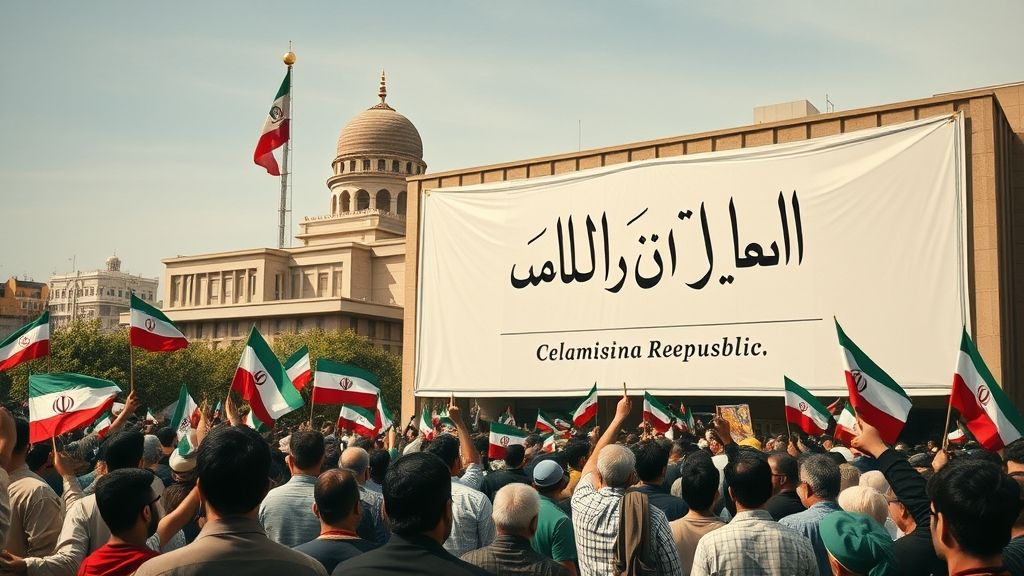
April 1, 1979, dawned upon Tehran with a palpable tension in the air. The city streets thrummed with the energy of millions—men, women, young and old—gathered in a spectacle of hope and upheaval. Flags bearing the emblem of the Islamic Republic fluttered alongside saffron banners of revolution. It was not merely a declaration on paper but a seismic moment that would redraw the destiny of a nation perched at a crossroads. The proclamation of the Islamic Republic did not simply signal a regime change; it shattered the very foundations of the old order.
Imagine the shouts echoing through Azadi Square, faces illuminated not just by the spring sun but by the fierce conviction of those who believed they had wrested their country’s soul from centuries of authoritarian rule. Beneath the jubilation, a confluence of anxiety and uncertainty loomed. What would this new republic mean for Iran’s identity, for its women, for its relations with the global powers? History was being inscribed not just in the official ceremony, but in the hearts of millions.
The Fall of the Monarchy: Seeds of Discontent and Turmoil
To comprehend the revolutionary fervor that culminated in April 1979, one must journey back through the cracks that formed in Iran’s monarchy. The Pahlavi dynasty, particularly under Mohammad Reza Shah, had embarked on aggressive modernization and westernization, which alienated powerful segments of society—from religious clerics to traditional merchants and rural populations. The Shah’s reign was marked by opulence and repression, with the notorious SAVAK secret police quashing dissent brutally.
Yet beneath the glittering surface of economic growth, a growing malaise spread. Inflation, inequality, and political repression sowed seeds of resentment. The 1970s saw a series of strikes, protests, and intellectual opposition, all seeking a voice suppressed by the regime’s iron fist. The Shah’s attempts at reform failed to quell dissent, instead often provoking further backlash.
Ayatollah Khomeini’s Return: The Spiritual Leader’s Triumphant Homecoming
At the heart of the revolution was Ayatollah Ruhollah Khomeini, a cleric whose exile in Najaf and later France had only amplified his influence. His messages, smuggled into Iran via cassette tapes and leaflets, reached millions who found in his vision a potent blend of religious revival and political liberation.
When Khomeini returned to Tehran on February 1, 1979, after 14 years of exile, the reception was nothing short of ecstatic. Overwhelming crowds lined the streets, chanting "Ya Ruhollah" in unison, a chorus of devotion and defiance. His presence rekindled hope for a new order founded not on Western secularism but on Islamic principles. He quickly emerged as the indisputable leader of the revolution, his authority transcending political factions.
The Overthrow of the Shah: From Palace to Exile
Mohammad Reza Shah’s departure in January 1979 was the tipping point. His flight to Egypt was initially billed as a temporary medical trip, but it soon became clear he would not return. Left in limbo was an Iran without a monarch, its institutions crumbling. The vacuum was not easily filled; multiple groups vied for power including secular nationalists, communists, and the religious clergy headed by Khomeini.
This chaotic interregnum was marked by widespread uncertainty and clashes. But it was Khomeini who guided the process toward the creation of a distinctly Islamic state, demanding allegiance not only from the people but from all political actors. His vision rejected Western models and laid the foundation for a system whereby governance would be inherently linked to religious authority.
The Unraveling of Old Regimes: Political Turmoil and Social Upheaval
The transition period was tumultuous—the dissolution of the monarchy unleashed decades of pent-up frustrations and unaddressed grievances. Political parties were banned, universities became focal points of ideological debates, and neighborhoods turned into battlegrounds of loyalties and repressions. The Revolutionary Guard was born in this crucible, tasked with protecting the revolution’s ideals against both internal dissent and foreign interference.
Meanwhile, ordinary citizens found themselves navigating a rapidly changing society where old certainties no longer applied. Streets once lined with Western advertisements now echoed with calls to prayer and revolutionary slogans. The cultural landscape was being rewritten in real time.
The New Republic Declared: April 1, 1979 – A Nation Reforged
The official announcement of the Islamic Republic through a national referendum on April 1, 1979, was less a surprise and more an affirmation of what the streets had already proclaimed. With an overwhelming majority—reportedly 98%—Iranians voted in favor of abolishing the monarchy and establishing an Islamic system.
This date, now etched in history, represented not just a change in governance but a rebirth of national identity. The Islamic Republic promised justice, sovereignty, and the application of Sharia law—an ideal that captivated many, yet also foreshadowed decades of ideological rigidity.
The Islamic Republic’s Constitution: Between Theocracy and Democracy
Crafting the constitution was a delicate balancing act. While the system retained elements of democratic participation—such as elections for the presidency and parliament—it enshrined the concept of Velayat-e Faqih, or guardianship of the Islamic jurist, placing ultimate authority in the hands of the Supreme Leader. This fusion of theocratic principles with republican institutions was unprecedented and controversial.
The constitution institutionalized the dominant role of the clergy in state affairs and set Iran on a distinct path in the political map—a theocratic republic with democratic trappings.
The Role of the Clergy: Guardians of Faith and Power
Unlike many revolutions where political parties dominate, the Iranian Revolution was unique in its fusion of religious authority and state power. The clergy did not merely act as spiritual guides but became architects of a new state order. This ascension deepened the role of religion in daily life—laws, education, dress codes, and even social behavior were now arenas of ideological enforcement.
Ayatollah Khomeini, as the Supreme Leader, wielded unparalleled power, symbolizing the unity of religious and political authority. His charisma and theological legitimacy helped cement this role, which would remain central through Iran’s subsequent decades.
The People’s Voice: The Referendum and Popular Support
The referendum itself was remarkable—millions lined up at polling stations over days, often waiting in long queues despite economic hardships and political uncertainty. The sheer scale of participation testified to the revolution’s penetration into Iranian society.
For many, the vote was a catharsis after years of repression—a chance to reclaim sovereignty. But underlying the near-unanimous official result were complex views. Some voted out of genuine conviction, others from fear or social pressure. The enormity of the change, and the speed at which it occurred, left little space for nuanced dissent.
Women and the Revolution: A Complex Transformation
Women’s roles became a contested terrain. The revolution promised social justice but also imposed strict Islamic codes that affected women’s daily lives—mandatory veiling, restrictions on workplaces and education sectors, and marginalization in politics.
Yet many women were active participants in the revolution itself, fighting alongside men, attending protests, and contributing to the uprising. The post-revolutionary reality, however, complicated their status: empowerment mixed with repression, tradition clashing with modern aspirations.
Domestic Reactions: Euphoria, Fear, and Resistance
While the majority celebrated, fear and uncertainty gripped other segments. Leftists, secularists, and members of the former elite faced persecution. Political purges and imprisonments became common, signaling that the revolution was also a consolidation of power through exclusion.
Families experienced deep divisions, neighbors grew suspicious, and the once cosmopolitan capital transformed into a city where ideological conformity was increasingly enforced. Dissenters fled or faced harassment, marking the darker undercurrents of the revolution.
The International Community Responds: Shockwaves Beyond Iran’s Borders
News of Iran’s transformation reverberated worldwide. Allies of the Shah, especially the United States and Britain, were blindsided by events. For Western powers, the Islamic Republic’s emergence was a challenge to their interests, especially given Iran’s strategic location and oil reserves.
The Soviet Union observed cautiously, aware of the ideological ramifications. Regional neighbors feared the export of revolutionary zeal, leading to shifts in alliances and security postures. The proclamation of the Islamic Republic foreshadowed decades of complex geopolitical realignments.
The U.S. Embassy Takeover: Seeds of Future Conflict
One of the most dramatic and defining repercussions occurred in November 1979, when Iranian students seized the U.S. embassy in Tehran, taking 52 Americans hostage. This act was a direct challenge to American influence and symbolized the deep mistrust that had grown.
The hostage crisis dimensioned the conflict into a long-standing enmity that would shape both countries’ foreign policies and remain a potent symbol of Iran’s revolutionary stance against Western interference.
Economic Repercussions: From Prosperity to Sanctions
Economically, the revolution disrupted a system that had bolstered Iran’s oil-driven prosperity. Investments fled, industries stalled, and trade was beholden to new ideological restrictions. The ensuing instability led to emigration of skilled professionals and business elites.
Western sanctions, especially after the hostage crisis, strangled the economy and complicated development efforts. Nevertheless, the state pursued policies aimed at self-sufficiency, nationalizing sectors and promoting an economic vision aligned with revolutionary ideals.
Cultural Shifts: Art, Media, and Identity in the New Republic
Culturally, Iran embarked on a profound transformation. Western films and music were banned or heavily censored. New artistic expressions emerged, often infused with religious themes and revolutionary fervor. The state promoted Islamic values in education and media, creating a distinct cultural narrative.
Yet underground movements persisted, and a rich tapestry of dissent, creativity, and adaptation flourished, reflecting an Iranian society wrestling with its past and future.
Consolidation of Power: Purges and Political Trials
The early 1980s were marked by ruthless consolidation. Political opponents—from leftists to monarchists and even moderate religious figures—were systematically neutralized. Public trials, imprisonment, and executions became tools to solidify the Islamic Republic’s grip.
This purge was justified by revolutionary leaders as necessary to safeguard the fragile new order, but it left scars that would deeply affect Iranian society.
The Legacy of April 1, 1979: A Revolution Remembered and Reinterpreted
Four decades later, the proclamation of the Islamic Republic remains a defining narrative of Iranian identity. Every anniversary is marked by official ceremonies, reflections, and debates. For some, it is a proud symbol of emancipation and moral governance; for others, a reminder of lost freedoms and ongoing repression.
The revolution’s legacy is not monolithic but a contested terrain where history is continuously rewritten.
The Long Shadow: How the Islamic Republic Reshaped the Middle East
Iran’s transformation also altered the broader Middle East. It inspired Islamist movements, challenged Western dominance, and embroiled the country in regional conflicts, including the brutal eight-year war with Iraq.
The Islamic Republic’s persistence through wars, sanctions, and internal dissent marks it as one of the most resilient and influential political projects of the late 20th century.
Voices from the Revolution: Eyewitnesses and Participants
Personal testimonies reveal the revolution’s complexity. An elderly shopkeeper recalling the joyous crowds, a former student who witnessed violence, an exiled intellectual mourning lost freedoms—they all paint a mosaic of human experience amid monumental change.
These voices enrich the historical narrative, grounding it in lived reality.
The Memory of 1979 in Contemporary Iran
Today’s Iran grapples with the revolution’s heritage. New generations debate its relevance; protest movements invoke its rhetoric while demanding reform. The state uses the revolutionary narrative to legitimize authority, but societal dynamics continuously evolve.
Understanding April 1, 1979, thus requires appreciating both its foundational impact and its ongoing reinterpretation.
Conclusion
The proclamation of the Islamic Republic on April 1, 1979, was far more than a political event; it was a profound rupture in history that reshaped a nation’s soul and sent ripples across the globe. Rooted in deep social grievances and visionary religious leadership, it unspooled a radical reimagining of governance, identity, and power.
Yet revolutions, as this one teaches us, are never monoliths of certainty. They are vibrant, clashing, sometimes painful experiences—capable of inspiring hope and inciting fear, creating unity and sowing division. Iran’s journey since that defining day continues to captivate and challenge us, reminding history’s living pulse is never far beneath the surface.
FAQs
Q1: What were the main causes of the Iranian Revolution of 1979?
A1: The revolution was fueled by widespread dissatisfaction with the Shah’s authoritarian rule, economic disparities, corruption, and a desire to restore Islamic values, led by the charismatic Ayatollah Khomeini.
Q2: Who was Ayatollah Khomeini and what role did he play?
A2: Khomeini was a cleric and revolutionary leader who galvanized opposition against the Shah and became the Supreme Leader of the new Islamic Republic, shaping its ideology and governance.
Q3: How did the Islamic Republic change Iran’s political system?
A3: It replaced the monarchy with a theocratic republic blending Islamic law (Sharia) and elements of elected governance, institutionalized under the concept of Velayat-e Faqih (guardianship of the jurist).
Q4: What was the significance of the April 1, 1979 referendum?
A4: The referendum confirmed popular support for the establishment of the Islamic Republic with over 98% approval, marking the formal end of the Pahlavi dynasty.
Q5: How did the revolution affect women in Iran?
A5: Women initially participated actively but faced strict social and legal restrictions after the revolution, including compulsory veiling and limits on certain rights, although many continued to resist and negotiate their roles.
Q6: What was the international reaction to the proclamation of the Islamic Republic?
A6: Western nations, especially the U.S., reacted with alarm and hostility, leading to sanctions and confrontations such as the hostage crisis. Regional powers feared the spread of revolutionary ideology.
Q7: How does Iranian society remember the revolution today?
A7: The revolution remains a source of pride for some and critique for others. It is commemorated officially, but debates over its meaning continue among different generations and political groups.
Q8: What long-term impact did the revolution have on the Middle East?
A8: It reshaped regional alliances, inspired Islamist movements, and established Iran as a key player in Middle Eastern geopolitics, influencing conflicts and diplomacy to this day.