Table of Contents
- The Storm Breaks: November 4, 1979 – A Night That Shook the World
- Iran on the Brink: The Seeds of Revolution
- The Shah’s Flight and Khomeini’s Rise: The Fall of a Dynasty
- America and Iran: From Alliance to Animosity
- Inside the U.S. Embassy: Guardians of American Interests
- The Day of Reckoning: The Embassy Is Stormed
- Faces of the Hostage Crisis: The Captives and Their Captors
- The World Watches in Shock: Global Reactions and Media Frenzy
- Diplomatic Deadlock: Failed Negotiations and Escalating Tensions
- The Hostages’ Ordeal: Psychological and Physical Trials Behind Bars
- Operation Eagle Claw: The Ill-Fated Rescue Attempt
- The Crisis Deepens: Iran’s Political Calculations
- The U.S. Response: Economic Sanctions and Global Strategy
- The Role of the Soviet Union and Cold War Dynamics
- The Long Wait: Politics, Elections, and Public Opinion in America
- Release at Dawn: January 20, 1981, and the End of Captivity
- Aftermath in Iran: The Revolution’s Consolidation
- Legacy of the Hostage Crisis: Diplomatic Norms and International Law
- Memories and Commemorations: The Crisis in Collective Consciousness
- Lessons Learned: The Embassy Seizure’s Impact on Foreign Policy
- Conclusion: A Turning Point in U.S.-Iran Relations
1. The Storm Breaks: November 4, 1979 – A Night That Shook the World
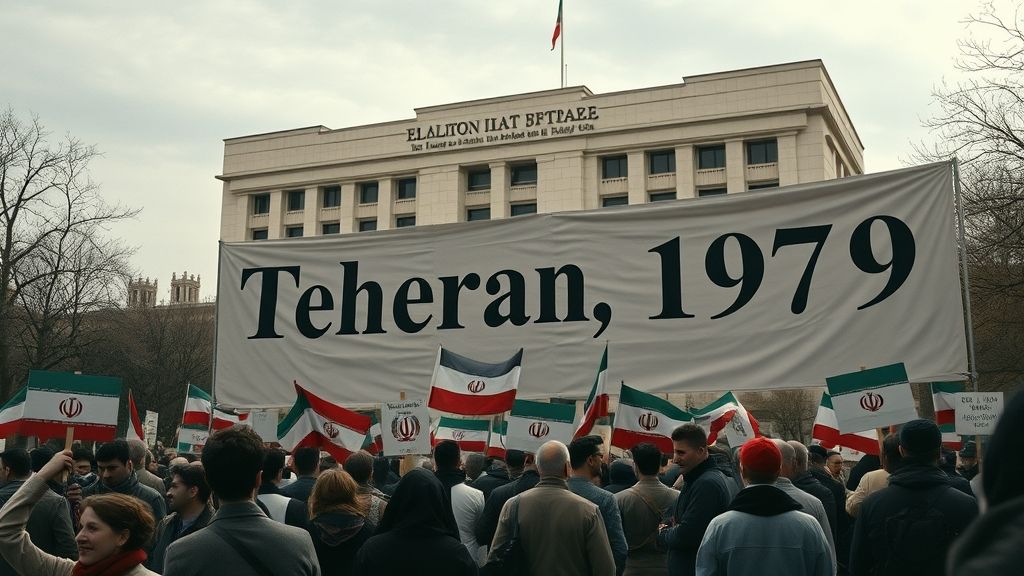
It was a cold, dry evening in Tehran when a crowd of young Iranian revolutionaries thronged the streets, their chants echoing through alleys and courtyards. The air was taut with tension, history unfolding like an ominous cloud on the horizon. Inside the walls of the U.S. Embassy, a fortress of foreign presence, American diplomats and staff were startled by the sudden storming of their sanctuary. What at first seemed a demonstration swiftly morphed into a siege, as the revolutionaries broke in, seizing the embassy and holding 52 Americans hostage for what would become 444 days—the longest hostage crisis in U.S. history. It was a moment frozen in time, a vivid interplay of youthful fervor, shattered trust, and geopolitical upheaval that would reverberate far beyond the borders of Iran.
2. Iran on the Brink: The Seeds of Revolution
To understand the storming of the U.S. Embassy, one must peer into the volatile cauldron of 20th-century Iran. Decades of autocratic rule by Mohammad Reza Shah Pahlavi had left the country a tinderbox of social inequality, political repression, and cultural upheaval. The Shah’s modernization efforts — dubbed the White Revolution — modernized infrastructure but alienated traditionalists, clerics, and many common Iranians. Beneath the sheen of Western-aligned development simmered resentment and unrest.
The 1970s saw a crescendo of opposition. Religious leaders, led by Ayatollah Ruhollah Khomeini, who was exiled in Najaf, Iraq, became the spiritual rallying points for anti-Shah forces. Economic disparities were glaring, and the SAVAK, the Shah’s feared secret police, brutally suppressed dissent. The U.S., seen as the Shah’s principal backer, became a focal point of nationalist anger. It was only a matter of time before this tension boiled over into a full-scale revolution.
3. The Shah’s Flight and Khomeini’s Rise: The Fall of a Dynasty
By January 1979, Iran’s streets were ablaze with protest. The Shah, facing mounting pressure and deteriorating health, fled the country in exile. Into this void stepped Khomeini, an austere cleric whose fiery sermons called for an Islamic republic founded on religious principles. Returning to Tehran in February 1979 amidst jubilant crowds, Khomeini quickly set about dismantling the old regime.
The revolution was not merely political; it was existential, pitting secular modernity against religious tradition. In this turbulent landscape, the U.S. was increasingly cast as the enemy, its embassy a symbol of imperial meddling and betrayal. The embassy came under close scrutiny as the new regime consolidated its power.
4. America and Iran: From Alliance to Animosity
From decades of friendship to sudden enmity, the relationship between the United States and Iran was a remarkable saga. The CIA-backed coup of 1953 that ousted Prime Minister Mohammad Mossadegh entrenched U.S. influence but wounded Iranian sovereignty sentiments deeply. Over the years, the Shah’s regime acted as a staunch American ally in the Middle East, while anti-American sentiment brewed underground.
The revolution marked a dramatic reversal. As Khomeini’s rhetoric grew sharper and Iran’s new Islamic identity solidified, all ties with the West were severed, and American presence became suspect. The embassy, once a hub of diplomacy, was now a recognized target of revolutionary wrath.
5. Inside the U.S. Embassy: Guardians of American Interests
The U.S. Embassy in Tehran was a sprawling compound amid the chaotic heart of the city, staffed by diplomats, intelligence officers, and local employees. Their mission was complex: to protect American citizens, track Iranian political shifts, and maintain relations with a rubber-stamp monarchy.
By late 1979, the embassy’s corridors were thick with anxiety. The advancing revolutionary tide had disrupted normal functions. Staff held emergency meetings but remained hopeful that the diplomatic immunity afforded by international law would protect the mission. Yet, beneath the calm, fear brewed—a gripping premonition of upheaval.
6. The Day of Reckoning: The Embassy Is Stormed
As daylight waned on November 4, an angry mob, buoyed by radical students loyal to Khomeini, gathered outside the embassy’s gates. Their numbers swelled quickly, chanting slogans accusing the U.S. of meddling, imperialism, and betrayal. Using makeshift battering rams and tools, the crowd overwhelmed guards, breaking through barriers with growing ferocity.
Once inside, the invaders seized documents, equipment, and — most alarmingly — hostages. The grotesque image of the beloved American flag being torn down and replaced by the black banner of the revolution became an indelible symbol of the rupture between nations.
7. Faces of the Hostage Crisis: The Captives and Their Captors
Among the 66 initially captured, 52 were held hostage for over a year, enduring endless uncertainty. They were diplomats, intelligence officers, communication experts, and administrative staff — ordinary men and women plunged into extraordinary confinement. Their captors ranged from fervent student militants to ideological hardliners within the new regime.
The captives’ humanity came into sharp focus through their letters, clandestine notes, and personal stories. They oscillated between frustration, hope, resilience, and despair. One hostage, John Limbert, would later describe it as “the hardest lesson in patience.”
8. The World Watches in Shock: Global Reactions and Media Frenzy
News of the embassy seizure sent shockwaves around the globe. Western media broadcast relentless coverage, capturing the tense faces of hostages, the defiant stances of captors, and the weighty silence of governments scrambling for answers. The crisis dominated front pages and evening news, framing a stark battle between East and West.
In the West, outrage mingled with fear. Governments condemned Iran’s actions, international organizations debated legality, and ordinary citizens grappled with the unfolding drama as a gripping yet grim spectacle.
9. Diplomatic Deadlock: Failed Negotiations and Escalating Tensions
Early diplomatic attempts to secure the hostages’ release faltered. Iran’s provisional government wavered between radical factions demanding the Shah’s extradition and pragmatists urging negotiation. The U.S. demanded immediate freedom, insisting that the embassy was inviolable under international law.
Talks were complicated by mutual mistrust, ideological gulf, and the shadow of Cold War geopolitics. The longer the stalemate endured, the more entrenched both sides became, with setbacks and provocations fueling diplomatic paralysis.
10. The Hostages’ Ordeal: Psychological and Physical Trials Behind Bars
Behind the embassy’s walls, the hostages endured often harsh conditions—intermittent isolation, threats, and limited communication. Some principals suffered physical mistreatment; many bore the mental strain of captivity, uncertainty, and humiliation.
Yet, their stories are also of courage and camaraderie. They created routines, supported each other, and found small moments of humanity amid adversity. Their resilience became a touchstone for the American public, embodying stoicism amid crisis.
11. Operation Eagle Claw: The Ill-Fated Rescue Attempt
By spring 1980, frustration in Washington mounted. President Jimmy Carter authorized a daring covert mission—Operation Eagle Claw—to rescue the hostages. Complex, involving multiple aircraft and ground teams, the operation was fraught with risk.
Tragedy struck when mechanical failures and a catastrophic helicopter crash forced mission abort. The failure was a devastating blow to American morale and political standing—a reminder of how perilous clandestine operations can be against an implacable host.
12. The Crisis Deepens: Iran’s Political Calculations
Iran’s revolutionary leadership, grappling with factionalism, external pressure, and the symbolic value of the hostages, maintained a firm grip on the crisis. The hostages were leverage—bargaining chips against the U.S. and a unifying cause domestically.
Khomeini’s public pronouncements and shifting narratives reflected deeper political calculations—preserving revolutionary legitimacy while navigating an unpredictable geopolitical landscape.
13. The U.S. Response: Economic Sanctions and Global Strategy
In addition to diplomatic efforts, the U.S. imposed a series of economic sanctions targeting Iran’s oil exports, froze Iranian assets, and rallied allied nations. The aim was twofold: to pressure Iran into releasing the hostages and to disrupt the nascent regime’s economic foundation.
These measures underscored a new chapter in sanctions as foreign policy tools—precursors to the complex economic standoff that would characterize future U.S.-Iran relations.
14. The Role of the Soviet Union and Cold War Dynamics
The hostage crisis unfolded against the broad canvas of the Cold War. For the Soviet Union, the turmoil in Iran presented both an opportunity and a challenge—potential openings to expand influence yet a volatile environment risking instability on its southern flank.
American intelligence feared Soviet exploitation of the crisis, while Washington worked stealthily to secure allies’ loyalty. The event was a microcosm of the ideological struggle between West and East, where regional conflicts became proxy battlegrounds.
15. The Long Wait: Politics, Elections, and Public Opinion in America
As months dragged on, the crisis became a fixture in American consciousness. Public sympathy for the hostages was profound, fueling anger at Tehran and frustration toward Washington’s apparent impotence.
President Carter’s approval ratings plummeted amid perceived mishandling. The hostage ordeal influenced the 1980 U.S. presidential election heavily, with Ronald Reagan’s campaign promising a stronger stance. The crisis exposed the intersection of foreign policy and electoral politics vividly.
16. Release at Dawn: January 20, 1981, and the End of Captivity
After 444 agonizing days, the hostages were released in the early hours of January 20, coinciding with Ronald Reagan’s inauguration. The timing sent a powerful message—Carter’s administration had secured the release, yet the transfer of power overshadowed celebrations.
The harrowing ordeal ended with scenes etched into collective memory: teary reunions, relief, and reflections on endurance. Yet, the release was not a closure but the opening of a new complex chapter in U.S.-Iran relations.
17. Aftermath in Iran: The Revolution’s Consolidation
In Iran, the hostage crisis helped consolidate Khomeini’s revolutionary government, uniting various factions in defiance of the West. The incident fueled nationalist pride while justifying domestic repression and purges of moderates.
However, international isolation and economic struggle also intensified. The trauma of the crisis shaped Iran’s self-perception as a defiant, sovereign entity challenging Western domination.
18. Legacy of the Hostage Crisis: Diplomatic Norms and International Law
The embassy seizure was a blatant violation of the Vienna Convention on Diplomatic Relations, which guarantees diplomatic immunity and inviolability of embassies. This breach reverberated through international law discourse, prompting reassessments of diplomatic security protocols.
The crisis also became a case study in hostage diplomacy and state-sponsored coercion, influencing how governments prepare for and respond to similar events.
19. Memories and Commemorations: The Crisis in Collective Consciousness
In both Iran and the United States, the hostage crisis remains a potent symbol. American commemorations honor the hostages’ sacrifice, embedding the event in cultural and political narratives. In Iran, it is invoked as a proud moment of resistance during revolutionary rebirth.
Documentaries, memoirs, and commemorative events keep the memory alive, bridging history and identity for new generations.
20. Lessons Learned: The Embassy Seizure’s Impact on Foreign Policy
The 1979 embassy seizure forced a rethink of U.S. foreign policy machinery, especially in hostile or volatile environments. Diplomatic security measures were overhauled, intelligence coordination intensified, and crisis management protocols enhanced.
Moreover, the limits of military solutions, the power of propaganda, and the complexity of ideological conflicts became vivid lessons shaping future policy decisions.
21. Conclusion: A Turning Point in U.S.-Iran Relations
The U.S. Embassy seizure in Tehran was more than a dramatic hostage crisis; it was a watershed moment reshaping the geopolitical order of the Middle East and the nature of modern diplomacy. It exposed the fragile veneer of international relations, where history, ideology, and power collide unpredictably.
As the hostages endured captivity fueled by ideological passion and political ambition, the world witnessed how personal lives intertwined with the currents of history. The crisis remains a haunting reminder of how misunderstanding and mistrust can ignite conflicts that span generations.
Conclusion
The seizure of the U.S. Embassy in Tehran is a story seared into world history—a powerful narrative of revolution, resilience, and rupture. It taught the world about the potency of nationalist fervor, the risks inherent in foreign alliances, and the human cost of geopolitical strife.
But beyond politics and statistics, it is the individual stories—the captives’ courage, the captors’ convictions, the ripple effects on families and nations—that breathe life into this dark chapter. The crisis calls on us to reflect on the fragile threads of diplomacy and the strength required to heal divisions once seemingly insurmountable. It remains an unresolved echo, a reminder that history’s echoes continue to shape the present and challenge the future.
FAQs
Q1: What triggered the storming of the U.S. Embassy in Tehran on November 4, 1979?
A1: The immediate trigger was the U.S. decision to admit the exiled Shah for medical treatment, which angered Iranian revolutionaries who demanded his return for trial. This, combined with long-standing resentment against American support for the Shah, catalyzed the embassy seizure.
Q2: How long were the American hostages held captive?
A2: Fifty-two Americans were held for 444 days, from November 4, 1979, until January 20, 1981.
Q3: Who was Ayatollah Khomeini, and what was his role in the crisis?
A3: Khomeini was the leader of the Iranian Revolution and the country’s Supreme Leader after the fall of the Shah. Though he initially distanced himself from the embassy takeover, he eventually endorsed it, using the crisis to consolidate power.
Q4: What was Operation Eagle Claw?
A4: It was a secret U.S. military mission in April 1980 aimed at rescuing the hostages. The mission failed due to mechanical problems and a crash, resulting in American casualties and a political setback.
Q5: How did the crisis affect U.S. domestic politics?
A5: The protracted hostage situation damaged President Jimmy Carter’s popularity, contributing to his defeat in the 1980 presidential election by Ronald Reagan.
Q6: What were the international legal implications of the embassy seizure?
A6: The takeover represented a violation of the Vienna Convention on Diplomatic Relations, challenging international diplomatic norms and leading to renewed calls for better protection of diplomatic missions.
Q7: How is the hostage crisis remembered in Iran today?
A7: It is celebrated as a symbol of resistance against imperialism and a defining moment in the Islamic Revolution, often invoked in political rhetoric.
Q8: What long-term impacts did the crisis have on U.S.-Iran relations?
A8: The crisis marked the beginning of decades-long hostility, economic sanctions, and diplomatic severance between the two nations, shaping Middle Eastern geopolitics into the present day.