Table of Contents
- The Dawn of Reykjavík: A Frigid Prelude to a Warm Attempt at Peace
- The Global Nuclear Shadow in the Mid-1980s
- Background Currents: Reagan and Gorbachev’s Unlikely Path to Dialogue
- Iceland’s Quiet Stage: Why Reykjavík?
- October 11, 1986: Arrival of the Titans
- The Opening Moments: Setting the Tone in a Stark, Cold Room
- The Spirit of Glasnost Meets the Muscle of the Reagan Doctrine
- The Initial Talks: Between Hope and Hesitation
- A Historic Proposal: The Dream of Zero Nuclear Weapons
- The Cracks Appear: SDI and the Hard Bargaining Tactics
- The Emotional Underbelly: Glimpses Behind the Diplomatic Masks
- Why the Summit Collapsed: The SDI Impasse
- Immediate Aftermath: Respite or Regression?
- The Media’s Gaze: Public Perception and Global Resonance
- The Summit’s Ripple Effect on Future Treaties
- Personalities in the Spotlight: Reagan, Gorbachev, and Their Teams
- Iceland’s Role in Cold War Diplomacy: A Small Island with a Huge Role
- Lessons from Reykjavík: When Titans Almost Agreed to Disarm
- Revisiting Reykjavík: The Summit in Cold War Memory
- Conclusion: The Summit That Didn’t End, But Changed Everything
- FAQs – Resolving the Mysteries of Reykjavík
- External Resource
- Internal Link
The Dawn of Reykjavík: A Frigid Prelude to a Warm Attempt at Peace
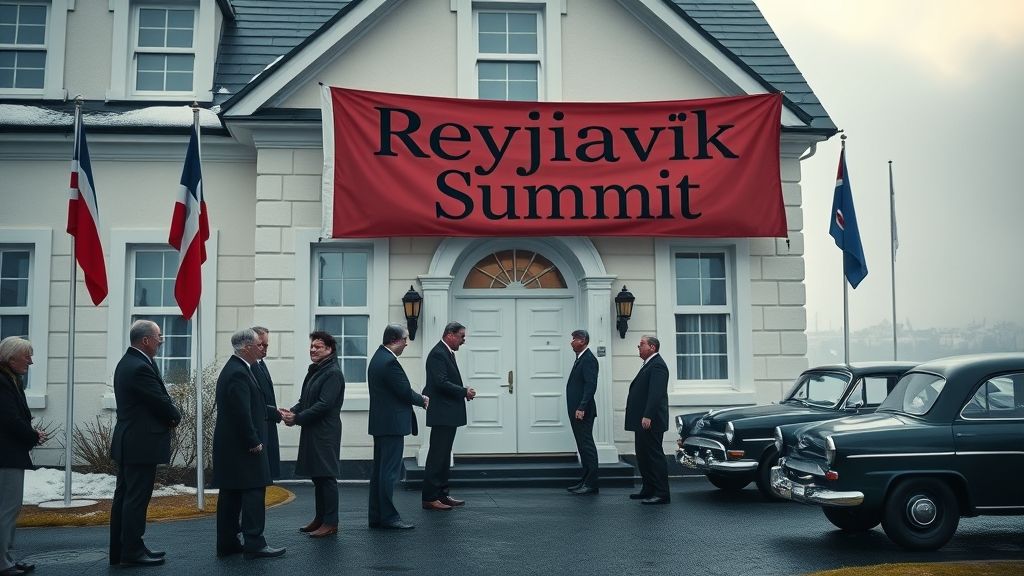
October 11, 1986, dawned over Reykjavík with the cold, clear air of an Icelandic autumn. But inside the austere walls of Harpa Concert Hall, transformed into a summit venue, a much warmer, far more intense atmosphere was brewing. Two of the most consequential leaders of the twentieth century—Ronald Reagan, the eagle-eyed pragmatist of the United States, and Mikhail Gorbachev, the reformer shaking the ancient corridors of Soviet power—had arrived, ready to confront the most dangerous threat shadowing humanity: nuclear annihilation. The chill of the Icelandic breeze contrasted sharply with the electric tension of the talks soon to unfold.
This summit was neither a conventional meeting nor a mere diplomatic ritual. It was a high-stakes gamble that balanced on the knife-edge of mistrust, hope, and global anxiety. For years, the Cold War had woven a complex web of fear and brinkmanship. Yet here, in this remote Nordic capital, the impossible conversation was being attempted—a dialogue aiming to redefine the future of the world.
The Global Nuclear Shadow in the Mid-1980s
By the mid-1980s, the Cold War was in its fifth decade, and the nuclear arsenals of the superpowers had swollen to grotesque proportions. Mutually Assured Destruction (MAD) was the name of the game: a paradoxical peace built on the certainty that if either side struck first, total devastation would inevitably follow. The terrifying calculus had stifled direct confrontations but fueled proxy wars, espionage, and ideological battles from Latin America to Afghanistan.
The global community watched with bated breath as a spiraling arms race surged forward. The introduction of intermediate-range missiles like the Soviet SS-20s and America’s Pershing IIs in Europe destabilized the fragile strategic balance. Protests erupted worldwide; the nuclear threat had become not just a political issue but a cultural anxiety seeping into literature, film, music, and everyday life. The world was poised on a razor’s edge—terrified but yearning for peace.
Background Currents: Reagan and Gorbachev’s Unlikely Path to Dialogue
Ronald Reagan, once a staunch Cold Warrior demonizing the "evil empire," had taken office with an aggressive military posture. Yet, by 1985, a subtle shift was perceptible. Enter Mikhail Gorbachev, a figure who dramatically broke from Soviet orthodoxy with his policies of glasnost (openness) and perestroika (restructuring). Gorbachev’s vision carried the faint but powerful promise of thawing the frozen stalemate between East and West.
The two leaders had met once before in Geneva, in 1985, during a cautious and respectful introduction that set the stage. Despite ideological differences and mutual suspicion, both recognized that the accumulating nuclear arsenals imperiled their nations and the planet. Yet the path to trust was steep and treacherous.
Iceland’s Quiet Stage: Why Reykjavík?
Choosing Reykjavík as the venue was itself a statement of subtle diplomacy. Iceland was a rare nexus of East-West contact: a NATO member geographically close to the Soviet Union but without a standing army to escalate conflict. Its neutral, unassuming presence offered a less pressurized environment away from the capitals teetering on Cold War anxieties.
Here, beneath the vast Northern skies and the silent gaze of glaciers, diplomacy could whisper without the rumble of parades or the glare of media frenzy. The choice of Reykjavík became symbolic: a small, unassuming place offering hope that superpower rivalry could be humanized and subdued.
October 11, 1986: Arrival of the Titans
As twilight faded into an Icelandic night, Reagan and Gorbachev arrived separately at the summit venue. Cameras flashed, journalists buzzed, but inside the building, the air thickened with the weight of unspoken history. Two men, representatives of colossal, often conflicting visions, prepared to meet not as enemies but as leaders seeking common ground.
The opening ceremony was brief but significant, with Iceland’s President Vigdís Finnbogadóttir welcoming both men with a rare blend of warmth and gravity. It was a reminder that history had halted here—poised on a precipice of either cataclysm or breakthrough.
The Opening Moments: Setting the Tone in a Stark, Cold Room
The negotiation room was spartan — a large table surrounded by aides and interpreters, the subdued hum of air conditioning underscoring the formality. Reagan, known for his storytelling charm, entered with a congenial smile; Gorbachev’s demeanor was more reserved, guarded but attentive.
Initial exchanges were cordial but cautious, laden with the cold politeness typical of international diplomacy. Yet beneath the surface, each side was rapidly probing for weaknesses, searching for signs of resolve or compromise. The ice of mutual mistrust began to crack, just slightly.
The Spirit of Glasnost Meets the Muscle of the Reagan Doctrine
Gorbachev brought to the table a new Soviet spirit—one that spoke of openness and fundamental reforms. Glasnost wasn’t just a word; it was a sweeping policy aimed at transparency and dialogue, representing a marked departure from Soviet secrecy. Reagan, meanwhile, was the embodiment of American strength and conviction, fueled by a fierce anti-communist ideology but gradually opening to new paradigms.
This summit became a clash and a dance between these two spirits—each man balancing personal conviction with the pressures of domestic politics and global expectations.
The Initial Talks: Between Hope and Hesitation
The first day was marked by tentative proposals and fragile agreements. Both leaders understood the stakes: every word, every nuance could tilt the balance toward progress or collapse. Certain advances were made on limiting strategic arms and reducing intermediate-range nuclear weapons. Optimism flickered, as aides whispered about possible breakthroughs unseen in years.
Still, hesitation lingered. The memories of decades of conflict couldn’t be swept away overnight. Both sides sought assurances that their core security concerns would be honored and respected.
A Historic Proposal: The Dream of Zero Nuclear Weapons
Then came the moment that electrified the negotiations. Gorbachev astonished the room by suggesting the possibility of the total elimination of all nuclear weapons within a decade—an almost unimaginable idea in the midst of the Cold War. Reagan responded with cautious enthusiasm; the vision of a world without nuclear arsenals seemed tantalizingly close.
This proposal marked the summit’s emotional and political zenith—a dream articulated by diplomat George Shultz as “the most courageous idea ever presented in disarmament talks.” It offered a glimpse of transcending the perpetual cycle of fear and retaliation.
The Cracks Appear: SDI and the Hard Bargaining Tactics
Yet the summit’s promise was short-lived. The U.S. insistence on maintaining the Strategic Defense Initiative (SDI)—nicknamed "Star Wars"—as a non-negotiable defensive technology created a rift. Gorbachev and his advisors saw SDI as a destabilizing factor that could unravel deterrence, tipping the strategic balance.
Negotiations quickly soured, as neither side was ready to budge. The dream of eliminating nuclear weapons collided with the harsh reality of technological distrust and the political need for perceived security advantages.
The Emotional Underbelly: Glimpses Behind the Diplomatic Masks
Despite the deadlock, Reykjavik revealed rare flashes of humanity. Reagan confessed privately to aides his longing for peace, Gorbachev showed impatience with the entrenched Cold War mentalities that resisted change. In moments away from cameras, the two men shared a mutual respect grounded in their awareness of the stakes—not just political but existential.
Anecdotes from aides describe tense discussions marred by frustration but also by moments of humor and sincere attempts to bridge gaps. The ice may have remained, but it cracked enough to show the warmth underneath.
Why the Summit Collapsed: The SDI Impasse
By October 12, the impasse over SDI proved insurmountable. Gorbachev could not accept the U.S. unilateral development of an advanced missile defense system, fearing it would encourage a first strike by undermining mutually assured destruction. Reagan viewed abandoning SDI as a political suicide in Washington, where the program was a symbol of strength.
The collapse was less a failure of will than a reflection of strategic complexities. Both leaders walked away without agreement, not with bitterness, but with the awareness that some issues needed more time and trust.
Immediate Aftermath: Respite or Regression?
The summit’s failure was initially portrayed as a setback in the press, but insiders recognized a tentative breakthrough. The very fact that Reagan and Gorbachev had come so close to an unprecedented agreement sparked renewed hope for future treaties.
Indeed, within a few years, the Intermediate-Range Nuclear Forces Treaty (INF) was signed, a direct legacy of Reykjavík. The summit paved a pathway from confrontation toward cooperation.
The Media’s Gaze: Public Perception and Global Resonance
On both sides of the Iron Curtain, the Reykjavík Summit was met with a mixture of skepticism, hope, and intrigue. Western media highlighted Reagan’s pragmatism and Gorbachev’s courage; Soviet press was more circumspect but cautiously positive.
Globally, citizens yearning for peace found in Reykjavík a symbol that even in the bleakest political moments, dialogue remained possible. The summit became part of the cultural lexicon of détente and disarmament activism.
The Summit’s Ripple Effect on Future Treaties
Reykjavík did not produce an immediate agreement, but it reshaped diplomatic norms. The discussions and proposals framed the architecture for the INF Treaty and subsequent Strategic Arms Reduction Talks (START).
The summit demonstrated that leaders could confront existential threats with honesty and vision. Its legacy permeates arms control efforts to this day.
Personalities in the Spotlight: Reagan, Gorbachev, and Their Teams
Understanding Reykjavík requires appreciation of its protagonists. Reagan’s evolving pragmatism, Gorbachev’s idealistic realism, and the deft diplomacy of figures like George Shultz and Eduard Shevardnadze created a combustible but promising mix.
Their teams negotiated not only policies but egos, political pressures, and personal convictions—human elements often shadowed by Cold War rhetoric.
Iceland’s Role in Cold War Diplomacy: A Small Island with a Huge Role
Iceland’s geographical and symbolic role was unparalleled. The country’s leaders skillfully played host, offering neutrality and modesty that contradicted the summit’s monumental ambitions.
In a way, Iceland embodied the paradox of the Cold War: seemingly remote yet central, small yet powerful in influence.
Lessons from Reykjavík: When Titans Almost Agreed to Disarm
Reykjavík’s greatest legacy lies in its dual lesson: that near-impossible agreements can be approached, and that deep-rooted fears and mistrust can scuttle even the most promising talks. It challenges us to acknowledge the complexity of peace, the necessity of nuance, and the human element behind geopolitical chess.
Revisiting Reykjavík: The Summit in Cold War Memory
In the decades since, Reykjavík has become a symbol of Cold War diplomacy's highest and most fragile aspirations. It features in history books, documentaries, and diplomatic studies as a moment when hope and reality clashed under the Arctic sky.
For historians, it remains a compelling case study in leadership, dialogue, and the search for security in an uncertain world.
Conclusion
The Reykjavík Summit was a defining moment in the Cold War saga—not because it ended with resounding triumph, but because it exposed the depths of fear and hope that define human conflict. In a chilly Icelandic chamber, two men peered into the abyss and dared to imagine a world beyond the nightmare of nuclear war.
Their tentative steps, their near-breakthroughs, and their ultimate retreat echo through history, reminding us that peace is both fragile and fiercely worth pursuing. The summit’s legacy is a testament to perseverance: even in the darkest hours, dialogue can light the path forward, urging future generations to continue what was begun in those crisp October days of 1986.
FAQs
Q1: What was the main goal of the Reykjavík Summit?
The primary goal was to advance arms control negotiations, specifically to reduce nuclear weapons and ultimately limit or eliminate entire categories, aiming for a more stable and peaceful world.
Q2: Why did the Reykjavík Summit fail to produce an agreement?
The summit faltered primarily because of disagreements on the U.S. Strategic Defense Initiative (SDI), which the Soviets feared would disrupt the strategic balance, while the U.S. saw it as essential to national security.
Q3: How did the Reykjavík Summit influence future arms control agreements?
Though it ended without an agreement, Reykjavík laid critical groundwork that led to the INF Treaty in 1987 and influenced subsequent negotiations by setting ambitious goals and fostering trust.
Q4: Who were the key figures involved besides Reagan and Gorbachev?
Key figures included U.S. Secretary of State George Shultz, Soviet Foreign Minister Eduard Shevardnadze, and advisors from both sides who shaped negotiation strategies.
Q5: Why was Iceland chosen as the meeting place?
Iceland was strategically neutral, geographically positioned close to both powers, and without military forces, offering a neutral and peaceful venue for delicate talks.
Q6: What was the public reaction to the summit?
Reactions were mixed but generally hopeful among peace advocates, who saw it as a sign that dialogue was possible even amid entrenched Cold War tensions.
Q7: Did Reagan and Gorbachev maintain personal rapport after the summit?
Yes, despite disagreements, their personal respect continued, facilitating future summits and reinforcing the thaw in East-West relations.
Q8: What lessons does the Reykjavík Summit teach about diplomacy?
It underscores the necessity of balancing idealism and realism, the challenges of overcoming mutual suspicion, and the importance of persistent dialogue in resolving global conflicts.