Table of Contents
- The Spark in the Refugee Camp: Jabalia on December 9, 1987
- Gaza’s Powder Keg: The Historical Backdrop to Uprising
- Roots of Frustration: Social, Political, and Economic Pressures
- The Outbreak: How a Traffic Accident Ignited a Revolution
- The Role of Refugee Camps: Heartlands of Resistance
- Youth at the Forefront: The New Generation’s Defiance
- Women’s Voices Amid Stones and Silence
- From Stone-Throwing to Strategic Organizing: Evolution of the Intifada
- Israeli Military Responses: Force and Fear
- The United States and International Reactions: Between Empathy and Diplomacy
- The Intifada’s Impact on the Palestine Liberation Organization (PLO)
- Media and the World’s Eye: The Intifada’s Graphic Narratives
- Economic Disruptions and the Daily Life of Palestinians
- The Psychological Cost: Trauma, Hope, and Resilience
- Political Ramifications: From Oslo Accords to Present-Day Struggles
- The Legacy of the First Intifada: Lessons and Unresolved Tensions
- Memory and Commemoration: How the Intifada Lives On
- Conclusion: The Enduring Spirit of Jabalia’s Uprising
- Frequently Asked Questions (FAQs)
- External Resource
- Internal Link
The Spark in the Refugee Camp: Jabalia on December 9, 1987
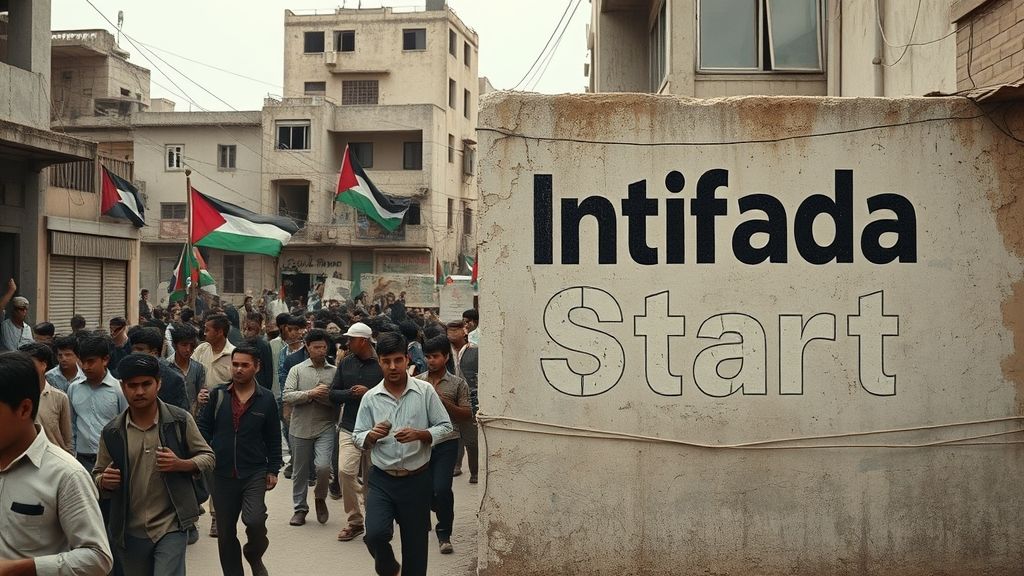
On that cold December day in 1987, the dusty streets of Jabalia—one of Gaza’s largest and most crowded refugee camps—erupted into spontaneous, defiant chaos. What began as a seemingly minor incident rapidly transformed into a wave of popular protest that stunned the world and redefined Palestinian resistance. A traffic accident involving an Israeli military vehicle and Palestinian workers escalated into unrest that could not be contained. Young men and women, armed not with weapons but with stones and unyielding spirit, took to the streets. The air filled with chants, the pounding of feet, and the crackle of burning tires. The first Palestinian Intifada had begun—an uprising that would ripple across the occupied territories for years to come.
The scene in Jabalia was electric yet tense. People gathered along narrow alleyways and worn-out homes, their faces carved from years of conflict and deprivation. No one could have predicted then the profound impacts this uprising would have on the geopolitical landscape of the Middle East, nor the deep human stories woven into every stone thrown and every tear shed.
Gaza’s Powder Keg: The Historical Backdrop to Uprising
To understand why Jabalia ignited in rebellion, one must peer back across decades of bitter history. The Gaza Strip had long been a land overwhelmed by displacement and uncertainty. Since the Nakba of 1948, hundreds of thousands of Palestinians had found themselves dispossessed, crammed into tiny camps with diminished hopes of return. Gaza became a melancholy enclave under Egyptian administration until 1967, when Israel occupied it following the Six-Day War. This occupation sowed the embers of future resistance.
For two decades, the Occupied Palestinian Territories simmered under military rule—curfews, checkpoints, land confiscations, and settlement expansions fragmented daily life. But beneath the surface, a new generation of Palestinians was coming of age—students, workers, mothers, and activists—feeling the sting of humiliation and craving dignity. The status quo was unsustainable, the frustrations lethal.
Roots of Frustration: Social, Political, and Economic Pressures
Jabalia’s crowded camps told a story of crushing poverty and limited resources. Unemployment soared, public services stagnated, and the youth faced a grim future of restricted mobility and shrinking opportunities. Politically, the peace process had stalled, and the Palestinian leadership, scattered and exiled, appeared distant and disconnected from everyday realities.
Israel’s military governance often met any form of dissent with severe repression, breeding an entrenched cycle of violence and despair. Schools became centers not just for education but also for political awakening; mosques echoed with calls for justice. The social fabric began to tear, threads of desperation tightening against the weight of occupation’s daily indignities.
The Outbreak: How a Traffic Accident Ignited a Revolution
The immediate trigger was, paradoxically, an event as mundane as a car accident. On December 8, 1987, an Israeli truck collided with a Palestinian vehicle in Gaza, killing four Palestinians. For many, the incident symbolized the disregard of Palestinian life under occupation. Rumors and anger spread like wildfire. The following day, Palestinian workers in Jabalia protested the tragedy, blocking roads and confronting Israeli soldiers.
The Israeli military responded harshly, and what started as a local walkout mushroomed into a widespread uprising. The young erupted in defiance, flinging stones and voices against armored vehicles and soldiers wielding tear gas and live ammunition. The Intifada was born in that collision of grief and anger—a collective roar demanding recognition, rights, and dignity.
The Role of Refugee Camps: Heartlands of Resistance
Refugee camps such as Jabalia transformed into crucibles for rebellion. These densely populated enclaves, with their labyrinthine alleys and shared hardships, became the organizing grounds for demonstrations, strikes, and communal support.
Camp residents bonded over mutual suffering and a shared heritage of exile—factors that forged a potent sense of solidarity. The camp’s informal leaders emerged, often young men revered for their courage and resourcefulness. Their role was critical in maintaining momentum and coordinating activities under the constant risk of Israeli crackdowns.
Youth at the Forefront: The New Generation’s Defiance
Perhaps no group embodied the spirit of the Intifada more than its youth. Adolescents and young adults, many born into occupation, were unwilling to accept a future dictated by others. Stone-throwing became emblematic—a symbolic act of resistance that, while non-lethal, conveyed a profound challenge to the might of a heavily armed military.
These young Palestinians faced immense dangers, with thousands arrested, injured, or worse. Yet, their courage inspired a wave of civil disobedience that transcended violence: boycotts of Israeli products, strikes, refusal to pay taxes. This grassroots movement was driven less by formal political organizations and more by spontaneous, community-rooted solidarity.
Women’s Voices Amid Stones and Silence
Too often overlooked in the grand narratives of conflict, Palestinian women played crucial roles during the Intifada. In Jabalia and beyond, women stepped out of traditional confines to participate in demonstrations, organize support networks, and maintain families shattered by arrests and violence.
Their involvement challenged patriarchal norms and reshaped social dynamics. Women formed committees for education and healthcare, ensuring that communal life persisted despite the upheaval. Responsible for both nurturing and resisting, these women’s stories remain essential to understanding the full human impact of the Intifada.
From Stone-Throwing to Strategic Organizing: Evolution of the Intifada
Over time, the Intifada evolved from chaotic eruptions to a more organized movement with clear objectives. Local committees formed to plan protests, document abuses, and provide legal and medical aid. Grassroots networks spread like wildfire throughout the West Bank and Gaza, coordinated loosely but effectively.
This maturation marked a turning point. The uprising was no longer just spontaneous outbursts of anger but a sustained campaign for rights and international recognition. Leaders arose within the community, including figures who would later transition into political roles. Yet, the movement remained distinct from the established Palestine Liberation Organization, which criticized some tactics while embracing the spirit of resistance.
Israeli Military Responses: Force and Fear
The Israeli military faced a daunting challenge. The Intifada was not a conventional war; the enemy was an entire population neither formally armed nor unified under a single command. Israel's response was harsh and multi-faceted.
Tear gas, rubber bullets, curfews, mass arrests, and home demolitions became regular tools. The use of live ammunition against demonstrators left hundreds dead and thousands wounded. These tactics sparked international criticism but also hardened Israeli public opinion, creating a complex feedback loop of fear and repression.
The United States and International Reactions: Between Empathy and Diplomacy
Across the ocean, governments watched with a mixture of concern and caution. The United States, a staunch ally of Israel, expressed support for Israeli security but also acknowledged the legitimate grievances of Palestinians. International media coverage brought graphic images into homes worldwide, fueling a growing discourse on human rights.
Arab states showed solidarity with Palestinians, though their support often conflicted with political interests. The United Nations condemned violence on both sides but struggled to mediate a lasting solution. The Intifada laid bare the stark realities of occupation to a global audience, changing perceptions and raising the urgency for peace talks.
The Intifada’s Impact on the Palestine Liberation Organization (PLO)
The uprising challenged the PLO’s dominance over the Palestinian national movement. Until then, the PLO leadership operated largely from exile in Tunisia, disconnected from on-the-ground realities. The Intifada’s grassroots energy and urgency forced the organization to recalibrate.
Yasser Arafat and his associates recognized the power of popular resistance, integrating aspects of the Intifada’s demands into their diplomatic strategies. This rapprochement eventually paved the way for the Oslo Accords, though not without controversy and further division.
Media and the World’s Eye: The Intifada’s Graphic Narratives
One of the defining features of the First Intifada was its media presence. Television broadcasts, newspapers, and photographers captured raw images of children throwing stones, civilians confronting soldiers, and the aftermath of violence. These visuals pierced the veil of political rhetoric.
Notably, footage from Jabalia and other camps conveyed the raw emotions of resistance, earning sympathy and sparking debates worldwide. The image of the “stone-thrower” became iconic—representing David versus Goliath, a youth standing against overwhelming force.
Economic Disruptions and the Daily Life of Palestinians
The Intifada was not merely a political event; it profoundly affected the Palestinian economy and everyday life. Israeli authorities imposed curfews and closed borders sporadically, halting trade and mobility. Local businesses suffered, agriculture faced difficulties, and poverty deepened.
Boycotts of Israeli goods and labor strikes became a powerful tactic, aiming to pressure the occupation economically. Yet the civilian population bore the brunt of hardship—schools operated irregularly, healthcare became strained, and the prospect of normalcy seemed a distant dream.
The Psychological Cost: Trauma, Hope, and Resilience
Beyond the physical toll, the Intifada inflicted deep psychological scars on communities. Constant exposure to violence, arrests, and house raids traumatized families. Yet, from this suffering emerged an unparalleled resilience.
Communities leaned on each other, mutual aid abounded, and stories of courage multiplied. Children wrote poems and songs; elders shared memories of resistance dating back to earlier generations. The Intifada was as much a battle for the heart and mind as it was for territory.
Political Ramifications: From Oslo Accords to Present-Day Struggles
The uprising set in motion a series of political shifts with lasting consequences. It placed Palestinian aspirations at the forefront of international diplomacy and coerced Israel to acknowledge resistance beyond military might.
The Oslo Accords of the early 1990s, while controversial, owed part of their existence to the momentum generated by the Intifada. Yet, unresolved tensions, settlement expansions, and continuing violence meant that the hopes kindled during the uprising remained fragile.
The First Intifada thus became both a beacon of possibility and a reminder of unfulfilled dreams, fueling future confrontations and negotiations.
The Legacy of the First Intifada: Lessons and Unresolved Tensions
Today, the legacy of the Intifada reverberates through Palestinian society and the broader Middle East. It embodies the power of nonviolent and grassroots resistance, the frailty of political solutions, and the complexities of occupation.
Lessons from this period remind us of the human costs of conflict and the enduring quest for justice. Yet, many of the fundamental issues—statehood, refugee rights, and mutual recognition—remain unresolved, perpetuating cycles of frustration and resistance.
Memory and Commemoration: How the Intifada Lives On
In Jabalia and countless communities, the memory of the Intifada is etched deeply in collective consciousness. Annual commemorations, murals, and oral histories keep the spirit alive.
For many, it is more than history—it is a living guide, a symbol of struggle and hope passed to new generations. Memorials honor the fallen, while stories circulate of acts of bravery and solidarity. The Intifada remains a powerful chapter in the Palestinian narrative of identity and perseverance.
Conclusion
The First Palestinian Intifada was not merely an uprising; it was a profound human drama played out in the narrow streets of Jabalia and beyond. It told of the desperation and defiance of a people denied autonomy, yet unwilling to surrender dignity. What started as a tragic accident kindled a flame of resistance that illuminated injustices, reshaped geopolitics, and inspired hope.
Though the struggle continues, the Intifada’s legacy endures as a testament to the strength of grassroots movements and the enduring quest for freedom. It teaches us that history is made not only by armies and treaties but by the courage of ordinary cells of society—youth, women, families—who dare to push back against oppression. In the quiet stone tosses and collective chants of Jabalia, the world witnessed a story of endurance that still resonates today.
FAQs
Q1: What precisely sparked the First Intifada in Jabalia?
A: The immediate trigger was a traffic accident on December 8, 1987, where an Israeli truck collided with a Palestinian car, killing four Palestinians. This tragic event ignited existing frustrations leading to widespread protests.
Q2: Why was Jabalia particularly significant during the Intifada?
A: Jabalia, as one of the largest refugee camps in Gaza, was a densely populated enclave of displaced Palestinians living under dire conditions. Its community networks and shared hardships made it a natural epicenter for resistance.
Q3: How did Israeli forces respond to the Intifada’s outbreak?
A: The Israeli military employed a combination of forceful tactics including tear gas, rubber bullets, live ammunition, curfews, and mass arrests to crush demonstrations.
Q4: What role did women play during the uprising?
A: Women were vital organizers, participants in protests, and caretakers of communal life, often stepping beyond traditional roles to sustain the movement and families amid turmoil.
Q5: How did the First Intifada affect international perceptions of the Palestinian cause?
A: Media coverage brought global attention to the occupation’s realities, generating sympathy for Palestinians and placing pressure on international stakeholders to seek diplomatic solutions.
Q6: What were the long-term political consequences of the Intifada?
A: It compelled the PLO to adjust its strategies, influenced the Oslo peace process, and heightened global awareness of the Palestinian struggle, though many core issues remained unresolved.
Q7: Why is the Intifada considered a model of grassroots resistance?
A: Its largely spontaneous, community-driven nature combined civil disobedience, nonviolent tactics, and youth activism, showing the power of popular movements.
Q8: How is the First Intifada remembered today?
A: Through commemorations, art, oral histories, and collective memory, especially within refugee communities like Jabalia, where its spirit continues to inspire new generations.