Table of Contents
- Dawn of a New Era: April 27, 1994, in South Africa
- The Long Night of Apartheid: Seeds of Liberation
- From Colonialism to Racial Segregation: Historical Roots
- The Rise of Resistance: ANC, PAC, and Other Movements
- The Shadow of Violence: Struggle and Sacrifice
- Negotiating Peace: The Road to Democracy
- The Role of F.W. de Klerk and Nelson Mandela
- International Pressure and Support
- The Electoral Process: Organizing the Impossible
- April 27, 1994: The Day the Nation Voted
- Faces of Hope: Stories from First-Time Voters
- Ballots and Barriers: Challenges on Voting Day
- The Result Broadcast: Mandela’s Historic Victory
- Global Reactions: From Skepticism to Celebration
- The Inauguration of the New South Africa
- Reconciliation and Reconstruction: Forging a Unified Nation
- Beyond the Vote: Challenges Ahead
- The Truth and Reconciliation Commission: Healing a Wounded Society
- Economic Transformation and Social Change
- The Cultural Renaissance Post-1994
- Enduring Legacy of the 1994 Elections
- Lessons for Democracy Worldwide
- Reflections on Freedom: Voices from the People
- Continuing Struggles: Democracy in the 21st Century South Africa
Dawn of a New Era: April 27, 1994, in South Africa
It was a morning unlike any other. A blood-red sun rose over the sprawling landscapes of Pretoria, casting light on a country long divided but now united in hope. The air was soaked with anticipation and an aching sense of liberation. South Africa, a nation scarred by decades of racial apartheid, was taking a monumental step into the unknown: its first democratic election open to all citizens, regardless of color or creed.
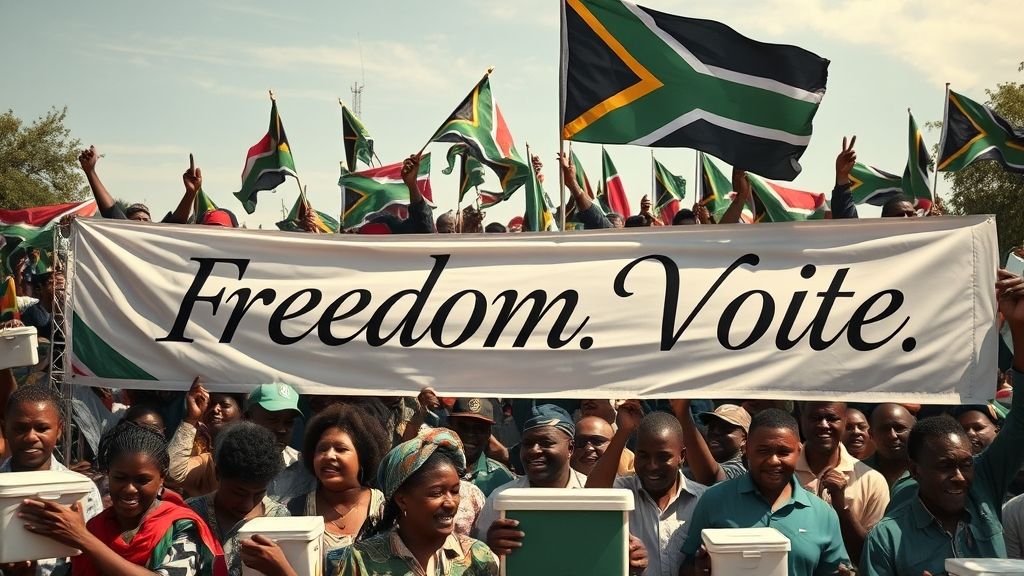
On April 27, 1994, the world held its breath as millions of South Africans queued for hours, some beginning the wait in the predawn darkness. From dusty townships to the bustling streets of Johannesburg, men and women, many of whom had never held the right to vote, stood shoulder to shoulder. Here was a profound testament not only to survival but to the enduring human spirit’s yearning for dignity and justice.
This day marked more than a political act. It was a collective reclaiming of identity, a defiant assertion that the era of oppression was finally over. But beneath the jubilant surface lay profound tensions, unresolved scars, and the precarious hope that democracy would not unravel before it truly began.
The Long Night of Apartheid: Seeds of Liberation
To understand the magnitude of April 27, 1994, one must journey back through the shadows of apartheid — the legalized system of racial segregation that ruled South Africa from 1948. Born out of colonial conquest and racial ideology, apartheid enshrined white supremacy in every facet of life. For nearly half a century, laws rigidly controlled where black South Africans could live, work, and socialize, codifying inequality into the bones of society.
But apartheid was never accepted passively. From its inception, seeds of resistance struggled against the suffocating order. Figures like Albert Luthuli, the first African Nobel Peace Prize laureate, and later Steve Biko, who championed Black Consciousness, carried the torch forward in different ways. The African National Congress (ANC), founded in 1912, and other groups sustained a core of opposition, evolving from peaceful protest to armed resistance as the regime tightened its grip.
Yet, even at the nadir of oppression, the human heart yearned for freedom — a freedom measured not just by the right to vote but by the simple dignity of being acknowledged as equal.
From Colonialism to Racial Segregation: Historical Roots
The roots of apartheid run deep, tangled in South Africa’s colonial history. Dutch settlers arrived in the 17th century, followed by the British Empire’s expanding shadow. The discovery of diamonds and gold in the late 19th century accelerated European interest and intensified competition over land and labor.
Racial segregation began as a series of laws and customs normalizing white domination, but apartheid institutionalized it in an unprecedented manner. The Population Registration Act of 1950 classified every citizen by race, sowing the seeds of exclusion. The Group Areas Act forcibly removed thousands of non-white South Africans from their homes—tearing apart communities and families.
The resulting social geography was one of stark contrasts: wealthy white suburbs bordered by impoverished black townships, still visible today as a legacy of deliberate design.
The Rise of Resistance: ANC, PAC, and Other Movements
The fight for justice was fierce and multifaceted. The ANC, initially pursuing peaceful protest, became the face of the anti-apartheid movement. Alongside the ANC, the Pan Africanist Congress (PAC) emerged in 1959, advocating for African nationalism and a more militant approach.
In 1961, the ANC formed its armed wing, Umkhonto we Sizwe (Spear of the Nation), reflecting a grim resolve to confront apartheid’s violence with armed resistance. The Sharpeville Massacre of 1960, where police opened fire on protesters, killing 69 people, marked a dark turning point — convincing many that peaceful protest alone could not dismantle the regime.
Names like Nelson Mandela, Walter Sisulu, Oliver Tambo, and Desmond Tutu became synonymous with courage, sacrifice, and unwavering hope for a democratic South Africa.
The Shadow of Violence: Struggle and Sacrifice
Apartheid was maintained through violence as much as legislation. The regime’s security forces inflicted brutal repression—arrests without trial, torture, and assassinations were commonplace. The 1976 Soweto Uprising, when thousands of black students protested against the imposition of Afrikaans as a teaching language, ended in a massacre, igniting international condemnation.
Within townships and rural areas, secret police and death squads hunted dissidents, yet hope survived in the underground networks of activists.
It is estimated that tens of thousands of lives were lost in the struggle against apartheid, including civilians caught in crossfire and activists imprisoned for decades. The personal stories of loss and resilience humanize what might otherwise seem an abstract political conflict.
Negotiating Peace: The Road to Democracy
By the late 1980s, internal protests combined with crippling international sanctions rendered apartheid unsustainable. F.W. de Klerk, South Africa’s last apartheid-era president, made the decisive move to dismantle the system. In 1990, Nelson Mandela was released after 27 years in prison, symbolizing the dawn of a new political chapter.
What followed was an arduous negotiation process involving multiple parties: the ANC, the National Party, the PAC, and others. The path to consensus was riddled with mistrust, outbreaks of violence, and political brinkmanship.
Yet, despite daunting obstacles, these talks laid the foundation for a transitional government and, crucially, the country's first multiracial elections.
The Role of F.W. de Klerk and Nelson Mandela
F.W. de Klerk and Nelson Mandela emerged as pivotal figures of this historic transition. De Klerk's announcement to unban liberation movements and release political prisoners shocked the world, yet many questioned the sincerity of the old regime’s overtures.
Mandela, with his characteristic humility and vision, emphasized reconciliation over retribution. His leadership helped temper expectations, encouraging a nation traumatized by decades of hatred to embrace forgiveness.
Their partnership showed a rare political maturity: adversaries committed to a common future, embodying the fragile dance that underpinned South Africa’s democratic birth.
International Pressure and Support
The global community played a significant role. Economic sanctions, cultural boycotts, and diplomatic isolation increasingly squeezed the apartheid regime. The United Nations declared apartheid a crime against humanity.
Yet, support also came from unexpected corners: global figures like Archbishop Desmond Tutu pleaded for peace, while international organizations funded voter education and the logistics of the electoral process.
The world watched closely, invested not only in South Africa’s future but also as a symbol of hope for oppressed peoples everywhere.
The Electoral Process: Organizing the Impossible
Organizing South Africa’s first democratic election was an extraordinary logistical and political challenge. Over 22 million people, many illiterate due to systemic educational inequalities, had to be registered and informed.
The Independent Electoral Commission (IEC) established voter education programs, using symbols instead of words to communicate the act of voting. Ballot papers were printed in multiple languages, and polling stations spread across urban and rural areas, some accessible only by foot.
International observers arrived to attest to the election’s fairness, underscoring the global stakes invested in this moment.
April 27, 1994: The Day the Nation Voted
At last, the day arrived. The atmosphere was electric, a mixture of nervous tension and jubilant celebration. Lines stretched for hours outside polling stations as South Africans—black, white, coloured, and Indian—stood side by side, united in purpose.
Many were voting for the first time. In the faces of elderly women and young men, one could see a century’s worth of dreams finally within reach. Despite isolated violence and logistical hiccups, turnout was remarkably high.
For many, the simple act of casting a ballot was a profound statement: “I count. My voice matters.”
Faces of Hope: Stories from First-Time Voters
Take Zanele, a grandmother from Soweto, who stood in line at dawn, clutching a worn photograph of Mandela. “I never thought I’d live to see this day,” she whispered, tears streaming.
In rural KwaZulu-Natal, Sipho, a young teacher, felt the weight of history on his shoulders: “This vote is for my students—to give them a future I never had.”
These personal accounts embodied the collective deliverance of a nation long burdened by injustice.
Ballots and Barriers: Challenges on Voting Day
Yet, this new dawn was not without shadows. Sporadic violence erupted in some regions, fueled by factions opposed to change. Logistical errors and misunderstandings over campaign rules sown distrust in isolated areas.
Nevertheless, the determination of voters, election officials, and international observers ensured that the voice of the people cut through fear and chaos.
The success of the day was a triumph not just of democracy but of human endurance.
The Result Broadcast: Mandela’s Historic Victory
When the results were announced, a wave of euphoria swept the nation. The ANC won nearly 63% of the vote; Nelson Mandela was poised to become South Africa’s first Black president.
In a televised address to an estimated 1.5 billion viewers worldwide, Mandela spoke with profound humility: “We understand it still that there is no easy road to freedom. We know it well that none of us acting alone can achieve success.”
His message struck a chord globally: here was a leader not just of South Africa, but of humanity’s enduring quest for justice.
Global Reactions: From Skepticism to Celebration
The world greeted the election with cautious optimism. Nations previously critical or indifferent now hailed South Africa as a beacon of hope. Nelson Mandela’s rise transcended politics; he became an icon of reconciliation.
Yet analysts cautioned against idealism, warning that structural inequalities and racial tensions still threatened stability.
Still, as churches, businesses, and schools celebrated, a deep sense of possibility filled the air.
The Inauguration of the New South Africa
On May 10, 1994, the inauguration ceremony was a spectacle of unity and cautious joy. Mandela’s rainbow nation metaphor was manifest: representatives from all races, creeds, and backgrounds gathered to witness a peaceful transfer of power.
The majestic Union Buildings in Pretoria, once a symbol of oppression, welcomed a new chapter framed by hope and shared destiny.
Mandela’s inaugural speech echoed throughout the world, emphasizing forgiveness and nation-building rather than vengeance.
Reconciliation and Reconstruction: Forging a Unified Nation
But democracy was only the beginning. South Africa faced the monumental task of repairing a deeply fragmented society. The Truth and Reconciliation Commission (TRC), chaired by Desmond Tutu, sought to unearth the painful wounds of the past while offering conditional amnesty to perpetrators.
Economic disparities remained staggering. Infrastructure previously reserved for white areas had to be extended across the country. Social programs were launched to heal and rebuild.
The dream of a united South Africa required patience, courage, and unyielding commitment.
Beyond the Vote: Challenges Ahead
Although the elections represented a turning point, South Africa’s path was fraught with challenges: rising crime rates, economic inequality, HIV/AIDS epidemic, and political corruption.
The ANC’s dominance invited criticism and complacency; new political movements began to emerge.
Yet, the political framework created in 1994 provided a platform for ongoing dialogue and contestation — the lifeblood of any democracy.
The Truth and Reconciliation Commission: Healing a Wounded Society
The TRC was revolutionary, blending justice and mercy. Victims of apartheid atrocities gave testimony, often publicly reliving trauma. Perpetrators who came clean were granted amnesty, a process that sparked intense debate worldwide.
This frank reckoning helped pave the way for social healing, emphasizing that acknowledgement and transparency were tools for peace.
Economic Transformation and Social Change
The government embarked on ambitious programs to redress apartheid’s economic legacy: Black Economic Empowerment, land reform policies, and improved access to education.
Progress was uneven and contested. Yet, by the late 1990s, a burgeoning black middle class and renewed investment began reshaping South Africa’s social landscape.
The Cultural Renaissance Post-1994
Freedom unleashed a flourishing of South African art, music, and literature. Voices long suppressed found expression in vibrant new forms — from the global rise of artists like Miriam Makeba to an explosion of township jazz and literature.
Sport, particularly rugby, became a unifying force, symbolized vividly by the 1995 Rugby World Cup held on South African soil.
Enduring Legacy of the 1994 Elections
More than two decades later, the significance of April 27, 1994, reverberates. It offers a model of peaceful transition, reconciliation, and the power of inclusive democracy.
Nelson Mandela’s moral leadership remains an inspiration worldwide, a reminder that freedom is not merely a political act but an ongoing human endeavor.
Lessons for Democracy Worldwide
South Africa’s elections underscore vital democratic principles: enfranchisement, transparency, leadership, and the complexity of nation-building.
Other countries facing division and oppression have looked to its example as a beacon of hope and caution alike.
Democracy is never guaranteed; it must be nurtured relentlessly.
Reflections on Freedom: Voices from the People
Today, South Africans remember that pivotal day with pride and reflection. Elders recount the mix of fear and joy, while youth inherit a nation still striving toward equality.
In the words of Mandela: “Our deepest fear is not that we are inadequate. Our deepest fear is that we are powerful beyond measure.”
Freedom is a journey, not a destination.
Continuing Struggles: Democracy in the 21st Century South Africa
The South African story continues, marked by both promise and challenge. Issues of inequality, governance, and social cohesion remain center stage.
Yet, the foundational democratic moment of 1994 endures as a declaration that no darkness is so deep that hope cannot break through.
Conclusion
South Africa’s first democratic elections on April 27, 1994, were much more than a political event; they were an emotional reckoning, a collective blossoming after decades of despair. It was a day when millions, for the first time, seized the power to shape their destiny—transforming a divided nation into a mosaic of hope, courage, and resilience.
The enormity of the challenges that South Africa faced—and still faces—underscores that democracy is a fragile flame that requires constant tending. But the human spirit revealed on that day is a testament to the power of unity in diversity, forgiveness over vengeance, and above all, the indomitable will to be free.
Nelson Mandela’s words capture the essence of that moment and its enduring legacy: “The time for the healing of the wounds has come. The moment to bridge the chasms that divide us has come.”
As the sun set on April 27, 1994, South Africa stepped into a future filled with promise, bearing the weight of history but tethered to the boundless hope of a true democracy.
FAQs
Q1: What were the main causes leading to the 1994 democratic elections in South Africa?
The elections were the culmination of decades of internal resistance, international pressure, and negotiations aimed at ending the apartheid system of racial segregation and oppression.
Q2: Who were the key figures involved in the transition to democracy?
Nelson Mandela and F.W. de Klerk were pivotal leaders. Mandela represented the liberation movements, while de Klerk initiated reforms that dismantled apartheid.
Q3: How was the 1994 electoral process unique?
It was the first time all South Africans of voting age could vote regardless of race, with extensive voter education conducted in multiple languages, often using symbols for illiterate voters.
Q4: What role did the international community play?
International sanctions and diplomatic pressure helped isolate apartheid South Africa, while observer missions and aid supported the election process.
Q5: What immediate challenges did South Africa face after the elections?
The new government had to address economic inequality, social reconciliation, rebuilding institutions, and controlling sporadic violence.
Q6: How did the Truth and Reconciliation Commission impact South Africa?
It enabled victims to share their stories and perpetrators to seek amnesty, facilitating societal healing through transparency and dialogue.
Q7: What is the lasting significance of the 1994 elections?
They symbolize a successful and peaceful transition from oppression to democracy, inspiring movements worldwide.
Q8: How is April 27 commemorated in South Africa today?
It is celebrated as Freedom Day, a public holiday that honors the nation’s journey toward equality and democracy.