Table of Contents
- Introduction
- The Economic Backdrop of the 17th Century
- Rise of Dutch Trade and Enterprise
- Birth of the Dutch East India Company (VOC)
- The Need for Capital and Risk Sharing
- Concept of Shares and Public Investment
- Creation of the Amsterdam Stock Exchange
- How the First Stock Exchange Operated
- Impact on the Dutch Economy
- Investor Behavior and Market Dynamics
- The Birth of Shareholder Rights
- Early Speculation and Regulations
- Legacy and Influence on Global Finance
- Comparison with Modern Stock Markets
- Lessons for Today’s Financial World
- Conclusion
- External Resource
- Internal Link
1. Introduction
On March 20, 1602, in the bustling city of Amsterdam, a quiet financial revolution began. It was the day the Dutch East India Company (VOC) was officially granted a charter to issue public shares, marking the creation of the world’s first stock exchange. This pioneering move not only changed how business was financed, but also laid the groundwork for the modern capitalist economy.
2. The Economic Backdrop of the 17th Century
✔️ Europe was transitioning from feudal systems to more market-driven economies ✔️ Trade routes were expanding rapidly thanks to maritime exploration ✔️ Nations were hungry for wealth, spices, and dominance in global commerce
The Dutch Republic, with its thriving ports and financial savvy, became a hub for innovation.
3. Rise of Dutch Trade and Enterprise
✔️ Amsterdam became a trade superpower ✔️ Dutch merchants excelled at shipping and commerce ✔️ Colonial ambitions required massive funding
This environment made it the perfect breeding ground for financial experimentation.
4. Birth of the Dutch East India Company (VOC)
✔️ Founded in 1602 by a merger of rival trading firms ✔️ Granted a 21-year monopoly over Asian trade ✔️ Needed huge capital to fund voyages, ships, and soldiers
The solution? Let the public invest and share the risk—and the rewards.
5. The Need for Capital and Risk Sharing
✔️ Long-distance trade was extremely risky and expensive ✔️ Traditional financing couldn’t meet VOC’s scale ✔️ Issuing shares enabled pooling of resources from ordinary citizens
It was the beginning of widespread investment by the general public.
6. Concept of Shares and Public Investment
✔️ Investors bought portions of the company ✔️ Received dividends from trade profits ✔️ Could sell their shares to others
This created a dynamic, tradable financial instrument: the stock.
7. Creation of the Amsterdam Stock Exchange
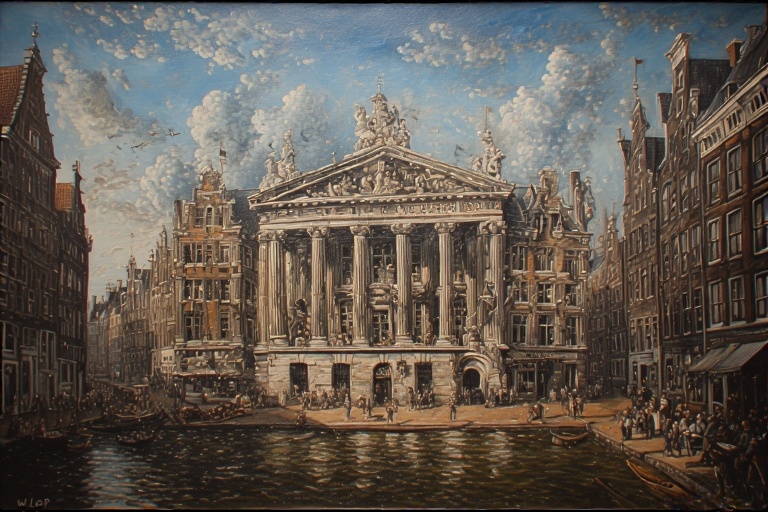
✔️ Located in a designated area in central Amsterdam ✔️ Provided a marketplace for VOC shares ✔️ Investors could buy, sell, and speculate
This physical exchange became the first organized stock market in history.
8. How the First Stock Exchange Operated
✔️ Traders met daily to discuss share prices ✔️ No formal trading hours or digital platforms ✔️ Transactions were recorded in handwritten ledgers
Yet, despite its simplicity, it was remarkably efficient and transparent for its time.
9. Impact on the Dutch Economy
✔️ Injected capital into global trade missions ✔️ Boosted Amsterdam’s status as a financial center ✔️ Encouraged a culture of saving and investing
The Dutch economy flourished under this innovative financial model.
10. Investor Behavior and Market Dynamics
✔️ Rumors and insider knowledge swayed prices ✔️ Investors formed informal clubs and alliances ✔️ Greed, fear, and ambition shaped the market
Human psychology played as big a role then as it does today.
11. The Birth of Shareholder Rights
✔️ Shareholders demanded transparency ✔️ Called for audits and financial reports ✔️ Began influencing company policy
This sparked the early notions of corporate governance and accountability.
12. Early Speculation and Regulations
✔️ Market manipulation emerged quickly ✔️ Dutch authorities began monitoring trades ✔️ Set precedents for later financial regulation
Even in 1602, the need to balance freedom with fairness was clear.
13. Legacy and Influence on Global Finance
✔️ Inspired the rise of stock exchanges worldwide ✔️ Became the foundation of modern investment systems ✔️ VOC model copied by British and French trade companies
The 1602 exchange still echoes in today’s financial architecture.
14. Comparison with Modern Stock Markets
✔️ Speed and technology have transformed trading ✔️ Principles of ownership and dividends remain the same ✔️ Market sentiment still drives volatility
Despite the centuries, the core idea—sharing ownership for capital—remains unchanged.
15. Lessons for Today’s Financial World
✔️ Transparency builds trust ✔️ Diversification reduces risk ✔️ Public participation fuels innovation
The spirit of 1602 reminds us to respect the roots of our financial systems.
16. Conclusion
The founding of the Amsterdam Stock Exchange in 1602 was more than a business move—it was the dawn of modern finance. It empowered the public, spread economic risk, and catalyzed a new era of global trade. From humble gatherings in city halls to billion-dollar trades in seconds, it all began with a bold Dutch experiment over four centuries ago.
17. External Resource
🌐 Wikipedia: Amsterdam Stock Exchange