Table of Contents
- Dawn over the Danube: The Eve of Wagram
- Europe in Turmoil: Setting the Stage for 1809
- The Players: Napoleon Bonaparte and Archduke Charles
- Austrian Ambitions and French Hegemony
- Intelligence and Intrigue: Gathering the Armies
- The Terrain of Wagram: Rolling Fields and Deadly Ground
- Day One: July 5, 1809 — First Clashes and Fierce Resistance
- Night Falls: Regrouping Under Fire
- Day Two: July 6, 1809 — The Decisive Swing of Battle
- The Artillery Duel: Thunder on the Plains
- Cavalry Charges and Infantry Squares: The Theater of War
- Command and Communication: The Fog on the Battlefield
- The Human Cost: Casualties, Courage, and Chaos
- The Aftermath: Napoleon’s Hard-Won Victory
- The Treaty of Schönbrunn and the Remapping of Europe
- Wagram’s Legacy: Military Innovation and Historical Memory
- Voices from the Battlefield: Letters, Reports, and Testimonies
- The Battle’s Place in the Napoleonic Wars
- Reflections on Leadership: Triumphs and Mistakes
- Conclusion: The Price of Empire and the Tide of History
- FAQs: Understanding the Battle of Wagram
- External Resource
- Internal Link
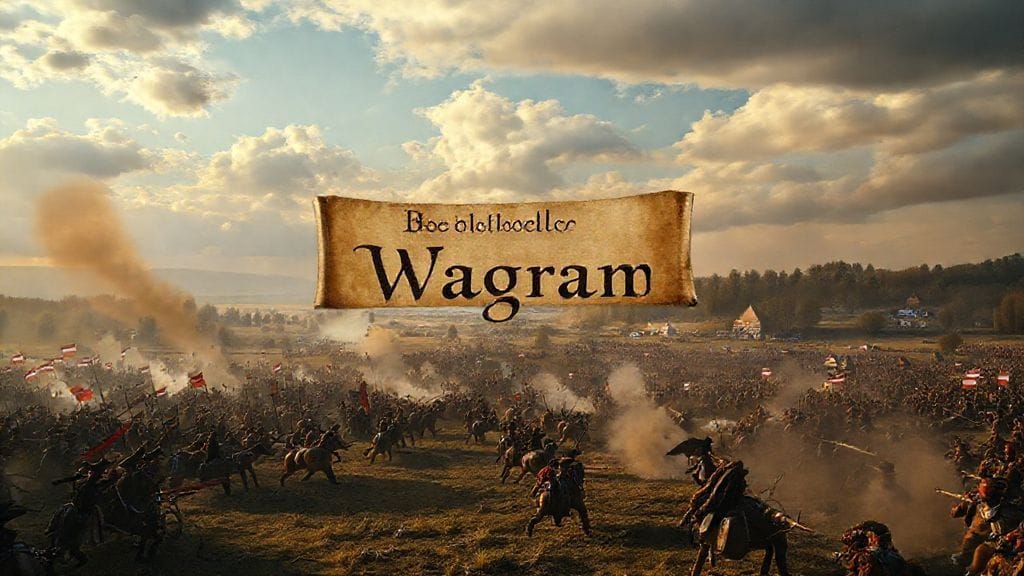
The rising sun spilled amber light across the sprawling fields near Vienna on the morning of July 5, 1809, casting long shadows over the thousands of soldiers poised to fight one of the greatest battles in the Napoleonic Wars. The air was thick with anticipation and the scent of gunpowder yet to be fired. From the French camps, the thunder of drums echoed, matched by the distant murmur of the Austrian forces marshaling on the opposite side. Here, the fate of empires would be decided over two brutal days of combat — the Battle of Wagram.
Dawn over the Danube: The Eve of Wagram
To understand the weight pressing upon both armies that dawn, imagine the great river Danube, winding like a silver snake near the battlefield, embodying the lifeline of Central Europe. Nearby villages stirred uneasily, the hum of impending violence washing over them. Soldiers cleaned weapons, officers dictated orders, and within every heart surged a storm of fear, hope, and duty.
Napoleon Bonaparte, Emperor of the French, stood on a slight rise overlooking the field, his famous cocked hat shading eyes that surveyed the vast Austrian formations led by the resolute Archduke Charles. The clash was inevitable. Months earlier, the fragile peace shattered under the weight of old hostilities and new ambitions. Now, two titans faced each other at Wagram.
Europe in Turmoil: Setting the Stage for 1809
The Battle of Wagram did not emerge from a vacuum but from years of upheaval and power struggles that defined early 19th-century Europe. The Napoleonic Wars, a complex web of shifting alliances and ideological conflicts, had thrown the continent into chaos since 1803. The Holy Roman Empire, fractured and weakened, became a battlefield where imperial ambitions clashed with emerging nationalist sentiments.
In 1805, Napoleon’s stunning victory at Austerlitz had seemingly sealed his grip on Central Europe. But Austria still nursed wounds and grudges, determined to push back. The War of the Fifth Coalition erupted in April 1809, pitting Austria, backed by Britain and other allies, against the French-led forces dominating the continent.
The Players: Napoleon Bonaparte and Archduke Charles
At the helm of the French war machine stood Napoleon, a military genius renowned for rapid maneuvers and psychological warfare. His tactics had rewritten the rules of engagement, but even he faced immense challenges near Vienna. Opposing him was Archduke Charles, brother to Emperor Francis I of Austria and one of the most capable commanders of his day.
Charles embodied a methodical, disciplined approach, aiming to exploit French vulnerabilities and reclaim Austrian honor. Their duel was not just about armies but clashing worldviews and destinies.
Austrian Ambitions and French Hegemony
Austria’s call to arms was more than military resistance; it was a fight for survival. The empire sought to resist French domination and prevent further erosion of its influence in Germanic lands. For Napoleon, controlling Vienna meant safeguarding his empire’s eastern flank and consolidating the Continental System — a blockade aimed at isolating Britain economically.
The stakes were colossal. A French victory meant deeper entrenchment across Europe; a defeat risked unraveling years of conquest.
Intelligence and Intrigue: Gathering the Armies
In the weeks preceding Wagram, spies, scouts, and messengers raced to provide information vital for strategy. Both armies assembled tens of thousands of men — close to 150,000 French troops against nearly 140,000 Austrians — with artillery units numbering in the hundreds.
Coordination was a monumental task, made more difficult by poor communication lines and treacherous terrain. Neither side underestimated the other, yet errors and misjudgments would soon shape the battle’s outcome.
The Terrain of Wagram: Rolling Fields and Deadly Ground
The battlefield itself played a decisive role. The gentle elevation known as the Wagram heights provided a strategic high ground, coveted by both factions. Nearby, the Marchfeld plain stretched wide, offering vast open spaces ideal for massed infantry assaults and artillery barrages — but also exposing troops to deadly fire.
Rivers, villages, and woodlands created complex tactical challenges, forcing commanders to improvise and adapt continuously.
Day One: July 5, 1809 — First Clashes and Fierce Resistance
The first day of battle erupted under a hazy sky. French forces launched probing attacks along the Austrian lines, testing their resilience. Early successes were met with stiff counterattacks as Archduke Charles’s troops showed remarkable discipline.
In one striking incident, the French Imperial Guard was held at bay by Austrian artillery, foreshadowing the brutal struggle to come. The fighting was intense but inconclusive; both sides dug in, nursing wounds and recalibrating plans.
Night Falls: Regrouping Under Fire
As darkness descended, the battlefield was littered with debris — shattered muskets, fallen horses, and the groans of the wounded. Commanders convened in hastily constructed bivouacs, pore over maps smeared with dirt and blood.
Napoleon faced critical decisions: reinforce the left flank or prepare a concentrated assault on the heights that had eluded capture. Communication faltered, rumors circulated, but resolve hardened.
Day Two: July 6, 1809 — The Decisive Swing of Battle
With the dawn came renewed fury. The French unleashed a massive artillery bombardment, shaking the earth and stunning Austrian lines. Napoleon’s famed corps advanced in tightly coordinated waves, exploiting weaknesses spotted the previous day.
Yet the Austrians fought with desperate valor, repulsing attacks and countercharging with fierce cavalry thrusts. The ebb and flow of battle seemed endless — until a massive French assault finally wrested control of the Wagram heights.
The Artillery Duel: Thunder on the Plains
Perhaps no element defined Wagram more than the thunderous artillery duel. With over 500 cannon firing shells, grapeshot, and canister, the plains reverberated under a relentless barrage. Dense smoke blurred the horizon, transforming the landscape into a hellscape.
Napoleon’s innovations in artillery deployment — including massed batteries firing in coordinated volleys — showcased the deadly evolution of warfare. Both sides suffered horrendous losses under this storm of iron and fire.
Cavalry Charges and Infantry Squares: The Theater of War
Amid the cacophony, cavalry units clashed in dramatic charges, their lances and sabers gleaming. Infantry units formed squares to repel saber-wielding horsemen in a brutal dance of offense and defense.
These encounters revealed the brutal, personal nature of Napoleonic combat — soldiers facing death face-to-face amid the roar of musketry and the cries of comrades.
Command and Communication: The Fog on the Battlefield
The fog of war was real — literally and figuratively. Thick smoke, confusion, and rapidly shifting frontlines made coordination difficult. Orders sometimes lost in transmission, commanders’ intentions misunderstood, leading to costly delays and localized breakthroughs.
Napoleon’s leadership was tested by these uncertainties, forcing quick adaptability and risk-taking that defined the day.
The Human Cost: Casualties, Courage, and Chaos
When the fighting ceased, the human toll was staggering. Around 70,000 casualties combined, including dead, wounded, and missing, marked one of the bloodiest battles of the Napoleonic era.
Stories emerged of individual heroism and sacrifice: medics tending shattered limbs under fire, soldiers sharing meager rations in foxholes, the exhausted cries of commanders rallying men for one last charge.
The Aftermath: Napoleon’s Hard-Won Victory
Though victorious, Napoleon’s triumph at Wagram was far from easy. The battle exposed vulnerabilities and cost precious manpower. Yet it forced Austria to sue for peace and solidify French dominance in Central Europe — at least temporarily.
Yet, behind the victory lay warnings: the limits of even Napoleon’s legendary genius, and the growing resistance brewing across the continent.
The Treaty of Schönbrunn and the Remapping of Europe
In October 1809, the Treaty of Schönbrunn formalized Austria’s defeat. The empire lost territory, influence, and resources. The treaty reshaped Central Europe, weakening Habsburg power while reinforcing French control.
This realignment fueled nationalist movements and stirred further conflict — ripples that would eventually undermine Napoleon’s empire.
Wagram’s Legacy: Military Innovation and Historical Memory
Wagram is remembered not only for its scale but as a case study in Napoleonic warfare — the use of massed artillery, tactical coordination, and the challenges of command in fluid conditions. It shaped military theory and inspired generals for generations.
Yet in Austria, Wagram echoed as a somber symbol of loss and resilience, its memory kept alive in books, monuments, and folklore.
Voices from the Battlefield: Letters, Reports, and Testimonies
Eyewitness accounts reveal the human dimension beyond strategy. Letters from soldiers describe the terror of cannon fire; officers’ dispatches capture the ebb and flow of command; civilians recount the devastation on fields and villages.
These voices humanize the immense historical forces at play — men and women caught in the sweep of history.
The Battle’s Place in the Napoleonic Wars
Wagram was a pivotal moment in the Napoleonic Wars, influencing campaigns to come and testing the limits of French expansion. It exemplified the grand scale and devastating destructiveness of early 19th-century warfare.
For historians, it offers a window into the complexities of leadership, logistics, and human endurance under fire.
Reflections on Leadership: Triumphs and Mistakes
Examining the battle reveals both Napoleon’s strategic brilliance and his occasional overreach. Archduke Charles’s resilience also stands out, highlighting the importance of adaptation and morale.
Leadership under fire — with all its decisions, blunders, and courage — shaped outcomes no plan alone could predict.
Conclusion: The Price of Empire and the Tide of History
The Battle of Wagram was not merely a clash of armies but a powerful chapter in the story of empire, ambition, and the human cost of war. It embodied the paradox of glory and tragedy, where brilliant tactics met tragedy on a blood-soaked plain.
Its echoes remind us that history is forged by choices under pressure, and that behind every victory lie stories of sacrifice and resilience that shape our world.
FAQs: Understanding the Battle of Wagram
Q1: What triggered the Battle of Wagram in 1809?
The battle was the culmination of Austria’s attempt to resist French dominance during the War of the Fifth Coalition. Tensions arising from Napoleon’s expansionist policies and prior conflicts like Austerlitz pushed Austria into open war.
Q2: How large were the forces involved in the battle?
Approximately 150,000 French troops faced nearly 140,000 Austrian soldiers, making Wagram one of the largest battles of the Napoleonic era.
Q3: What role did artillery play in the battle?
Artillery was decisive; massed batteries unleashed devastating barrages that shaped battle outcomes. Napoleon’s tactics emphasized concentrated firepower, though the Austrians also employed artillery effectively.
Q4: Who was Archduke Charles, and why was he significant?
Archduke Charles was Emperor Francis I’s brother and a highly respected Austrian commander. His leadership provided stiff resistance to Napoleon, showcasing determined Austrian military capability.
Q5: What were the immediate consequences of the battle?
Napoleon won a costly victory, forcing Austria to negotiate the Treaty of Schönbrunn, which redrew borders and diminished Habsburg power in Central Europe.
Q6: How did the battle influence future military strategy?
Wagram demonstrated the importance of artillery coordination, logistics, and the challenges of command under fire, influencing military doctrine for decades.
Q7: What was the human cost of the battle?
Casualties were tremendous, with around 70,000 soldiers killed, wounded, or missing, reflecting the brutal nature of Napoleonic warfare.
Q8: How is Wagram remembered today?
While overshadowed by battles like Austerlitz or Waterloo, Wagram remains a key study in military history and a symbol of Austrian resilience and French ambition.