Table of Contents
- The Dawn of a New Nation: May 14, 1811
- Asunción on the Brink: The City Before Independence
- Colonial Paraguay: The Grip of Spanish Rule
- Seeds of Discontent: Economic and Social Strains
- The Influence of Revolutionary Waves in Latin America
- The Role of José Gaspar Rodríguez de Francia and Other Patriots
- The Conspiracy in the Shadows: Planning the Breakaway
- May 14, 1811: The Day Paraguay Declared Independence
- The Emotional Moment: Voices, Speeches, and Symbols
- Immediate Reactions: From the Spanish Crown and Local Populace
- Paraguay’s Early Struggles: Political Factionalism and Foreign Threats
- Francia’s Vision: The Guardian of the New Republic
- Paraguay’s Isolationism: A Shield and a Curse
- Economic Transformation: From Colonial Trade to Self-Sufficiency
- Social Changes: Identity, Culture, and Nation-Building
- The Legacy of Independence in Contemporary Paraguay
- International Ripple Effects: How Paraguay’s Independence Reshaped South America
- Commemorating May 14: Memory and Myth in Paraguay
- The Complexity of Paraguayan Independence Compared to Other Latin American Nations
- Reflections: The Human Cost and Triumph of That Historic Day
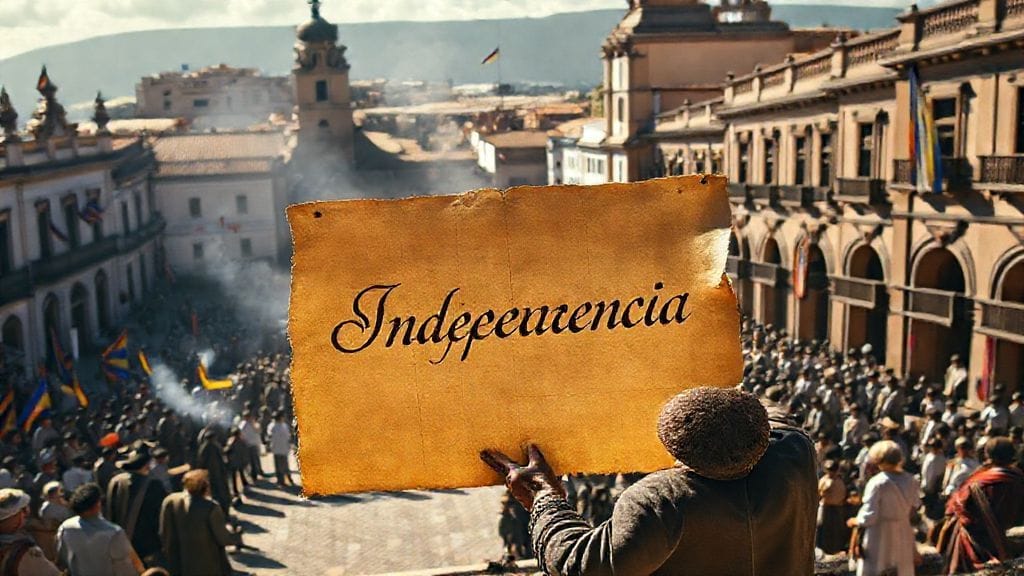
The warm morning sun cast long shadows across the square of Asunción on May 14, 1811. A restless crowd gathered beneath the vast canopy of colonial balconies, their murmurs merging into an undercurrent of hope and fear. The air was thick with anticipation, the scent of smoke from nearby chimneys mingling with the subtle fragrance of fresh earth after a recent rain. Paraguay, a quiet and often overlooked province at the edge of the Spanish Empire, was about to transform its destiny irreversibly. That day, with the courage born in whispers and the firmness etched in collective will, Paraguay proclaimed its independence. It was not a grandiose spectacle like those in Buenos Aires or Mexico City, but a moment saturated with the profound yearning of a people yearning to chart their own course.
The city of Asunción, capital and heart of Paraguay, had for centuries been a modest outpost on the fringes of colonial ambition. Nestled along the shores of the Paraguay River, it was defined more by its isolation than its grandeur. Small adobe houses, red-tiled roofs, and uneven cobblestone streets made up its fabric, while the river lent a quiet pulse to daily life. It was a place where indigenous Guaraní traditions intersected with colonial Spanish customs, creating a unique cultural mosaic. Yet, beneath this calm surface, currents of change stirred. The political and economic constraints imposed by the distant Spanish crown fostered a latent dissatisfaction that had been building for decades. The city, shy of size but rich in resilience, was poised for revolution.
Colonial Paraguay was a land marked by contradictions. Under Spanish rule since the 16th century, it had served as a critical link in the empire’s complex network spanning South America. Its economy revolved primarily around yerba mate cultivation and cattle ranching, commodities modest in scale but vital locally. Unlike the wealthier viceroyalties such as New Granada or Peru, Paraguay remained relatively neglected, often treated as a backwater province more to be controlled than nurtured. Spanish authorities governed from distant Lima or Buenos Aires, binding Paraguay with heavy taxation and trade restrictions that stifled economic growth and bred resentment.
The social fabric of Paraguay was a tapestry interwoven with indigenous Guaraní peoples, mestizos, criollos, and a dwindling number of peninsulares—Spaniards born in Europe. The Guaraní had never been fully subjugated but rather assimilated in various degrees, preserving language and customs that would become national symbols after independence. However, racial and class divisions were stark, and the criollo class—people of Spanish descent born in the Americas—nursed ambitions that often conflicted with colonial hierarchy and privileges. Around the turn of the 19th century, these tensions fused with the fiery winds of change sweeping Latin America.
The age of revolutions was in full swing. The American and French Revolutions had ignited sparks globally, while South America itself had begun to awaken. The 1810 May Revolution in Buenos Aires set a precedent: colonial subjects could rise and assert sovereignty. Paraguay, though geographically removed, was not immune to such ideas bubbling through the Spanish colonies. Revolutionary fervor was carried not only by pamphlets and newspapers but also by returning veterans of the Napoleonic Wars, local patriotism, and frustration with colonial stagnation. Ideas of liberty, self-government, and national identity took root in the minds of the Paraguayan elite and broader populace alike.
Central among the figures who shaped Paraguay's path to independence was José Gaspar Rodríguez de Francia, a man whose enigmatic presence would come to define the new nation. An educated, meticulous, and deeply pragmatic individual, Francia had studied law and philosophy, blending European enlightenment ideals with a profound awareness of Paraguay’s unique circumstances. Alongside other notable leaders such as Fulgencio Yegros and Pedro Juan Caballero, he forged the resistance against Spanish rule, advocating a vision of Paraguayan sovereignty distinct from neighboring countries.
In the years leading to 1811, conspiracies and clandestine meetings took place under the veil of routine life. Paraguay’s elite coordinated moves with precision, understanding that any premature or ill-prepared rebellion would invite harsh reprisals. The conspirators cultivated popular support quietly, navigating the delicate lines between loyalty to the Spanish crown and the emergent idea of a free Paraguay. It was a dangerous tightrope walk, where betrayal or failure meant not just political loss but death.
The morning of May 14 was charged with a mix of secrecy and openness. Around midday, the cabildo—a city council composed primarily of local elites—gathered with urgency. By evening, the proclamation was finalized. In a solemn ceremony at the main plaza, surrounded by citizens from all walks of life, Paraguayan independence was declared. The announcement was sober, imbued with gravitas rather than triumphalism. Words invoked justice, self-determination, and the natural right to govern one’s own destiny.
Witnesses recounted how the crowd, initially stunned, gradually erupted in heartfelt applause, with some moved to tears. Flags were unfurled, and the strains of patriotic songs reverberated through Asunción’s narrow streets. Yet, it was not a day of wild celebration but one weighted with hope and uncertainty. The path ahead was uncharted, fraught with internal divisions and external threats. The Spanish crown, still far from relinquishing control, denounced the act as rebellion, preparing punitive expeditions to regain authority.
Despite these looming dangers, the spirit of independence took firm hold. Paraguay steered a cautious course, wary of larger powers but resolute in its sovereignty. This new republic grappled immediately with the challenge of nation-building. Power struggles emerged among the different factions, revealing divergent visions of Paraguay’s future. Francia soon emerged as the dominant force, guiding the country with an iron will tempered by political shrewdness. His decades-long rule would shape Paraguay’s identity, often veering toward isolationism and self-reliance but solidifying its independence in a volatile region.
Economically, Paraguay faced the daunting task of breaking free from colonial constraints. Trade routes redirected, traditional economic ties severed, and new patterns of self-sufficiency forged. The cultivation of yerba mate, livestock, and local artisanal crafts sustained the population, but growth was slow and uneven. Nevertheless, these efforts nurtured a distinct Paraguayan economy less dependent on foreign powers, reinforcing national pride.
On a social level, the independence struggle cemented the fusion of indigenous and European elements into a shared national identity. The Guaraní language persisted and even flourished as an emblem of cultural unity. New myths and narratives were born, heroes were celebrated, and commemorative practices began to take form. May 14 would eventually become a foundational pillar of Paraguayan historiography and education.
Paraguay’s declaration of independence echoed beyond its borders, influencing the delicate tapestry of South American geopolitics. While larger nations battled ongoing wars for freedom and consolidation, this small republic quietly held its ground. Its isolationism, both a strategic choice and a cultural trait, would later be both a shield against foreign domination and a potential source of stagnation.
Reflecting on the event today, May 14, 1811, stands as a testament to courage, foresight, and collective will. For Paraguayans, it represents not only the birth of a nation but the embodiment of the spirit to rise against adversity and craft a distinct path. Beyond the political proclamation lies a deeply human story of sacrifice, hope, and identity. It reminds us that the making of a nation is as much about the intertwined lives, dreams, and struggles of its people as it is about treaties or battles.
Conclusion
The proclamation of Paraguayan independence on May 14, 1811, was far more than a political act—it was a profound redefinition of identity, aspiration, and destiny. In a landscape dominated by powerful empires and turbulent revolutions, Paraguay chose the path of sovereignty with a quiet but unbreakable resolve. The event marks a pivotal moment where a people, bound by shared culture and common grievances, dared to imagine a future governed not by distant rulers but by their own hands.
Yet, independence was only the beginning. Paraguay’s journey would be shaped by internal struggles, isolationist policies, and the visionary yet sometimes authoritarian leadership of figures like Francia. These complexities reflect the realities of nation-building — fraught with contradictions but propelled by the persistent human spirit. Today, looking back on the anniversary of that fateful day, we see a narrative rich in courage and nuance, reminding us that the quest for freedom is never quick nor easy but always essential.
FAQs
1. What were the main causes leading to Paraguay’s independence in 1811?
Economic stagnation, heavy colonial restrictions, social tensions between criollos and peninsulares, and the influence of revolutionary ideas sweeping Latin America motivated Paraguayans to seek self-rule.
2. Who was José Gaspar Rodríguez de Francia, and why is he significant?
Francia was a leading revolutionary and later the authoritarian leader of independent Paraguay. His vision and governance shaped the early republic’s policies and national identity for decades.
3. How did Paraguay’s independence differ from other Latin American countries?
Unlike some neighbors, Paraguay’s independence was less influenced by external military conflict and more by political conspiracy and negotiation, followed by a period of deliberate isolationism.
4. What immediate challenges did Paraguay face after declaring independence?
The new nation dealt with internal power struggles, threats from Spain seeking to reconquer the territory, economic restructuring, and the task of unifying a diverse population under a national identity.
5. How did Paraguay’s indigenous and mestizo populations influence its national identity post-independence?
Guaraní language and cultural traditions were embraced as central to Paraguayan identity, symbolizing unity and continuity in the face of colonial heritage and new national aspirations.
6. What was the international impact of Paraguay’s independence?
While smaller in scale than other revolutions, Paraguay’s independence contributed to the reshaping of South American geopolitics, presenting a model of sovereignty and self-determination.
7. How is May 14 commemorated in Paraguay today?
The day is celebrated as a national holiday, with ceremonies, cultural events, and educational programs reflecting on the country’s history and fostering patriotism.
8. Did Paraguay maintain peaceful relations with its neighbors after independence?
Relations were complex; Paraguay generally stayed isolated, though it engaged in periodic conflicts and alliances, impacting regional dynamics.