Table of Contents
- A Dawn Like No Other: Caracas, July 5th, 1811
- The Spanish Grip and Colonial Strain
- The Seeds of Liberty: Early Winds of Rebellion
- The Scholar, The Priest, and The Soldier: Key Figures in the Independence Movement
- Caracas in Turmoil: The Political Landscape Before the Declaration
- The Continental Storm: Influences from Other Revolutions
- The Congress of Venezuela: Gathering the Voices of Change
- July 5, 1811: The Moment Liberty Was Proclaimed
- The Content and Craft of the Venezuelan Declaration of Independence
- Immediate Reactions: Joy, Doubt, and Fury
- The Armed Struggle Begins: From Words to Weapons
- Internal Divisions: Federalists and Centralists Clash
- Spain’s Response: The Viceroy’s Repression and Military Campaigns
- Legacy of the Declaration During the War of Independence
- The Role of Indigenous Peoples, African Descendants, and Women
- The Declaration as a Catalyst Across Latin America
- Cultural Echoes: Symbols, Myths, and National Identity
- The Long Road to Complete Independence: Beyond 1811
- Historiography: How Historians View Venezuela’s Declaration Today
- Contemporary Reflections: Independence in Modern Venezuelan Consciousness
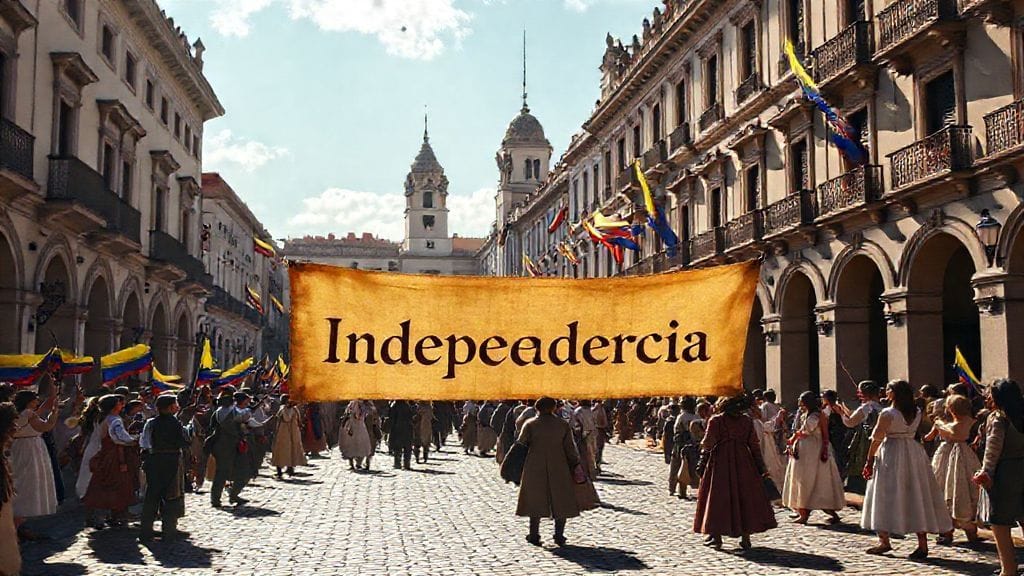
On a breathless morning in Caracas, the capital city gleamed under the fierce Caribbean sun. The air was thick with anticipation, hope, and a fervent sense of destiny. It was July 5th, 1811 — a day that would ripple through centuries. On this day, Venezuela declared its independence from Spanish rule, lighting a flame that had smoldered quietly for decades. But before that historic proclamation, the city’s cobblestone streets were alive with whispered conversations, clandestine meetings, and the restless heartbeat of a people on the cusp of radical transformation.
The plaza where the declaration was read held a crowd both awed and anxious. Men in worn boots and fine coats stood shoulder to shoulder, eyes fixed on the representatives who would challenge an empire. Flags yet unborn fluttered in an unknown future, dreams clung to every syllable spoken. This was not merely a document; it was the bold assertion of a new era.
But to truly grasp the magnitude of this moment, we must piece together a complex mosaic of colonial oppression, enlightenment ideals, fiery personalities, and geopolitical tremors that shook the Atlantic world.
The Spanish grip on Venezuela by the early 19th century was neither monolithic nor unchallenged. For nearly three centuries, the territory had been part of the vast Spanish Empire, a jewel for its resources like cocoa and coffee, yet a burden for its people. Colonial administration was characterized by rigid social hierarchies, heavy taxation, and the assertion of absolute loyalty to the Crown. The indigenous populations had already suffered devastating declines due to disease and forced labor, African slaves toiled under brutal regimes, and creole elites—descendants of Spaniards born in the Americas—found themselves increasingly chafing against the limits imposed by so-called “peninsulares,” officials born in Spain who monopolized political power.
This tension built slowly but surely. Over time, creoles began to forge a distinct identity. Influenced by the intellectual currents of the Enlightenment and inspired by revolutions in America (1776) and France (1789), they questioned the very legitimacy of colonial rule. The inefficiencies and corruption of Spanish governance, combined with the heavy hand of the Inquisition and mercantilist restrictions, seeded discontent. Alejandro de Humboldt’s scientific journeys and observations in Latin America further stimulated an awareness of natural rights and cultural pride.
Long before the guns roared and the papers were signed, the idea of independence was nurtured in salons, churches, and secret societies. The Junta de Caracas, formed in 1810 after Napoleon’s invasion of Spain destabilized the metropole, became the crucible of Venezuelan self-determination. The wave of Bonapartist turmoil across Europe made Spanish authority in the colonies precarious.
Key figures emerged: Simón Bolívar, famously known as "El Libertador," whose youthful vigor and fiery rhetoric galvanized popular support; Francisco de Miranda, the seasoned revolutionary and internationalist; and José Cortés de Madariaga, the impassioned clergyman who preached freedom from the pulpit. Their debates and plans interwove ideas of constitutional monarchy, Republicanism, and federalism—a complex ideological cocktail driven by pragmatism and vision.
Caracas itself was a city of contrasts, where the colonial past and the dawn of modernity collided. The wealthy merchant class gathered in coffeehouses discussing enlightenment philosophy, while artisans and laborers listened eagerly. Political clubs debated the future of their homeland. Yet fear lurked beneath the enthusiasm: rumors of Spanish troops rallying, internal divisions among the creole elites, and the ambitions of neighboring provinces uncertain about the path forward.
This fragile equilibrium broke when representatives from the provinces convened in what would be the first Venezuelan Congress. Their goal was daunting: to chart a course toward self-governance while negotiating the very real risk of war and fragmentation.
The centuries-old Spanish Empire was not alone in facing revolution by 1811. Around the Atlantic, the age of monarchy was crumbling under the weight of new ideas about rights, sovereignty, and justice. The United States, barely three decades into independence, had provided a model and a warning. France’s upheaval had shaken aristocracies everywhere, while the creole armies of South America had heard news of successful insurgencies.
These continental tremors echoed deeply in Caracas, fueling both hope and determination. But unlike in the United States, where unity was solidified early, in Venezuela divergent visions of independence threatened to fracture the nascent nation.
The Congress of Venezuela, meeting in March 1811, was a historic assembly of voices from across the provinces. Its deliberations were intense, often fractious, but ultimately transformative. It was here that the declaration took its shape, a carefully drafted manifesto influenced by Enlightenment principles and the political exigencies of rebellion.
The Congress combined native-born Venezuelan leaders, intellectuals, military officers, and clergy. They wrestled with concepts of sovereignty—would it reside with the people, the provinces, or a centralized government? Should the new nation keep ties with the Spanish crown under a constitutional monarchy, or sever them entirely? For weeks, fervent debates filled the halls, every phrase of the declaration weighed for its implication.
Then came July 5th. On that day, amid public ceremony and buzzing expectation, the Congress unveiled the Declaration of Independence. It marked the official rupture from Spain, a bold statement to the world that Venezuela would no longer be a colonial possession but a free republic.
The declaration was comprehensive, listing grievances against Spanish tyranny: excessive taxation without representation, the suppression of local commerce, disrespect for creole rights, and the denial of civil liberties. It proclaimed the inalienable rights of men, the sovereignty of the people, and the establishment of a republic guaranteeing justice and equality.
The document was read aloud in Caracas’s Plaza Mayor, each word carrying the weight of generations' suffering and dreams. Citizens erupted in applause and tears alike, aware that the road ahead would be perilous but believing profoundly in the justice of their cause.
Yet, this was just the beginning of the storm.
The reaction was immediate and polarized. Loyalists to the Spanish Crown decried the declaration as illegal treason, while revolutionaries across Latin America took inspiration. In Caracas, celebrations gave way to preparations for armed conflict. The declaration was not only a political manifesto but a challenge that demanded military defense.
Venezuela’s geography—vast plains, dense jungles, and rugged mountains—would become the stage for a brutal and protracted war, one that tested the resolve of leaders and the strength of a fledgling nation.
From the peaceful proclamation to the clash of sabers, Venezuela's independence movement quickly took on a martial character. Thousands volunteered to fight, militias formed, and battles erupted across the territory. The forces loyal to Spain mobilized to crush what they saw as rebellion, leading to sieges such as that of Valencia and brutal retaliations.
Here emerged the complexity of the revolutionary cause. Federalists—advocating a decentralized state with provincial autonomy—contested the centralists, who sought a strong unified government. This internal discord complicated the fight against Spain, often weakening the resistance and giving the royalists opportunities to press their advantage.
The Spanish monarchy, though weakened by the Napoleonic Wars in Europe, was determined to retain its richest colonies. The Viceroy dispatched experienced generals to suppress the uprising. Carving a military path through the rich Venezuelan llanos and mountains, royalist forces sought to undo the declaration by brute force.
Their campaigns were marked by sieges, harsh reprisals against suspected revolutionaries, and the rallying cries of loyalty to King Ferdinand VII. The violence inflicted during these years left deep scars on the Venezuelan populace, testing the endurance of both soldier and civilian.
The declaration’s true legacy unfurled during the years of war that followed. It gave the revolution legitimacy, a banner around which patriots rallied through setbacks and victories. Its text and ideals inspired neighboring regions, contributing to the eventual liberation of much of Spanish South America.
Though the ultimate victory would take years and require extraordinary characters like Bolívar’s extraordinary campaigns, the 1811 declaration was the spiritual and political cornerstone of Venezuelan freedom.
It is vital to acknowledge the often overlooked actors within the independence struggle. Indigenous groups, despite suffering dispossession and cultural erasure, negotiated their allegiances carefully, sometimes supporting, sometimes resisting the revolution.
African descendants, many enslaved yet increasingly present in military ranks and urban populations, sought freedom in this tumult. Women, though denied formal political power, played essential roles as informants, organizers, and moral supporters of the cause. Their stories weave into the broader tapestry of independence.
As Venezuela stood boldly against its colonial past, the 1811 declaration resonated far beyond its borders. It contributed to the growing wave of Latin American emancipations that swept the continent in the early 19th century. The ideals contained within its text echoed in Colombia, Ecuador, Peru, and even Mexico, weaving a continental network of resistance.
For many nations, Venezuela’s proclamation symbolized the audacity of subjugated peoples reclaiming their destiny.
The cultural impact of the declaration is still visible today. The Venezuelan flag, the national anthem, statues, and civic rituals all harken back to the revolutionary moment of 1811. Myths surrounding the heroes of independence are taught from childhood, shaping a national identity rooted in courage, sacrifice, and the pursuit of liberty.
Art, literature, and popular culture continuously reinterpret the founding, highlighting both its grandeur and its contradictions.
The road to complete independence was neither quick nor peaceful. While the declaration signaled separation, Venezuela would experience decades of conflict, political chaos, and regional fragmentation before consolidating as an independent republic under Bolívar’s leadership in the mid-1820s.
The process was a marathon, not a sprint, fought on battlefields and in courtrooms, across rural haciendas and bustling ports.
Today, historians see the 1811 Venezuelan Declaration of Independence not only as a milestone but a complex process embedded within global shifts. It is studied for its legal arguments, ideological roots, and its role in shaping a new political order in Latin America.
Scholars debate the contradictions within the declaration, such as the limited inclusion of indigenous and enslaved peoples, or the tensions between federalism and centralism that would resurface later.
For contemporary Venezuelans, the July 5th proclamation remains a source of pride and sometimes reflection on the nation’s journey through turbulence. It is a commemorated day, a reminder that freedom comes at great cost and that the fight for sovereignty is never final.
The echoes of 1811 serve as both inspiration and caution as Venezuela navigates its ever-evolving identity in the 21st century.
Conclusion
The declaration of independence in Caracas on July 5th, 1811, was far more than a statement. It was the eruption of long-buried hopes, grievances, and visions of a new future after centuries of colonial rule. Against the backdrop of global upheaval and regional convulsions, Venezuela’s leaders took the extraordinary risk of asserting sovereignty, fully aware that their words could ignite war and alter the destiny of millions.
Today, the anniversary invites us not just to celebrate freedom but to remember the complexity of revolution: the courage, the contradictions, the sacrifices, and the enduring human longing for self-determination. It reminds us that independence is a process—unceasing, imperfect, but profoundly transformative.
July 5th, 1811, remains a luminous beacon on the map of history, symbolizing the birth of a nation and the indomitable spirit of its people.
FAQs
Q1: What were the primary causes leading to Venezuela’s declaration of independence in 1811?
The causes were multifaceted: colonial economic exploitation, social inequalities between peninsulares and creoles, influence from Enlightenment ideals, and the destabilization of Spain due to Napoleon’s invasion, which created a power vacuum locally.
Q2: Who were the key figures in the Venezuelan independence movement?
Simón Bolívar, Francisco de Miranda, José Cortés de Madariaga, and other creole leaders played fundamental roles in promoting independence through military, political, and religious channels.
Q3: How did the Venezuelan Declaration of Independence influence other movements in Latin America?
It provided an early republican model and rallying point that inspired neighboring independence movements throughout Spanish America, contributing to the eventual collapse of colonial rule on the continent.
Q4: What were the immediate consequences following the declaration?
The declaration triggered armed conflict with royalist forces, internal political divisions, and a protracted war that would last over a decade, testing the resolve and unity of the nascent republic.
Q5: Were all social groups in Venezuela united behind the declaration?
No. Political elites were often divided, and indigenous peoples, enslaved Africans, and women had varied roles and degrees of inclusion; some groups were marginalized or coerced.
Q6: How is July 5th remembered in Venezuela today?
It is a national holiday commemorating independence, marked by celebrations, speeches, and reflections on Venezuela’s history and identity.
Q7: What ideological foundations underpinned the declaration?
The document drew heavily from Enlightenment philosophies, emphasizing natural rights, popular sovereignty, and republican governance as opposed to monarchy and colonialism.
Q8: How long did it take for Venezuela to achieve full independence after 1811?
Full independence came gradually through armed struggle and political consolidation, culminating in the mid-1820s with Bolívar’s campaigns and the collapse of Spanish power.