Table of Contents
- March 1817: A City on the Brink
- The Seeds of Dissent: Pernambuco Before the Revolution
- The Weight of Empire: Colonial Brazil under Portuguese Rule
- Society Divided: Economic and Social Tensions in Recife
- Enlightenment Ideals and Revolutionary Inspiration
- The Spark Ignites: The Outbreak of the Pernambuco Revolution
- Leaders of Change: The Faces Behind the Movement
- A Provisional Government and the Dream of Republicanism
- Battle for Recife: Moments of Hope and Despair
- The Role of Intellectuals, Merchants, and Military in the Uprising
- The Portuguese Crown’s Response: Repression and Retaliation
- The Fall of the Revolution: July 1817 and the Collapse of the Republic
- Trials, Executions, and the Legacy of Martyrs
- Repression and Resilience: Pernambuco After the Revolution
- The Pernambuco Revolution’s Place in Brazilian Independence
- International Echoes: How the Revolution Resonated Beyond Brazil
- Cultural Memory: Commemorating the 1817 Struggle Today
- Lessons in Liberty: What Pernambuco Tells Us About Revolution
- Conclusion: The Enduring Spirit of Freedom in Pernambuco
- FAQs
- External Resource
- Internal Link
March 1817: A City on the Brink
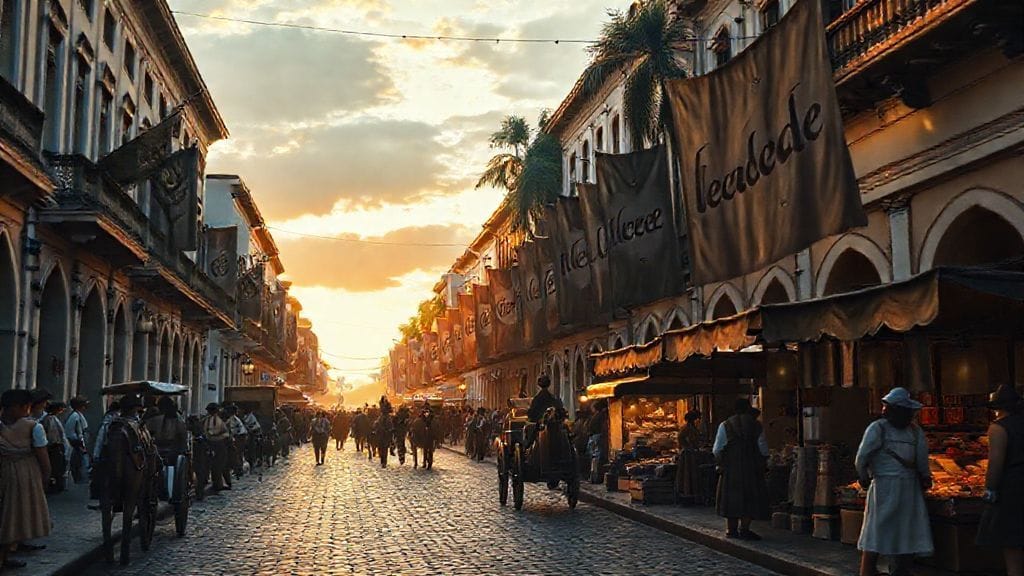
In the humid dawn of March 1817, the city of Recife was suffused with tension—a simmering cauldron of hope, anger, and revolutionary spirit. Narrow cobblestone streets echoed with whispered plans, restless footsteps, and the murmurs of a population no longer content with subjugation. Merchants, soldiers, planters, and intellectuals alike felt a gathering storm in the air: Pernambuco, one of Brazil’s wealthiest provinces, was about to shake the foundations of colonial authority.
As the sun pierced the South American sky, it illuminated more than just the pastel-colored facades lining the port—it cast light, too, on a struggle that would come to define Brazil’s long journey toward independence. The Pernambuco Revolution, unfolding in the heart of Recife in 1817, was not merely a localized rebellion. It was a poignant chapter of radical Enlightenment ideals colliding with empire, a story of aspiration, bloodshed, and the unyielding quest for freedom.
Yet even in those early hours, beneath the veneer of bustling commerce and everyday life, forces were at work that would forever change Pernambuco—and indeed, Brazil itself.
The Seeds of Dissent: Pernambuco Before the Revolution
To understand the Pernambuco Revolution, one must first immerse themselves in the world that preceded it: a world simmering with contradictions. Pernambuco, located in northeast Brazil, was a jewel of the sugar economy, the lifeblood of the colonial empire. Its sprawling plantations produced wealth that filtered upward—but also bred profound inequality and resentment.
By the early 19th century, Pernambuco had matured into a complex society fraught with tension. The planter aristocracy amassed great fortunes, yet relied heavily on enslaved Africans and exploited laborers. Smaller farmers and the growing urban middle classes—merchants, artisans, minor officialdom—felt marginalized, yearning for representation and political voice. Against the backdrop, the Portuguese crown maintained a rigid grip, exacting taxes, controlling trade, and suppressing dissent.
Pernambuco’s urban center, Recife, was a bustling port city but also a crucible of ideas. Coffeehouse debates, imported books, and the influence of the French and American revolutions permeated local consciousness. For many, the promise of liberty was no longer an abstraction but a horizon toward which they painfully reached.
The stage was thus set: a province that combined wealth and exploitation, with a population increasingly restless—and ready to act.
The Weight of Empire: Colonial Brazil under Portuguese Rule
Though Brazil was officially a Portuguese colony, by 1817 it had become far more than a distant outpost; it was a vital source of wealth, especially sugar and gold. Yet the relationship between colony and metropole was one marked by imbalance and resentment.
The Portuguese crown adhered to mercantilist policies that hindered local commerce and favored the mother country. Pernambuco’s planters were constrained by restrictive trade laws, high taxes, and arbitrary governance from Lisbon and Rio de Janeiro. Moreover, for the local elite, political power remained firmly in the hands of Portuguese-born officials—known as “reinóis”—who often arrogated privilege and authority.
By this time, the political climate in Portugal itself was turbulent. The Napoleonic Wars had driven the Portuguese royal family to flee to Rio de Janeiro in 1808, raising questions about legitimacy and control that trickled to Pernambuco. Meanwhile, revolutionary ideals born in Europe and the Americas increasingly challenged the colonial order.
In this crucible of empire, discontent found fertile soil.
Society Divided: Economic and Social Tensions in Recife
The stark divisions of Pernambuco society underpinned the volatility of the 1817 rebellion. While sugar barons lived in relative luxury, the vast majority of the population—enslaved Africans, indentured servants, poor whites—faced brutal exploitation.
Recife, as a city, embodied this contradiction. It was home to cosmopolitan elites, prosperous merchants trading in European goods, but also dense neighborhoods of poverty and racial marginalization. The planter class deeply distrusted the emerging urban professionals and merchants who clamored for reform and parliamentary representation.
Important as well was the military factor: local militia, often composed of mestizos, freedmen, and others marginalized under the colonial edifice, shared grievances with civics leaders. This intersection of social classes created a revolutionary alliance unusual for the time.
It was precisely this complex social web that fueled the rebellion’s initial strength—and eventual unravelling.
Enlightenment Ideals and Revolutionary Inspiration
One cannot overstate the influence of Enlightenment thought on the Pernambuco Revolution. Ideas of liberty, equality, and popular sovereignty coursed through the intellectual circles of Recife.
The French Revolution’s clarion call to overthrow monarchy and hereditary privilege echoed strongly. Likewise, the successes of the American Revolution and the Haitian Revolution inspired hope and caution alike, suggesting both the possibility and peril of radical change.
Local intellectuals and agitators studied these models, translating and disseminating them in Portuguese. The notion that government should gain legitimacy from the consent of the governed struck a chord amid Pernambuco’s political stagnation.
In this sense, the Pernambuco uprising was more than a local revolt: it was an expression of a global wave of revolutionary fervor sweeping the Atlantic world.
The Spark Ignites: The Outbreak of the Pernambuco Revolution
At the heart of the storm were restless hands acting with urgency on the dawn of March 6, 1817. The revolution began with a well-organized coup against the colonial administration.
Led by a coalition of rebellious military officers, merchants, and members of the urban elite, insurgents swiftly took control of Recife. The colonial governor was arrested, and symbols of royal authority were dismantled.
For a brief moment, the city celebrated what seemed like the birth of a new republic. The uprising declared the independence of the province from the Portuguese crown—with ambition and idealism intertwined.
Yet this was no impulsive riot but a calculated, ideological struggle born after months of plotting, alliances, and planning.
Leaders of Change: The Faces Behind the Movement
The Pernambuco Revolution thrived on the charisma and vision of several key figures who lent direction and hope to the cause.
One prominent leader was Domingos José Martins, a military captain who embodied the republican cause and served as a liaison between the army and civilians. His commitment to liberty and justice inspired followers but also made him a target for repression.
Another was José de Barros Lima, a wealthy merchant who used his influence and resources to fund revolutionary activities and articulate political demands.
Finally, Alberto de Oliveira Cavalcanti, an intellectual and lawyer, shaped the ideological foundation of the revolt through his persuasive writings on republican ideals and governance.
Together, these men symbolized the coalition of military courage, economic interest, and intellectual fervor driving Pernambuco’s challenge to empire.
A Provisional Government and the Dream of Republicanism
Following the initial seizure of power, the revolutionaries moved quickly to establish a provisional government aimed at enshrining republican values and political autonomy.
Declarations proclaimed equality before the law, the abolition of some oppressive taxes, and the promise of parliamentary representation. The new government even floated plans to abolish slavery, recognizing its incompatible contradiction with liberty.
The city of Recife became a laboratory of radical governance—a republic in miniature. Coffeehouses and public squares buzzed with debates about the shape of the new order.
Yet, the fledgling government faced daunting challenges: internal divisions, limited resources, and an impending military response by Portugal.
Battle for Recife: Moments of Hope and Despair
The Portuguese crown was not idle. Counterattacks began to tighten around Pernambuco almost immediately.
The revolutionaries, though courageous, were outnumbered and outgunned. Fierce street fighting erupted throughout Recife as royalist forces launched repeated assaults to reclaim the province.
One particularly dramatic episode occurred at Fort São João, where revolutionaries made a last stand amidst cannon fire and musket volleys. Civilians hid in doorways, children flinched at the blasts, and the city’s fate hung by a thread.
Despite brave resistance, the revolt’s military weakness soon became evident. Fractures within the provisional government and lack of coordinated strategy hastened the fall.
The Role of Intellectuals, Merchants, and Military in the Uprising
What makes the Pernambuco Revolution unique is the alliance it forged across social strata—an alliance critical but also fraught with tension.
Intellectuals supplied the ideological blueprint, crafting speeches and manifestos that inspired a vision of a free republic. Merchants supplied funds and logistical support, recognizing the economic benefits of autonomy and freer trade.
Meanwhile, military officers provided the necessary muscle to wrest control of Recife and challenge royal authority. Yet, as battle hardened the movement, these groups often clashed over priorities and strategies, weakening cohesion.
This fragile coalition reveals much about the complexity of revolutionary mobilization.
The Portuguese Crown’s Response: Repression and Retaliation
Portugal’s response was ruthless. Determined to quash the rebellion as swiftly as possible, the crown dispatched reinforcements that overwhelmed the republican forces by July 1817.
Imperial troops executed harsh reprisals. Key leaders were arrested, subjected to summary trials, and executed in public spectacles designed to intimidate.
Thousands more were imprisoned or exiled, and a climate of fear permeated the province. The provisional government dissolved under pressure, and the old colonial order brutally reasserted itself.
Yet, repression could not erase the ideas nor extinguish the spirit that had briefly breathed life into Recife.
The Fall of the Revolution: July 1817 and the Collapse of the Republic
By late July, the revolution, once vibrant and promising, lay in ruins. Recife was retaken by Portuguese loyalists, and the dream of an independent Pernambuco Republic was extinguished.
The fall signaled not only a military defeat but a profound psychological blow to proponents of liberty. The rebel leaders—branded traitors—faced execution or exile.
Yet from this defeat emerged martyrs and legends: stories of bravery at the barricades, of defiant speeches, of ideals stronger than oppression.
In this sense, July 1817 was both an end and a beginning—a painful lesson carved into Brazil’s collective memory.
Trials, Executions, and the Legacy of Martyrs
The aftermath was grim. Trials held by royal courts often denied basic protections, and many defendants faced the firing squad or public hangings.
Figures such as Domingos José Martins were immortalized posthumously as heroes of liberty. Their sacrifices became a rallying point for future revolutionaries.
Common folk, too, preserved memories of the uprising through oral traditions, songs, and clandestine meetings.
The Pernambuco Revolution’s martyrs lived on not just as victims but as inspirational figures embodying the price of freedom.
Repression and Resilience: Pernambuco After the Revolution
Despite the crushing defeat, Pernambuco’s spirit was not extinguished. The province remained a hotbed of political unrest in the years following the rebellion.
New waves of activists studied the failed uprising, adjusting their tactics and hopes. The experience forged tighter bonds among separatists and republicans.
Economically, Pernambuco struggled under strict colonial policies, but cultural and political resistance simmered beneath the surface, waiting for the moment Brazil-wide independence would open new possibilities.
The 1817 revolution was a painful but indispensable moment in this longer narrative of resistance.
The Pernambuco Revolution’s Place in Brazilian Independence
Though often overshadowed by the later independence movements culminating in 1822, the Pernambuco Revolution stands as a vital antecedent.
It was among the earliest sustained attempts to break free from Portuguese domination on Brazilian soil. Its republican ideals would influence later leaders like José Bonifácio and the architects of Brazilian independence.
Moreover, Pernambuco’s example exposed colonial vulnerabilities and shaped Portuguese reactions to growing unrest.
In many ways, the revolution planted seeds that would bloom in Brazil’s eventual emergence as a nation.
International Echoes: How the Revolution Resonated Beyond Brazil
The Pernambuco Revolution did not exist in a vacuum. Its events echoed across Atlantic revolutionary movements.
European and American observers noted the rebellion with interest—both admiring its courage and wary of its contagious potential. Regional powers in South America and the Caribbean monitored Pernambuco closely.
For abolitionists, republican sympathizers, and anti-colonial activists, the uprising was a powerful symbol of resistance against monarchy and slavery.
While short-lived, its resonance rippled beyond Pernambuco's shores.
Cultural Memory: Commemorating the 1817 Struggle Today
Today, Pernambuco remembers 1817 as pivotal to its identity. Public squares bear statues of fallen heroes; schools teach the revolution as a foundational event.
Annual celebrations, reenactments, and scholarly works keep the memory alive—reminding Pernambucoans and Brazilians alike of the enduring value of liberty.
Museums in Recife preserve artifacts and documents from the period, inviting reflection on the costs and rewards of revolutionary struggle.
This cultural memory sustains the flame kindled over two centuries ago.
Lessons in Liberty: What Pernambuco Tells Us About Revolution
The Pernambuco Revolution teaches us about the complexity of fighting for freedom under oppressive regimes: the power of ideas, the challenges of coalition-building, and the unpredictable tides of history.
It reveals how revolutionary dreams can ignite communities but also fall victim to divisions and retaliation.
Yet, above all, it shows that even crushed uprisings lay the groundwork for future change—how sacrifice and vision transcend defeat.
History’s pages are richer for Pernambuco’s contribution.
Conclusion: The Enduring Spirit of Freedom in Pernambuco
The Pernambuco Revolution of 1817 may have lasted but a few months, yet its impact transcends time. It was a crucible in which ideas clashed with empire, where the oppressed dared to dream of self-determination amid overwhelming odds.
Though crushed by Portuguese might, the revolution embodied a yearning for justice, equality, and governance by the people, ideals that would eventually sweep Brazil and much of Latin America.
The streets of Recife remember the courage of those who stood for liberty—reminders that the fight for freedom is often painful and fraught but inherently human and indispensable.
As we reflect on Pernambuco’s story, we honor a chapter etched in sacrifice and hope—a testament to the enduring spirit of revolution.
FAQs
Q1: What were the main causes of the Pernambuco Revolution?
A1: The revolution stemmed from a mix of economic grievances, political exclusion under Portuguese colonial rule, social inequality, and inspiration from Enlightenment and other Atlantic revolutions. Local elites and military figures sought greater autonomy and republican governance.
Q2: Who were the key leaders of the Pernambuco Revolution?
A2: Notable leaders included Domingos José Martins, a military captain; José de Barros Lima, a wealthy merchant; and Alberto de Oliveira Cavalcanti, an intellectual lawyer. Each played pivotal roles in organizing and directing the revolt.
Q3: How did the Portuguese crown respond to the uprising?
A3: The crown swiftly deployed troops to suppress the rebellion, retook Recife by July 1817, and executed many leaders. Repression was harsh, intended to deter further unrest.
Q4: What was the outcome of the Pernambuco Revolution?
A4: The revolutionaries were defeated, the provisional government dissolved, and royal authority restored. However, the revolt’s ideals lived on and influenced later independence movements.
Q5: How is the Pernambuco Revolution remembered today?
A5: The revolt is commemorated in Pernambuco through monuments, education, cultural events, and public memory as a symbol of early resistance against colonial rule.
Q6: Did the revolution have any impact outside Brazil?
A6: While primarily a regional event, the revolution resonated in the wider Atlantic world, inspiring other anti-colonial movements and contributing to the spread of republican ideals.
Q7: Was slavery addressed during the revolution?
A7: Yes, the provisional government expressed intentions toward abolition, seeing slavery as incompatible with republican values, though it was never fully abolished at that time.
Q8: How does the Pernambuco Revolution fit into the broader story of Brazilian independence?
A8: It was one of the first significant organized attempts at independence and republicanism in Brazil, laying groundwork for the eventual break with Portugal in 1822.