Table of Contents
- A Storm Brewing over the River: Buenos Aires in 1819
- Echoes of Revolution: The Legacy of 1810 and the Road to Congress
- The United Provinces of the Río de la Plata: A Fragmented Dream
- The Call to Assemble: Convening the Congress of the United Provinces
- January 1819: The Congress Takes Shape in the Heart of Buenos Aires
- Ideologies in Clash: Federalists and Centralists at the Table
- The Looming Shadow of Spanish Reconquest: Urgency and Fear
- Battles Beyond the Chamber: Military Threats and Political Intrigues
- The Acts Passed: Legislation That Sought Unity Amid Chaos
- Key Figures of the Congress: Patriots, Visionaries, and Power Players
- The Struggle Over the Constitution: Early Attempts at Governance
- Economic Realities: The Fragile Finances of a New Nation
- The Role of Indigenous and Afro-Argentine Populations in the Debate
- Press and Public Opinion: The Congress in the Eyes of the People
- Foreign Interests and Diplomacy: Britain, Spain, and Neighbors Watching
- The Crumbling Consensus: Signs of Dissension and Fragmentation
- January’s Legacy: Short-Lived Triumph or Foundation Stone?
- The Aftermath: Political Repercussions in Buenos Aires and Beyond
- The Congress Acts’ Influence on Later Constitutions
- How the 1819 Congress Reflects the Making of Modern Argentina
- Memory and Myth: The Congress in Argentine Historical Narrative
- Archives and Discoveries: Preserving the Acts Through Time
- Lessons from a Tumultuous Assembly: Unity, Division, and Nation-Building
- The Congress in Context: Latin American Independence Movements
- Conclusion: The Spirit of 1819 in Today’s Argentina
A Storm Brewing over the River: Buenos Aires in 1819
The humid summer air in Buenos Aires was thick with anticipation, sweat, and the unwelcome taste of uncertainty. It was January 1819. The cobblestone streets buzzed with horsemen and messengers, rumors and whispers swirling like the dust kicked up by cartwheels. The Río de la Plata, majestic and restless, reflected a sky heavy with clouds and portent. Here, in the heart of the city, the fate of the United Provinces was about to be wrestled over in a congress unlike any other—a gathering born of revolution, desperate hope, and the high stakes of nation-building.
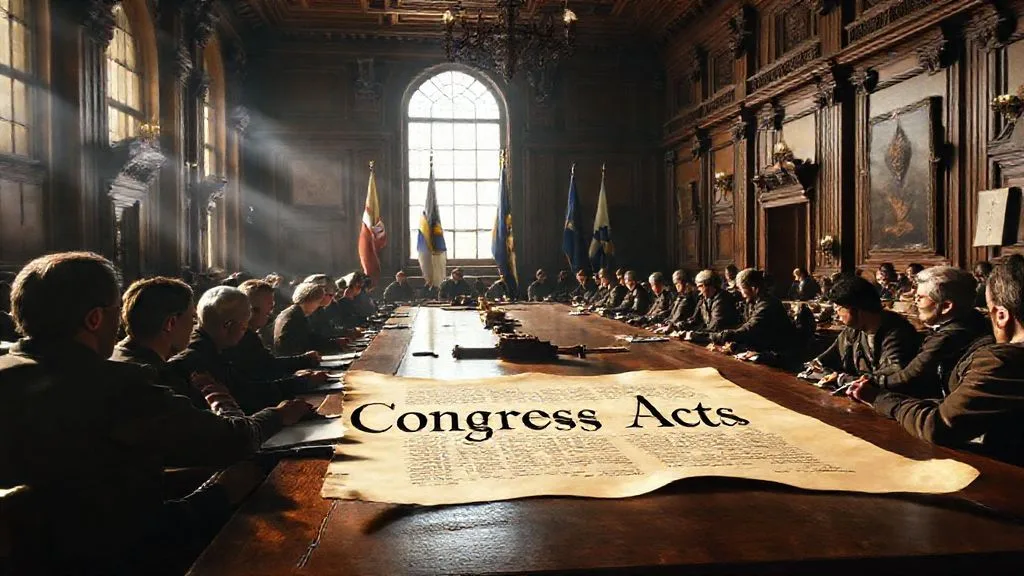
The Congress of the United Provinces of the Río de la Plata had convened amidst crisis. New world and old world collided, as residual colonial legacies clashed with visions of independence. The acts to come would be etched onto parchment, but their impact would ripple far beyond the ink, carrying the fragile dreams of a people yearning for identity, sovereignty, and peace.
Echoes of Revolution: The Legacy of 1810 and the Road to Congress
It all began nearly a decade earlier, in 1810, when the May Revolution shook the foundations of colonial authority in Buenos Aires. The Viceroyalty of the Río de la Plata, an immense and unwieldy Spanish domain spanning modern Argentina, Uruguay, Paraguay and parts of Bolivia, found itself rattled by the winds of change. The removal of Viceroy Baltasar Hidalgo de Cisneros marked the start of a turbulent process striving to replace imperial rule with local governance.
But the path was not straight. The newly self-styled United Provinces of the Río de la Plata were a patchwork of provinces with divergent interests. Buenos Aires, the dominant economic and political center, viewed itself as the natural leader, yet provinces like Santa Fe and Córdoba fiercely defended their autonomy. The clash between centralism and federalism began to take permanent shape.
The United Provinces of the Río de la Plata: A Fragmented Dream
By 1819, the fragile alliance that had held during the early revolutionary wars was fraying. The provinces pulsed with aspirations and suspicions in equal measure. The grand vision of a unified state often collided with local realities: distinct economies, lingering Spanish loyalists, indigenous populations with their own stakes, and the constant threat of Portuguese invasion from Brazil.
Buenos Aires’ merchants and political elites pushed for centralized control to stabilize commerce and defense, while hinterland leaders argued for federalism that would preserve provincial self-rule. Into this turbulent brew stepped the Congress—a fragile hope for dialogue and structure.
The Call to Assemble: Convening the Congress of the United Provinces
The Congress was no mere formality. Against daunting odds, representatives from across the United Provinces were summoned to Buenos Aires. This was a major political gamble: could the diverse actors coalesce to form laws, define governance, and solidify the independence dream? The convocations themselves revealed deep tensions over representation and legitimacy.
January 1819 saw an intense flurry of activity as deputies arrived, fraught with ambition, distrust, and a shared sense of historical gravity. The streets around the Cabildo and colonial buildings filled with the chatter of different dialects and ideologies.
January 1819: The Congress Takes Shape in the Heart of Buenos Aires
The Congress's opening sessions in January were marked by heated debate and long nights. The delegates came with personal mandates but also the weight of their provinces’ hopes. The specter of Spanish reconquest haunted every discussion, forcing urgency upon even the most entrenched disputes.
For the people of Buenos Aires, the Congress was both beacon and battlefield. Crowds gathered outside, newspapers argued, and the coffeehouses became hotbeds of political deliberation.
Ideologies in Clash: Federalists and Centralists at the Table
At the core of the Congress's struggle lay an ideological clash familiar to emerging Latin American republics: federalism versus centralism. The centralists—dominantly dockside merchants and bureaucrats from Buenos Aires—viewed centralized authority as the necessary response to internal chaos and external threats. They pushed for a strong executive and uniform policies.
The federalists, including rural and provincial leaders, feared domination and loss of local sovereignty. They sought a loosely connected confederation guaranteeing provincial autonomy. The debates grew heated, revealing fractures that threatened to shatter the Congress itself.
The Looming Shadow of Spanish Reconquest: Urgency and Fear
Behind the ideological wrangling lurked a more pressing menace—the possibility that Spain, rallying its forces after the Peninsular War, would crush the rebellion. The memory of brutal crackdowns throughout Spanish America galvanized many delegates to put aside differences—at least momentarily.
This existential threat added a palpable urgency; the acts passed were not mere administrative measures but survival tools. The fragile unity was as much a product of fear as of hope.
Battles Beyond the Chamber: Military Threats and Political Intrigues
The Congress’s work was shaped by ongoing military struggles. Outside the halls, generals like José de San Martín and Manuel Belgrano maneuvered armies, while political factions jostled for influence. In Buenos Aires, factions known as “unitarios” and “federales” whispered conspiracies, plotted alliances, and sometimes spilled blood.
The Congress became not only a legislative body but a theatre of power struggles—a microcosm of the new nation’s chaotic birth.
The Acts Passed: Legislation That Sought Unity Amid Chaos
Despite the cacophony, the Congress succeeded in passing several key acts. They attempted to organize the army, regulate trade, and outline the rudiments of a national government. One law sought to clarify citizenship rights; another established rules for provincial representation.
Yet these acts all bore the marks of compromise and hesitation—reflecting a nation unsure of its shape.
Key Figures of the Congress: Patriots, Visionaries, and Power Players
Several personalities stood out in the unfolding drama. Juan Martín de Pueyrredón, an influential leader and future Supreme Director, played a critical role in shaping debates. Other delegates like Manuel Dorrego infused federalist rhetoric, while staunch centralists like Bernardino Rivadavia pushed for institutional modernization.
Their interactions were at times cordial, often confrontational, always charged with idealism and pragmatism.
The Struggle Over the Constitution: Early Attempts at Governance
The Congress in January 1819 tentatively approached the idea of drafting a constitution, aware that such a document could bind or break the union. Attempts to create a charter that balanced provincial autonomy with centralized authority quickly ran into roadblocks.
The elusive constitution symbolized the country’s deeper identity crisis—how to govern a diverse people under one banner.
Economic Realities: The Fragile Finances of a New Nation
Economics weighed heavily on the Congress’s agenda. The war had drained resources; trade was disrupted; inflation soared. Buenos Aires’ port was vital, but export taxes, blockades, and shortages bred discontent.
The Congress tried to devise financial policies aimed at stabilization—tax reforms, tariffs, and attempts to attract foreign loans—but the instability undercut success.
The Role of Indigenous and Afro-Argentine Populations in the Debate
Though often sidelined in official records, indigenous and Afro-Argentine communities were present realities. Some delegates raised concerns about their rights and participation, but systemic exclusion remained entrenched.
Their struggles and contributions would eventually influence broader national movements, though 1819 Congress acts largely reflected elite priorities.
Press and Public Opinion: The Congress in the Eyes of the People
Buenos Aires’ newspapers published passionate editorials, sometimes praising the Congress as a symbol of progress, at other times condemning it as self-serving politics. Pamphlets, debates in taverns and plazas, and the spread of political clubs showed an engaged, if fragmented, public.
The Congress was both institution and spectacle, a focus of hopes and frustrations.
Foreign Interests and Diplomacy: Britain, Spain, and Neighbors Watching
International eyes watched the Congress with cautious calculation. Britain, interested in trade, offered delicate support; Spain sought to reclaim lost lands; neighboring Brazil eyed the region’s instability.
Diplomatic negotiations and clandestine correspondence underscored the congress’s importance in a wider geopolitical chessboard.
The Crumbling Consensus: Signs of Dissension and Fragmentation
As January wore on, fault lines deepened. Provinces withheld delegates; factional quarrels intensified; some insurgent groups questioned the Congress’s legitimacy. The momentum slowed, consensus rusted.
The dream of a united polity appeared more fragile than ever, foreshadowing years of civil war and disorder.
January’s Legacy: Short-Lived Triumph or Foundation Stone?
Though the Congress would not produce a lasting constitution or stable government, its acts in January 1819 represented a bold, if imperfect, attempt to institutionalize independence. It set precedents; it created a language of national unity; it crystallized ideological conflicts.
The session was thus both a beginning and a warning.
The Aftermath: Political Repercussions in Buenos Aires and Beyond
The political turbulence following the Congress reshaped the United Provinces. Buenos Aires increasingly came under centralist control, while provinces pursued their paths. Military coups, rebellions, and shifting alliances became common.
Yet the idea of a united Argentina—however contested—remained alive.
The Congress Acts’ Influence on Later Constitutions
The 1819 legislative attempts, though limited, informed the drafting of the 1826 and ultimately the 1853 Argentine Constitution. Concepts of federalism, executive power, and civil rights traced back to these origins.
Historians see the Congress acts as stepping stones in the long constitutional evolution.
How the 1819 Congress Reflects the Making of Modern Argentina
The 1819 Congress encapsulates the paradoxes of Argentine nationhood: conflict and conciliation, diversity and unity, aspiration and betrayal. Its story reveals how messy, passionate, and resilient the making of a country can be.
Memory and Myth: The Congress in Argentine Historical Narrative
Over centuries, the Congress’s place has waxed and waned in textbooks, songs, and monuments. Sometimes glorified as a heroic founding moment, sometimes critiqued as naïve or elitist, it remains a touchstone for debates about national identity.
Archives and Discoveries: Preserving the Acts Through Time
The survival of congressional records is a story of archivists, historians, and serendipity. Many documents were lost or dispersed; others rediscovered have shed new light on debates, colorful personalities, and forgotten ideas.
Lessons from a Tumultuous Assembly: Unity, Division, and Nation-Building
The 1819 Congress teaches that forging a nation demands compromise, courage, and patience. Its failures remind us that political coexistence is difficult but necessary. Above all, it embodies the restless spirit of a people striving for self-definition.
The Congress in Context: Latin American Independence Movements
Placed alongside other congresses in Chile, Colombia, and Mexico, the Río de la Plata’s assembly shares common themes: struggle against empire, contested sovereignty, and the painful birth of republics.
This regional lens highlights both unique Argentine features and broader continental dynamics.
Conclusion
The United Provinces of the Río de la Plata Congress of January 1819 was a defining moment of hope and hardship, of ideals meeting stark realities. In the sweltering heat of Buenos Aires, diverse voices gathered to shape a future that was at once uncertain and compelling. Though the Congress’s acts did not immediately forge a lasting state, they kindled the embers of nationhood.
Today, as Argentina reflects on its origins, the 1819 Congress stands as a testament to the courage, conflict, and complexity that underpin every quest for independence. It reminds us that nation-building is never linear and that the dreams of one generation set the foundation for those to come. The Río de la Plata’s story in 1819 is at once a chapter closed and a living legacy—an eloquent dialogue between past and present.
FAQs
Q1: What were the main causes behind the convening of the 1819 Congress in Buenos Aires?
A1: The Congress was convened to address the political fragmentation and governance challenges following the May Revolution and to attempt uniting the diverse provinces under laws defining sovereignty and administration amidst the threat of Spanish reconquest.
Q2: Who were the key ideological factions in the Congress, and what did they represent?
A2: The two primary factions were the centralists, advocating strong centralized government based in Buenos Aires, and the federalists, defending provincial autonomy and decentralized power.
Q3: What impact did the Congress’s acts have on the region’s political development?
A3: Although limited in immediate effect, the acts contributed to early institutional frameworks, informed future constitutional efforts, and exposed critical ideological divides shaping subsequent civil conflicts.
Q4: How did military and external threats influence the Congress’s deliberations?
A4: The looming Spanish attempts to reclaim the territory and internal unrest pressured delegates to seek some degree of unity and urgency in promoting laws related to defense and national cohesion.
Q5: In what ways did the Congress include or exclude indigenous and Afro-Argentine populations?
A5: Their formal participation was minimal, reflecting broader societal exclusion, although their presence and resistance influenced the socio-political landscape indirectly.
Q6: How is the 1819 Congress remembered in Argentine history today?
A6: It is viewed both as a foundational moment of nation-building and as a reflection of early political divisions; it features symbolically in national memory and scholarly discourse.
Q7: What were some economic challenges facing the Congress and the United Provinces at the time?
A7: The provinces suffered from war-related financial strain, disrupted trade routes, inflation, and an unstable fiscal environment that complicated governance and diplomacy.
Q8: How does the 1819 Congress compare to other Latin American independence efforts?
A8: Like many assemblies across Latin America, it grappled with reconciling diverse regional identities, balancing central and local power, and confronting imperial counterattacks, reflecting a continental pattern of turbulent state formation.