Table of Contents
- The Birth of a Nation: Bolivia’s Dawn in Sucre
- A Land Carved by Conquest and Resistance
- The Winds of Change: Independence Movements in Latin America
- Simón Bolívar: The Liberator’s Vision in South America
- The Struggle for Upper Peru: Battleground of Empires
- The Battlefields that Shaped a Country
- The Role of Antonio José de Sucre: Bolívar’s Trusted General
- August 6, 1825: The Proclamation of the Bolivian Republic
- Naming the Nation: Honoring Bolívar’s Legacy
- Drafting a Constitution: The Foundations of Bolivian Sovereignty
- Challenges from the Start: Political Factions and Regional Tensions
- Economic Hurdles: Mining and the Fragile Economy
- Indigenous Peoples’ Role and Recognition in the New Republic
- Bolivia’s Early Diplomacy: Relations with Neighbors and European Powers
- The Symbolism of Sucre: Capital and Cultural Heart
- The Aftermath: Bolivia’s Fragile Steps Toward Stability
- Long Shadows: Bolivia’s Identity in a Post-Colonial World
- The Legacy of Independence: Memory and Myth in Bolivia
- Bolivia in the Broader Latin American Context
- Revisiting August 6 Today: Celebrations and Reflection
- Conclusion: The Enduring Spirit of Bolivia’s Birth
- FAQs: Understanding Bolivia’s Birth and Its Impact
- External Resource
- Internal Link
1. The Birth of a Nation: Bolivia’s Dawn in Sucre
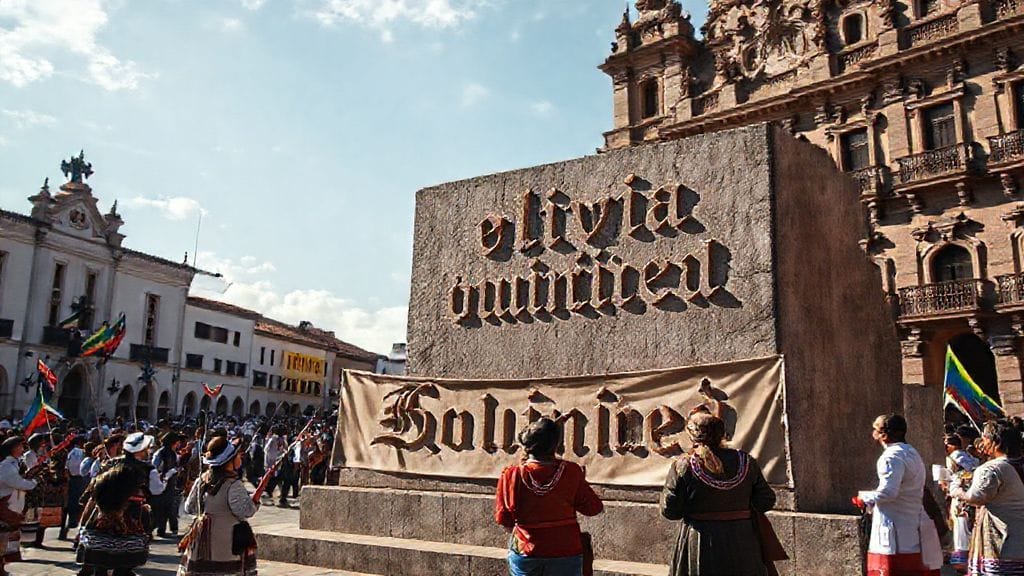
The air in Sucre was electric on that August morning of 1825. A slow breeze carried whispers of change over the Andean peaks, while the cobbled streets buzzed with an unusual fervor. Citizens, soldiers, indigenous leaders, and revolutionaries gathered in the main plaza, breaths visible in the chilly morning air, waiting with bated breath. It was not simply another day under the fading Spanish crown; it was the birth of a new republic, stitched from the tapestry of sacrifice, hope, and rebellion. This was the moment Bolivia was proclaimed an independent nation for the first time—an event that would forever redefine borders, history, and identity in the heart of South America.
The proclamation was more than a political statement—it was the crystallization of decades of struggle, an audacious declaration from the shadows of empire. As voices raised the cry of “¡Libertad!” and banners fluttered, the dream of a sovereign republic perched high in the Andes came alive before stunned onlookers. The long night of colonial domination was ending; a new era was beginning.
2. A Land Carved by Conquest and Resistance
To understand Bolivia’s momentous founding, we must first journey back centuries before 1825, to a land shaped by empires and conquest. Originally home to diverse indigenous cultures, including the Aymara and Quechua, the territory was later annexed into the expansive Inca Empire, its veins pulsing with silver from the famed mines of Potosí.
When the Spanish arrived in the 16th century, they transformed Upper Peru into a strategic jewel of the empire. The wealth of the Cerro Rico mountain became the economic engine for Spain’s global ambitions, but beneath this gleaming surface, oppression festered. Forced labor systems such as the mita subjected indigenous peoples to brutal exploitation. Yet, despite harsh rule, seeds of resistance took root in the highlands and valleys.
The complex layering of indigenous resilience, colonial hierarchy, and mixed-race populations created a volatile social fabric — one ready to unravel with the winds of revolutionary ideals.
3. The Winds of Change: Independence Movements in Latin America
By the early 19th century, the rhythms of revolution pulsed strongly across Latin America. The Atlantic revolutions—American, French, Haitian—had unleashed new ideas about liberty, equality, and sovereignty. These currents reached the Viceroyalty of the Río de la Plata, which encompassed Upper Peru, inciting local leaders and freshly minted creole elites to envision a future free from Madrid’s yoke.
The Napoleonic invasion of Spain in 1808 destabilized imperial authority, providing revolutionary leaders opportunities to challenge colonial rule. Yet, unlike many peaceful declarations of independence, the struggle in Upper Peru was arduous and violent, complicated by geographical obstacles and fractured loyalties. This area would become a crucible where the ideals of freedom would be tested in blood and fire.
4. Simón Bolívar: The Liberator’s Vision in South America
No story of Bolivian independence can be told without evoking the towering figure of Simón Bolívar. The “Liberator,” a Venezuelan creole of aristocratic lineage, had bound the fate of Latin America to his quest for continental freedom. His vision was one of a united and independent region, free from European monarchies but rife with its own challenges.
Bolívar’s military campaigns liberated Venezuela, Colombia, Ecuador, and Peru, but he knew the struggle in Upper Peru remained pivotal. It was here that Spanish royalists still had pockets of strength. Bolívar’s entry into the region signified not only a military expedition but an ideological commitment to sweeping away colonial legacy, though not without controversies regarding centralized control versus regional autonomy.
5. The Struggle for Upper Peru: Battleground of Empires
Upper Peru was no tranquil stage for revolutionaries. Its rugged terrain—from snow-capped peaks to dense valleys—served as both a refuge and a trap. The royalists, determined to retain this vital resource-rich region, clashed fiercely with patriot forces.
Local battles, including the decisive Battle of Junín and the Battle of Ayacucho in Peru, foreshadowed the impending collapse of Spanish rule. Yet, within Upper Peru itself, guerrilla warfare, banditry, and shifting alliances made the path to independence rugged. Leaders like Pedro Domingo Murillo had ignited sparks of rebellion even earlier but had faced merciless repression.
By 1825, the momentum had shifted irrevocably toward liberation, but it required not simply battlefield success but also political will and consensus.
6. The Battlefields that Shaped a Country
The years preceding the proclamation witnessed brutal confrontations. The Battle of Ayacucho (December 1824), though fought just beyond Upper Peru’s borders, was a turning point; it effectively ended Spanish domination in South America. Antonio José de Sucre, Bolívar’s trusted general, commanded patriot forces to a resounding victory, cementing his reputation as a military and political leader.
The victory opened the door for independence in Upper Peru. Patriot leaders moved quickly to consolidate victories and found political frameworks for a new nation. Battles and bloodshed would mark the founding of Bolivia, but so would hope and profound national pride.
7. The Role of Antonio José de Sucre: Bolívar’s Trusted General
Sucre was more than a battlefield hero; he was the architect of Bolivia's birth. Born in Venezuela, he combined sharp intellect, unwavering loyalty to Bolívar, and a deep understanding of the region’s social dynamics. After military victories, Sucre assumed the delicate role of mediator, fostering dialogue among diverse factions, including indigenous leaders, creoles, and mestizos.
His governance brought stability amid chaos. When the assembly gathered in Chuquisaca (now Sucre), it was Sucre's presence that lent authority and coherence to the extraordinary task of nation-building. His name would be immortalized as the republic’s first president—a testament to his critical role.
8. August 6, 1825: The Proclamation of the Bolivian Republic
The historic day of August 6 unfolded with symbolism. In the assembly held at Chuquisaca’s Cathedral, representatives from the region declared the creation of the Republic of Bolívar, soon renamed Bolivia. The proclamation was both a declaration of freedom and a political assertion of identity, a unique nation born from the topography of the Andes and the ideals of liberty.
The moment was fraught with emotion and significance. Guns fired in salute, church bells rang, and the crowd swelled in jubilation. Flags bearing the emblem of the new republic unfurled against the Andean backdrop as a loud affirmation: a people had risen to claim their destiny.
9. Naming the Nation: Honoring Bolívar’s Legacy
The choice of the name “Bolivia” was deliberate and powerful, a tribute to Simón Bolívar’s indelible impact. This symbolic act linked the new republic to the broader independence struggles in Latin America and enshrined Bolívar’s ideals into the national consciousness.
Yet, it was also a unique identity, distinct from neighboring countries that fought for their own sovereignty. Bolivia’s name heralded unity amid diversity—a call to forge a republic underpinned by shared sacrifice and aspiration.
10. Drafting a Constitution: The Foundations of Bolivian Sovereignty
Following the proclamation, attention turned urgently to building institutions. Lawmakers drafted Bolivia’s first constitution, seeking to balance enlightened ideals with local realities. The constitution outlined principles of republican government, civil liberties, and the role of the executive, setting a framework for governance.
However, tensions simmered between advocates of centralization, inspired by Bolívar’s vision, and proponents of federalist decentralization. These debates presaged internal struggles that would characterize much of Bolivia’s political life.
11. Challenges from the Start: Political Factions and Regional Tensions
Bolivia’s independence was far from a harmonious birth. The young republic grappled with competing visions and regional interests. The highland elites of La Paz clashed with the conservative aristocracy of Sucre; indigenous populations demanded recognition and rights often denied to them. Political parties emerged, fragments of broader ideological debates across Latin America.
This plurality bred instability, frequent coups, and fragile governments. The lofty ideals proclaimed in 1825 encountered the harsh realities of governance in a divided and diverse land.
12. Economic Hurdles: Mining and the Fragile Economy
While Bolivia’s silver mines had long fueled empire, independence challenged existing economic structures. Spanish capital and technical expertise evaporated, and the republic lacked developed infrastructure and diversified industries. Mining remained the economic backbone but was plagued by internal disputes and declining yields.
This fragility made Bolivia vulnerable to external pressures and internal unrest. Economic hardship further complicated nation-building, making development a persistent struggle through the 19th century.
13. Indigenous Peoples’ Role and Recognition in the New Republic
The indigenous majority, whose labor had sustained colonial economies, found their status complicated in the new republic. While independence promised emancipation from colonial oppression, many indigenous communities faced continued marginalization.
Leaders debated how to integrate indigenous peoples politically and culturally. Although the constitution spoke vaguely of equality, practices lagged behind, sowing seeds of future social and political conflict. Yet indigenous identities and resistance remained vital threads in Bolivia’s evolving tapestry.
14. Bolivia’s Early Diplomacy: Relations with Neighbors and European Powers
Forming a nation was not only a domestic challenge but an international one. Bolivia sought recognition from Spain, neighboring republics, and European powers, striving to secure borders and political legitimacy. The republic’s landlocked position complicated trade and diplomacy.
The new government engaged in treaties and negotiations, sometimes contentious, with Peru, Argentina, and Brazil while also keeping wary eyes on French and British geopolitical interests.
15. The Symbolism of Sucre: Capital and Cultural Heart
Sucre, the city of proclamation, held special significance. Nestled in the Andes, it was not only the administrative capital but also a cultural beacon, home to universities, cathedrals, and intellectual circles. The city symbolized the intersection of indigenous heritage and creole leadership, monarchy and modern republic.
Its streets bore witness to history—as the cradle of independence, Sucre’s identity became inseparable from Bolivia’s national narrative.
16. The Aftermath: Bolivia’s Fragile Steps Toward Stability
Proclamation day was a glorious beginning, but the years that followed tested Bolivia’s resolve. Internal divisions, external threats, and economic struggles loomed large. Political instability was frequent; nevertheless, the republic endured.
Over decades, Bolivia added layers to its identity, navigating challenges that would shape its trajectory into the modern era.
17. Long Shadows: Bolivia’s Identity in a Post-Colonial World
Bolivia’s birth offered hope but also posed questions about identity—how to reconcile colonial legacies with indigenous cultures and republican ideals. Questions of race, class, and power continued to define social relations. Bolivia’s multicultural fabric was both a strength and a struggle.
The republic’s founding crystallized these tensions, which would continue to evolve through revolutions, reforms, and social movements.
18. The Legacy of Independence: Memory and Myth in Bolivia
Historians, poets, and citizens have since woven the proclamation of 1825 into Bolivia’s collective memory. August 6 is celebrated annually with parades, speeches, and reflection on the price of freedom.
Myths surrounding Bolívar, Sucre, and the martyrs of independence enrich the nation’s story, inspiring generations to reclaim and redefine their heritage.
19. Bolivia in the Broader Latin American Context
Bolivia’s independence was part of the grand panorama of Latin American liberation. Its experiences echoed those of neighbors yet retained unique features due to geography, demography, and internal politics.
The nation’s trajectory highlights both shared struggles and singular challenges in building republics from the ruins of empire.
20. Revisiting August 6 Today: Celebrations and Reflection
Today, August 6 invites Bolivians to unite and remember. Public ceremonies re-enact the proclamation; schools teach its lessons; indigenous groups use the day to assert their enduring presence.
The date is a marker of resilience and an opportunity to address contemporary issues—social justice, political representation, and economic inclusion.
Conclusion
Bolivia’s founding on August 6, 1825, is a profound testament to human aspiration amid adversity. From the Andean heights, a people declared their right to self-determination, carving a nation out of empire’s shadows with courage, sacrifice, and vision. The republic’s proclamation was not merely the birth of a political entity—it was the ignition of a collective spirit that continues to shape Bolivia’s identity.
The path was never smooth, nor its legacy uncontested. Yet the enduring power of that day lies in its affirmation of possibility: that freedom, forged in the fires of struggle, can produce new worlds. Bolivia’s story invites us to remember that history is lived and relived, reshaped by hope and determination, ever pulsing in the heartbeats of its people.
FAQs
Q1: Why was Bolivia named after Simón Bolívar?
A1: The republic was named Bolivia to honor Simón Bolívar, the key liberator whose military and political efforts were pivotal in freeing much of South America from Spanish rule. The name symbolized the nation’s link to his ideals of liberty and unity.
Q2: What challenges did Bolivia face immediately after independence?
A2: After independence, Bolivia struggled with political instability, regional rivalries, economic fragility—particularly in mining—and complex social dynamics involving indigenous peoples and creole elites.
Q3: Who was Antonio José de Sucre and what was his role?
A3: Sucre was Bolívar’s trusted general who led decisive military victories in the region and played a crucial role in the political establishment of Bolivia. He became its first president and helped draft the early constitution.
Q4: How did indigenous peoples factor into Bolivia’s foundation?
A4: Although indigenous populations formed the majority, their rights and status were ambiguously recognized in the new republic. They remained marginalized politically but continued to be central to Bolivia’s social fabric and identity.
Q5: How did Bolivia’s geography influence its independence struggle?
A5: The rugged Andes and isolated valleys provided both defensive advantages and logistical challenges, shaping guerrilla warfare and making political cohesion difficult across regions during the fight for independence.
Q6: What role did Sucre and the Battle of Ayacucho play?
A6: Sucre commanded patriot forces at the Battle of Ayacucho, a key victory that effectively ended Spanish colonial power in South America and opened the way for Bolivia’s declaration of independence.
Q7: How is August 6 commemorated in Bolivia today?
A7: August 6 is celebrated as Independence Day with parades, ceremonies, cultural events, and reflection on Bolivia’s history and ongoing struggles for social justice and inclusion.
Q8: What was the international reaction to Bolivia’s independence?
A8: Recognition was gradual; neighboring countries and European powers cautiously accepted Bolivia, viewing it within the broader geopolitical shifts after Spanish colonial retreat.