Table of Contents
- A Nation on the Verge: The Dawn of Gran Colombia’s Fragmentation
- The Legacy of Bolívar and the Dream of Unity
- The Birth of Gran Colombia: From Vision to Reality
- Troubled Foundations: Early Signs of Discord
- The Rise of Regional Ambitions and Local Loyalties
- The Political Anatomy of Dissension: Factions and Power Struggles
- Valencia, Venezuela: The Epicenter of Discontent
- La Cosiata Emerges: Causes and Catalysts
- José Antonio Páez: The Man Behind the Movement
- April 1826: The Spark that Ignited a Powder Keg
- The Role of Military Power in the Uprising
- Responses from Bogotá and Simón Bolívar’s Dilemma
- The Limits of Authority: Centralism versus Federalism
- The Sociopolitical Landscape: Venezuela in Turmoil
- The Collapse of Trust: Between Leaders and Populations
- Diplomatic Maneuvers and Failed Reconciliation Efforts
- The Aftermath: Gran Colombia’s Slow Dissolution Begins
- The Broader Impact: Transforming South America’s Political Map
- Lessons from La Cosiata: Unity’s Fragility in New Republics
- The Human Cost: Lives, Loyalties, and Legacies
- Remembering La Cosiata: How History Views the Event Today
- Conclusion: From Fragmentation to Independence – A Historical Turning Point
- FAQs: Understanding La Cosiata’s Significance
- External Resource
- Internal Link
1. A Nation on the Verge: The Dawn of Gran Colombia’s Fragmentation
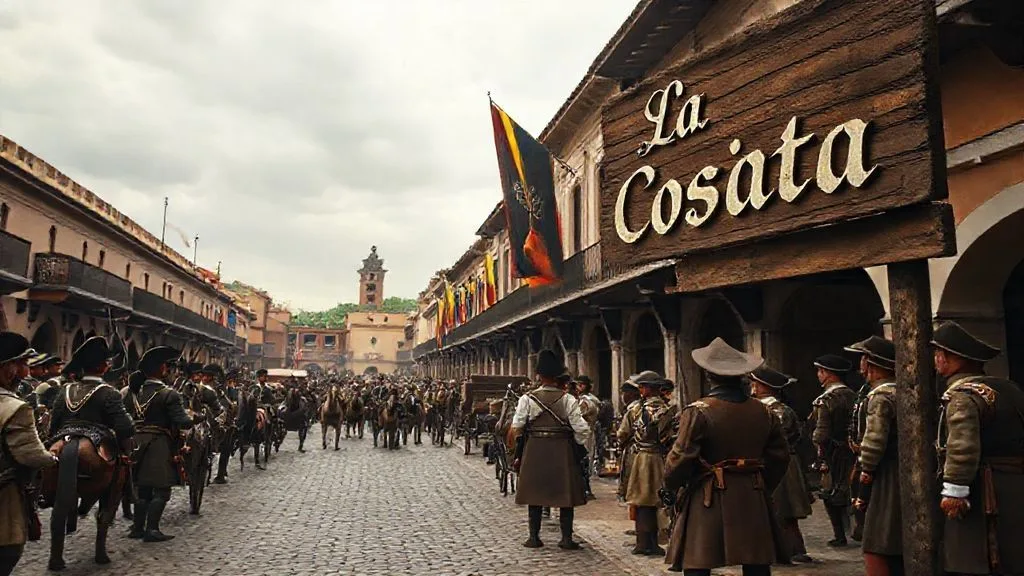
In the early dawn of April 1826, the streets of Valencia, Venezuela, buzzed with a potent mix of hope, defiance, and uncertainty. It was a city caught between dreams of unity and the harsh realities of governance, a microcosm where the grand experiment of Gran Colombia was unraveling thread by thread. The air was charged with whispers of rebellion—La Cosiata was not just a revolt; it was a declaration of a deeper fracture within one of Latin America’s boldest projects. To understand that moment is to step back into a world drenched in idealism yet hard-pressed by power struggles, regional pride, and unresolved tensions.
2. The Legacy of Bolívar and the Dream of Unity
Few names resonate as deeply in the history of Latin America as Simón Bolívar’s. The Libertador was not merely a military commander; he was the architect of a vast vision—the unification of newly independent lands into a grand polity that could withstand external threats and internal chaos. Bolívar envisaged Gran Colombia as a beacon of republicanism, a federation of Venezuela, New Granada (present-day Colombia), and Ecuador, bound by shared ideals and mutual strength.
Yet, Bolívar’s vision, lofty and inspiring, was also rigid. His insistence on a strong central government, with him at the helm, pointed toward a political reality that would soon clash with regional aspirations. The dream of unity was as fragile as the paper on which it was penned.
3. The Birth of Gran Colombia: From Vision to Reality
Established formally in 1819, Gran Colombia was a bold experiment from its inception. Its vast geographical expanse was a mosaic of diverse peoples, languages, and cultures. The notion that Caracas, Bogotá, and Quito could seamlessly operate under a single government was as hopeful as it was daunting. The fledgling state faced immense challenges: unclear borders, economic instability, and the aftermath of battles that had only recently liberated these lands from Spanish rule.
Early optimism quickly gave way to the grinding realities of state-building. The political elite, while enthusiastic, grappled with balancing power among regions that had historically acted semi-autonomously. This balance was delicate, and tensions simmered beneath the surface.
4. Troubled Foundations: Early Signs of Discord
From the outset, Gran Colombia was a house divided. Governing a territory that stretched from the Caribbean coasts of Venezuela to the Andean highlands of Ecuador meant grappling with logistical nightmares—and political friction. While the central government in Bogotá demanded loyalty and conformity, provincial leaders envisioned more autonomy for their regions.
Cultural differences fueled mistrust. Venezuelans, accustomed to their local structures and prideful of their revolutionary contribution, bristled at what they perceived as Bogotá’s overreach. As the Liberator struggled to impose his centralized vision, cracks emerged—sometimes subtle, but often unmistakable.
5. The Rise of Regional Ambitions and Local Loyalties
Political loyalty in post-colonial Latin America was often divided between ideology and locality. While many leaders publicly endorsed the concept of unity, privately they nurtured their own power bases. In Venezuela, influential figures such as José Antonio Páez asserted their dominance not just as military leaders but as regional power managers. Páez was a symbol of Venezuelan identity and resistance to distant control.
This burgeoning regionalism clashed with the centralist policies emanating from Bogotá. It was more than a political disagreement; it was a struggle over who would shape the destiny of people newly freed from colonial chains.
6. The Political Anatomy of Dissension: Factions and Power Struggles
Gran Colombia’s elite fractured into camps—centralists led by Bolívar and other Bogotá politicians, and federalists advocating for regional autonomy. The ideological battle was raw. Centralists viewed federalism as a slippery slope toward chaos and disintegration. Federalists saw centralism as an echo of monarchical absolutism under a republican guise.
Amidst these ideological battles, personal ambitions played their part. Leaders aligned or divided less around political philosophy than around personal alliances and enmities. This mixture of ideas and personalities created a combustible environment.
7. Valencia, Venezuela: The Epicenter of Discontent
Valencia, an important Venezuelan city, became the focal point where grievances and aspirations converged. By 1826, it was clear that many in Venezuela no longer wished to be under Bogotá’s strict control. The economic policies from the center were viewed as detrimental to local producers and traders. The central government’s inability to effectively govern and address local issues eroded its legitimacy.
In Valencia, these frustrations led to more organized expressions of dissent—beyond whispers and petitions, to open challenges.
8. La Cosiata Emerges: Causes and Catalysts
“La Cosiata,” translating roughly to “the little thing” or “the little movement,” belies the significance of the event. In truth, it was a major insurrection that reflected broader fractures within Gran Colombia. Sparked by a mixture of political grievances, regional pride, and dissatisfaction with the central government, La Cosiata was an expression of local leadership’s resolve to assert autonomy.
Multiple causes intertwined: economic hardship worsened by centralized trade restrictions; resentment over military command appointments; and a growing distrust of Bogotá’s intentions under Bolívar’s de facto control.
9. José Antonio Páez: The Man Behind the Movement
No figure loomed larger in this drama than General José Antonio Páez. A charismatic and pragmatic leader, Páez was a hero of Venezuelan independence and a natural rallying point for local interests. His military stature gave added gravitas to the movement, which might have otherwise remained fragmented.
Páez’s decision to back La Cosiata was a defining moment. He positioned himself not simply as a military man but as a guardian of Venezuelan rights, challenging the legitimacy of continental authority and effectively putting his neck on the line.
10. April 1826: The Spark that Ignited a Powder Keg
The uprising reached a critical point in April 1826. On the streets of Valencia and in military barracks, the tension boiled over. Troops loyal to Páez openly defied orders from Bogotá. Local juntas (councils) in Valencia rejected central edicts, asserting their own governance.
The city became a symbol of resistance, not only to local populations but also to international observers, highlighting the escalating crisis in Gran Colombia.
11. The Role of Military Power in the Uprising
Military loyalty was pivotal. Bolívar’s efforts to centralize military command were met with resistance. Páez commanded respect and loyalty among soldiers who identified more strongly with Venezuela than the distant capital.
This schism in military allegiance was a critical factor. It prevented rapid suppression of the movement and forced Bolívar to reconsider his approach. The army, a unifying force in the independence wars, now became an instrument of potential division.
12. Responses from Bogotá and Simón Bolívar’s Dilemma
Back in Bogotá, the reaction was initially one of outrage and alarm. Bolívar, torn between his commitment to unity and the realities of regional assertion, faced a wrenching dilemma. Military intervention risked civil war; concession risked setting a precedent for further fragmentation.
Correspondence from Bolívar to Páez reveals a leader struggling with the collapse of his vision but unwilling to utterly abandon the dream of Gran Colombia. His famous blend of pragmatism and idealism came face to face with an unpredictable political reality.
13. The Limits of Authority: Centralism versus Federalism
La Cosiata crystallized the fundamental question facing Gran Colombia: Could a central authority govern diverse territories with distinct interests? The tension between centralism and federalism was not merely political theorizing—it was about survival.
The central government’s insistence on maintaining control clashed with burgeoning regional identities demanding self-rule. This struggle was echoed in other newborn republics of Latin America, making La Cosiata emblematic of a continent-wide challenge.
14. The Sociopolitical Landscape: Venezuela in Turmoil
Venezuela, amidst its own economic distress and social upheaval, found itself at a crossroads. The local elites, merchants, landowners, and indigenous communities all felt the impact in different ways. The sense that Bogotá was disconnected from Venezuelan realities intensified.
The populist undertones of La Cosiata, while led by elites like Páez, resonated with sectors who saw in it a chance for recognition, control, and relief from neglect.
15. The Collapse of Trust: Between Leaders and Populations
The fragmentation of trust was as significant as political fault lines. Bolívar’s authority, once near-mythical, was questioned. Populations and local leaders doubted whether distant rulers truly had their best interests at heart. This erosion of legitimacy was damaging and difficult to repair.
It was a tragedy of idealism outpaced by the complexities of governance—a human story of belief and betrayal.
16. Diplomatic Maneuvers and Failed Reconciliation Efforts
Efforts to bridge the divide involved envoys, negotiations, and promises. Bolívar sought compromise, offering concessions and attempting to coax resignation from Páez. However, the mistrust endured, and La Cosiata’s momentum only grew.
The failure of diplomatic attempts underscored the deep-rooted nature of the crisis. Neither party wanted outright war, but the path to peaceful resolution was fraught with dangers.
17. The Aftermath: Gran Colombia’s Slow Dissolution Begins
While La Cosiata did not immediately dismantle Gran Colombia, it was a decisive turning point. It weakened the central government, emboldened separatists, and set a precedent for regional defiance. Within a few years, the grand union would fragment, leading to the emergence of independent states.
This slow dissolution was tragic in its consequences: the loss of a unified vision that might have altered the trajectory of Latin America.
18. The Broader Impact: Transforming South America’s Political Map
The ripple effects transcended Venezuela’s borders. Neighboring regions watched closely, many grappling with similar tensions. La Cosiata was a harbinger of the new political reality—divided nationalities, competing power centers, and fragile republics prone to disintegration.
It helped shape the political map of South America as we know it today, with separate nations rather than federations.
19. Lessons from La Cosiata: Unity’s Fragility in New Republics
La Cosiata teaches us about the difficulty of building unity over diversity, particularly in post-colonial contexts. It highlights the tension between ideals and realpolitik, between charismatic leadership and structural challenges.
The event remains a case study in how regional identities can supersede grand designs, a cautionary tale for any multi-regional state-building effort.
20. The Human Cost: Lives, Loyalties, and Legacies
Beyond politics, La Cosiata affected lives—soldiers torn between loyalties, civilians caught in upheaval, families disrupted by conflict. It also shaped personal legacies: Páez became a national hero in Venezuela, Bolívar a tragic figure clinging to an elusive dream.
The emotional landscape was complex and enduring, intertwined with pride, loss, and hope.
21. Remembering La Cosiata: How History Views the Event Today
Modern historiography views La Cosiata with nuance—less a mere rebellion, more a symptom of the centrifugal forces that shaped Latin America. Monuments, literature, and public memory in Venezuela embrace Páez’s role, while Bolívar’s narrative is complicated by this challenge.
It remains a potent reminder of the challenges faced by new nations trying to forge unity from diversity.
Conclusion
La Cosiata was more than a regional uprising in Valencia—it was a seismic event in the history of Gran Colombia and Latin America’s independence movements. It exposed the fragile nature of unity in a vast, diverse territory, revealing the limits of even the most visionary leaders. The dream of a unified Gran Colombia faded not through foreign conquest, but through internal dissension—human ambitions, deep-rooted loyalties, and political complexity.
Yet, in this fragmentation lay the birth of new nations and identities, forged in the crucible of conflict and aspiration. La Cosiata reminds us that history is rarely linear and that the paths toward nationhood are as fraught as they are hopeful. In the echoes of Valencia’s rebellion, we hear the enduring human quest for self-determination, justice, and belonging.
FAQs
Q1: What was the primary cause of La Cosiata?
A1: La Cosiata was caused by regional dissatisfaction in Venezuela with Gran Colombia’s centralist policies, particularly the imposition of military command and economic decisions made in Bogotá, and the desire for greater regional autonomy.
Q2: Who was José Antonio Páez and what role did he play?
A2: Páez was a Venezuelan general and leader who became the figurehead of La Cosiata, championing regional interests against the central government’s authority and driving the movement from its onset.
Q3: How did Simón Bolívar respond to La Cosiata?
A3: Bolívar was alarmed and sought to restore order by negotiating with Páez and attempting to balance firmness with conciliation, though ultimately unable to fully suppress the movement.
Q4: Did La Cosiata immediately dissolve Gran Colombia?
A4: No, it did not cause immediate dissolution but marked a critical moment that weakened central control and set in motion the eventual fragmentation between 1830 and 1831.
Q5: What does La Cosiata reveal about early Latin American republics?
A5: It reveals the tension between colonial-era regional identities and new republican central authority, showing how fragile these early unions could be amidst competing ambitions.
Q6: How is La Cosiata remembered in Venezuela today?
A6: It is commemorated as a key step toward Venezuelan autonomy and nationhood, with Páez regarded as a heroic figure who defended local interests.
Q7: What were the long-term impacts of La Cosiata on South America?
A7: La Cosiata contributed to the breakup of Gran Colombia and influenced the political division of the continent into separate republics, each with its own trajectory.
Q8: Were there similar movements in other parts of Gran Colombia?
A8: Yes, other regionalist and separatist tendencies existed, but La Cosiata was the most significant early open rebellion challenging central authority.