Table of Contents
- The Ottoman Breeze Shifts: A Prelude to Crisis
- The Geopolitical Chessboard of Early 19th Century Europe
- The Greek War of Independence and Ottoman Weakness
- Muhammad Ali of Egypt’s Ascendancy: Ambition Meets Empire
- The Road to Istanbul: Diplomatic Shadows and Military Maneuvers
- The Afternoon of July 8, 1833: Signing the Treaty
- The Secret Article: A Clause That Changed the Balance of Power
- Russia’s Strategic Leap: Protector or Puppet Master?
- The Ottoman Empire’s Dilemma: Autonomy vs. Dependence
- Reactions Across Europe: Alarm and Diplomacy
- British and French Anxiety: Guarding the Eastern Mediterranean
- Muhammad Ali’s Gains and the Shattered Ottoman Illusions
- The Treaty’s Impact on Ottoman Sovereignty and Reform Efforts
- The Reshaping of Russo-Ottoman Relations: From Allies to Adversaries
- Prelude to the Eastern Question: Seeds of Future Conflicts
- Cultural and Social Ripples: The Empire’s Changing Identity
- The Treaty in Retrospect: Historians Weigh In
- Lessons from Hünkâr İskelesi: Power, Survival, and Diplomacy
- Conclusion: The Treaty’s Enduring Legacy
- FAQs: Unraveling the Treaty of Hünkâr İskelesi
- External Resource
- Internal Link
On a sweltering summer afternoon, within the imposing walls of Istanbul’s dazzling Ottoman capital, the fragile fabric of an empire was quietly rewoven. It was July 8, 1833, when the Treaty of Hünkâr İskelesi was signed—a diplomatic entanglement whose reverberations would echo far beyond the gilded chambers. The empire, vast yet crumbling, found itself dangling between survival and submission, caught in a web spun by ambition, fear, and strategy. This accord, cloaked in secrecy and layered with political intrigue, was more than a mere treaty. It was a testament to the waning Ottoman sovereignty and the rising influence of Russia in the Eastern Mediterranean.
The Ottoman Breeze Shifts: A Prelude to Crisis
By the early 1830s, the Ottoman Empire no longer strode confidently across its territories but staggered beneath the weight of internal decay and external threats. The centuries-old power that had once bridged continents was fraying at the edges. The Greek War of Independence (1821-1830) had already carved a gaping wound, emboldening nationalist movements and stimulating European powers’ meddling. The empire’s military defeats and diplomatic setbacks had exposed the fragile state of Ottoman governance.
The Geopolitical Chessboard of Early 19th Century Europe
Europe in the decades following the Napoleonic Wars was a cauldron of rivalries and alliances. The Concert of Europe sought balance, yet interests collided relentlessly. Great Britain and France, wary of Russian ambitions, kept a vigilant eye on the Ottoman sphere—a region pivotal for trade routes and colonial expansion. Russia, the Orthodox Christian empire to the north, perceived the Ottomans not only as adversaries but as potential subjects. The strategic Black Sea straits and the control of Istanbul stood at the fulcrum of this latent conflict.
The Greek War of Independence and Ottoman Weakness
The victorious Greek revolution, backed tacitly and sometimes overtly by Britain, France, and Russia, exposed not only Ottoman military weakness but also the empire’s fragile hold on its Balkan provinces. The loss of Greece was a bitter pill that resonated in Ottoman soul and strategy, prompting intense efforts at reform and reassertion of control — all while confronting increasingly ambitious provincial rulers.
Muhammad Ali of Egypt’s Ascendancy: Ambition Meets Empire
Muhammad Ali Pasha, the Ottoman governor of Egypt, was no ordinary provincial leader. His reforms, military modernization, and political acumen turned Egypt into a formidable power rivalling Istanbul itself. By the early 1830s, Muhammad Ali sought to extend his dominion over Syria and parts of the Levant, daring to challenge the Ottoman sultan directly. This challenge was a symptom of Ottoman weakness but also a sign of shifting political dynamics within the empire.
The Road to Istanbul: Diplomatic Shadows and Military Maneuvers
In 1831, as Muhammad Ali’s forces advanced into Syria, the Ottoman central authority was beleaguered and disorganized. The sultan’s court appealed for help, but European powers were divided. Russia, seizing the moment, offered military assistance but with strings attached. After years of conflict and failed negotiations, the two parties moved toward a secret agreement that would codify their relationship more tightly.
The Afternoon of July 8, 1833: Signing the Treaty
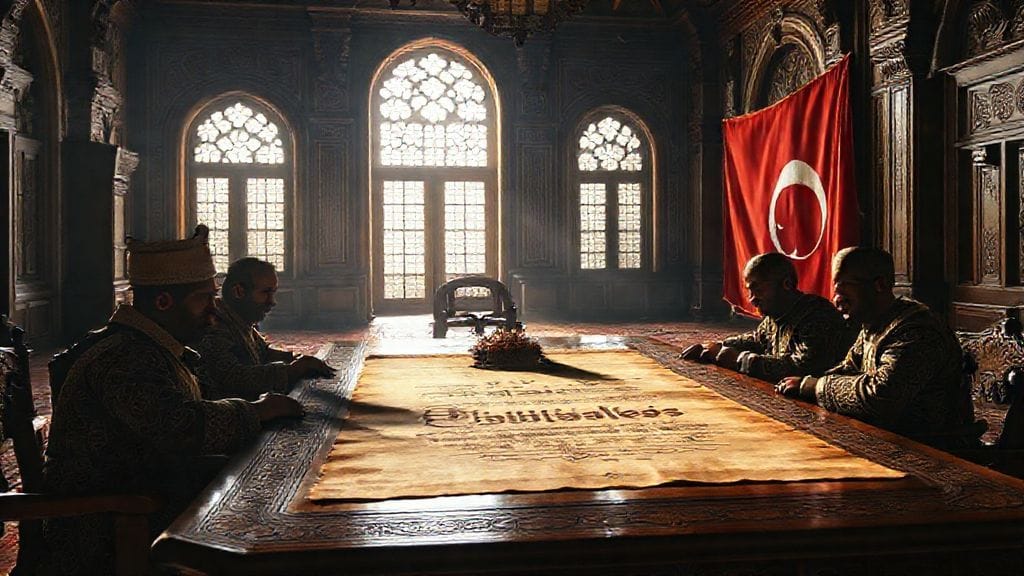
On that fateful July day, the Treaty of Hünkâr İskelesi was signed between the Ottoman Empire and Imperial Russia. The treaty formalized Russian military support, promising protection against external and internal threats, particularly from Muhammad Ali’s burgeoning forces. It cemented a delicate alliance but also planted seeds of dependency. The signing took place in the Hünkâr İskelesi (Sovereign’s Pier) in Istanbul, a symbolic venue where empire’s fortunes dipped and shifted.
The Secret Article: A Clause That Changed the Balance of Power
What made the treaty extraordinary was its clandestine Article 8 — a military clause obliging the Ottomans to close the Dardanelles to foreign warships upon Russia’s request. This gave Russia a strategic stranglehold over a critical maritime passage, threatening the delicate balance of power and alarming other European actors. For the Ottomans, it was both a lifeline and a shackle.
Russia’s Strategic Leap: Protector or Puppet Master?
For Russia, the treaty was a diplomatic triumph. It positioned Russia as the Ottoman Empire’s protector in the face of regional revolts and external threats while simultaneously enhancing its influence deep inside Ottoman heartlands. Yet, this “protector” role blurred into a form of subtle domination, raising questions about Ottoman sovereignty and Russia’s imperial designs.
The Ottoman Empire’s Dilemma: Autonomy vs. Dependence
The treaty was both a shield and a gag. It averted immediate collapse by securing Russian military aid but compromised the Ottomans’ ability to maneuver diplomatically. It revealed the desperation of the empire’s ruling elite, who had to balance between internal disintegration and the growing power of external backers whose agendas did not always align with Ottoman interests.
Reactions Across Europe: Alarm and Diplomacy
Britain and France perceived the treaty as a threat to their own interests, particularly the control over Mediterranean trade routes. It precipitated a wave of diplomatic activity—an anxious dance of negotiations, warnings, and strategizing aimed at curbing Russian influence without triggering open conflict. The treaty thus became a focal point of the evolving “Eastern Question.”
British and French Anxiety: Guarding the Eastern Mediterranean
Both Britain and France recognized the strategic danger posed by Russian control over the straits. The potential closure of the Dardanelles to foreign warships jeopardized military and commercial routes to India and beyond. Their subsequent policies intertwined with their colonial ambitions, injecting the Ottoman decline with renewed international rivalry.
Muhammad Ali’s Gains and the Shattered Ottoman Illusions
Despite Russian intervention, Muhammad Ali’s ambitions were far from quelled. His temporary control over Syria and parts of Arabia challenged the unity of the Ottoman state and spotlighted the fracturing imperial order. The treaty failed to address this fundamental problem fully, leaving the empire enmeshed in further conflicts.
The Treaty’s Impact on Ottoman Sovereignty and Reform Efforts
The increasing reliance on Russian support hindered Ottoman attempts at internal reform by embedding foreign influence within the empire’s political structure. The sultan’s hesitant reforms struggled to gain traction amid rising distrust from both domestic factions and foreign powers, trapping the empire in a vicious cycle of decline and dependency.
The Reshaping of Russo-Ottoman Relations: From Allies to Adversaries
Though initially seen as a partnership, the treaty sowed seeds of future rivalry. Russia’s augmented position eventually clashed with Ottoman aspirations for sovereignty, and the uneasy alliance unraveled. The fragile détente flared into further conflicts, shaping the trajectory of 19th-century diplomacy and warfare in the region.
Prelude to the Eastern Question: Seeds of Future Conflicts
The Treaty of Hünkâr İskelesi became a landmark in the unfolding “Eastern Question” — the geopolitical challenge posed by the empire’s decline. It crystallized the fears and ambitions of numerous powers, setting the stage for later crises and wars, including the Crimean War and the reshaping of Middle Eastern borders.
Cultural and Social Ripples: The Empire’s Changing Identity
Beyond politics and diplomacy, the treaty marked a moment when the Ottoman Empire’s identity was in flux. The intrusion of foreign powers into the heart of Ottoman governance altered perceptions at home and abroad, contributing to social tensions, nationalist stirrings, and debates over modernization and tradition.
The Treaty in Retrospect: Historians Weigh In
Historians regard the Treaty of Hünkâr İskelesi as a pivotal turning point—both a symbol of Ottoman decline and an example of great power politics’ ruthlessness. It exemplifies the complexity of imperial diplomacy, where survival often meant compromise, and where alliances were as fragile as the empires they sought to preserve.
Lessons from Hünkâr İskelesi: Power, Survival, and Diplomacy
The treaty teaches enduring lessons about the paradoxes of power and dependence. It highlights how empires, threatened by internal fractures and external pressures, make fraught choices with long-lasting consequences. It reveals diplomacy’s human dimension — where fear, ambition, pride, and pragmatism intertwine.
Conclusion
The Treaty of Hünkâr İskelesi, signed on a summery Istanbul afternoon in 1833, was more than an agreement—it was a mirror reflecting an empire at a crossroads. It showed the Ottoman Empire's struggle to survive amid the rising tides of nationalism, imperial ambitions, and modern diplomacy. Its secret clauses symbolized the entangled fates of empires balancing autonomy against reliance, survival against compromise.
Looking back, the treaty marked both an end and a beginning—the end of Ottoman isolation and the beginning of deeper Russian influence. But it also catalyzed a broader European reckoning with the enigmatic yet crumbling “Sick Man of Europe.” History teaches us that such moments, fraught with tension and uncertainty, are the fulcrum upon which destinies turn.
As the empire limped forward, reshaped forever by this compact, one cannot help but feel the weight of human hopes and fears beneath the political machinations. The Treaty of Hünkâr İskelesi is a testament to the complicated dance between power and vulnerability, where no victory is absolute and every alliance exacts a price.
FAQs
1. What were the main causes leading to the Treaty of Hünkâr İskelesi?
The treaty was primarily caused by the Ottoman Empire’s precarious position after the Greek war of independence, internal provincial revolts—especially Muhammad Ali’s challenge—and the empire’s need for strong allies. Russia seized the chance to deepen its influence by offering military support under this treaty.
2. Who were the key figures involved in the treaty?
The main actors were Sultan Mahmud II representing the Ottoman Empire and Tsar Nicholas I of Russia, along with Muhammad Ali of Egypt, whose military aggression indirectly pressured the Ottoman court into seeking Russian aid.
3. What was the significance of the treaty’s secret article?
The secret article obliged the Ottomans to close the Dardanelles Strait to foreign warships upon Russia’s request, granting Russia significant strategic control over a critical maritime passage, alarming other European powers and shifting the regional power balance.
4. How did other European powers react to the treaty?
Britain and France were alarmed by growing Russian influence and the strategic implications of the treaty. They increased diplomatic efforts and military preparedness in the region to counterbalance Russia's newfound advantage.
5. Did the treaty help the Ottoman Empire regain its strength?
While the treaty provided temporary military assistance, it ultimately deepened Ottoman dependency on Russia and failed to resolve internal challenges such as Muhammad Ali’s rebellion. This contributed to the empire’s continuing vulnerability.
6. How did the Treaty of Hünkâr İskelesi influence later conflicts in the region?
It was a crucial precursor to the Eastern Question and later conflicts like the Crimean War. The treaty heightened rivalries and distrust among European powers, shaping the diplomatic theatre of the 19th century.
7. What does the treaty reveal about 19th-century diplomacy?
The treaty illustrates the complex interplay of secrecy, power politics, and survival strategies in imperial diplomacy. It shows how treaties could simultaneously offer support and impose limitations, reflecting the fragile balance in international relations.
8. How is the Treaty of Hünkâr İskelesi remembered today?
It is seen as a symbol of Ottoman decline and of Russia’s expansionist ambitions. Historians assess it as a pivotal moment that reshaped Ottoman-Russian relations and had lasting regional consequences.