Table of Contents
- The Fateful Day in Kütahya: Peace or Pause?
- The Rise of Muhammad Ali: Visionary or Rebel?
- Ottoman Empire on the Edge: Political and Military Turmoil
- The Spark of the First Egyptian–Ottoman War
- Egyptian Forces March into Anatolia
- The Campaigns of 1832: From Cairo to Kütahya
- The Ottoman Defeat and Sultan Mahmud II’s Crisis
- The Negotiation Begins: Stakes and Players in Kütahya
- Signing the Convention: Terms of Uneasy Peace
- Reactions Across the Empire: Jubilation and Resentment
- Muhammad Ali's Gains: A New Era for Egypt?
- The Ottoman Empire’s Strategic Retrenchment
- European Powers on the Sidelines: Britain, Russia, and France
- Seeds of Future Conflicts: The Convention’s Hidden Flaws
- Cultural and Social Reverberations in the Ottoman Domains
- How Kütahya Shaped Muhammad Ali’s Rule in Egypt
- The Road to the Second Egyptian–Ottoman War
- Human Stories from the Battlefield and Diplomatic Table
- Legacy of the Kütahya Convention: Lessons for Empires
- Conclusion: A Fragile Peace Rooted in Ambition and Desperation
- FAQs on the Convention of Kütahya
- External Resource
- Internal Link
The Fateful Day in Kütahya: Peace or Pause?
The air was heavy with the dust of war, yet beneath the scorched sky over Kütahya on May 4, 1833, a beacon of fragile hope flickered. After months of military campaigns that had shattered centuries-old assumptions about the Ottoman world’s invincibility, emissaries laid quills to parchment. The Convention of Kütahya was signed — an agreement that would temporarily halt the bloodshed between two titans of the Eastern Mediterranean: the mighty Ottoman Empire and its ambitious vassal-turned-rival, Muhammad Ali of Egypt. But was this a genuine peace or merely a breath before the next storm? To step into this moment is to glimpse the collision of empires, the dreams of reformers, and the trembling fate of a region in upheaval.
The Rise of Muhammad Ali: Visionary or Rebel?
To understand the significance of the Convention of Kütahya, one must first delve into the towering figure whose ambitions disrupted an empire. Muhammad Ali Pasha, an Albanian-born Ottoman governor appointed to Egypt in 1805, transformed his province into a powerful quasi-independent state. With eyes fixed on modernization, military reform, and territorial expansion, he was no mere provincial ruler; he was a man who dared to rewrite the rules of Ottoman hegemony. His reforms turned Egypt into a formidable force, militarily and economically, setting the stage for inevitable conflict with the empire that had raised him and now feared his ascendancy.
Ottoman Empire on the Edge: Political and Military Turmoil
At the dawn of the 19th century, the Ottoman Empire was a shadow of its former grandeur. Once called "the sick man of Europe," it grappled with internal decay, revolts, and the pressure of European powers eager to carve its territories. Sultan Mahmud II, resolute and reform-minded, was simultaneously modernizing his army and administering reforms to centralize power. Yet his ambitions clashed directly with those of Muhammad Ali, who held Egypt increasingly beyond Ottoman reach. The cracks in the imperial edifice had widened perilously by the early 1830s.
The Spark of the First Egyptian–Ottoman War
Tensions flared dramatically when Muhammad Ali sought to expand beyond Egypt and Sudan into the Levant—a land vital to the Ottoman heartland. His expedition into Syria in 1831, initially sanctioned by the Sultan, swiftly morphed into open rebellion. Ottoman attempts to suppress him were disastrous; their armies suffered defeat after defeat. The war was not merely a clash of armies but a contest of legitimacy and survival. As Egyptian forces marched relentlessly northwards, imperial dignity waned.
Egyptian Forces March into Anatolia
By 1832, Muhammad Ali’s son, Ibrahim Pasha, led the Egyptian army deep into Anatolia, territory densely populated by Ottoman loyalists and critical as a buffer zone. Commanded with ruthless discipline and fought with the ambition of a rising power, their victories stunned observers. In battles like Konya, Egyptian troops demonstrated superior tactics, advanced artillery, and modernized training. The sight of 'a former vassal crushing emperor’s armies' marked a turning point in warfare in the region, signaling that the Ottoman Empire could no longer rely on its traditional supremacy.
The Campaigns of 1832: From Cairo to Kütahya
The journey towards Kütahya was a sweeping military saga. Egyptian forces advanced to the gates of the imperial heartland, forcing Sultan Mahmud II to contemplate unprecedented concessions. The Sultan’s own forces were demoralized, struggling against an enemy that now commanded not only tactical superiority but also significant popular support in parts of the Levant. The standoff centered on Kütahya, a geographically strategic town that bore the symbolic weight of Ottoman resistance.
The Ottoman Defeat and Sultan Mahmud II’s Crisis
When news of successive defeats reached the imperial court, panic set in. The Sultan faced formidable pressure: collapse risked not just territorial losses but total loss of control over his domain. Despite ongoing reforms, the Ottoman military was still catching up to European standards, while Ibrahim Pasha’s forces wielded modernized armies with zeal and experience honed in years of campaign. Mahmud II’s options narrowed—either fight a likely losing battle or negotiate terms at Kütahya, an act both humiliating and necessary.
The Negotiation Begins: Stakes and Players in Kütahya
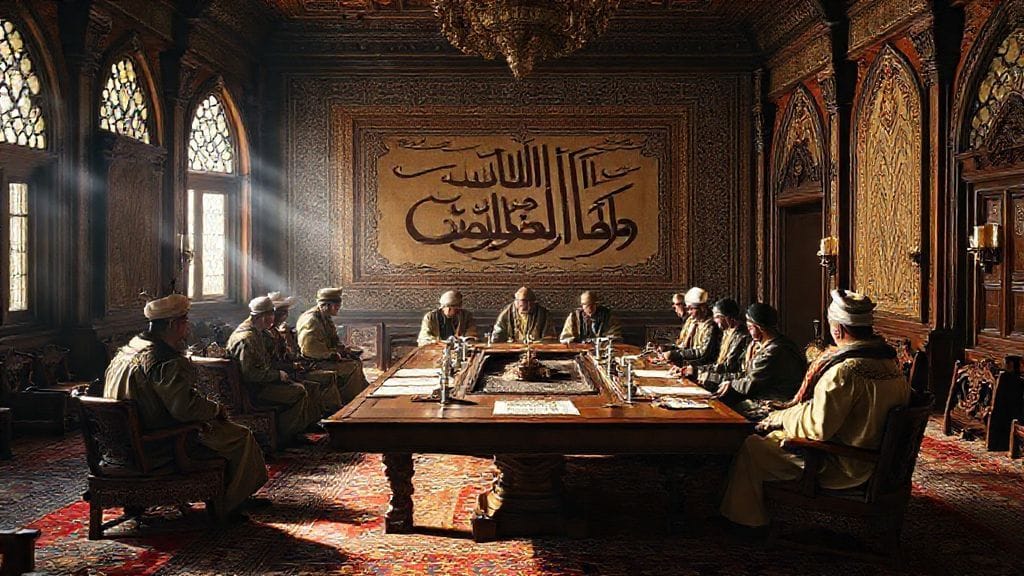
Diplomatic envoys convened in Kütahya amid tense uncertainty. Representing Muhammad Ali and the Ottomans, negotiators brought conflicting ambitions, grievances, and political calculations to the table. Amid the diplomatic backdrop, external powers watched cautiously, fearing the destabilization of a crucial regional bulwark. Negotiations, fraught with mistrust and mutual suspicion, had to reconcile the Sultan's desire to maintain formal supremacy and Muhammad Ali's claim to greater autonomy backed by military conquest.
Signing the Convention: Terms of Uneasy Peace
On May 4, 1833, the Convention of Kütahya formalized an end to hostilities that had ravaged the region for two years. Under its terms, Muhammad Ali and his son Ibrahim were granted possession and governance of Syria and parts of Anatolia, recognizing their rule while nominally maintaining Ottoman suzerainty. This tacit acknowledgment of de facto independence was unprecedented, a political earthquake shaking the foundation of empire. Yet the peace was uneasy, a delicate balance sustained more by exhaustion and fear than genuine resolution.
Reactions Across the Empire: Jubilation and Resentment
The news rippled across the empire like a wave of conflicting emotions. In Egypt, Muhammad Ali was hailed as a hero who had carved out expansion and prestige. Yet across Ottoman lands, especially in Constantinople and Anatolian heartlands, resentment festered. Many viewed the terms as capitulation, a dangerous precedent threatening the integrity of the empire. Military reforms accelerated, but fractured loyalties and fear of future clashes persisted.
Muhammad Ali's Gains: A New Era for Egypt?
For Muhammad Ali, the Convention was more than a truce—it was validation of his vision. Possessing Syria opened strategic trade routes, resources, and influence, effectively making Egypt a regional power rivaling Istanbul itself. His administrative and military reforms could now spread across a broader territory, enhancing his legacy. But this expansion also sealed a path toward confrontation with not only the Ottomans but also European powers uneasy with the new geopolitical reality.
The Ottoman Empire’s Strategic Retrenchment
For the Ottoman administration, the Convention marked both a retreat and a learning moment. Sultan Mahmud II understood that military and bureaucratic modernization needed to accelerate. The empire’s survival depended on reformers supported by European advisors. Yet the loss of Syria underlined the limits of Ottoman power in the age of nationalist ambitions and emerging modern states. The Convention had postponed defeat but not a deeper existential crisis.
European Powers on the Sidelines: Britain, Russia, and France
Behind the scenes, European great powers watched the Egyptian-Ottoman conflict with wary eyes. Britain, keen to protect its route to India, preferred a stable Ottoman Empire but found itself tempted to support Muhammad Ali as a bulwark against other rivals. Russia eyed Ottoman weakness with opportunism. France, boasting cultural and political ties with Egypt under Muhammad Ali, saw the Convention as a diplomatic puzzle. Their jockeying for influence foreshadowed even greater entanglements to come.
Seeds of Future Conflicts: The Convention’s Hidden Flaws
Though the Convention ended active hostilities, it failed to resolve the underlying tensions. Muhammad Ali’s empowerment unsettled the Ottoman power structure, while the empire’s weakened resolve emboldened other challengers. The treaty's ambiguous wording sowed confusion, and regional governors both in Egypt and the Ottoman heartlands prepared for the inevitable next chapter. The fragile peace of Kütahya was but a prelude to the more catastrophic Second Egyptian–Ottoman War.
Cultural and Social Reverberations in the Ottoman Domains
Beyond the political and military landscape, the conflict and its resolution affected societies deeply. In Syria and Anatolia, the shifting allegiances caused disruptions in trade, faith communities, and local governance. Stories from villages recount a mix of hope under new rulers or fear of change. In Egypt, the triumph fed pride and a sense of national mission. Artistic and literary expressions from the time subtly echo these upheavals, preserving the human dimension beneath grand imperial narratives.
How Kütahya Shaped Muhammad Ali’s Rule in Egypt
The Convention reinforced Muhammad Ali’s role as a central figure in Middle Eastern history. His regional authority was no longer disputed, enabling further modernization and attempts at industrialization. Yet, his ambitions increasingly collided with the imperial and European order. The peace, while beneficial, served more as a checkpoint than a finish line, influencing his diplomatic and military strategies for years.
The Road to the Second Egyptian–Ottoman War
Inevitably, the fragile peace crumbled. The Convention of Kütahya postponed conflict but did not erase the rivalry. By 1839, tensions reignited, leading to the Second Egyptian–Ottoman War. The diplomatic failure to build a lasting framework at Kütahya taught historians much about the difficulties empires face in managing centrifugal forces and rising local powers amid the tumult of 19th-century geopolitics.
Human Stories from the Battlefield and Diplomatic Table
Amid grand strategy and imperial ambition, the lives of soldiers, diplomats, and civilians intertwined. Letters from an Ottoman officer reveal a mixture of despair and hope; Egyptian soldiers recount the pride of marching into new lands; and envoys at Kütahya bore the immense burden of negotiating peace with trembling hands and anxious hearts. These personal glimpses humanize an epochal moment, reminding us that history moves through individuals as much as empires.
Legacy of the Kütahya Convention: Lessons for Empires
Two centuries later, the Kütahya Convention stands as a poignant lesson. It highlights the perils of imperial rigidity in the face of local agency and modernization. Its story warns of stopgap measures that paper over fundamental shifts and the cost of underestimating aspirational leaders like Muhammad Ali. Above all, it reflects the complex dynamics between central authority and peripheral power in the ever-shifting map of empire.
Conclusion
May 4, 1833, at Kütahya was more than a signature on parchment—it was the narrative of an empire struggling with its own evolution and a man who dared to change the rules. The Convention marked a turning point: a momentary ceasefire between old-world imperial decline and new-world nationalist and reformist ambitions. Its uneasy peace illuminated the paradoxes of power—the push and pull of loyalty and rebellion, tradition and change. Ultimately, Kütahya was a mirror: reflecting both the fragility and resilience of empire, the dreams of a rising Egypt, and the currents that would shape the modern Middle East. Far from a mere historical footnote, the Convention is a vivid chapter in the drama of civilization’s relentless transformation.
FAQs
Q1: What caused the First Egyptian–Ottoman War leading to the Convention of Kütahya?
A: The war originated from Muhammad Ali’s desire to extend his control over Syria and parts of the Ottoman Empire, combined with the empire’s inability to suppress his growing power due to internal weaknesses and military shortcomings.
Q2: Who was Muhammad Ali, and why was he significant?
A: Muhammad Ali was the Ottoman-appointed governor of Egypt who modernized its military and economy, effectively transforming Egypt into a semi-independent state and challenging Ottoman authority.
Q3: What were the key terms of the Convention of Kütahya?
A: The agreement granted Muhammad Ali control over Syria and parts of Anatolia while officially recognizing Ottoman suzerainty, creating a de facto autonomy for Egypt and laying a fragile foundation for peace.
Q4: How did the Convention affect the Ottoman Empire politically and militarily?
A: It exposed the empire's military vulnerabilities and prompted accelerated reform efforts but also revealed the limits of central authority, increasing internal instability.
Q5: What role did European powers play during this conflict?
A: Though mostly observers at this stage, they had vested interests; Britain, France, and Russia monitored the conflict closely, influencing later diplomatic interventions in the region.
Q6: Did the Convention result in lasting peace?
A: No, it was an uneasy truce that lasted only a few years before tensions reignited, leading to the Second Egyptian–Ottoman War.
Q7: How did the local populations perceive the Convention and its aftermath?
A: Reactions varied; some saw it as a relief from war, others as a troubling sign of weakening Ottoman control, sparking both hope and apprehension across social strata.
Q8: Why is the Convention of Kütahya important to modern Middle Eastern history?
A: It marks a watershed moment when a provincial ruler successfully challenged imperial authority, foreshadowing nationalist movements and shaping the geopolitical landscape for decades.