Table of Contents
- The Dawn of Rebellion: October 2, 1835, at Gonzales
- A Land on the Brink: Mexican Texas before the Revolution
- The Mexican Government and the Anglo Colonists: A Friction Point
- The “Come and Take It” Cannon: Symbol of Defiance
- From Peaceful Settlers to Armed Fighters: The Road to Battle
- The Battle of Gonzales: First Shots of a Revolution
- Tactical Moves and Courage in the Face of Oppression
- Voices from the Fight: Eyewitnesses and Memoirs
- The Spark Ignites: How Gonzales United the Texian Cause
- Mexico’s Response: Political and Military Ripples
- The Texian Rebels' Growing Resolve and Organization
- The Role of Tejanos: Allies in a Common Cause
- International Interest and the Specter of American Expansionism
- Gonzales in the Mythos of Texas Independence
- Consequences for the Region: A Shift Toward War
- The Long March: From Skirmish to Full-scale Revolution
- Remembering Gonzales: Commemorations and Memory
- The Legacy of Defiance in Contemporary Texas Identity
- Lessons from the Texas Revolution’s Opening Act
- Conclusion: The Fire Ignited at Gonzales
- FAQs: Understanding the Texas Revolution’s Beginning
- External Resource
- Internal Link
1. The Dawn of Rebellion: October 2, 1835, at Gonzales
The morning haze hung low over the quiet town of Gonzales, nestled along the banks of the Guadalupe River. The tranquility was deceptive—a simmering tension vibrated in the dry Texas air, palpable and electric. It was October 2, 1835, a date destined to echo millennia later as the moment when colonists in Mexican-held Texas dared to defy the might of a distant government. Far from a grand battlefield, the struggle began with a simple cannon and a single, fiery resolve: "Come and Take It."
The clock’s hands crept toward a confrontation that would mark the tinderbox of revolution. Around a handful of weathered settlers, some fresh with the hopes of a new life, others hardened by frontier hardships, the story of a rebellion was about to be penned in the blood and sweat of men who chose liberty over law, hope over fear.
2. A Land on the Brink: Mexican Texas before the Revolution
The dust of recent years had settled uneasily on the vast, untamed lands of Texas under Mexican jurisdiction. The territory, rich in expansive prairies and winding rivers, was a tapestry of Mexican citizens—known as Tejanos—and increasingly, Anglo settlers lured by the promise of cheap land and new beginnings. Yet beneath the surface of this multicultural patchwork, tensions escalated.
Since Mexico’s independence from Spain in 1821, its government sought to consolidate power, facing the twin challenges of control and cultural differences. Texas, distant and isolated from the Mexican capital, became a focal point of unease. The Anglo settlers—mostly Protestant, English-speaking, and steeped in American ideals—clashed with Mexican laws, especially those concerning customs, governance, and slavery, which Mexico opposed but many Texans practiced.
Border disputes, political anxiety, and fears of losing their hard-won freedoms fermented unrest. Despite efforts by Mexican authorities to assert order, including military presence and stricter laws, the settlers’ loyalty to Mexico waned.
3. The Mexican Government and the Anglo Colonists: A Friction Point
Tensions came to a head under President Antonio López de Santa Anna, whose centralist policies aimed to strip away the autonomy Texians had enjoyed under the federalist constitution. The dissolution of the Mexican Congress in 1835 and imposition of martial law were seen as tyrannical overreach.
Aggravating the conflict was Mexico’s demand for settlers to disarm, a decree that shocked communities remembering their frontier vulnerabilities. The spark appeared small but was incendiary: Mexican authorities ordered the retrieval of a small cannon, a gift to the settlers of Gonzales from Mexican officials decades earlier, intended for defense against indigenous raids.
For the settlers, surrendering their cannon was more than relinquishing a weapon; it represented submission to a government increasingly perceived as foreign and hostile. "Come and Take It" soon became a defiant slogan, immortalizing the colonists’ refusal.
4. The “Come and Take It” Cannon: Symbol of Defiance
The small bronze cannon, unassuming yet potent in symbolism, sat as a flashpoint of simmering conflict. In a letter sent by Mexican officials demanding its surrender, they perhaps underestimated the will of Texas settlers.
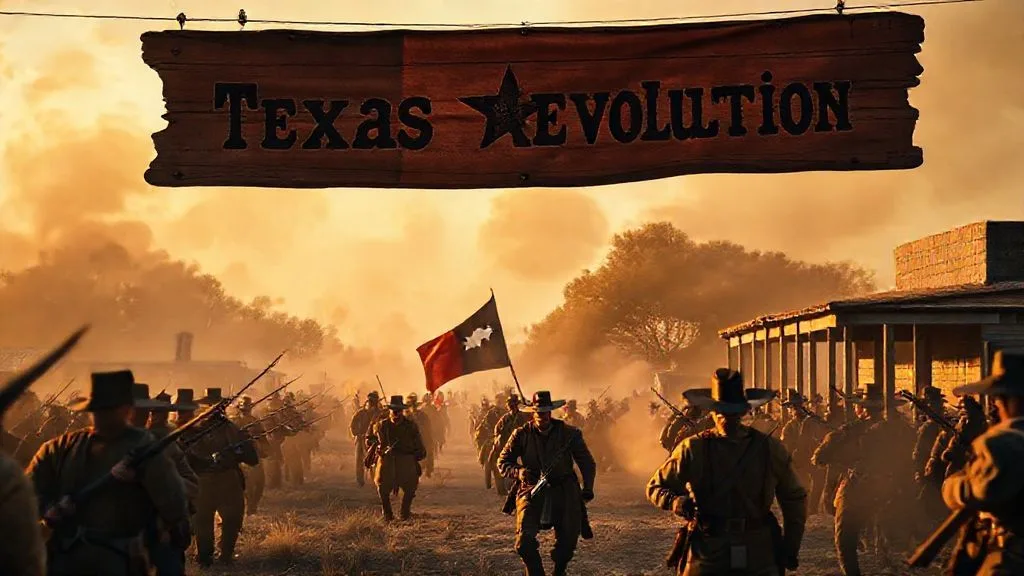
Instead of a meek response, the settlers raised a flag—black stars etched above the words “Come and Take It”, emblazoned beneath the image of the cannon. This was no mere protest but a psychological declaration, transforming a piece of artillery into a banner for liberty.
The flag, simple and bold, quickly became a rallying point for Texians—an emblem of resistance personifying their collective spirit in the crucible of revolution.
5. From Peaceful Settlers to Armed Fighters: The Road to Battle
Many of the Gonzales settlers were farmers, ranchers, and merchants untrained in military arts. Yet, their yearning for freedom transcended a lack of experience. As Mexican troops marched from San Antonio to claim the cannon, the settlers hastily organized a militia.
Young men, old veterans of earlier conflicts in the United States, and even women in supportive and logistical roles readied for confrontation. They knew the odds; the Mexican army was professional and numerically superior. Yet, they understood that in this gamble lay the future identity of Texas.
Word spread quickly, and reinforcements arrived from surrounding areas, illustrating the broader implications of this seemingly local stand.
6. The Battle of Gonzales: First Shots of a Revolution
On October 2, 1835, the two forces met just west of the town near the banks of the Guadalupe River. Mexican soldiers, numbering about 100 under Lieutenant Francisco de Castañeda, advanced with the aim of seizing the cannon. Opposite them stood fewer than sixty Texian militia members, yet their eyes flashed with determination.
Negotiations failed as the Texians refused to yield. Shots rang out. While the battle was brief and relatively small in scale, it was fierce in spirit. The Texians used guerrilla tactics, capitalizing on their knowledge of the terrain. The Mexican forces, caught off guard by the settlers’ ferocity, retreated.
Though the battle lasted less than an hour, its significance dwarfed its duration. The first military engagement setting the revolutionary train in motion was won.
7. Tactical Moves and Courage in the Face of Oppression
The success of the Texian militia was no accident. Leaders like John H. Moore and emerging figures such as Edward Burleson provided strategy, blending frontier pragmatism with a deep understanding of local loyalties.
The Texians’ use of mobility, marksmen skills, and morale outmatched the expectations of Mexican command. “It was as much courage as tactic,” said one observer decades later. The victory, though small, was emblematic of David meeting Goliath.
This battle was less about military conquest than a statement: the settlers would fight for their rights, their homes, and an ideal they held sacred.
8. Voices from the Fight: Eyewitnesses and Memoirs
The personal accounts of the Battle of Gonzales add layers of humanity to the historical facts. Caroline Baker, a settler’s widow, wrote that day about “the fire in the men’s eyes, the shaking hands, and the prayerful hearts.”
Mexican soldiers, in their own letters, recorded the unexpected resistance. Lieutenant Castañeda expressed a mixture of frustration and respect for the determined Texians.
These narratives reveal the complexity of the conflict—fighting neighbors, blurred lines of friendship and opposition, a shared land torn by conflicting sovereignties.
9. The Spark Ignites: How Gonzales United the Texian Cause
News of the victory spread rapidly across Texas and the United States. Gonzales became a beacon, symbolizing that the Texians could stand up to Mexico’s central authority.
Populations from far-flung settlements realized the necessity for solidarity; this was no longer a dispute of isolated grievances but a collective stand for self-determination. The Texian provisional government began to form in the backdrop, led by experienced politicians such as Stephen F. Austin.
The revolutionary momentum quickened, with enlistments swelling and militias organizing for further confrontation.
10. Mexico’s Response: Political and Military Ripples
Mexico’s government responded with alarm and resolve. Santa Anna, no stranger to decisive action, planned a campaign to quash the rebellion. Dispatches to northern commanders ordered harsh measures.
Yet, Mexico’s internal divisions—between federalists and centralists, regional leaders, and civil unrest elsewhere—hampered a swift counterattack. The battle at Gonzales exposed vulnerabilities in administration and command.
This miscalculation allowed Texas rebels to consolidate and grow increasingly bold, preparing for the long struggle ahead.
11. The Texian Rebels' Growing Resolve and Organization
The events at Gonzales pushed leaders to refine their political aims and military organization. The Convention of 1835 debated independence from Mexico, spelling out aspirations beyond mere autonomy.
Military camps were established, including the pivotal Muster on the San Antonio Road. Volunteers came from the United States, driven not only by ideology but also by economic opportunity and adventure.
The sense of a shared cause transcended differences, knitting settlers of diverse origins into a revolutionary force.
12. The Role of Tejanos: Allies in a Common Cause
While Anglo settlers often dominate narratives, Tejanos played critical roles in the revolution’s early stage. Mexican Texans who opposed Santa Anna’s dictatorship found common cause with the settlers, joining militias and supplying intelligence.
Figures like Juan Seguín exemplified this alliance, striving to protect their homes and rights amid shifting political tides.
Yet, this solidarity was fragile and complex, reflecting layered identities challenged by war.
13. International Interest and the Specter of American Expansionism
The Texas Revolution’s outbreak at Gonzales did not go unnoticed internationally. The United States, still reveling in the aftermath of Manifest Destiny, saw Texas as a valuable asset.
While the U.S. government maintained official neutrality—at least publicly—many citizens saw the rebellion as a noble cause aligned with American values.
European powers, observing from afar, contemplated the impact of a new republic emerging on the North American continent.
14. Gonzales in the Mythos of Texas Independence
Over the decades, Gonzales ascended beyond its military significance to become a mythic birthplace of Texan courage. The “Come and Take It” flag echoes in modern Texas iconography, inspiring pride and remembrance.
Annual festivals, monuments, and educational curricula stress this moment as the founding spark, embedding it in the state’s cultural DNA.
The story transcends history, becoming a symbol of resistance to oppression.
15. Consequences for the Region: A Shift Toward War
The battle marked the irreversible shift from political dissent to armed rebellion. Towns across Texas began arming themselves; Mexican authorities were forced into defensive stances.
The American Southwest braced for upheaval, as Texas’s trajectory moved beyond diplomacy into full-scale revolution and eventual independence.
Gonzales itself suffered consequence—its residents caught between hope and hardship amid ongoing skirmishes.
16. The Long March: From Skirmish to Full-scale Revolution
The spark at Gonzales eventually illuminated a broader conflict that culminated at the Alamo, San Jacinto, and the recognition of Texan independence.
The months following October 1835 saw battles evolve, alliances form, and a fledgling republic emerge.
What started as a small, desperate defense of a cannon had become a defining chapter in North American history.
17. Remembering Gonzales: Commemorations and Memory
The legacy of October 2, 1835, lives on in annual “Battle of Gonzales” reenactments and museum exhibitions. These events preserve eyewitness tales, artifacts, and the spirit of those who dared defiance.
Educational programs highlight the complexities, emphasizing that the revolution was not just conquest but a struggle for identity, freedom, and justice.
Gonzales stands as a testament to human resolve in the face of larger powers.
18. The Legacy of Defiance in Contemporary Texas Identity
In the modern Texan psyche, the Battle of Gonzales embodies the ideals of independence and self-reliance. It inspires political discourse, cultural expression, and even commercial branding.
The image of the cannon and the slogan “Come and Take It” resonate deeply in local and national dialogues about rights, sovereignty, and rebellion.
Texas’s founding myth is inseparable from this day of courage.
19. Lessons from the Texas Revolution’s Opening Act
Examining the battle through a contemporary lens offers valuable insights into resistance against authoritarianism, the power of symbols, and the role of community solidarity.
It reminds us that revolutions often begin not with grand armies but small acts of personal defiance.
The narrative invites reflection on how history is shaped by choices as much as by circumstance.
Conclusion
The crisp morning of October 2, 1835, in Gonzales was more than a mere clash over a rusty cannon; it was the awakening of a people grappling with identity, autonomy, and destiny. As the Texians stood shoulder to shoulder against the Mexican army, they wrote the opening lines of a dramatic saga that would reshape the borders and souls of nations. Their courage, embodied in a simple yet unyielding banner—“Come and Take It”—resonates still, a testament to the fire ignited on that day.
In this small town, on the edge of an empire’s reach, history was made by the humble but determined. The Battle of Gonzales reminds us that revolution often begins with the smallest spark, a moment when ordinary individuals, defending their homes and ideals, become architects of freedom.
FAQs
Q1: What triggered the Texas Revolution at Gonzales?
A1: The immediate cause was Mexico’s demand that Texian settlers surrender a small cannon used for defense. The settlers’ refusal, symbolized by the “Come and Take It” flag, prompted a military confrontation that became the revolution’s opening battle.
Q2: Why was the cannon so important to the settlers?
A2: Beyond its military value, the cannon represented the settlers’ right to self-defense and autonomy. Surrendering it was seen as submission to Mexican centralist policies that threatened their freedoms.
Q3: Who were the key figures in the Battle of Gonzales?
A3: Leaders such as John H. Moore and Edward Burleson organized the Texian militia, while Mexican forces were commanded by Lieutenant Francisco de Castañeda.
Q4: How did the Battle of Gonzales influence the wider Texas Revolution?
A4: The Texian victory galvanized settlers, encouraging more to join the revolutionary cause and heightening tensions that led to full-scale war with Mexico.
Q5: What role did Tejanos play during this event?
A5: Many Tejanos opposed Santa Anna’s regime and allied with the Texian settlers, contributing troops and local knowledge pivotal to the early stages of the rebellion.
Q6: How is the Battle of Gonzales remembered today?
A6: It is celebrated annually with reenactments and commemorations in Texas. The “Come and Take It” slogan remains a potent symbol of Texan independence and resistance.
Q7: Was the United States involved in the Texas Revolution?
A7: Officially neutral at the start, many American volunteers joined Texian forces. The U.S. government later annexed Texas, an act that intensified tensions with Mexico.
Q8: What broader themes does the Battle of Gonzales illustrate in history?
A8: It reflects themes of colonial resistance, identity formation, and the struggle between centralized authority and local autonomy.