Table of Contents
- The Twilight of the Peru-Bolivian Confederation
- Tensions on the Andes: Rivalries and Alliances Before 1839
- Andrés de Santa Cruz: The Architect of Union and Its Collapse
- The War of the Confederation: Struggle for Sovereignty
- The Battle of Yungay: The Decisive Turning Point
- August 25, 1839: The Dawn of a New Republic
- Lima in Turmoil: Political Upheaval and Public Sentiment
- Rebuilding the Republic: Challenges and Aspirations
- The Reinstatement of the Peruvian Constitution
- The Role of Domingo Nieto and Agustín Gamarra
- Economic Ruins and Hopes for Revival
- Indigenous and Mestizo Populations: Voices on the Fringes
- Regional Reactions: Neighboring Countries and International Impact
- The Legacy of the Confederation: National Memory and Historical Debate
- Lessons from the Restoration: Sovereignty in a Turbulent Era
- The Path Forward: Peru towards Constitutional Stability
- Cultural Renaissance amidst Political Disorder
- Reflections on Unity and Division in South America
- Peru’s Geopolitical Position Post-Restoration
- The End of an Experiment: Confederation’s Lasting Echoes
- Conclusion
- FAQs
- External Resource
- Internal Link
The Twilight of the Peru-Bolivian Confederation
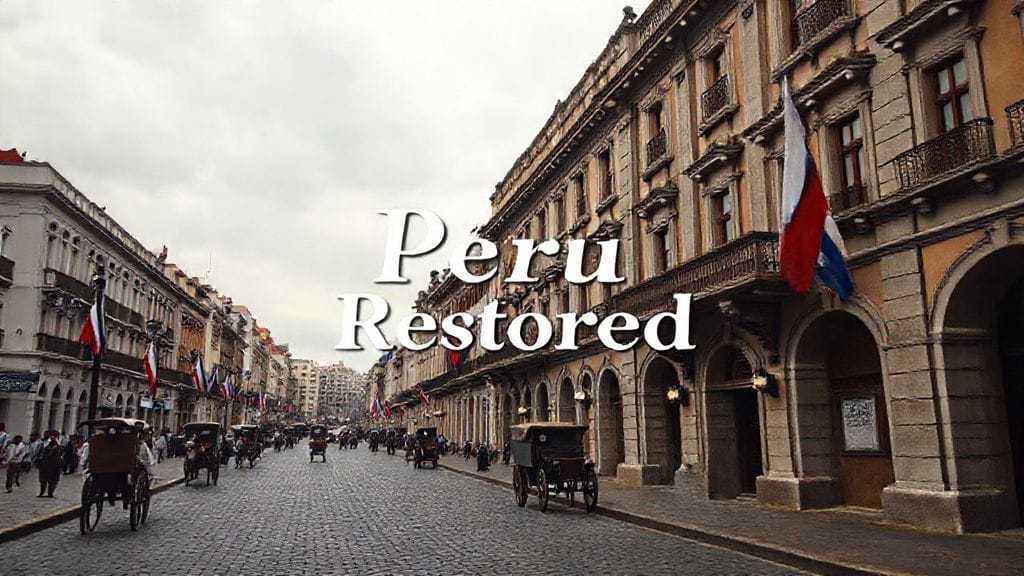
On a sweltering day in late August 1839, the streets of Lima echoed with a mixture of relief, fear, and cautious hope. Flags fluttered unevenly above cramped balconies, while the military paraded soldiers bearing scars both physical and political. Peru’s fragile attempt at unification with Bolivia—the Peru-Bolivian Confederation—had crumbled. The republic, fractured yet reborn, was poised on the precipice of renewal.
The Republic of Peru had just been restored, definitively, on August 25, 1839, after the Confederation’s dramatic dissolution. The whole region was a whirlwind of shifting alliances, blood, pride, and imperatives of survival. To grasp the weight of this moment—when the hopes for a consolidated Andean powerhouse vanished, replaced by uncertainty—we must retrace the stormy years that led to this historic turning point.
Tensions on the Andes: Rivalries and Alliances Before 1839
The early 19th century was more than an era of independence from Spain; it was a battleground for political philosophy, national identity, and the balance of power in South America. Peru and Bolivia, territories tied by geography but divided by distinct social structures, economic interests, and leadership ambitions, were forever caught in a struggle between unity and autonomy.
Peru, with its thriving coastal exports and complex class hierarchies, watched with wary eyes the rise of Bolivia—the former Alto Perú—in the highlands. Bolivia’s own internal instability and quest for recognition on the world stage invited attention and intervention by neighbors and global powers alike.
The idea of uniting these two republics under a single federation was not new, but it gained momentum under the charismatic and controversial leadership of Andrés de Santa Cruz. His vision of a confederation promised economic revitalization, a collective defense strategy, and a shared cultural renaissance—if only the fragile political stars aligned.
Andrés de Santa Cruz: The Architect of Union and Its Collapse
A mestizo born in La Paz in 1792, Andrés de Santa Cruz emerged as a towering figure in early 19th-century South America. A soldier, statesman, and dreamer, he sought to transcend the fragmented colonial legacies to create a strong Andean confederation.
Santa Cruz’s efforts culminated in the official establishment of the Peru-Bolivian Confederation in 1836, a tripartite arrangement splitting Peru into North and South states alongside Bolivia. His hope was to create a bloc that could rival the influence of Chile, Argentina, and Brazil.
However, his vision was not embraced uniformly. The Confederation faced fierce opposition: from disgruntled Peruvian elites unwilling to share power, from Chilean forces fearing a growing regional hegemon, and from domestic factions within Bolivia wary of Santa Cruz’s ambitions. His authoritarian style fueled resentment, and unity began to unravel under mounting external and internal pressures.
The War of the Confederation: Struggle for Sovereignty
By 1837, tensions exploded into open confrontation. Chile, alarmed by what it saw as a threat to its regional dominance, joined with Peruvian dissidents to wage war on the Confederation. This conflict, known as the War of the Confederation (1836–1839), pitted Santa Cruz’s forces against a coalition determined to dismantle his grand design.
This war was brutal, fought across imposing Andean mountain passes and coastal plains. The fog of ideological battle obscured another truth: a fight for control of natural resources, trade routes, and the legitimacy of nascent nationhood itself.
The Confederation had strong initial successes, but as the coalition tightened its grip, Santa Cruz’s dream began to falter. Both sides deployed irregular militias, engaged in brutal skirmishes, and sought diplomatic maneuvers, but it was clear that the outcome would shape the continent’s future.
The Battle of Yungay: The Decisive Turning Point
February 20, 1839, the battle that would seal the Confederation’s fate—a thunderous clash near the town of Yungay. Peruvian-Chilean forces, under the leadership of General Manuel Bulnes, engaged Santa Cruz’s armies in a fight that was as symbolic as it was tactical.
After hours of fierce combat marked by bravery and heavy losses, Bulnes emerged victorious. Santa Cruz’s retreat signaled the final collapse of the Confederation’s military resistance. News of this shook the political landscape, triggering cascades of resignations and declarations of renewed independence across Peru.
The Battle of Yungay was not just a military defeat but a powerful psychological blow that ended any illusions of a unified Andean empire under one banner.
August 25, 1839: The Dawn of a New Republic
In Lima, the revered city at the heart of Peruvian identity, August 25 arrived with a strange mix of jubilation and uncertainty. Officials declared the restoration of the Republic of Peru, formally ending the Confederation and reasserting sovereign control.
The day's ceremonies were subdued, in recognition of the devoir endured, the lives lost, and the fragility of the peace won. Yet, people dared to hope once again that stability might take root.
Lima, a city scarred by repeated political upheaval, found itself at a crossroads—between past dreams shattered and the daunting prospect of rebuilding a nation.
Lima in Turmoil: Political Upheaval and Public Sentiment
The restoration was not a single act but a process fraught with conflict. Lima's political factions—monarchists, republicans, liberal reformers—each saw opportunity in the power vacuum that followed the Confederation’s collapse.
Public sentiment was equally complex. The common people, who had suffered through wars and economic disruptions, yearned for peace but were skeptical of the promises of leadership. Political assemblies debated fervently, poets lamented, while merchants anxiously recalculated futures in trade.
This climate unpredictably shaped the restoration’s trajectory: alliances were made and broken with dizzying speed, as Lima sought to regain control over itself and define its national identity.
Rebuilding the Republic: Challenges and Aspirations
Peru’s reunification faced immense hurdles. The undoing of the Confederation meant instability both administratively and socioeconomically. Reestablishing authority across vast and diverse territories demanded diplomacy and force in equal measure.
Institutions were weak, infrastructure damaged, and a once-vibrant economy staggered. Yet, Peru’s leaders clung to aspirations of reforming their republic—with renewed constitutions, military restructuring, and embracing nationalist ideas that could unify disparate groups.
Amid hardship, the restoration became a laboratory for political thought and action, creating the foundations for later republican institutions.
The Reinstatement of the Peruvian Constitution
A pivotal step in restoring sovereignty was drafting and enforcing a constitution that reflected Peru’s renewed status as an independent republic. Restoring constitutional order was both symbolic and practical, salvaging legitimacy lost during the Confederation’s tumult.
The new charter emphasized presidential powers but sought to balance them with legislative and judicial institutions. It resonated with liberal ideals borrowed from both European Enlightenment and republican traditions in the Americas.
While imperfect and contested, the constitution laid groundwork for political stability and citizen rights, planting seeds for Peru’s upward trajectory.
The Role of Domingo Nieto and Agustín Gamarra
In the delicate balance of power, military and political leaders played outsized roles. Domingo Nieto, a respected general known for his patriotism and moderate views, helped navigate transitional moments, favouring constitutionalism and order.
Agustín Gamarra, a figure with a more complex legacy, emerged as a dominant political force. His ambition and military prowess commanded loyalty, although his vision often clashed with rivals.
Together, and often against each other, leaders like Nieto and Gamarra shaped Peru’s restoration, reflecting the contradictions between military authority and democratic aspirations that marked the period.
Economic Ruins and Hopes for Revival
The wars and political turbulence left Peru economically devastated. Trade routes had been disrupted; agricultural production suffered; international markets were suspicious of instability.
Yet, new opportunities emerged. The restoration catalyzed plans for infrastructure rebuilding—roads, ports, and communications—to reestablish Peru as a commercial hub.
Mining, a traditional backbone of the economy, was poised for revival, and the government incentivized foreign investment cautiously. Despite insecurities, entrepreneurs and workers sought to breathe new life into the faltering economy.
Indigenous and Mestizo Populations: Voices on the Fringes
While political narratives center on Lima’s elites and military leaders, large segments of Peru’s population—indigenous peoples and mestizos—experienced these changes differently.
Often excluded from official politics, these groups lived realities shaped by continued land dispossession, forced labor, and cultural marginalization. Yet, their endurance, traditions, and occasional resistance contributed quietly but powerfully to Peru’s resilience.
The restoration era sowed complex legacies regarding identity and inclusion, issues that Peru continues grappling with to this day.
Regional Reactions: Neighboring Countries and International Impact
Peru’s restoration did not go unnoticed by neighbors nor global powers. Chile, having played a crucial role in dismantling the Confederation, recalibrated its policies to maintain ascendancy. Argentina and Brazil watched with equal vigilance, wary of shifting alliances.
Europe and the United States saw strategic importance in the Andes, where trade routes and resource extraction promised wealth and influence. Diplomatic ties and treaties proliferated, balancing cooperation with competition.
The restoration thus reopened complex dialogues about sovereignty, intervention, and modernization across South America.
The Legacy of the Confederation: National Memory and Historical Debate
The Peru-Bolivian Confederation, though short-lived, left a deep imprint—both in political memory and historiography. Was it a noble but doomed experiment? An authoritarian project cloaked in rhetoric? A catalyst for modern nationalism?
Historians and public discourse oscillate between admiration for its vision and criticism of its methods. The Confederation’s downfall informed later debates on regionalism, identity, and integration.
Its legacy persists as a cautionary tale, underscoring the difficulties of uniting diverse peoples under ambitious political constructs.
Lessons from the Restoration: Sovereignty in a Turbulent Era
The 1839 restoration teaches enduring lessons about sovereignty—the fragile balance between unity and autonomy, the role of military power in politics, and the limits of imposed integration.
Peru’s experience offers insight into the resilience of local identities and the tumultuous journey toward stable republicanism in Latin America. It illuminates the cost of conflict and the price of political ideals.
The restoration was neither an end nor a beginning, but a pivotal chapter in a longer struggle for legitimacy and order.
The Path Forward: Peru towards Constitutional Stability
Following 1839, Peru cautiously advanced toward internal consolidation. Successive governments grappled with the challenge of strengthening institutions amid ongoing regional tensions.
Slow progressive reforms, often interrupted by military coups and civil unrest, reflected the complexity of nation-building on fractured foundations.
Nonetheless, the restoration set in motion a trajectory favoring constitutional law, civil society engagement, and the gradual emergence of national coherence.
Cultural Renaissance amidst Political Disorder
Despite chaos, the period sparked cultural revival. Writers, artists, and intellectuals engaged with themes of identity, sovereignty, and history. Lima’s salons debated Enlightenment ideas while folk traditions thrived in the countryside.
This cultural effervescence was inseparable from the political context—an expression of the people’s effort to define themselves in a rapidly changing world.
The restoration thus stands as more than a political event; it is a moment of reawakening in Peru’s cultural consciousness.
Reflections on Unity and Division in South America
The collapse of the Confederation and Peru’s restoration reverberated throughout the continent as a lesson in the complexities of unity. Latin America, fractured by geography, diverse peoples, and competing visions, found it difficult to form lasting federations.
Yet, the ideals of solidarity and integration remained potent, resurfacing in later regional projects and ideals.
The 1839 event thus occupies a crucial place in the continent’s ongoing dialogue about identity and cooperation.
Peru’s Geopolitical Position Post-Restoration
After 1839, Peru reasserted itself as a key Andean player. While weakened, its strategic location, resource wealth, and cultural influence gave it significant regional weight.
Balancing relations with Chile, Bolivia, and other neighbors became paramount, influencing diplomacy and defense strategies for decades.
The restoration marked the start of Peru’s renewed quest for sovereign agency within an often hostile and competitive geopolitical landscape.
The End of an Experiment: Confederation’s Lasting Echoes
The Peru-Bolivian Confederation, though undone, continued to inspire political thought and occasional nostalgia. Its failure highlighted challenges but also seeded questions about integration, federalism, and regional strategy.
Its echoes can be traced in 20th-century South American history and current discussions on Andean cooperation.
It remains an emblematic case study about the possibilities and pitfalls at the crossroads of empire and republic.
Conclusion
The restoration of the Republic of Peru on August 25, 1839, was a moment heavy with contradiction: a triumph shadowed by loss, a rebirth tinged with fragility. After years of exile from unity and sovereignty, Peru reclaimed itself—not as a perfect nation, but as a land of aspirations, scars, and enduring spirit.
This event reminds us that history moves not in grand gestures alone but in the steady, uncertain steps of peoples and leaders wrestling with identity and power. The legacy of the Confederation’s rise and fall is more than a tale of war and politics; it is a human story of hope, resilience, and the arduous quest for belonging.
Peru’s restored republic became a canvas on which future generations would paint their dreams and struggles, forever shaped by this pivotal chapter.
FAQs
Q1: What were the main causes of the Peru-Bolivian Confederation’s collapse?
The Confederation collapsed under a weight of internal dissent, external opposition (notably from Chile), and military defeat. Conflicting political visions, resistance from Peruvian elites, and economic strains made sustaining the union untenable.
Q2: Who was Andrés de Santa Cruz, and what role did he play?
Santa Cruz was the mastermind behind the Confederation, seeking to unite Peru and Bolivia into a regional power. His authoritarian leadership, military background, and vision were central to both the creation and downfall of the Confederation.
Q3: How did the Battle of Yungay influence the restoration of Peru?
The decisive defeat of Santa Cruz’s forces at Yungay in February 1839 marked the military end of the Confederation and paved the way for Peru’s restoration of its republican status on August 25, 1839.
Q4: What challenges did Peru face immediately after the restoration?
Peru grappled with political instability, economic devastation, social fractures, and the task of rebuilding national institutions and legitimacy, all under the pressure of regional geopolitics.
Q5: How did the indigenous populations perceive the Confederation and restoration?
Indigenous peoples were often marginalized from official politics during both periods and experienced continued social and economic hardships, although they maintained cultural resilience and, at times, engaged in local resistance.
Q6: What is the legacy of the Peru-Bolivian Confederation in modern South America?
The Confederation serves as a historical example of the difficulties of regional integration, contributing to ongoing debates about sovereignty, nationalism, and cooperation in the Andes and wider continent.
Q7: Which leaders were prominent in Peru’s restoration process?
Notably, Domingo Nieto and Agustín Gamarra were military and political leaders shaping restoration efforts, embodying tensions between military authority and constitutional governance.
Q8: How did neighboring countries react to the Confederation’s restoration?
Chile actively opposed the Confederation and played a pivotal role in its collapse, while Argentina and Brazil maintained cautious watchfulness, adjusting their policies to the shifting balance of power.