Table of Contents
- The Dawn of Conquest: The July 1830 Invasion of Algiers
- The Mediterranean Crossroads: Algiers Before the French
- Triggers and Tensions: The Prelude to Occupation
- The French Monarchy’s Ambitions and Colonial Urge
- The Fleets Assemble: A Naval Power Projection
- July 5, 1830: The Storming of Algiers Begins
- Urban Warfare and Resistance: Clashes in the Kasbah
- The Collapse of Dey Hussein’s Regime
- The Role of Key Figures: From Lord Exmouth to Ahmed Bey
- The Massacre and Aftermath: Civilians Amidst Chaos
- Symbolism and Propaganda: The French Narrative Takes Shape
- Algiers Transformed: Military Occupation to Colonial Metropolis
- The Beginning of French Algeria: Beyond the City Walls
- Reactions from Europe and the Ottoman Empire
- The Cultural and Social Impact on Algerian Society
- The Long Road to Resistance and Nationalism
- Economic Reorientation Under French Control
- Memory and Myth: How the Occupation Is Told Today
- Hindsight and Historical Debate: Was It Colonialism Inevitable?
- Conclusion: Occupation as a Catalyst for Modern Algeria
- FAQs: The French Occupation of Algiers 1830
- External Resource
- Internal Link
1. The Dawn of Conquest: The July 1830 Invasion of Algiers
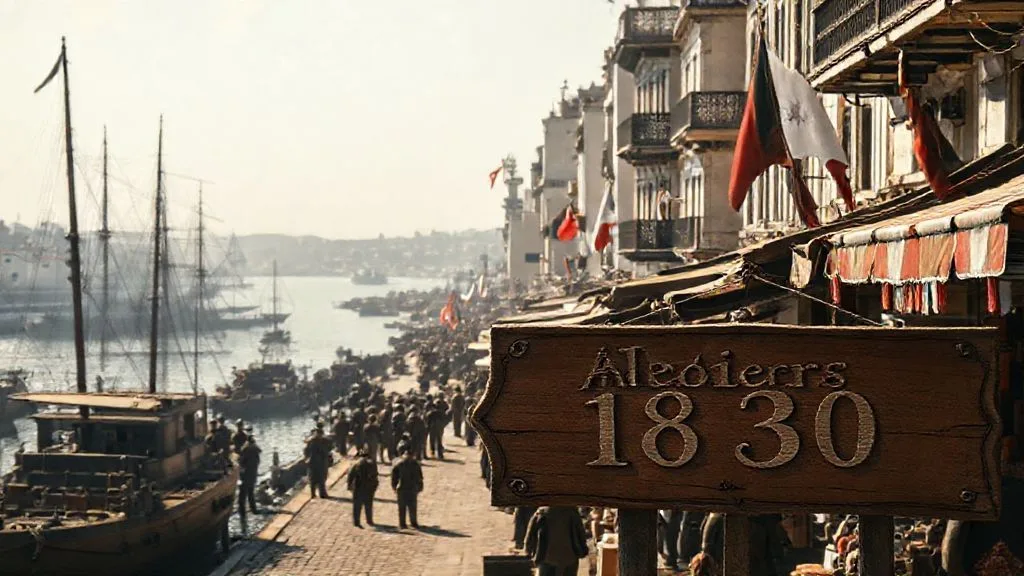
The sun scorched the Mediterranean coast on a sweltering July morning in 1830. On the horizon, a formidable armada of French warships cut through the blue waters, their sails billowing like the harbingers of an irrepressible change. Below, the city of Algiers, proud jewel of the Barbary Coast, pulsed with an uneasy calm—a fragile veil over decades of tension and turbulence. Then, the thunder of French cannons shattered the air, echoing across the Kasbah’s labyrinthine alleys. In just days, the city would fall, marking not only the collapse of the Ottoman-backed Regency of Algiers but the dawn of nearly 130 years of French colonial rule.
This wasn’t merely a military encounter but a pivotal moment when the forces of empire confronted a storied Mediterranean city—a confrontation that altered the destinies of millions and reshaped the geopolitical landscape of North Africa.
2. The Mediterranean Crossroads: Algiers Before the French
Algiers, perched on a crescent of rugged shoreline, was a city woven from the threads of millennia. Founded by Phoenicians, absorbed into Roman, Byzantine, and subsequently Arab-Islamic empires, it was by the 19th century a fortress of Ottoman influence and a thriving hub of Mediterranean trade. Its narrow streets echoed with the calls of merchants, the scent of spices, and the clarion of minarets.
Yet beneath this vibrant surface lurked a volatile mix of local tribal allegiances, pirate havens, and Ottoman-appointed rulers—the Deys—whose grip was both a source of order and of exploitation. The city was simultaneously a jewel and a powder keg, vital for the Ottoman Empire’s waning control over the western Mediterranean but increasingly vulnerable to European powers hungry for influence.
3. Triggers and Tensions: The Prelude to Occupation
The seeds of the French invasion were sown decades earlier in a series of diplomatic slights and economic frictions. The notorious "Fly Whisk Incident" of 1827, where a French consul was struck by the Dey Hussein with a fly whisk, became a symbolic casus belli—an excuse sparking latent grievances. France, reeling from internal political upheavals and eager to distract its populace, seized upon the incident as justification for a punitive expedition.
But beneath the surface, France’s motives were far more strategic and economic. Control over Algiers meant dominance over Mediterranean trade routes, a stepping stone for broader colonial ambitions in Africa, and a demonstration of burgeoning imperial muscle in an era where European powers scrambled for overseas possessions.
4. The French Monarchy’s Ambitions and Colonial Urge
In 1830, France was a nation at crossroads. The Bourbon monarchy had been recently restored but was shaky, and King Charles X sought a triumphant venture to unite the fractious country behind the crown. The conquest of Algiers promised glory and economic opportunity, a chance to reinvigorate national pride.
French military planners, aristocrats hungry for prestige, and emerging bourgeois commercial interests all converged behind the campaign. The expedition became a symbol of modern France’s aspirations: to reclaim its place on the world stage through colonial conquest and naval dominance.
5. The Fleets Assemble: A Naval Power Projection
Under the tactical genius of Admiral Guy-Victor Duperré—and with the shadowy but decisive presence of Lord Exmouth, the British diplomat who had earlier enforced peace in the region—the French amassed a formidable naval force. Over 400 ships transported more than 37,000 soldiers, artillery, and supplies, capable of overwhelming the city’s modest defenses.
The armada’s arrival was not just a show of force; it was a calculated, precise display of industrial-age military power—steamships alongside traditional sail, cannons larger and deadlier than anything Algiers had faced, and soldiers hardened by recent European conflicts.
6. July 5, 1830: The Storming of Algiers Begins
The assault began with a blistering naval bombardment. French gunfire rained down on the city walls and the surrounding forts along the Bay of Algiers. Then, via landing crafts, troops breached the beaches near Sidi-Fredj. The Algerian defenders, outnumbered and outgunned, rallied under Dey Hussein but faced logistical chaos and confusion in the narrow streets.
Fierce resistance erupted, turning Algiers into a battlefield of stone and smoke. The Kasbah’s twisting alleys became death traps where hand-to-hand combat flared amid the rubble of centuries-old buildings. Yet the relentless French advance, supported by naval firepower, pushed the defenders back.
7. Urban Warfare and Resistance: Clashes in the Kasbah
The Kasbah—the fortified heart of Algiers, labyrinthine and steep—was both a shield and a trap. For the Algerian warriors, it represented home soil, sacred wards, and centuries of heritage. Fighting here was desperate and brutal. Legend recounts Mohammed ben Ahmed, a staunch commander who led guerrilla-style counterattacks that harried French columns.
Still, the French military discipline and sheer numbers steadily overcame these pockets of resistance. The roar of artillery, the cries of civilians and combatants alike, and the eerie smoke-wreathed streets transformed Algiers into a grim portrait of siege warfare.
8. The Collapse of Dey Hussein’s Regime
By mid-July, Dey Hussein’s power crumbled. Facing insurmountable military defeat and internal dissent, the last Ottoman governor capitulated on July 7, surrendering keys to the city and ending centuries of Ottoman formal rule. However, this defeat wasn’t merely an end—it was a violent disruption of political order, laying bare the fractures within Algerian society and its governance.
Dey Hussein’s fall was less a sudden collapse than a culmination of years of degeneration in the Regency’s structures, exacerbated by the shock and scale of the French invasion.
9. The Role of Key Figures: From Lord Exmouth to Ahmed Bey
While Dey Hussein presided over the doomed defense, several individuals shaped this confrontation’s course. Lord Exmouth, though British and not directly involved in the invasion, loomed large diplomatically, having earlier imposed peace treaties on the Barbary States—his shadow underscored the waning Ottoman authority.
On the Algerian side, Ahmed Bey, ruler of Constantine and a formidable fighter, would later symbolize Algerian resistance. Though absent during the initial fall of Algiers, Ahmed Bey’s leadership in the years that followed inspired prolonged insurgency. His story embodies the complexities of Algerian defiance against colonization.
10. The Massacre and Aftermath: Civilians Amidst Chaos
War’s brutality extended beyond soldiers. Civilians, caught between bombarded neighborhoods and firefights, suffered grievously. Massacres and looting marred the French entry into the city; entire quarters bore the scars of bloodshed. Accounts speak of families fleeing into dense alleyways, mosques turned into shelters, and a population grappling with shock and despair.
The psychological trauma reverberated long after guns fell silent. This was not a mere military conquest but a social rupture—a harbinger of the colonial pains yet to come.
11. Symbolism and Propaganda: The French Narrative Takes Shape
Back in France, newspapers heralded the victory as a triumph of civilization over barbarism. Paintings immortalized heroic French soldiers planting the tricolor atop the Casbah’s ramparts. Political leaders framed the conquest as a civilizing mission—spreading French culture, law, and progress to a “backward” land.
This narrative cloaked the violent reality under a veneer of righteousness, shaping public opinion and justifying the occupation both at home and across Europe.
12. Algiers Transformed: Military Occupation to Colonial Metropolis
The French occupation was initially a military administration, but soon it bore the hallmarks of colonial ambition. French urban planners redesigned Algiers, tearing down parts of the old city to impose wide boulevards, administrative buildings, and European-style quarters—intent on erasing the Ottoman imprint.
The city became a laboratory for colonial rule, where French institutions, legal codes, and education systems replaced traditional Algerian structures—accelerating cultural transformation with profound tensions.
13. The Beginning of French Algeria: Beyond the City Walls
But Algiers was only the beachhead. The conquest laid the groundwork for the extensive colonization of Algeria’s fertile plains and mountainous interiors. French settlers, or colons, moved in, seizing farmland and resources, sparking dispossession and rebellion.
The city’s fall symbolized a gateway to a drawn-out insurgency, as rural tribes and urban notables united sporadically against French encroachment.
14. Reactions from Europe and the Ottoman Empire
Europeans watched with mixed fascination and trepidation. Britain, balancing interests, tacitly supported France but feared disruption of the Mediterranean balance of power. The Ottoman Empire, already in decline, protested diplomatically but lacked the means to intervene militarily.
This event exposed the Ottoman Empire’s fragility and accelerated imperial realignments that would culminate in the “Eastern Question” dominating 19th-century diplomacy.
15. The Cultural and Social Impact on Algerian Society
The occupation shattered Algerian social fabric. Traditional elites were displaced, Islamic institutions curtailed, and European customs imposed. The local population faced economic hardship, cultural humiliation, and a loss of autonomy.
But amid this, Algerian society adapted, preserving its identity through oral histories, religious practices, and early nationalist sentiments—seeds of future resistance.
16. The Long Road to Resistance and Nationalism
Though Algiers fell quickly, Algerian resistance simmered and erupted repeatedly. Figures like Emir Abdelkader would later galvanize the anti-colonial struggle. This initial occupation forged a collective memory of resistance, martyrdom, and national aspiration that underpinned Algeria’s eventual fight for independence over a century later.
17. Economic Reorientation Under French Control
French colonization redirected local economies toward European markets, exploiting Algeria’s agricultural potential—especially wine, grain, and livestock production. Infrastructure followed settler interests, often marginalizing indigenous needs.
While some urban modernization occurred, wealth disparities deepened, fueling resentment and social unrest.
18. Memory and Myth: How the Occupation Is Told Today
The fall of Algiers remains a contested narrative. French historiography often emphasized civilizing missions, while Algerian collective memory mourns subjugation and loss. Films, literature, and public commemorations in Algeria evoke both trauma and pride in resistance—showing how history lives in cultural consciousness.
19. Hindsight and Historical Debate: Was It Colonialism Inevitable?
Modern scholarship probes whether French occupation was predestined by European imperialism or a contingent event shaped by political miscalculations and local dynamics. Discussions focus on alternate trajectories, Ottoman decline, and the impact of global power rivalries.
20. Conclusion: Occupation as a Catalyst for Modern Algeria
The fall of Algiers in July 1830 was more than a military conquest; it was a transformative rupture spawning centuries of colonial domination and eventual national awakening. From the smoldering ruins of the Kasbah rose a modern Algeria—scarred, complex, resilient. The echoes of that July invasion still resonate, a poignant reminder of the intertwined destinies of empire and resistance.
Conclusion
The French occupation of Algiers in July 1830 stands as a seismic episode in world history—a moment when imperial ambitions collided with a rich, ancient culture, forever altering North Africa’s political and cultural landscape. What began as a swift military victory unfolded into a prolonged saga of occupation, resistance, and identity. For the Algerians, it was the dawn of a difficult century marked by upheaval but also remarkable resilience.
This chapter invites us to reflect on the human costs of empire and the enduring quest for self-determination. It reveals how history is rarely neat or unequivocal; it is a living story shaped by courage, conflict, and hope.
FAQs
Q1: What was the main cause of the French invasion of Algiers in 1830?
The invasion was precipitated by a mixture of diplomatic incidents—most notably the "Fly Whisk Incident"—economic interests, and France’s desire to distract domestic unrest by projecting power overseas.
Q2: Who was Dey Hussein, and what role did he play?
Dey Hussein was the Ottoman-appointed ruler of Algiers at the time of invasion. He led the defense but ultimately surrendered the city under overwhelming French military assault.
Q3: How did the fall of Algiers affect the Ottoman Empire?
It signaled a significant loss of Ottoman influence in North Africa, exposing the empire’s weakening hold over its distant provinces and accelerating European encroachment.
Q4: What was the impact of the French occupation on Algerian society?
The occupation disrupted social structures, imposed foreign rule, and initiated cultural changes—many of which fueled future nationalist movements.
Q5: Who was Ahmed Bey, and why is he significant?
Ahmed Bey was the ruler of Constantine who resisted French advances after Algiers fell, becoming a symbol of early Algerian resistance.
Q6: How did the international community react to the French conquest?
Reactions were mixed; some European powers welcomed it as a shift in regional balance, while the Ottoman Empire protested but was unable to intervene effectively.
Q7: Was the occupation immediately formalized as a colony?
Not immediately; it started as a military occupation before evolving into full-scale colonization with settler influx and institutional restructuring.
Q8: How is the occupation remembered in Algeria today?
It is often viewed as the beginning of colonial oppression but also as the birthplace of collective resistance and national identity.