Table of Contents
- Dawn over Fredericia: The Calm Before the Storm
- The First Schleswig War: A Kingdom Divided
- Denmark’s National Identity at Stake
- The Strategic Importance of Fredericia
- Commanders and Soldiers: Faces of the Conflict
- The Siege of Fredericia: A City Under Threat
- July 6, 1849: The Battle Unfolds
- The Danish Charge: Courage Against Odds
- Tactical Innovations and Battlefield Decisions
- The Role of Geography and Weather
- Civilian Life Amidst the Conflict
- The Aftermath: A City Scarred but Resilient
- Political Repercussions in Denmark and Beyond
- How the Victory Shaped Danish National Consciousness
- European Power Dynamics and the Schleswig Question
- Remembering Fredericia: Monuments and Memory
- A Legacy of Resistance and Unity
- Historical Perspectives and Debates
- Fredericia in Danish Cultural Imagination
- Conclusion: Triumph Beyond the Battlefield
- FAQs about the Danish Victory at Fredericia
- External Resource
- Internal Link
Dawn over Fredericia: The Calm Before the Storm
It was a summer morning on July 6, 1849—a fragile calm stretched across the fortified town of Fredericia in Denmark. The heavy mists rolled over the ramparts, shrouding the walls like a veil of uncertainty. Townsfolk peeked through shuttered windows, children’s laughter mingled nervously with the distant murmur of military preparations. In this moment, the city was a crucible of hope and dread, standing at the precipice of a battle that would shape not just a war, but the very soul of a nation.
The air was thick with tension—enemy forces lay enemy lines outside the city, laying siege and readying to crush the Danish hold on this strategic port. Yet within Fredericia's walls rose a determined spirit, a resolve forged by the horrors and hopes of months of conflict. As bugles sounded and cannons roared, the stage was set for a confrontation that would echo through Danish history: the decisive victory at the Battle of Fredericia.
The First Schleswig War: A Kingdom Divided
To understand Fredericia’s significance, one must travel back to the broader conflict erupting in the Danish realms—the First Schleswig War (1848-1851). Born from a tinderbox of nationalism, dynastic ambitions, and ethnic claims, the war was a clash over the duchies of Schleswig and Holstein, regions with mixed Danish and German populations and a contested status between Denmark and the German Confederation.
The death of King Frederick VI led to the accession of Christian VIII, whose death soon after ignited questions over succession and sovereignty. The German-speaking residents of Schleswig and Holstein, clad with sympathies toward the German Confederation, rebelled, provoking Denmark into a desperate defense of its territorial integrity. The clash embodied the sweeping nationalist currents of 19th-century Europe—the pendulum of rising ethnic identities and shifting boundaries.
Denmark’s National Identity at Stake
Denmark stood at a crossroads. The war was more than a territorial dispute; it was a question of nationhood. Could Denmark maintain control over its traditional territories despite mounting German nationalist pressure? The war infused the Danish public with a renewed sense of patriotism and survival instinct as volunteers and veterans alike answered the call.
The small kingdom was not merely defending borders—it was defending its very sense of identity in the face of fragmentation. Danish politicians, military leaders, and civilians alike recognized that the outcome at Fredericia would symbolize the resilience or unraveling of Denmark’s sovereignty.
The Strategic Importance of Fredericia
Fredericia was a gem of strategic importance. Founded in 1650 as a fortress city designed to repel invasions, its walls and artillery emplacements made it a thorn in the side of besieging forces. Control of Fredericia meant controlling a vital gateway to Jutland, a barrier preventing German forces from slicing through the peninsula into the heart of Denmark.
For over a month before the battle, Danish forces were barricaded inside, with the enemy slowly tightening their grip—cutting supplies, probing defenses. The fortress’s survival was a matter of logistics and morale. If Fredericia fell, the Danish grip on Jutland would be fatally weakened.
Commanders and Soldiers: Faces of the Conflict
At the heart of the confrontation were two men whose leadership would direct the fates of thousands.
On the Danish side, General Olaf Rye stood as a symbol of audacity and calculated daring. A veteran of the Napoleonic wars, Rye was renowned for his aggressive tactics and understanding of battlefield psychology. His resolve was unyielding—a leader who understood that boldness was Denmark’s only path to redemption.
Opposing him, the Schleswig-Holstein forces were commanded by Prince Frederik of Augustenburg, a figure blending aristocratic poise with sharp military acumen. Intent on crushing Danish resistance and uniting the duchies with Germany, Augustenburg embodied the nationalist fervor of the insurgents.
Beneath these commanders, tens of thousands of soldiers—Danish regulars, volunteers, and conscripts—stood poised to fight for causes they believed transcended their own lives.
The Siege of Fredericia: A City Under Threat
In the weeks preceding July 6, the siege wore heavily upon the city and its defenders. Food supplies dwindled, communication lines were strained, and morale teetered under relentless artillery bombardments. The civilian population endured the dual hardships of fear and deprivation, their fate entwined with the soldiers' struggle.
Yet within the city's bastions, planning brewed. The Danes resolved to break the siege, not simply to hold their ground but to strike a decisive blow that would alter the war’s trajectory. The mood shifted from defense to audacity—preparing for a charge that was as much a gamble as a calculated maneuver.
The siege was not just a military encirclement; it was a test of will, endurance, and unity.
July 6, 1849: The Battle Unfolds
At dawn on July 6, the mist that had veiled Fredericia’s walls lifted, revealing a battlefield alive with tension. Danish troops moved quietly, marshaling in formations designed to exploit weaknesses in the enemy’s encirclement. The air thrummed with anticipation.
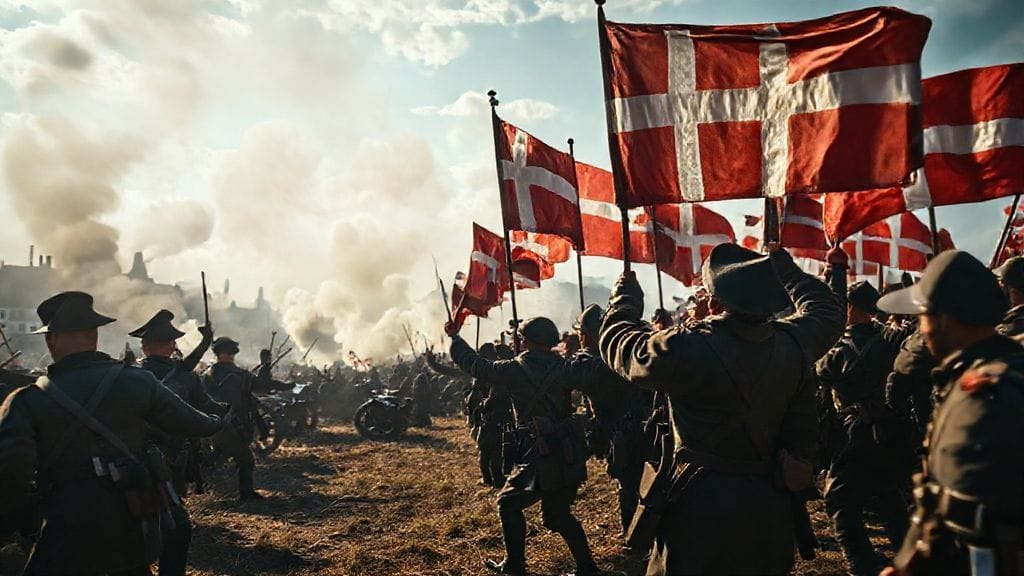
General Rye gave the command to advance, and with a thunderous roar, the Danish forces surged forward. The battle was marked by fierce hand-to-hand combat, storming of enemy trenches, and relentless cannon fire. Despite the odds, Danish forces pushed back the besieging armies with a combination of surprise, discipline, and ferocity.
The fiercest fighting concentrated on the outer lines, where Danish troops stormed the fortified positions of the enemy, turning the tide of the siege. The clash was brutal and chaotic—a cacophony of gunfire, battle cries, and the pounding footsteps of soldiers fighting for their homeland.
The Danish Charge: Courage Against Odds
The success of the Danish assault hinged on the courage and leadership of its soldiers. Volunteers who had left farms and workshops to take up arms fought side by side with seasoned troops, their shared patriotism binding them.
One of the most poignant anecdotes from the battle relates to General Olaf Rye himself. Leading from the front, he was mortally wounded during the assault—his death becoming a rallying point for his men. Rye’s sacrifice embodied the fierce determination that carried the Danish charge to victory.
This human cost was stark, reminding all that triumph was inseparable from suffering.
Tactical Innovations and Battlefield Decisions
The victory at Fredericia was no mere accident of bravery; it was the product of carefully orchestrated tactics. Danish commanders capitalized on intelligence and reconnaissance to identify weak points in enemy lines.
Innovations in artillery deployment and infantry coordination allowed the Danes to concentrate firepower effectively. The decision to mount a surprise night maneuver to reposition troops, cloaked by darkness, demonstrated an understanding of psychological warfare.
Throughout, communication between units was swift, a testament to the army’s discipline.
The Role of Geography and Weather
Fredericia’s landscape shaped the battle profoundly. The city’s fortifications were complemented by natural barriers, including the surrounding marshlands and the Little Belt strait just beyond. Danish forces used these features to funnel enemy troops into kill zones.
Weather on July 6 also played an unexpected role. The shifting summer winds carried smoke across enemy positions, disorienting their gunners, while intermittent rain refreshed parched troops.
This interplay between man and nature underscores how battles often pivot on forces beyond human control.
Civilian Life Amidst the Conflict
Amidst the thunder of artillery, Fredericia's civilians endured their own ordeal. Families sheltered in cellars, tended to the wounded, and struggled to maintain semblances of daily life under siege conditions.
Local women organized medical aid, preparing dressings and tending to the injured soldiers passing through hospitals set up within churches and community halls. Stories of courage and compassion abound—neighbors sharing scarce food, strangers forging alliances in hardship.
This human dimension offers a vivid reminder that war’s impact extends beyond the battlefield.
The Aftermath: A City Scarred but Resilient
When the dust settled, Fredericia lay heavily marked by war. Buildings were scarred by cannon fire, streets littered with debris, and the city mourned its dead. Yet for many, victory was sweeter for its cost.
The lifting of the siege restored vital sea communications, securing Denmark’s foothold in the region. Freed from the encirclement, Danish forces could begin to regroup and plan future operations with renewed confidence.
The city’s resilience became a symbol of national endurance—wounded but unbroken.
Political Repercussions in Denmark and Beyond
News of the Danish victory reverberated beyond Fredericia, sparking both jubilation and renewed resolve. Politically, it strengthened the hand of Denmark’s monarchy and government, strengthening domestic calls for a robust defense of Danish sovereignty.
International observers in Berlin, London, and Vienna followed developments closely. The battle highlighted the precariousness of the German Confederation’s attempts to assert control over Schleswig and Holstein. The war would drag on for two more years, but Fredericia marked a turning point.
How the Victory Shaped Danish National Consciousness
In the broader cultural tapestry of Denmark, Fredericia became a source of collective pride and identity. It embodied the virtues of courage, sacrifice, and unity against formidable opposition.
Songs, poems, and memorials dedicated to the battle proliferated throughout Danish society. Schools recounted the heroism of the soldiers; families named children after fallen heroes. The narrative of Fredericia helped consolidate a national mythology that persists to this day.
European Power Dynamics and the Schleswig Question
The Battle of Fredericia cannot be separated from the greater European context. The Schleswig-Holstein question was a thorny diplomatic problem involving rising German nationalism, Danish independence, and the shifting power balance of mid-19th century Europe.
Fredericia’s victory delayed German ambitions and contributed to ongoing negotiations among European powers. It foreshadowed the enduring struggle for influence in the region that would erupt again decades later in the Second Schleswig War and beyond.
Remembering Fredericia: Monuments and Memory
Today, Fredericia stands dotted with memorials commemorating the battle and those who fought. Statues of General Olaf Rye and plaques honoring fallen soldiers serve as tangible links to the past.
Annual commemorations keep the memory alive—drawing citizens and historians alike to reflect on the significance of July 6, 1849. These rituals affirm the enduring bond between present and past, reminding Denmark of the sacrifices that shaped its destiny.
A Legacy of Resistance and Unity
Fredericia’s victory exemplifies more than military success; it stands as a testament to a nation’s capacity to unite in the face of existential threats. The battle underscored how shared values—courage, determination, solidarity—could overcome daunting odds.
Its legacy informs contemporary conceptions of Danish resilience, inspiring generations to cherish sovereignty and peace while honoring their martial heritage.
Historical Perspectives and Debates
Historians continue to debate aspects of the battle: Was the victory a product of superior leadership, or did enemy mistakes play a decisive role? How significant was the loss of General Rye to the longer-term Danish war effort?
New research into archives and personal diaries sheds light on everyday soldiers’ experiences, enriching our understanding of the conflict’s human dimension.
These inquiries keep Fredericia alive not just as history, but as a living dialogue with the past.
Fredericia in Danish Cultural Imagination
Beyond academic circles, Fredericia has permeated Danish cultural imagination. Novels, films, and theatrical productions capture the drama and emotions of the siege and battle.
Artists have sought to evoke the emotional undercurrents of fear, hope, and sacrifice experienced by soldiers and civilians alike. The story of Fredericia continues to resonate as an emblem of courage and communal spirit.
Conclusion: Triumph Beyond the Battlefield
The Battle of Fredericia stands as a luminous chapter in Denmark’s history. Beyond its immediate military implications, it embodies an enduring human story of resilience, sacrifice, and the quest for identity.
On that summer day in 1849, amid smoke and bloodshed, a nation’s fate hung in the balance. And through the valor of its people, Denmark etched a victory that transcended the battlefield—a victory of spirit against division; unity against despair.
FAQs about the Danish Victory at Fredericia
1. What was the First Schleswig War and how did the Battle of Fredericia fit into it?
The First Schleswig War (1848-1851) was fought over the control of the duchies of Schleswig and Holstein, involving Denmark and German nationalist forces. The Battle of Fredericia in 1849 was a decisive victory for Denmark, lifting the siege of a strategic fortress and boosting Danish morale during the conflict.
2. Why was Fredericia strategically important for Denmark?
Fredericia was a heavily fortified town controlling access to Jutland and vital for Danish defense against German forces. Holding Fredericia prevented enemy forces from penetrating deeper into Denmark.
3. Who was General Olaf Rye and what was his role in the battle?
General Olaf Rye was a Danish commander known for his bold leadership. He led the Danish forces during the battle and was killed in action, becoming a heroic symbol of Danish sacrifice.
4. How did the victory at Fredericia influence Danish national identity?
The victory reinforced Danish unity and patriotism, becoming a symbol of national courage and resilience in the face of external threats—an identity cornerstone for the Danish people.
5. What were the wider European implications of the battle?
The battle affected European diplomacy by complicating the Schleswig-Holstein question and signaling Denmark’s resilience against German nationalist ambitions, influencing power dynamics in mid-19th century Europe.
6. How is the Battle of Fredericia remembered today?
Through monuments, annual commemorations, cultural works, and educational narratives, the battle remains a significant part of Danish historical memory and identity.
7. What hardships did civilians face during the siege?
Civilians faced food shortages, constant bombardment, and the fear of warfare destruction, all while contributing to war efforts through medical aid and moral support.