Table of Contents
- A City on the Edge: Monterrey on the Eve of Battle
- The Mexican-American War: A Clash of Empires and Ideologies
- Manifest Destiny and the Road to War
- The Strategic Significance of Monterrey
- General Zachary Taylor: The American Architect of Victory
- The Mexican Defense: General Pedro de Ampudia’s Gamble
- September 21, 1846: The Siege Begins
- Fog, Fire, and Fury: The Battle for the City’s Heights
- Urban Combat: Streets, Walls, and Unyielding Courage
- Civilians in the Crossfire: Monterrey’s Silent Witnesses
- The Turning Point: Assault on the Bishop’s Palace
- General Ampudia’s Decision: Negotiations Under Fire
- The Surrender: Terms, Triumph, and Controversy
- Aftermath in Monterrey: Destruction and Reconstruction
- The Impact on the Mexican-American War’s Progression
- Political Reverberations in Mexico City and Washington
- Zachary Taylor’s Rising Star and American Nationalism
- Monterrey in Memory: Monuments, Myths, and History
- Perspectives Across Borders: Mexican and American Narratives
- Lessons from Monterrey: War, Diplomacy, and Human Cost
- Conclusion: The Enduring Legacy of the Capture of Monterrey
- FAQs: Deepening Understanding of the 1846 Conflict
- External resource: Wikipedia link to Capture of Monterrey
- Internal Link: Visit History Sphere
1. A City on the Edge: Monterrey on the Eve of Battle
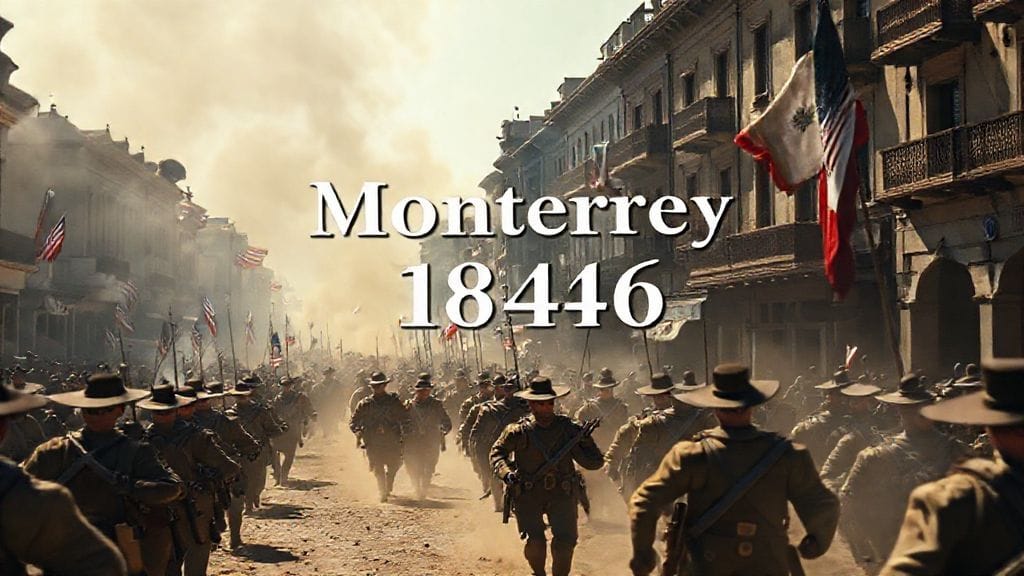
The sun rose over Monterrey in late September 1846, casting long shadows over a city trembling beneath a suffocating canopy of dust and gunpowder. Narrow cobbled streets, colonial facades stained by years of weather and war, echoed the restless murmur of citizens caught between hope and dread. Mothers clutched children close; soldiers massed, boots heavy on stone. Smoke from scattered fires blurred horizons. Monterrey, proud and beautiful, was about to endure one of the most pivotal sieges in North American history. This was no mere battle for a city; it was a crucible in which two nations would test their might, resolve, and very identity.
2. The Mexican-American War: A Clash of Empires and Ideologies
The Mexican-American War had already become a bitter saga by 1846—an unrelenting conflict born of ambition, ideology, and tragedy. Mexico, a fractured republic struggling to cement its revolution-born sovereignty, faced the rising tide of a young and hungry United States, propelled by the doctrine of Manifest Destiny. At stake were lands, national pride, and competing visions of continental destiny. Monterrey, nestled in Northern Mexico, held strategic weight far beyond its walls: a gateway to the interior and an emotional symbol of Mexican resistance.
3. Manifest Destiny and the Road to War
“From sea to shining sea,” the phrase encapsulated an American conviction that their nation was preordained to expand across the continent. By 1846, tensions fueled by Texas annexation and border disputes boiled over into open conflict. President James K. Polk, a champion of expansion, saw in Mexico a door to fulfill the nation’s destiny. The campaign northward was not simply a military endeavor—it was a collision of ideas, an assertion of power tinged with inevitable tragedy. Monterrey stood on that path as a prize and a challenge.
4. The Strategic Significance of Monterrey
Monterrey’s geography made it uniquely formidable. Flanked by the Cerro de la Silla and other rugged heights, the city was naturally defensible, a fortress in stone and adobe. Its location as a commercial and military hub atop critical routes added layers of importance. Control of Monterrey meant dominance over Northern Mexico—opening pathways deep into Mexican territory that would shape the war’s trajectory. For U.S. forces, taking Monterrey was both an ambition and a necessity.
5. General Zachary Taylor: The American Architect of Victory
Taylor, known as “Old Rough and Ready,” was no stranger to hardship. His weathered face and straightforward style belied a tactical mind honed in frontier skirmishes and Indian wars. Tasked with leading U.S. forces, he combined determination with caution, understanding both the strengths of his troops and the resilient spirit of Mexican defenders. Monterrey would become his crucible and stage, helping define his legacy and propelling him toward future political heights.
6. The Mexican Defense: General Pedro de Ampudia’s Gamble
Opposing Taylor was General Pedro de Ampudia, a seasoned Mexican officer entrusted with Monterrey’s defense. Ampudia faced a daunting challenge: limited troops, scarce supplies, and the looming threat of overwhelming American firepower. Yet his resolve was unbowed. Embracing the city’s challenging terrain and fortifying key positions, he prepared for a brutal defense that would push the Americans to their limits. His decision to hold Monterrey was as much about national pride as military strategy.
7. September 21, 1846: The Siege Begins
As the morning mists lifted, American forces encircled Monterrey. Fields gave way to trenches; artillery batteries thundered. The siege opened with skirmishes testing strength and resolve. Taylor’s men moved cautiously, aware of the city’s perilous courtyards and thick walls. The Mexican defenders, entrenched in elevated positions, met every advance with a hailstorm of musket fire. The battle was no mere clash—it was a grinding siege demanding courage, endurance, and innovation from both sides.
8. Fog, Fire, and Fury: The Battle for the City’s Heights
The natural high grounds surrounding Monterrey defined the contest. Battles raged atop Cerro de la Silla and other hills, where artillery duels and infantry assaults blurred into chaos. American soldiers braved heavy fire to claim these vantage points, vital for directing cannon and cutting Mexican lines. The smoke of battle mingled with the morning fog, an eerie testament to war’s confusion and the personal bravery etched into every footstep over rocky slopes.
9. Urban Combat: Streets, Walls, and Unyielding Courage
Once the heights were secured, the fight spilled into Monterrey’s tangled urban heart. Narrow streets became deadly kill zones; walls were scaled under hailstorms of bullets. The city’s colonial architecture was transformed into trenches and bastions. Combatants on both sides displayed extraordinary valor, with hand-to-hand fighting becoming frequent. It was a brutal, intimate warfare—soldiers confronted neighbors, friends, and foes in a grim ballet of survival. The city itself bore the scars of this violence, its stones whispering the tales of those who perished and persevered.
10. Civilians in the Crossfire: Monterrey’s Silent Witnesses
Amid the thunder of guns, Monterrey’s civilians—shopkeepers, artisans, women, and children—endured unimaginable hardships. Homes were reduced to rubble; food and water became scarce. Many fled or sought refuge in churches, while others, caught between loyalty and survival, served as messengers, medics, or took shelter in cellars. Historical accounts tell of families torn apart and communities galvanized by resilience. Their suffering and strength form an often overlooked, yet vital, chapter in this story.
11. The Turning Point: Assault on the Bishop’s Palace
One of the fiercest moments was the assault on the Bishop’s Palace, a commanding position overlooking much of the city. Taylor ordered a bold, risky attack to break Mexican lines. After hours of close quarters combat, American troops finally seized the palace, swinging momentum decisively in their favor. This victory was more than tactical; it was symbolic—a turning point that shifted morale and presaged the city’s impending fall.
12. General Ampudia’s Decision: Negotiations Under Fire
Despite determined resistance, the Mexican position became untenable. General Ampudia faced a grim calculus: continue a bloody defense that risked annihilation or seek terms that might preserve lives and cities. Opting for negotiations, he opened talks with Taylor under a flag of truce. Their discussions reflected not only the tactical realities but a profound respect between warriors. The surrender terms were controversial—some accused Ampudia of conceding too soon, while others viewed his choice as a humane act given the circumstances.
13. The Surrender: Terms, Triumph, and Controversy
The official capitulation on September 24, 1846, marked a bittersweet victory for the U.S. Forces. Monterrey was under American control, but the terms—allowing Mexican troops to withdraw honorably—generated debate. Taylor’s magnanimity contrasted with the ruthlessness expected in war, earning both praise and criticism. Amidst the triumph, the cost of war weighed heavily: ruined homes, lost lives, and the sobering realization that peace was still a distant hope.
14. Aftermath in Monterrey: Destruction and Reconstruction
The siege left Monterrey battered but unbroken. Fires had razed neighborhoods; artillery shells left scars both physical and psychological. Yet under the surface, a city spirit stirred toward recovery. Reconstruction efforts began cautiously, with communities banding together to rebuild not only walls but social fabric. The city’s resilience would echo through future generations, becoming a symbol of endurance amid conflict.
15. The Impact on the Mexican-American War’s Progression
Monterrey’s fall was a strategic blow to Mexico, opening pathways for further American incursions deeper into the country. It disrupted Mexican command structures and morale, while emboldening U.S. armies. Yet, it also galvanized Mexican resistance in other regions, sowing seeds of prolonged conflict. The battle highlighted the war’s ruthlessness and complexity—far from a simple march to victory, it was a protracted ordeal with shifting fortunes.
16. Political Reverberations in Mexico City and Washington
News of Monterrey’s capture reverberated through capitals. Washington hailed Taylor as a national hero, his success fueling political ambitions that would later crown him president. Mexico City bristled with anger and despair, triggering debates on military strategies, governance, and the nation’s future. This event crystallized deeper struggles—between war and diplomacy, pride and pragmatism—that would shape the war’s conclusion and Mexico’s identity.
17. Zachary Taylor’s Rising Star and American Nationalism
Taylor’s role in Monterrey cemented his reputation as a fearless leader and symbol of American resolve. Newspapers exalted him; citizens celebrated. His straightforward leadership style and battlefield prowess became emblematic of the expanding nation’s spirit. Yet behind the acclaim lay the heavy toll of war—a reminder that every hero’s glory is matched by sacrifice and sorrow.
18. Monterrey in Memory: Monuments, Myths, and History
The siege has since been woven into the cultural tapestries of both nations. Monterrey commemorates the resilience of its people and the tragedy of war. In the United States, the battle is remembered as a chapter in a larger story of expansion and destiny. Monuments, literature, and oral histories preserve these memories, contending with myths and realities. The dialogue between fact and legend continues, enriching understanding of this pivotal moment.
19. Perspectives Across Borders: Mexican and American Narratives
Monterrey’s capture is viewed through contrasting lenses. To many Mexicans, it represents loss and foreign aggression; to Americans, a necessary step toward national destiny. These perspectives shape identity, history, and diplomatic memory, reminding us that war’s truths are multifaceted and deeply human. Dialogue and scholarship today strive to honor all voices, fostering empathy across past divides.
20. Lessons from Monterrey: War, Diplomacy, and Human Cost
The siege underscores timeless lessons: the brutality of urban warfare, the complexity of command decisions, and the indelible impact on civilians. It also highlights the thin line between victory and devastation and the enduring quest for peace amid conflict. These reflections resonate beyond 1846, informing contemporary discussions on war’s ethics and consequences.
21. Conclusion: The Enduring Legacy of the Capture of Monterrey
The capture of Monterrey was more than a military event; it was a moment where history’s currents surged with all their force — ambition, sacrifice, resilience. The city's stones still whisper tales of bravery and loss, of leaders and civilians entwined in a defining chapter of two nations’ intertwined destinies. It reminds us that history is not mere dates and battles, but human stories, shaped by decisions, dreams, and the unwavering will to endure.
Conclusion
In the autumn of 1846, under skies thick with tension and smoke, Monterrey became a theater for courage, conflict, and the clashing tides of empire. The city’s capture by U.S. forces was not simply a chapter in a broader war—it was a vivid narrative of human endeavor against a backdrop of geopolitical upheaval. The siege revealed the raw edges of nationalism, the agony of battle-scarred streets, and the undying spirit of communities caught in history’s tempest. As we reflect on Monterrey, we confront the complexities of war and power balanced by threads of humanity—an enduring legacy teaching us about the price of destiny and the resilience of those who live through its storm.
FAQs
Q1: What sparked the Mexican-American War that led to the Battle of Monterrey?
A1: The war was primarily sparked by the U.S. annexation of Texas and disputes over the Texas-Mexico border, compounded by the American belief in Manifest Destiny which aimed for expansion across the continent.
Q2: Why was Monterrey so strategically important during the war?
A2: Monterrey was a vital military and commercial hub in Northern Mexico, controlling routes into the interior, making it crucial for both defense and offense strategies in the region.
Q3: Who were the key commanders during the siege of Monterrey?
A3: General Zachary Taylor led the U.S. forces, while General Pedro de Ampudia commanded the Mexican defenders.
Q4: What were the conditions like for civilians during the siege?
A4: Civilians faced immense hardships including destruction of homes, food shortages, and being caught in deadly crossfires, with many seeking refuge in churches or fleeing the city.
Q5: How did the capture of Monterrey affect the overall war effort?
A5: The victory boosted U.S. morale and opened pathways into Mexico but also hardened Mexican resistance, prolonging the war.
Q6: What controversies surrounded the surrender terms?
A6: The honorable withdrawal allowed Mexican troops to retreat, which some in the U.S. saw as too lenient, sparking debates about military conduct during the campaign.
Q7: How did this battle influence Zachary Taylor’s political career?
A7: His success at Monterrey enhanced his national reputation, paving the way for his eventual election as President of the United States.
Q8: How is the Battle of Monterrey remembered today in Mexico and the U.S.?
A8: It is a symbol of loss and resistance in Mexico, and a key victory in American expansion—the dual memory reflecting contrasting national narratives of pride, tragedy, and identity.