Table of Contents
- The Fog of War: Istanbul on the Brink, October 1853
- European Powers Poised on the Edge of Conflict
- The Ottoman Empire’s Vulnerable Crossroads
- Russian Ambitions in the Black Sea Region
- The Eastern Question: A Powder Keg of Empires
- Religious Rivalries and Diplomatic Strains
- The Immediate Causes Behind the Declaration of War
- Ottoman Diplomacy: From Desperation to Resolve
- The Declaration Made Official: Istanbul, October 4, 1853
- Initial Military Movements: Clashes Along the Danube and the Black Sea
- The Siege of Silistra and Early Ottoman Resistance
- Western Europe's Reactions: Britain and France Weigh In
- The Balance of Power at Stake: Strategic Calculations
- The Role of the Sultan and Ottoman Leadership
- The Impact on Ottoman Society and the Empire’s Future
- A Conflict That Captured the World's Attention
- Famous Personalities Emerging in the Early War Days
- Media and Public Sentiment Across Europe
- Transition from Skirmishes to Full-Scale War
- Lessons Emerging from the Opening Battles
- The Crimean War as the Beginning of Modern Warfare
- The Human Cost: Soldiers and Civilians at the Forefront
- The Diplomatic Aftershocks that Shaped Subsequent Treaties
- Memory and Legacy of the War’s Outset in Modern Historiography
On the breathless dawn of October 4, 1853, Istanbul stood on the precipice of upheaval. The air was thick with tension and anticipation, like the moment a tempest gathers strength over the horizon, ready to strike. Rumors buzzed through the labyrinthine streets of the imperial capital—whispers of war, of empires clashing, of a declaration imminent that would shatter an uneasy peace. In the grand halls of Topkapi Palace, the aged Sultan Abdülmecid I wrestled with the weight of history. His empire, caught between rising nationalism and waning power, faced a desperate choice: to submit to the encroaching might of Russia or to cast his lot with a coalition of European powers determined to curtail the Tsar’s ambitions.
That day, the Ottoman Empire officially declared war on Russia—a declaration that rippled far beyond the ancient city walls, engulfing continents and heralding one of the nineteenth century’s defining conflicts: the Crimean War.
The Ottoman Empire had long found itself at a precarious crossroads, a vast and diverse realm struggling to maintain its authority amid the swirling tides of change. For centuries, its position as a power straddling Europe and Asia made it both pivotal and vulnerable. But by 1853, the empire was weakened—its military outdated, its economy strained, and its internal cohesion fraying. It was this frailty that Russia sought to exploit, pressing forward with ambitions that many in Istanbul recognized as existential threats.
The clash was not merely territorial; it was imbued with deep geostrategic significance. The Black Sea, the control of the Turkish Straits, and access to warm-water ports had always made this region a flashpoint for imperial rivalry. Russia’s expansionist policies in the Caucasus and the Balkans alarmed Western European powers, particularly Britain and France, who feared a destabilized balance of power. Meanwhile, religious tensions added another combustible layer—competing claims over the protection of Christian minorities under Ottoman rule inflamed passions and diplomatic disputes.
Behind the scenes, diplomatic efforts faltered. European powers wrangled over how to respond, seeking to preserve their own interests while avoiding a full-scale war. Yet, the complexity of alliances and the urgency felt in Istanbul meant that war became not just inevitable but swift. When the Ottoman government issued its proclamation against Russia, it did so with a mixture of determination and desperation—to defend sovereignty, to assert relevance, and to draw allies into a cause that seemed, at the time, both noble and necessary.
The declaration itself was not just a statement of intent; it was an immense gamble. The Ottoman military, though vast in tradition, faced a modernized and mechanized Russian force ready to advance. In the weeks that followed, engagements flared along the Danube River, and the fortress of Silistra became a symbol of resistance. Meanwhile, the eyes of the world turned toward Constantinople, London, and Paris, as the great powers prepared to intervene.
This was the start of a war that would transform warfare and diplomacy alike. The Crimean War would expose the weaknesses and strengths of empires, force technological innovation on the battlefield, and expose the human cost of industrialized conflict. The events beginning on that October day were the prologue to a saga that reshaped the map of Europe and the Near East, whose echoes would resonate for generations.
What caused this dramatic rupture? How did the Ottoman declaration unfold amidst the age-old webs of diplomacy and intrigue? And how did this moment, born in the vibrant—and volatile—heart of the Ottoman capital, ignite a conflict that would captivate the world?
The origins of the Crimean War and, more specifically, the Ottoman declaration of war, lie deep within the tangled web of 19th-century geopolitics known as the “Eastern Question.” This term referred to the international problem posed by the gradual decline of Ottoman power, which invited imperial ambitions from Russia, Austria-Hungary, Britain, and France. At the time, these powers jockeyed to maintain or expand their influence in the strategically critical territories of the Balkans and the Near East.
Russia, under Tsar Nicholas I, was particularly assertive. Motivated by a mixture of historical claims, religious solidarity with Orthodox Christians in Ottoman lands, and a strategic yearning for warm-water ports, Russia aimed to extend its control over Ottoman possessions. The Black Sea was key in this plan—not only economically vital but militarily crucial as Russia sought access to the Mediterranean without obstruction from the Ottoman straits.
By 1853, Russia had already moved troops aggressively into the Danubian Principalities (modern-day Romania), a bold move that the Ottoman government declared provocative and unacceptable. Europe viewed this as a test not only of Ottoman resilience but also of British and French resolve. Both powers feared that unchecked Russian expansion would upset the fragile equilibrium of the continent and threaten their own routes to India and the East.
Religious rivalry further exacerbated tensions. The question of who should protect the Christian populations within the Ottoman Empire—Catholics favored by the French or Orthodox Christians protected by Russia—became a diplomatic flashpoint. The Holy Places in Jerusalem, sacred to multiple faiths, symbolized this conflict in miniature. These overlapping religious claims inflamed nationalist and sectarian sentiments on both sides.
Against this backdrop, the Ottoman leadership faced an agonizing choice. Sultan Abdülmecid I, though committed to reform, was acutely aware that the empire was not militarily or economically prepared to confront Russia alone. Nevertheless, the alternative—allowing Russian pressure and encroachment to continue unchallenged—seemed worse. The decision to declare war was as much about courage and desperation as it was about strategy.
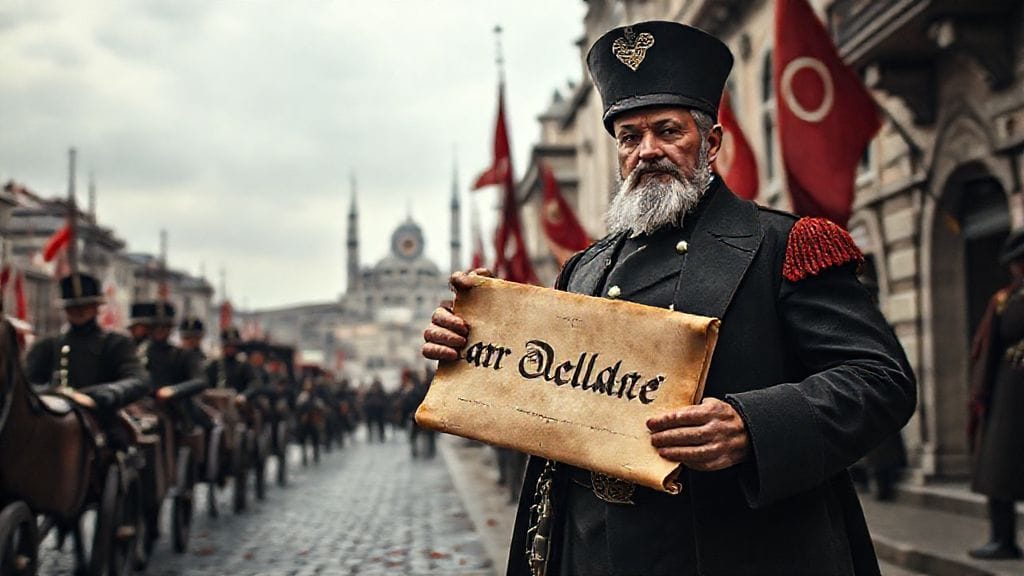
On the day of the declaration, Ottoman officials issued a formal ultimatum demanding Russian withdrawal from the Danubian Principalities and recognition of Ottoman sovereignty. When Tsar Nicholas ignored this, the Ottoman government, guided by its grand viziers and ministers, moved swiftly to declare a state of war on October 4, 1853.
The news of the declaration sent shockwaves across Europe. London and Paris convened emergency meetings to decide whether they would intervene militarily alongside the Ottomans. For the Ottomans, gaining the support of these powers would be critical. Without it, the young empire risked swift defeat.
The weeks following the declaration witnessed rapid military mobilization. Russian forces, anticipating conflict, launched assaults to secure key positions. The campaign along the Danube river saw intense fighting, with both sides committed to hard-fought battles.
One of the early focal points was the fortress of Silistra on the Danube's banks, commanded fiercely by Ottoman defenders determined to halt Russian advance. The siege became emblematic of Ottoman resilience despite logistical shortages and tactical disadvantages. Though cities and fortresses fell or endured, this initial phase illustrated the larger struggle of an empire fighting for survival.
The Ottoman declaration also galvanized British and French public opinion. Newspapers filled with tales of Russian aggression and Ottoman valor, stirring patriotic sentiments. Both governments, wary of Russia’s intentions, began dispatching fleets and troops, transforming a regional war into an international conflict.
Behind the scenes, diplomatic channels buzzed with negotiation and subterfuge. British Prime Minister Lord Aberdeen and Emperor Napoleon III watched closely, balancing the desire to protect their interests with reluctance for war. Still, the strategic necessity of curbing Russian expansion won out.
Sultan Abdülmecid I’s role during these early days was pivotal. His steady leadership and embrace of the Tanzimat reforms—modernizing changes aimed at revitalizing the empire—brought a sense of renewed hope. The declaration of war was as much a statement about Ottoman identity and determination as it was a tactical move.
Yet the onset of the war quickly revealed deep systemic weaknesses. The Ottoman military, though proud, lacked the industrial and logistic capabilities that Russia increasingly possessed. The conflict compelled all sides to reconsider tactics and technologies, making the Crimean War one of the earliest examples of “modern” warfare.
Telegraphs, railways, and new artillery played essential roles, as did the involvement of foreign military advisers and journalists who chronicled the unfolding drama. Public interest soared as stories of heroism and horror reached European capitals, a far cry from previous, more remote conflicts.
For the ordinary Ottoman citizen, the war’s beginning heralded upheaval and uncertainty. Economic strains increased, and the fear of Russian invasion gripped many communities. Likewise, the conflict displaced thousands, while the empire’s diverse populations wrestled with their loyalties amid the storm.
The Ottoman declaration of war against Russia on October 4, 1853, was not merely a political act; it was a moment freighted with complexity, courage, and impending tragedy. It presaged a conflict that would pit tradition against modernity, old empires against emerging powers, and deeply intertwined religious and national identities against the brutal calculus of geopolitics.
Though initially an Ottoman-Russian confrontation, the Crimean War rapidly escalated into a wider contest, drawing in the might of Britain and France, and setting the stage for a bitter struggle that reshaped Europe and the Near East. That day in Istanbul was both an end and a beginning—a decisive rupture in the 19th-century order and a harbinger of the modern world to come.
Conclusion
The Ottoman declaration of war on Russia in October 1853 was a defining moment not only for an empire struggling to retain its dignity but for an entire continent teetering on the edge of profound change. It encapsulated the tensions of empire, faith, and power in a world where the old order was fraying under the pressures of nationalism and industrialization. The bold, even desperate choice by Istanbul to stake its survival against a dominant Russia sparked a war that would reveal the limits of power and the costs of conflict in new and harrowing ways.
Yet, beyond the battlefield, this declaration embodied a complex human drama: the fear and hope of a people confronting an uncertain future, the interplay of diplomacy and bloodshed, and the relentless march of history shaping individual and collective destinies. The reverberations of that declaration carried far beyond the Ottoman palaces—echoing in the annals of military innovation, the struggles for national identity, and the geopolitical chessboard that still influences the world today.
FAQs
Q1: What were the main causes behind the Ottoman Empire’s declaration of war on Russia in 1853?
A1: The declaration was driven by Russian military aggression in the Danubian Principalities, imperial rivalry over control of the Black Sea and the Turkish Straits, and religious disputes over the protection of Christian minorities in Ottoman territories. The Ottoman leadership saw war as necessary to defend sovereignty and rally international support.
Q2: How did European powers react to the Ottoman declaration of war?
A2: Britain and France viewed the declaration as a call to curb Russian expansion threatening the European balance of power. They mobilized military support, eventually joining the war to protect their strategic interests, turning a regional conflict into a wider European war.
Q3: Who was Sultan Abdülmecid I, and what role did he play?
A3: Sultan Abdülmecid I was the Ottoman ruler at the time, known for the Tanzimat reforms aimed at modernizing the empire. He played a critical role in navigating the complex political terrain, authorizing the declaration to fight Russian encroachment, and seeking alliances to preserve the empire.
Q4: What was the significance of the fortress of Silistra during the early war period?
A4: Silistra, located on the Danube, became a focal point of early Ottoman resistance. Its siege demonstrated Ottoman determination and the strategic importance of controlling river access in the conflict's opening stages.
Q5: How did the Ottoman declaration of war impact the civilian population?
A5: The declaration and ensuing war caused significant hardship, including displacement, economic strain, and societal anxiety. Diverse groups within the empire were affected differently, with fears of invasion and the stresses of military conscription weaving into daily life.
Q6: In what ways did the Crimean War mark a turning point in military history?
A6: The war showcased early uses of modern technologies such as telegraphs, railways, and rifled artillery. It was one of the first conflicts documented extensively by war correspondents, heralding a new era of both warfare and media involvement.
Q7: What legacy did the October 1853 declaration leave in international relations?
A7: The declaration and subsequent war highlighted the fragility of the European balance of power, intensified the “Eastern Question,” and influenced future diplomatic arrangements, such as the Treaty of Paris (1856), which aimed to regulate the Black Sea and Ottoman sovereignty.
Q8: Why is the Ottoman declaration of war considered a moment of both desperation and determination?
A8: Faced with overwhelming Russian pressure and internal weaknesses, the Ottoman leadership’s decision reflected a desperate gamble to resist decline. Yet, it also underscored a determined assertion of sovereignty and a hope to restore imperial prestige through alliances and military resolve.