Table of Contents
- A City on the Edge: Dawn of the Siege
- Sevastopol’s Strategic Heart: Why This Battle Mattered
- The Crimean War in Context: Clashing Empires and Desperate Causes
- Power Players: The Commanders and Their Armies
- The Calm Before the Storm: Early Preparations and Tensions
- October 17, 1854: The Beginning of the Siege
- The First Assaults: Fire and Fury Against the Fortifications
- Life Under Siege: Civilians and Soldiers Struggling Together
- Engineering Genius and Brutal Warfare: The Artillery Duel
- The Role of the British and French Allies: Coordination and Conflicts
- Disease and Desperation: The Invisible Enemy
- The Heroic Defenses: Stories of Courage and Sacrifice
- The Siege’s Turning Points: Failures and Triumphs
- Winter Approaches: Survival Amidst Cold and Hunger
- The Siege’s Political Reverberations in Europe
- The Fall of Sevastopol: End of an Epic Struggle
- Aftermath and Reconstruction: A City and a War Changed Forever
- The Siege in Memory: Literature, Art, and National Identity
- Innovations Born of Siege: Military and Medical Advances
- The Legacy of Sevastopol: Lessons for Future Conflicts
1. A City on the Edge: Dawn of the Siege
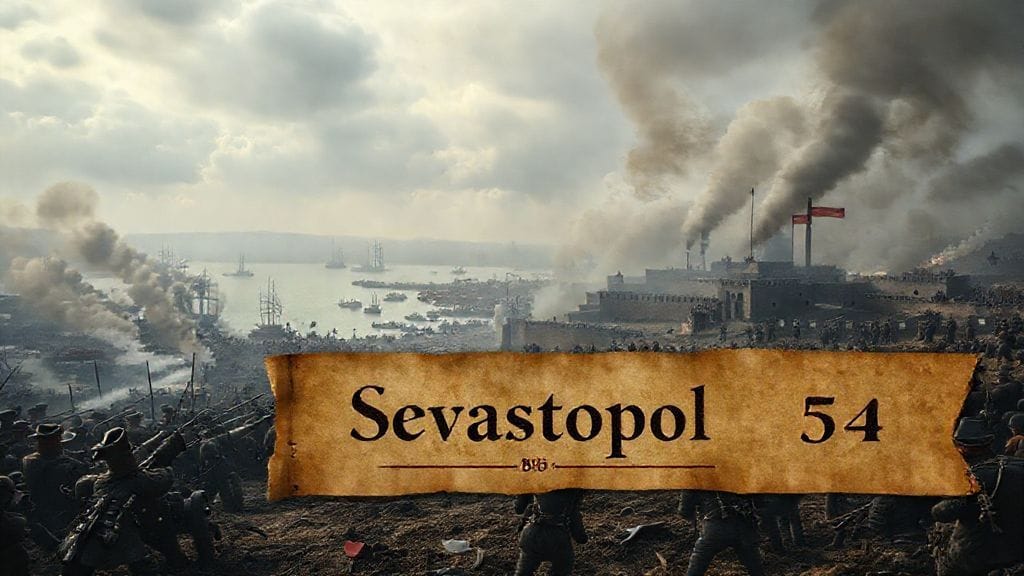
October 17, 1854. As dawn spilled over the jagged Crimean coast, dark smoke billowed above Sevastopol. The once proud port city, heart of the Russian Black Sea Fleet, now braced itself for a siege that would stretch into painful eternity. For those standing on the battered walls, the horizon was streaked with the thunderclouds of artillery fire and the ominous silhouettes of approaching Allied forces. This was not merely a battle for a city but the fulcrum of empires colliding—where courage would be tested and modern warfare forever transformed.
The Siege of Sevastopol had begun.
2. Sevastopol’s Strategic Heart: Why This Battle Mattered
Nestled on the Crimean Peninsula, Sevastopol was more than a coastal stronghold; it was Russia’s gateway to warm waters, a bastion of its naval power in the Black Sea. To the British, French, and Ottoman empires, capturing it was essential to dismantle Russian influence and check its southern ambitions. Beyond its military might, Sevastopol symbolized imperial pride and the fortune of nations whose fate would be sealed upon its battered ramparts.
The siege represented a pivotal moment in the Crimean War, itself a tinderbox ignited by decades of imperial rivalry, religious conflicts, and geopolitical dreams.
3. The Crimean War in Context: Clashing Empires and Desperate Causes
The Crimean War (1853–1856) was a collision of titans—Russia against an allied coalition of Britain, France, the Ottoman Empire, and later Sardinia. At its core were complex issues: the decline of the Ottoman Empire, the contest for influence over its territories, and the fragile balance of power in Europe. Religious tensions flared over protection of Christian minorities in the Holy Land, but beneath moral causes lurked strategic calculations.
When Russia advanced into Ottoman territories in 1853, it unleashed a conflict that exposed the vulnerabilities of all involved. Sevastopol, the jewel of Russia’s Black Sea defense, became a natural stage for the coming drama.
4. Power Players: The Commanders and Their Armies
Commanders shaped the siege as much as geography. Russian General Prince Menshikov, a resilient but flawed leader, helmed the city’s defense alongside naval officers charged with protecting the fleet. Opposing them were British General Lord Raglan, a veteran commander famous for his calm demeanor, and French General François Canrobert, whose relationship with his British counterparts oscillated between cooperation and friction.
Their armies were a mix of experienced regulars and raw conscripts. British and French troops, fueled by patriotism and imperial pride, faced daunting logistical challenges. Russian defenders confronted shortages but drew strength from fierce determination and home-ground advantage.
5. The Calm Before the Storm: Early Preparations and Tensions
In the weeks before the siege, tension paralyzed the peninsula. Inspections of fortresses, hurried entrenchments, and frantic exchanges of intelligence filled the air with a nervous energy. Sevastopol’s defenders reinforced walls, stockpiled ammunition, and braced families for the coming ordeal.
On the Allied side, troops landed with optimism but unsettled nerves, aware that superior firepower might not suffice to breach the city’s outer defenses. Letters home betrayed a mix of confidence and dread. The soldiers knew their lives depended on commands that might as well come from gods as men.
6. October 17, 1854: The Beginning of the Siege
The morning of October 17 erupted with the roar of artillery as Allied batteries opened fire, signaling the start of a prolonged and bloody siege. Cannonballs thudded into ramparts; clouds of smoke swallowed the skyline. Sevastopol’s defenders responded with deadly precision, their muskets sparking through the haze.
The battle transformed into an attritional nightmare. It was a war of endurance, where every inch of earth would be contested. The noise was deafening, the stakes existential—this was not simply warfare but an assault on identity and empire.
7. The First Assaults: Fire and Fury Against the Fortifications
The initial Allied assaults sought to capture forward defenses and key redoubts, each attempt marked by brutal hand-to-hand combat amid shattered stone and smoldering ruins. Assaults faltered and regrouped; artillery barrages exchanged across no-man’s land left lasting scars.
Orders were shouted above explosions; medics rushed forward to save the wounded amid chaos. Men lived and died uncertain if dawn would find them alive, or if the tide of battle would turn against their hopes.
8. Life Under Siege: Civilians and Soldiers Struggling Together
The civilian population of Sevastopol bore the siege’s brunt alongside the military. Women tended to the wounded, children scavenged for scraps, and every household became a fortress. Hunger gnawed insidiously; nights echoed with cries of despair and hope.
Letters smuggled past enemy lines reveal stories of resilience, fear, and unyielding human spirit. Despite devastation, moments of compassion and solidarity bloomed like wildflowers amid ruin.
9. Engineering Genius and Brutal Warfare: The Artillery Duel
The Siege of Sevastopol was a crucible of military engineering. Trenches spread like scars across the landscape as sapper units tunneled relentlessly toward enemy walls. Artillery duels evolved into an intricate dance—bombardments sought to weaken defenses, while counter-battery fire tried to silence the guns.
The British deployed the innovative Armstrong gun; the French refined techniques for explosive shells. Russian defenders constructed clever earthworks, mines, and barricades to repel assaults. Behind the horror lay a fierce mind game, where engineering prowess dictated survival.
10. The Role of the British and French Allies: Coordination and Conflicts
While united against a common enemy, British and French troops often struggled with differing tactics, language barriers, and political agendas. The coalition’s command decisions were marked by moments of friction and compromise.
Nevertheless, joint efforts were crucial—joint bombardments, coordinated infantry advances, and shared supplies. Their alliance, though imperfect, showcased early models of multinational military cooperation that would become standard in modern warfare.
11. Disease and Desperation: The Invisible Enemy
More deadly than bullets for many was disease. Sevastopol’s cramped conditions and poor sanitation turned the city into a hotbed of cholera, typhus, and dysentery. Medical services struggled with inadequate supplies and knowledge.
Florence Nightingale arrived during the siege, revolutionizing nursing by emphasizing cleanliness and patient care, saving countless lives and laying foundations for modern medicine. The human cost extended beyond the battlefield scars to unseen microbial horrors.
12. The Heroic Defenses: Stories of Courage and Sacrifice
Amid the carnage, acts of extraordinary bravery punctuated the siege’s darkest hours. Russian defenders performed daring sorties, naval personnel repurposed ships as floating batteries, and ordinary citizens risked everything to warn of attacks.
One legend tells of the “Hellfighters” — sailors and soldiers who repelled assaults in underground tunnels beneath the city — their grim faces illuminated by flickering torchlight amid collapsing walls. These stories humanize the siege, reminding us of the indomitable will to resist.
13. The Siege’s Turning Points: Failures and Triumphs
Throughout the siege, moments swung like a pendulum. An ill-fated Allied assault in November was repulsed with heavy casualties; yet, the arrival of reinforcements and better artillery gradually tilted the balance.
On the Russian side, internal dissent and exhaustion sowed cracks, though resolve remained unbroken. Each failed attack hardened determination, each success brought fragile hope. The siege was both a war of attrition and a test of strategic patience.
14. Winter Approaches: Survival Amidst Cold and Hunger
As autumn gave way to a brutal Crimean winter, frost bit through tents and trenches. Supplies dwindled; hunger stalked the armies with merciless intent. Frostbite, starvation, and despair spread alongside enemy fire.
Soldiers wrote haunting letters describing frozen landscapes where comrades perished not by muskets but by cold. Yet camaraderie, heated by shared suffering, forged bonds that transcended nationality.
15. The Siege’s Political Reverberations in Europe
The unfolding siege sent shockwaves through European capitals. Governments debated the human and financial toll; public opinion swung as newspapers detailed horrific losses. The war exposed inefficiencies and forced modernization debates in militaries and administrations alike.
Sevastopol became a symbol of both sacrifice and stubbornness—an event whose political resonance echoed beyond Crimea’s rocky shores.
16. The Fall of Sevastopol: End of an Epic Struggle
After months of relentless pressure, a decisive Allied offensive in September 1855 shattered Russian defenses. The demolition of the Malakoff redoubt opened the gates; Russian troops evacuated or surrendered.
Sevastopol lay in ruins, its harbor devastated, but its defenders had carved a legacy of endurance. The city’s fall signaled the approaching end of the Crimean War, yet its symbolic weight endured as a testament to courage and catastrophe.
17. Aftermath and Reconstruction: A City and a War Changed Forever
The war’s conclusion prompted reconstruction efforts in Sevastopol and reforms in all warring nations. Military innovations inspired by siege lessons transformed artillery tactics and battlefield medicine. Diplomats convened in Paris to redraw arrangements reflecting the shifting balance.
Sevastopol itself bore scars that lasted generations—memorials, cemeteries, and ruins reminding future generations of the price of empire.
18. The Siege in Memory: Literature, Art, and National Identity
Artists and writers immortalized Sevastopol in poetry, paintings, and prose. Tolstoy’s “Sevastopol Sketches” captured the grim reality of war’s human toll. Memorials and commemorations enshrined the siege in cultural memory, blending national pride with somber reflection.
The siege became a symbol of sacrifice under impossible odds, shaping Russian identity and Western perceptions of courage and empire.
19. Innovations Born of Siege: Military and Medical Advances
The siege catalyzed advances in artillery technology, trench warfare tactics, and battlefield medicine. Florence Nightingale’s pioneering nursing methods revolutionized hospital care worldwide.
Sappers’ use of mines and tunnels foreshadowed techniques in future conflicts. The lessons learned triggered reforms that reverberated in the decades following the Crimean War, influencing wars yet to come.
20. The Legacy of Sevastopol: Lessons for Future Conflicts
Sevastopol’s siege stands as an early modern example of protracted siege warfare, coalition combat, and the brutal human costs of empire. It exposed the challenges of coordination among allies and foreshadowed the grim realities of trench and attritional warfare that would define the 20th century.
Above all, the siege reminds us that history is lived not only in grand strategies but in the hearts of those who endure, resist, and persevere against overwhelming odds.
Conclusion
The Siege of Sevastopol was more than a battle; it was a crucible where the fates of empires intertwined with the lives of ordinary soldiers and civilians caught in the maelstrom. The pounding of artillery, the cries in the freezing trenches, the unyielding determination of defenders and attackers alike—these human stories echo beyond history books, imparting timeless lessons on resilience, sacrifice, and the complexities of war.
In the fading smoke of cannon fire, we see reflected the enduring question: what price do we pay for empire, honor, and survival? Sevastopol’s siege answers with a haunting clarity—history’s scars may heal, but its memories burn eternal.
FAQs
Q1: Why was Sevastopol so strategically important during the Crimean War?
A1: Sevastopol housed Russia’s Black Sea Fleet and served as a critical naval base, controlling Russian access to warm waters and regional influence. Capturing it was essential to breaking Russian power in the Black Sea and shifting the balance in the war.
Q2: Who were the main commanders involved in the siege?
A2: Russian defense was led primarily by General Prince Menshikov, while the Allied forces were commanded by British General Lord Raglan and French General François Canrobert, among others.
Q3: What role did civilians play during the siege?
A3: Civilians endured severe hardships—providing medical aid, supporting defenses, managing scarce resources, and maintaining morale under siege conditions. Their contributions were vital to the city’s prolonged resistance.
Q4: How did Florence Nightingale impact the siege?
A4: Florence Nightingale introduced revolutionary nursing practices, focusing on hygiene and sanitation that drastically reduced mortality rates from disease among wounded soldiers, transforming military medicine.
Q5: What were some key turning points during the siege?
A5: Early failed Allied assaults, the prolonged artillery duels, and crucial battles such as the capture of the Malakoff redoubt ultimately determined the siege’s outcome.
Q6: How did the siege influence future military tactics?
A6: The siege accelerated developments in trench warfare, artillery use, engineering tactics like tunneling, and medical practices, foreshadowing strategies used extensively in later conflicts like World War I.
Q7: What was the wider geopolitical impact of Sevastopol’s fall?
A7: The fall weakened Russian influence, led to the Treaty of Paris (1856), which restricted Russian naval presence in the Black Sea, and shifted the European balance of power.
Q8: How is the siege remembered today?
A8: Through literature, art, memorials, and national commemorations, the siege remains a powerful symbol of courage and the costs of war, particularly in Russian and European historical consciousness.