Table of Contents
- A Nation’s Dawn: The Uneasy Birth of the United Principalities
- The Historical Backdrop: Wallachia and Moldavia before 1859
- The European Chessboard: Great Powers and Local Ambitions
- The Aftermath of the Crimean War: Seeds of Change
- The Idea of Union: From Dream to Political Strategy
- Alexandru Ioan Cuza: The Man Who Would Be Father of the Nation
- January 24, 1859: The Day That Changed the Course of Romanian History
- The Dual Election: A Political Masterstroke in Bucharest and Iași
- The Reactions: Triumph, Resistance, and Skepticism
- Cuza’s Early Reforms: Navigating Mountains of Tradition and Obstacles
- The Role of the Assemblies: Moldavia and Wallachia Step Forward Together
- International Diplomacy: Balancing Powers and Seeking Recognition
- Challenges Within: Cultural Divides and Economic Realities
- Cuza’s Vision: Modernization, Centralization, and National Identity
- The Road to Formal Unification: From Personal Union to Institutional Unity
- The Cultural Renaissance: Literature, Language, and a New National Spirit
- Resistance and Backlash: Conservative Forces and Political Intrigues
- The Broader European Context: Nationalism and the Age of Empires
- Legacy of the 1859 Election: Foundations of Modern Romania
- Conclusion: From Fragmentation to Unity — The Birth of a Nation
- FAQs: Understanding the United Principalities’ Election of 1859
- External Resource: Wikipedia Link for Further Exploration
- Internal Link: 🏠 Visit History Sphere → https://historysphere.com/
1. A Nation’s Dawn: The Uneasy Birth of the United Principalities
On a cold January day in 1859, the winds of destiny swept through the capitals of two principalities on the banks of the Danube and the Prut rivers. In Bucharest and Iași, the echoes of centuries-old rivalries and fragmented sovereignties converged in an unprecedented political act — the election of Alexandru Ioan Cuza as the prince of both Wallachia and Moldavia. This election was not merely the crowning of a leader; it was the heartbeat of a nascent nation beginning to pulse with a single rhythm. The scene was charged with hope and uncertainty, a fragile yet unstoppable force shaking the foundations of old empires and igniting the dream of Romanian unity.
The air was thick with anticipation. For the first time, two peoples — long bound separately to Ottoman suzerainty and influenced by competing European powers — dared to imagine a collective future. A future where shared language, culture, and aspirations could finally find political expression. But the road ahead was steep, the path uncertain. This election planted the first seed of what would become modern Romania, a nation forged in the tumult of international diplomacy, local fervor, and the dreams of a single man who dared to unite two worlds.
2. The Historical Backdrop: Wallachia and Moldavia before 1859
To grasp the true magnitude of January 24, 1859, one must understand the centuries-long existence of Wallachia and Moldavia as distinct entities. Since the medieval era, these Principalities had lived as separate realms, each its own microcosm of power struggles, shifting alliances, and cultural riches. Both were vassals of the Ottoman Empire, paying tribute and navigating a delicate balance between imperial suzerainty and local autonomy.
Wallachia, with its capital Bucharest, was a land of rolling plains and bustling trade routes, a crossroads between East and West. Moldavia, whose capital stood in Iași, was often seen as the more mountainous and rugged counterpart, rich in tradition and Orthodox spirituality. Though united by language and shared heritage, centuries of separate governance had fostered distinct political and social realities. Nobles wielded power unevenly; serfdom persisted alongside an emerging class of merchants and intellectuals.
The 18th and early 19th centuries marked a slow awakening for both Principalities. Enlightenment ideas trickled through salons and coffee houses, laying the intellectual groundwork for a future marriage of states. Yet, old rivalries endured, and the local boyars jealously guarded their privileges, wary of sweeping reforms or the threat of losing influence in a united framework. The stage was set for change, but it was to be a delicate dance.
3. The European Chessboard: Great Powers and Local Ambitions
The mid-19th century was a period of enormous upheaval in Europe. The great empires—Russia, Ottoman Turkey, the Habsburg monarchy, France, and Britain—juggled ambitions and alliances like players on a vast chessboard. The Romanian Principalities found themselves caught in this intricate game, their fate often decided by diplomats and monarchs far removed from their rivers and mountains.
Russia, after the Crimean War, had lost significant influence over the Danube basin but still hung heavy over Moldavia and Wallachia. The Ottoman Empire, long dubbed the "Sick Man of Europe," was in decline but retained nominal control. France, under Napoleon III, saw the Romanian question as an opportunity to expand its influence eastwards, often positioning itself as a champion of national liberation and modernization.
Meanwhile, Austria-Hungary feared the rise of strong nationalist movements on its borders, while Britain aimed to maintain the balance of power and keep Russian ambitions in check. The interests of these powers collided and converged over the fate of Wallachia and Moldavia, turning the Romanian question into a prism reflecting the larger geopolitical tensions of the era.
4. The Aftermath of the Crimean War: Seeds of Change
The Crimean War (1853–1856), often remembered for its brutal conflict and mismanagement, reshuffled political cards across Europe, including the Danubian Principalities. The Treaty of Paris (1856) ended Russia’s hegemony over the region and placed Moldavia and Wallachia under the collective guarantee of the great powers, effectively ending Ottoman unilateral control.
This new arrangement opened a window for local nationalists and reformers. The Principalities, while still nominally Ottoman vassals, had gained a form of international recognition and a political space in which they could maneuver. The Treaty encouraged the establishment of local assemblies (ad hoc Divans), which began to assert themselves more vocally for autonomy and reform.
The post-war atmosphere was charged with possibility. Romanian intellectual and political elites saw an opportunity to unite their fragmented lands not only in spirit but under one political roof. The seeds of union, long planted in the fertile minds of patriots and revolutionaries since 1848, found soil ready for germination.
5. The Idea of Union: From Dream to Political Strategy
For centuries, the notion of uniting Wallachia and Moldavia had stirred nationalist hearts but remained just out of reach. The fragmented social order, foreign domination, and competing interests had always weighed heavily. However, by the 1850s, this dream began to crystallize into an achievable political project.
The ad hoc Divans convened in 1857, composed mainly of boyars, merchants, clergy, and intellectuals, became the battleground for unionist debate. While some supported a conservative vision preserving the status quo, many voices called for a strong, modern Romanian state as the answer to stagnation and foreign dependence.
Alexandru Ioan Cuza was not yet at center stage, but these assemblies set the stage for his emergence. The idea of electing the same ruler in both Principalities, thus creating a personal union, was a clever political strategy designed to circumvent the opposition of the great powers who feared a full outright merger. This compromise sowed the seeds for the eventual formation of the United Principalities.
6. Alexandru Ioan Cuza: The Man Who Would Be Father of the Nation
Born in 1820 in Moldavia, Alexandru Ioan Cuza was the embodiment of the moderate revolutionary. Educated in law and steeped in Enlightenment ideals, Cuza was a figure who mastered both the art of diplomacy and the pulse of popular aspirations. His military experience and noble lineage combined with his reformist vision made him the consensus candidate for uniting the two lands.
Cuza’s personal charisma, his reputation for honesty, and his moderate yet determined temperament distinguished him from more radical or conservative contenders. He was seen as the man capable of bridging divides — not only between Wallachia and Moldavia but between tradition and progress.
When the time came, it was Cuza who captivated both assemblies, uniting minds and hearts with the promise of rebuilding a national fate on shared principles.
7. January 24, 1859: The Day That Changed the Course of Romanian History
The morning of January 24, 1859, arrived shrouded in a chill that belied the warmth of the moment. In Bucharest, the Wallachian assembly gathered under watchful eyes, both hopeful and cautious. Several hundred kilometers to the northeast, in Iași, Moldavians assembled with equal measures of excitement and tension. The political gamble was simple yet audacious: both Principalities would elect the same man as prince, a maneuver that would create a personal union and lay the groundwork for a more profound unity.
The vote’s outcome was electrifying. Alexandru Ioan Cuza was chosen overwhelmingly in Moldavia and, in a stunning act of political solidarity and unity, also elected in Wallachia shortly after. This dual election was a brilliant stroke; it was a peaceful insurrection against centuries of fragmentation.
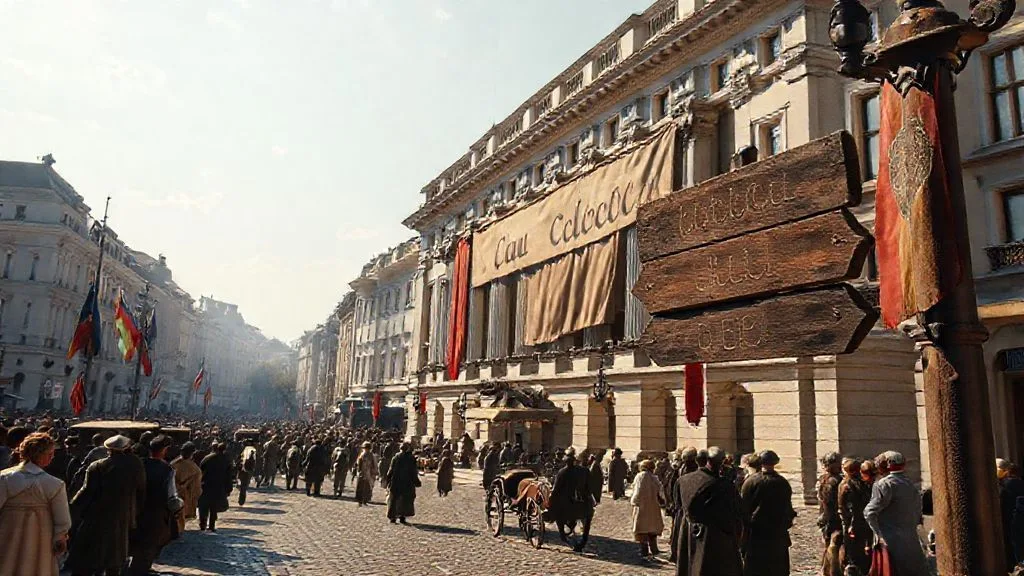
Cuza’s return to the capitals was met with parades, celebrations, and an outpouring of nationalist sentiment. Yet, beyond the applause, the practical challenges awaiting the new ruler were immense.
8. The Dual Election: A Political Masterstroke in Bucharest and Iași
The genius of the election lay in its subtlety. Though the international community had forbidden outright unification, there was no explicit ban on the same individual ruling both Principalities. Clever politicians exploited this loophole, turning legal ambiguity into national triumph.
This dual election was not just a political stunt but a symbolic union, signaling to the world and to their compatriots that a new era was dawning. The electoral assemblies were aware that this was only the first step in a longer journey, yet in this moment, hope and unity radiated across the Danube and through the Carpathians.
Cuza’s acceptance speech emphasized the need for reform and national consolidation, pledging to protect the rights of his new subjects and to modernize a country torn between past and future.
9. The Reactions: Triumph, Resistance, and Skepticism
Across Europe, reactions varied. France applauded quietly; Russia watched with suspicion; the Ottoman Empire grumbled but stopped short of intervention. Within the Principalities, the unionist triumph was tempered by pockets of resistance.
Conservative boyars feared losing influence; some Moldavian notables worried that political power would shift excessively towards Wallachia. The peasantry, though largely disenfranchised, looked to Cuza for change, especially for land reform and justice.
Throughout the summer of 1859, debates raged in assemblies and salons, balancing optimism with the realities of internal opposition and external pressures.
10. Cuza’s Early Reforms: Navigating Mountains of Tradition and Obstacles
Having secured his position, Cuza set out to fulfill his promises. His agenda was ambitious — reform the administration, unify laws, modernize the army, and overhaul the archaic social structure.
One of his most significant challenges was the deeply entrenched system of serfdom and land tenure. Promising peasants relief meant clashing with the powerful boyar class, which fiercely resisted such changes.
Cuza’s government introduced the first major land reforms in Romanian history, aiming to redistribute land and improve rural conditions. These reforms sparked revolts and conspiracies, but also laid the foundation for a more equitable Romanian society.
11. The Role of the Assemblies: Moldavia and Wallachia Step Forward Together
The political institutions of Moldavia and Wallachia had their own histories and traditions. To build a unified state, creating a functional, centralized system was essential.
Cuza worked tirelessly to harmonize legislation and bring together the assemblies, pushing through laws that cemented the union’s political structures. The ad hoc Divans evolved into national assemblies representing both territories, an embryonic parliament for Romania.
This legislative progress was both practical and symbolic: an affirmation that the United Principalities were more than a union of crowns; they were a union of peoples and laws.
12. International Diplomacy: Balancing Powers and Seeking Recognition
One could hardly overestimate the delicacy of Cuza’s position on the international stage. Each move required careful negotiation to keep at bay the competing interests of the Ottoman Empire, Russia, Austria, and France.
Over the next two years, Cuza’s envoys worked tirelessly to secure formal recognition of the union. The Treaty of Paris and subsequent diplomatic communiqués walked a fine line between declaring the union a fait accompli and respecting the delicate balance of power.
It took until 1862 for the Ottoman Empire and the European Concert to officially recognize the United Principalities under Cuza’s leadership, in a victory as subtle as the election itself.
13. Challenges Within: Cultural Divides and Economic Realities
Behind the political symbolism were real challenges: economic backwardness, illiteracy, regional disparities, and social divides.
Moldavians and Wallachians sometimes struggled to reconcile their distinct identities. Legislation had to respect local customs while building a shared national identity. The economy was heavily agricultural and dependent on foreign markets.
Cuza’s reforms attempted to address these needs, initiating infrastructure projects, improving education, and promoting cultural exchanges. Yet, the social fabric was fragile, and opposition lurked in parliament and coffee houses alike.
14. Cuza’s Vision: Modernization, Centralization, and National Identity
Visionary and pragmatic, Cuza saw beyond the electoral triumph. He aimed to shape a modern, Western-oriented Romania. He centralized administration, reformed the judicial system, introduced secular education, and expanded civil services.
He championed a national identity rooted in shared language, history, and Orthodox faith but open to European ideas. His vision laid the groundwork for Romania’s political culture and state institutions.
However, his reforms antagonized powerful elites and created numerous enemies, culminating in his forced abdication in 1866.
15. The Road to Formal Unification: From Personal Union to Institutional Unity
While the dual election united the crowns, it took years to merge the bureaucracies, legal codes, and policies of two formerly separate states.
Gradually, the United Principalities transformed from a convenient political arrangement into a genuine nation-state. Infrastructure, customs regulations, and military forces were consolidated. The capital, Bucharest, became the heart of a new Romanian polity.
The personal union forged under Cuza is thus remembered as the spark that ignited the legal and institutional formation of Romania.
16. The Cultural Renaissance: Literature, Language, and a New National Spirit
As political unification advanced, a cultural awakening blossomed. Romanian writers, poets, and artists found new inspiration in the possibility of a united people.
Figures such as Mihai Eminescu and Ion Luca Caragiale began producing works that celebrated Romanian history, language, and folklore. Romanian became the language of instruction and administration, replacing Greek and other foreign tongues.
This cultural renaissance was both a cause and consequence of political union, helping to solidify national identity among city and countryside alike.
17. Resistance and Backlash: Conservative Forces and Political Intrigues
No nation’s birth is without conflict. Cuza's ambitious reforms met persistent resistance from conservative landowners and politicians who feared losing power.
Several conspiracies aimed to remove Cuza, including alliances between boyars and foreign interests. The most significant blow came with the "monstrous coalition" of 1866, forcing Cuza to abdicate and flee.
Yet, even in exile, Cuza’s legacy endured, and the union he facilitated continued under his successors.
18. The Broader European Context: Nationalism and the Age of Empires
The Romanian union was part of a wider mid-19th-century phenomenon: the rise of nationalism and the reconfiguration of empires.
While Italy and Germany were struggling to unify, the Romanian example showed a different path: a peaceful dual election, careful diplomacy, and gradual reform.
It inspired other nationalist movements within multinational empires, serving as proof that identity and statehood could coexist within a complex European balance.
19. Legacy of the 1859 Election: Foundations of Modern Romania
The election of Alexandru Ioan Cuza forged the blueprint for Romanian statehood. It was the first step toward independence, modernization, and nation-building, achieved without violent revolution.
This event set in motion reforms and ideologies that would shape Romanian politics for decades. Even today, January 24 is celebrated as the Day of the Union, a testament to the courage and vision of those who dared to dream and act.
Conclusion
The story of the United Principalities’ election of Alexandru Ioan Cuza on January 24, 1859, is a narrative of courage, vision, and delicate political artistry. Against a backdrop of imperial contest and local tensions, two small but proud peoples took a historic step toward unity and self-determination. Cuza’s election was not only a victory of a single man but the baptismal moment of modern Romania, a nation born from shared language, culture, and hope.
This event teaches us about the power of ideas and alliances, about the persistence needed to transform dreams into realities, and about the complexity of nation-building in a world of great powers. The birth of the United Principalities reminds us that history is often forged in moments of bold choices—the weaving of many threads into a single tapestry of identity and destiny.
FAQs
Q1: Why were Wallachia and Moldavia separate principalities before 1859?
They had developed as distinct political entities under Ottoman suzerainty, with separate administrations, capitals, and social structures, despite shared language and traditions.
Q2: What was the significance of the Crimean War in Romanian history?
The Crimean War weakened Russian influence in the region and led to international guarantees over the Principalities that allowed political mobilization toward union.
Q3: How was Alexandru Ioan Cuza elected prince of both principalities?
Local assemblies in Wallachia and Moldavia separately elected Cuza as prince, exploiting a legal loophole that forbade union but allowed a single ruler.
Q4: What were Cuza’s main reforms after his election?
He focused on land reform, modernization of administration, legal unification, education reform, and suppression of serfdom.
Q5: How did European powers react to the union?
Reactions were mixed: France was supportive, Russia skeptical, Austria-Hungary cautious, and the Ottoman Empire initially reluctant but eventually accepting under diplomatic pressure.
Q6: Why did Cuza abdicate in 1866?
Powerful conservative factions opposed his reforms and accused him of authoritarianism, leading to a coalition that forced his abdication.
Q7: When was the union officially recognized internationally?
Formal international recognition came in 1862, after diplomatic negotiations following Cuza’s election.
Q8: What is the legacy of this election for modern Romania?
It is considered the founding moment of modern Romania, setting the path for independence (1877) and the later creation of Greater Romania.