Table of Contents
- The Smoke of War Descends on Canton: January 1858
- China at a Crossroads: The Opium Wars and Imperial Clash
- Canton’s Strategic and Symbolic Importance
- The Anglo-French Alliance: Motives and Machinations
- The Prelude to the Siege: Diplomatic Failures and Escalating Tensions
- January 5, 1858: The First Assault and Urban Turmoil
- Chaos in the Streets: Combat, Civilians, and the Shifting Frontlines
- Military Strategies: How the Anglo-French Forces Overpowered the Defenders
- The Role of Naval Power and Gunboats on the Pearl River
- The Qing Defenders: Leadership, Resistance, and Dilemmas
- The Human Cost: Soldiers, Merchants, and Citizens Caught in Conflict
- The Capture of the City: Symbolism and Strategic Victory
- Negotiations under Duress: Toward the Treaty of Tientsin
- The Aftermath in Canton: Occupation, Looting, and Reconstruction
- Broader Implications: The Opening of China’s Doors to the West
- Cultural Clashes and Misunderstandings During the Occupation
- Resistance Movements and Popular Memory in Canton
- The Capture’s Place in the Greater Arc of the Second Opium War
- How the Anglo-French Victory Shaped Modern China’s Trajectory
- Echoes in Today’s Global Relations: Colonial Shadows and Lessons
- Conclusion: A City’s Fall and the Unfolding of Global Power Dynamics
- Frequently Asked Questions
- External Resource
- Internal Link
The Smoke of War Descends on Canton: January 1858
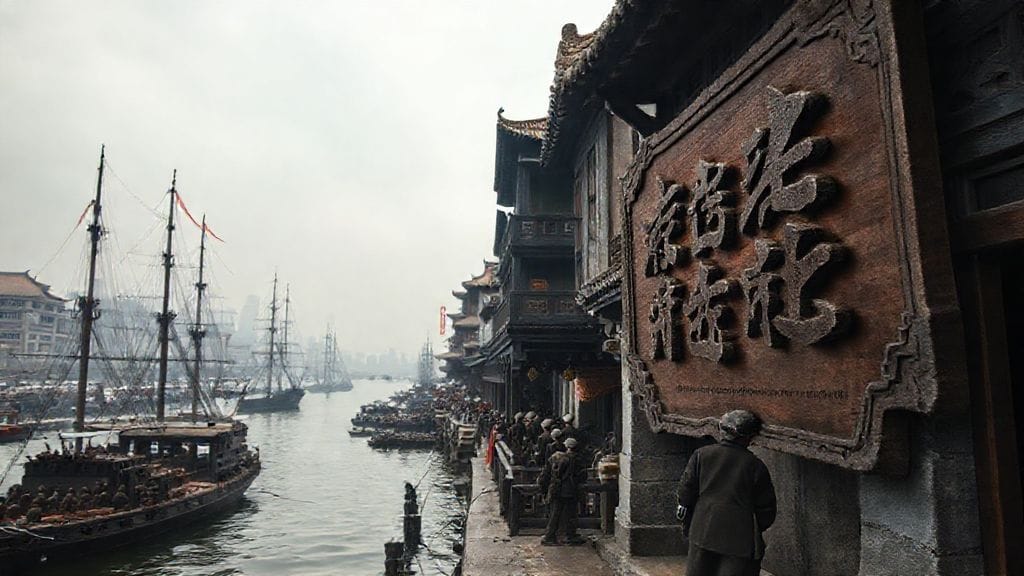
The morning of January 5, 1858, dawned cold and gray over the bustling southern city of Canton. The restless air, thick with sulfur and smoke, carried the first tremors of a storm that would shake the foundations of an empire. Along the Pearl River’s twisting banks, the unmistakable silhouettes of British and French warships loomed, the metallic glint of cannon barrels pointing inexorably toward the city’s ancient walls. In the narrow, crowded streets below, merchants hurried to shutter their shops, and townsfolk exchanged anxious glances, sensing a violent upheaval was imminent. This was no mere skirmish, but the opening act of an imperial drama whose echoes would resonate far beyond China’s southern shores.
Canton — known today as Guangzhou — was more than a sprawling port; it was the gateway to China’s vast interior and a focal point of East-West trade and cultural exchange. Yet, on this cold January day in 1858, the city became the crucible in which the competing worlds of Qing China and Western imperial powers would collide once again. The Anglo-French capture of Canton was not only a military conquest; it was a harbinger of the profound transformations to come — a moment when the old order, steeped in tradition and resistance, was challenged by relentless foreign ambition and technological superiority.
China at a Crossroads: The Opium Wars and Imperial Clash
To understand why Canton found itself under siege, one must peer into the tangled web of mid-19th century global power struggles. The First Opium War (1839-1842) had left China humiliated and vulnerable, forced into disastrous treaties that opened ports to foreign trade and ceded Hong Kong to Britain. Although a fragile peace followed, tensions simmered beneath the surface. The Second Opium War, also known as the Arrow War, kindled in this tinderbox of distrust, trade disputes, and conflicting worldviews.
At its core, the conflict was about more than opium—though that harmful narcotic played a notorious role—it was about sovereignty, cultural identity, and the merciless expansion of Western capitalism and imperialism into Asia. The Qing dynasty, wary of foreign intrusion but weakened by internal strife such as the Taiping Rebellion, was caught in a vise. With Britain and France united in their demands for greater access, diplomatic relations rapidly deteriorated into open hostility.
Canton’s Strategic and Symbolic Importance
Canton was a jewel in imperial ambitions. As the primary port where Western powers were permitted limited trade before the full opening of treaty ports, it was a nexus of wealth and influence. The city’s sprawling markets and labyrinthine alleys housed merchants from around the world, reflecting centuries of trade and cultural exchange.
For the Qing dynasty, Canton represented a critical defensive bastion, the “southern gatekeeper” to the empire’s economic heartland. Defending it was both a practical and symbolic necessity — to allow foreign powers any foothold risked the very sovereignty and dignity the dynasty sought to maintain. For the British and French, capturing Canton meant asserting undeniable dominance in southern China, securing more favorable trade terms, and ghosting the power balance decisively in their favor.
The Anglo-French Alliance: Motives and Machinations
The alliance between Britain and France was a marriage of convenience forged in the fires of mutual interest and competition. Britain, still smarting from the long years it had fought China alone, sought to consolidate its gains and expand influence. France, eager to assert its colonial power in Asia, found in this conflict an opportunity to extend its reach and prestige.
Their combined military forces harnessed industrial-age weaponry, disciplined troops, and naval superiority unmatched by Qing forces. Behind the visible battles lay intricate diplomatic maneuvers, intelligence gathering, and propaganda campaigns designed to justify intervention while undermining Qing authority.
The Prelude to the Siege: Diplomatic Failures and Escalating Tensions
In the months leading to January 1858, negotiations between Qing officials and the Anglo-French envoys deteriorated sharply. The contentious issue of legalizing opium trade, opening new treaty ports, and the treatment of missionaries fueled mutual distrust. The Treaty of Tianjin, still under discussion, was overshadowed by violent incidents and outright refusals to compromise.
As patience wore thin, Western commanders prepared their forces to take decisive action. Reports of suspected Chinese “rebellions” attacking foreign nationals became the pretext for escalation. In truth, Qing leaders were torn between maintaining order and resisting foreign encroachment, a dilemma that sealed Canton’s fate.
January 5, 1858: The First Assault and Urban Turmoil
The initial assault was brutal and swift. British grenadiers and French marines stormed the outer walls, their artillery thunder booming over the city’s rooftops. Cannonballs tore through wooden shutters and crumbled stone, while musket fire echoed through the claustrophobic streets. The defenders, made up of a mix of imperial troops and local militia, fought courageously but were ill-prepared for modern warfare.
Amid the smoke and screams, civilians scrambled for shelter — mothers clutching children, merchants desperately trying to save precious goods, and scholars watching in disbelief as their ancient city became a battlefield. The clash was not only military but psychological: the imposing foreign troops represented a terrifying new order.
Chaos in the Streets: Combat, Civilians, and the Shifting Frontlines
Urban combat in Canton was a tangled nightmare. Allied forces pushed forward methodically, block by block, their discipline contrasting with the fragmented defense led by Qing commanders. Civilians were caught in the crossfire and many perished; others fled towards the city’s core or the riverbanks.
Hearing the cries of the wounded and the relentless bombardment, the city’s mood shifted from hope to fear, then despair. Some local officials momentarily debated surrender to spare further destruction, while others urged resistance to the very end. The city became a microcosm of the wider conflict’s human cost.
Military Strategies: How the Anglo-French Forces Overpowered the Defenders
The success of the Anglo-French conquest stemmed from superior coordination and technology. The allied command combined naval bombardments with infantry advances; their artillery was more accurate and devastating than the Qing forces’ archaic cannons. Additionally, British and French forces employed engineering units to undermine city walls and open breaches.
Notably, cooperation between the British Royal Navy and the French Marine forces was seamless, demonstrating an unprecedented level of allied synergy. This tactical edge ensured that, despite fierceness of resistance, the defenders were gradually pushed back.
The Role of Naval Power and Gunboats on the Pearl River
The Pearl River was not just a trade artery but a strategic battleground. Anglo-French gunboats prowled its waters, providing artillery support and controlling supply routes. Their presence effectively cut off reinforcements and supplies for the city’s defenders.
Moreover, the foreign fleets’ dominance on the river symbolized a new era: Western naval power projected fully into China’s inland waterways, a demonstration of global reach that the Qing navy, modest and outdated, could not match.
The Qing Defenders: Leadership, Resistance, and Dilemmas
Qing commanders faced enormous challenges. The legacy of underfunded armies, corruption, and outdated tactics hampered their effectiveness. Yet, moments of valor and ingenuity dotted their resistance. Some local leaders organized guerrilla-style defenses and rallied militia to harass the invaders.
However, internal divisions plagued Qing responses. Some argued for negotiation and peace, others for staunch defense. These conflicting approaches highlighted the larger crisis facing a dynasty struggling to balance tradition with modern realities.
The Human Cost: Soldiers, Merchants, and Citizens Caught in Conflict
While official accounts often emphasize numbers and strategy, the true cost lay in human suffering. Thousands of soldiers on both sides were wounded or killed; many civilians suffered injury, property loss, or displacement.
Merchants who had long prospered under Canton’s trade networks saw their livelihoods shattered. Families were torn apart; some fled to neighboring provinces, while others braved the occupation’s hardships. The capture marked a rupture in the city’s social fabric.
The Capture of the City: Symbolism and Strategic Victory
When Canton finally capitulated, the event sent shockwaves throughout China and abroad. For the British and French, it was a resounding validation of their superiority and a critical step toward forcing the Qing dynasty to accept humiliating treaty terms.
For the Chinese, however, it was a bitter symbol of vulnerability. The fall of Canton, a centuries-old gateway, epitomized the eroding control Qing had over its territory and the intrusion of foreign powers into sovereignty.
Negotiations under Duress: Toward the Treaty of Tientsin
The capture directly influenced the course of diplomacy. With Canton lost, Qing officials found themselves forced back to the negotiating table. The resulting Treaty of Tientsin (June 1858) granted foreign powers expanded trade rights, legalized the opium trade, and opened more treaty ports, further eroding Chinese autonomy.
Though a temporary respite, the treaty sowed seeds for future conflict, as its stipulations were deeply resented and fragile in enforcement.
The Aftermath in Canton: Occupation, Looting, and Reconstruction
Occupying forces imposed strict controls over Canton, and episodes of looting and violence marred their presence. Efforts to rebuild and administer the city reflected broader challenges of foreign occupation.
While some merchants regained footing under new trade arrangements, others struggled with disrupted networks and cultural dislocation. Canton’s urban landscape itself was scarred, its streets forever altered by the clashes.
Broader Implications: The Opening of China’s Doors to the West
The capture of Canton was a pivotal moment accelerating China’s forced integration into the global capitalist economy. The city’s fall symbolized the collapse of the Qing dynasty’s ability to restrict foreign influence.
More ports opened, missionary activities increased, and Western legal extraterritoriality took stronger root. The event marked a definitive milestone in what Chinese historians later termed the “Century of Humiliation.”
Cultural Clashes and Misunderstandings During the Occupation
Beyond military and economic changes, the occupation highlighted profound cultural clashes. Western soldiers and administrators often misunderstood or dismissed Chinese customs, breeding resentment. Meanwhile, some Chinese intellectuals and elites sought to interpret and adapt Western ideas, sparking debates over tradition and modernization.
This cultural confrontation extended to religion, law, and daily life, elements that framed China’s tumultuous transition in the 19th century.
Resistance Movements and Popular Memory in Canton
Despite occupation, resistance simmered. Secret societies, local militias, and patriotic groups mounted sporadic attacks and organized underground networks opposing foreign presence.
Cantonese collective memory preserved tales of heroism and suffering, embedding the capture deeply within local identity. It became a symbol of both tragedy and resilience, shaping narratives for generations.
The Capture’s Place in the Greater Arc of the Second Opium War
The capture of Canton was not an isolated episode but a key chapter in the Second Opium War saga. It set a pattern of Western military superiority and forced concessions that culminated in the 1860 capture of Beijing and further unfavorable treaties.
The war’s outcome fundamentally altered China’s geopolitical landscape and its relations with global powers well into the modern era.
How the Anglo-French Victory Shaped Modern China’s Trajectory
The repercussions of Canton’s fall went beyond immediate trade advantages. It catalyzed internal reforms attempts, including modernization efforts and military upgrades, while exposing Qing vulnerabilities.
Yet these efforts struggled against entrenched conservatism and crises like the Taiping Rebellion, eventually precipitating the dynasty’s fall in the early 20th century. The event thus helped pivot China toward the complex path of modernization, revolution, and eventual emergence as a global power.
Echoes in Today’s Global Relations: Colonial Shadows and Lessons
Today, the Anglo-French capture of Canton resonates as a case study of imperialism’s costs and consequences. It serves as a reminder of the imbalances of power that shaped world history — from colonial exploitation to cultural upheaval.
Understanding these shadows is vital in contemporary dialogues about sovereignty, globalization, and historical justice, as nations grapple with legacies forged in moments like Canton’s siege.
Conclusion: A City’s Fall and the Unfolding of Global Power Dynamics
On that chilly morning in January 1858, Canton’s ancient walls crumbled under the battering thunder of Anglo-French guns. The capture was more than a military episode — it was a vivid tableau of empire’s relentless reach and the fragile endurance of a civilization confronting unprecedented challenges.
The city's fall marked a critical juncture in the 19th century’s saga of global power. It illustrated the clash between tradition and modernization, sovereignty and imperialism, despair and resilience. Canton’s story, layered with courage and tragedy, remains a powerful chapter in the grand narrative of history — reminding us how local moments can reverberate across continents and centuries.
Frequently Asked Questions
Q1: What triggered the Anglo-French attack on Canton in 1858?
The immediate trigger was a series of failed negotiations over trade rights, diplomatic status, and the opium trade, amid rising tensions and escalating violent incidents. The British and French sought to strengthen their position in China during the Second Opium War by seizing a strategic port.
Q2: Why was Canton so important in the context of the Opium Wars?
Canton was China’s main southern port and a historic center of foreign trade. Controlling it allowed foreign powers to dominate access to China’s markets and symbolically challenged Qing sovereignty.
Q3: What role did the combined Anglo-French military forces play in the capture?
Their superior technology, discipline, naval power, and coordinated assault proved decisive against Qing defenders who were ill-equipped and fragmented. The alliance maximized pressure through both land and river attacks.
Q4: How did the capture of Canton influence the subsequent Treaty of Tientsin?
The military defeat compromised the Qing delegation’s bargaining power, forcing them to accept harsher terms including opening new treaty ports and legalizing opium trade.
Q5: What was the impact of the occupation on the city’s civilians?
Civilians experienced displacement, economic disruption, casualties, and cultural dislocation. The occupation was often harsh, with looting and strict military control.
Q6: How is the capture of Canton remembered in Chinese history?
It is often remembered as a symbol of foreign intrusion and national humiliation, but also as a catalyst for resistance and reform movements in the struggle to preserve China’s sovereignty.
Q7: Did the Anglo-French capture of Canton end the conflict?
No, it was an important but initial phase. Hostilities continued until 1860 when Beijing itself was captured, marking the war’s climax.
Q8: What lessons does this historical event offer for today’s global relations?
It highlights the long-term consequences of imperialism, the importance of respecting sovereignty, and the complex interplay of cultural misunderstanding and power politics—lessons still relevant in international affairs.