Table of Contents
- The Dawn of a Revolution: May 11, 1860, Marsala’s Quiet Harbor
- Giuseppe Garibaldi: The Dreamer and the Soldier
- The Context of Italian Fragmentation: Kingdoms, Empires, and Hopes
- The Risorgimento: A Nation Awakens
- The Thousand Assemble: The Birth of the Redshirts
- Crossing the Sea: From Quarto to Marsala
- Marsala’s Shores Under the Red Tide
- The First Clash: Encountering Bourbon Forces
- The Strategy Behind the Madness: Guerrilla Warfare and Local Support
- Sicily’s Response: From Fear to Fervor
- The Fall of Palermo: The Turning Point
- Diplomacy and Danger: The Eyes of Europe Upon Sicily
- The Expedition’s Ripple Effect: Reactions Across the Italian States
- Risks and Setbacks: Disease, Desertions, and Betrayals
- Beyond Marsala: Marching Toward Naples and the Unification Dream
- The Human Toll: Stories from the Redshirts and Sicilians
- Garibaldi’s Leadership: Charisma, Risk-Taking, and Vision
- Myths and Realities: How History Remembered the Thousand
- The Expedition’s Legacy in Italian Nationhood
- Conclusion: A Voyage That Changed Italy Forever
- FAQs: Understanding the Expedition of the Thousand
- External Resource
- Internal Link
The dawn was still pale, casting a fragile light over the simmering harbor of Marsala, a small Sicilian town ready to become the stage of a grand historical drama. It was May 11, 1860—a date etched into the fervent memories of Italians who saw in it the first ripple of their nation's rebirth. The sea whispered softly against the hulls of the four ships moored discreetly, hidden beneath the cloak of early morning mist. On board, a motley band of volunteers, some barely more than boys, others weathered adventurers, gripped their weapons and dreams with equal intensity. Their leader, Giuseppe Garibaldi, stood on deck, eyes fixed on the rocky coastline that hid both promise and peril. This was not just a landing; it was the birth of a revolution destined to redraw the map of Italy and kindle the flame of unification.
Giuseppe Garibaldi: The Dreamer and the Soldier
If the Expedition of the Thousand is symbolized by any figure, it is Garibaldi himself—a man whose name would forever be intertwined with the Risorgimento, the resurgence of Italy. Born to humble means in Nice in 1807, Garibaldi’s life was a tapestry of bold ventures, exile, and warfare. His reputation as a romantic soldier, a man who fought not for titles but for ideals, had spread far beyond the Italian peninsula by the time he took to Marsala’s shore. His red shirt became an emblem of rebellion, a banner under which volunteers gathered, inspired by visions of a united Italy free from foreign dominion and archaic monarchy.
The Context of Italian Fragmentation: Kingdoms, Empires, and Hopes
But 1860 Italy was far from united. It was a land fragmented into kingdoms and duchies, many under foreign or Bourbon rule. The Kingdom of the Two Sicilies, ruling over southern Italy and Sicily, was the largest and most populous of these patchworks. Its king, Francis II, inherited a realm riddled with inefficiency, social strife, and repression. The grip of Bourbon governance was tight, but brittle under the pressures of liberal revolutions echoing across Europe. Above this political chaos towered a collective yearning born from centuries of division: the dream of a single Italian nation. That dream would now be tested amid the rocky coves of Sicily.
The Risorgimento: A Nation Awakens
The Risorgimento was not a single movement but an accumulation of ideas, uprisings, secret societies, and political maneuvering spanning decades. Figures like Count Cavour in Piedmont, Victor Emmanuel II, and intellectuals such as Mazzini had laid the groundwork for a future Italy. However, progress was slow and fraught with compromise. Garibaldi’s expedition was a lightning strike, a disruptive force against the complacency of monarchs and empires.
The Thousand Assemble: The Birth of the Redshirts
The volunteers known as the Thousand were indeed close to a thousand—around 1,200 men of diverse backgrounds; artisans, students, expatriates, and adventurers. They wore the symbolic red shirts, chosen reportedly to conceal bloodstains and unify their image. The group was equipped lightly, driven by passion and the belief that a small dedicated force could ignite a larger popular uprising. This was audacity incarnate, a gamble that the people of Sicily would rise alongside them.
Crossing the Sea: From Quarto to Marsala
On May 5, 1860, the expedition set sail from Quarto near Genoa under the cover of darkness. Four steamships carried Garibaldi and his men southward over 700 kilometers of turbulent sea. The journey was a mixture of hope, stomach-churning waves, and whispered promises. This crossing was more than a voyage; it was a leap of faith into history.
Marsala’s Shores Under the Red Tide
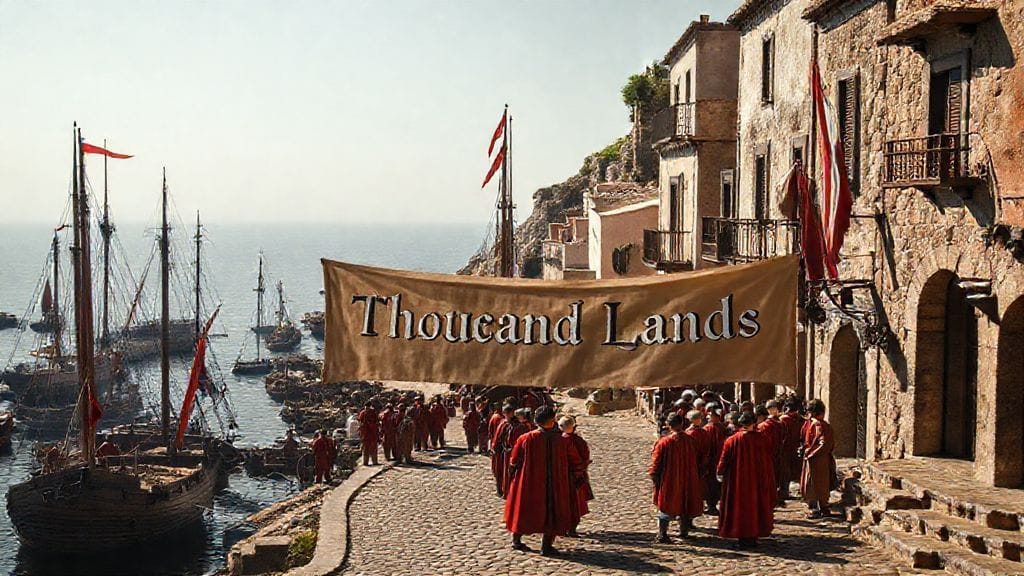
At dawn on May 11, the red-shirted insurgents landed stealthily on the rocky beaches near Marsala. Far from the pomp of kings and courts, the landing was a quiet insertion of a revolutionary spark into the heart of Bourbon-controlled Sicily. The local population, initially cautious, watched as these foreign yet hopeful soldiers planted the seeds of insurgency.
The First Clash: Encountering Bourbon Forces
The first battles were swift and brutal. Garibaldi’s men, leveraging surprise and local intelligence, clashed with Bourbon troops who were caught off guard by the audacity of the landing. Against all odds, the redshirts triumphed in small skirmishes that boosted morale and swelled their ranks as more Sicilians joined their cause.
The Strategy Behind the Madness: Guerrilla Warfare and Local Support
Instead of conventional warfare, Garibaldi employed guerrilla tactics, adapting to the rugged Sicilian terrain and leveraging popular discontent. This strategy was crucial, as his force was numerically and materially inferior to the Bourbon armies. Local peasantry, weary of Bourbon oppression, provided aid, food, and recruits, turning the landscape into a fertile ground for revolution.
Sicily’s Response: From Fear to Fervor
Initially, Sicilian nobles and landowners were terrified by the chaos, but the plight of the peasants and the middle class aligned with Garibaldi’s cause. Towns began to rise in revolt; secret committees formed. The expedition sparked not just military resistance but a popular uprising against Bourbon rule.
The Fall of Palermo: The Turning Point
By late May, Garibaldi’s forces marched towards Palermo, the Sicilian capital. The siege and eventual capture of Palermo on June 30 marked a decisive military and symbolic victory. It was a clear sign that Bourbon control was faltering and Italian unification was ascending beyond mere rhetoric.
Diplomacy and Danger: The Eyes of Europe Upon Sicily
The unfolding drama captured international attention. Britain, France, Austria, and the Papal States watched nervously, apprehensive that Garibaldi’s success might unsettle the fragile European balance of power. Yet, Garibaldi pressed on, determined to fulfill his mission despite these diplomatic headwinds.
The Expedition’s Ripple Effect: Reactions Across the Italian States
News of the landing and victories reverberated through the Italian peninsula. Southern Italian and Sicilian nationalists were inspired, while monarchs and conservative elites grew anxious. The Kingdom of Sardinia, under Victor Emmanuel II and Cavour, calculated their own moves carefully, eventually annexing these liberated territories and crowning a unified Italy.
Risks and Setbacks: Disease, Desertions, and Betrayals
Yet the expedition was not without hardship. Illness, fatigue, and desertion whittled down Garibaldi’s ranks throughout the campaign. Betrayals lurked in the shadows, and the specter of bloodshed loomed large over every advance. These obstacles tested the resolve of the redshirts and their commander.
Beyond Marsala: Marching Toward Naples and the Unification Dream
With Sicily largely controlled, Garibaldi crossed to the mainland, marching northward toward Naples. This phase further cemented his reputation and brought the dream of unification within closer reach, culminating in the eventual annexation of the south to the nascent Kingdom of Italy.
The Human Toll: Stories from the Redshirts and Sicilians
Every battle, every village taken, was soaked in sacrifice. Letters home, diaries, and accounts reveal the mixture of fear, exhilaration, and camaraderie among the redshirts. Sicilian civilians faced brutal reprisals yet also celebrated newfound freedoms. These personal stories infuse warmth and tragedy into the larger historical canvas.
Garibaldi’s Leadership: Charisma, Risk-Taking, and Vision
Garibaldi’s leadership was both military and symbolic. His ability to inspire men of different origins and to blend irregular warfare with political savvy was remarkable. His charisma forged a myth around the expedition, amplifying its impact well beyond military victories.
Myths and Realities: How History Remembered the Thousand
Over time, the Thousand became heroes of Italian folklore—a symbol of courage and unity. Yet historians have also probed the nuances and contradictions: how small was the actual force? How dependent was Garibaldi on local Sicilian insurgents? These complexities enrich the narrative and challenge simplistic glorification.
The Expedition’s Legacy in Italian Nationhood
The landing at Marsala and the following campaign not only reshaped political borders but redefined Italian identity. The Expedition of the Thousand became a foundational myth of Italian nationalism and unification, an enduring testament to the power of daring and dreams.
Conclusion
The Expedition of the Thousand stands as one of the most riveting episodes in the saga of Italy’s unification—a symphony of courage, strategy, and unyielding hope. From the quiet dawn at Marsala to the thunderous streets of Palermo, these men kindled a fire that would slowly but surely burn away centuries of regional fragmentation. It was a tale of ordinary people reaching for extraordinary change, led by a man whose vision transcended borders and generations. In today’s Italy, the echoes of that landing still resonate, reminding us how small acts of courage can shift the tide of history.
FAQs
1. Why did Garibaldi choose to land at Marsala specifically?
Marsala provided a discreet and strategic harbor on Sicily’s west coast, less heavily defended and closer to the mainland, allowing the Thousand to quickly gain a foothold without immediate overwhelming resistance.
2. Who were the Thousand, and what motivated them?
They were a diverse group of volunteers, mostly young men driven by patriotism, adventure, and the ideal of a unified Italy. Many were inspired by Garibaldi’s charisma and the wider Risorgimento movement.
3. How did the Expedition of the Thousand impact the broader unification of Italy?
The expedition weakened Bourbon control over the south, creating conditions for the annexation of the Kingdom of the Two Sicilies into the Kingdom of Sardinia, eventually leading to the proclamation of the Kingdom of Italy in 1861.
4. What role did locals in Sicily play during the expedition?
Sicilian peasants, townsfolk, and dissidents provided intelligence, shelter, and reinforcements, making the campaign a blend of military action and popular uprising.
5. Were there significant international consequences of the expedition?
Yes, European powers monitored the situation cautiously as it threatened the balance of power. Some feared revolutionary contagion; others saw opportunity in Italian unification.
6. How is Garibaldi remembered today?
Garibaldi is celebrated as a national hero and symbol of Italian unity. His tactics and ideals continue to be studied and honored.
7. Did the expedition face any major setbacks?
Besides military challenges, disease and desertions imposed serious hardships, testing the resolve and cohesion of the expedition.
8. How did the Expedition of the Thousand influence Italian culture and memory?
It became a powerful national myth inspiring literature, art, music, and civic pride, anchoring the narrative of Italy’s birth as a modern nation-state.