Table of Contents
- The Fateful Autumn of 1860: Beijing on the Brink
- Origins of a Turbulent Era: The Opium Wars and Rising Tensions
- The Players of Empire: Britain, France, Russia, and Qing China
- The Second Opium War: Prelude to Conflict
- Diplomatic Stalemates and Military Campaigns: A Nation in Turmoil
- The Fall of the Old Summer Palace: Destruction and Symbolism
- The March to Beijing: Allied Forces and Qing Defenses
- Negotiations Under Duress: The Road to the Convention
- The Signing of the Convention of Peking: A Moment of Capitulation
- Key Provisions Unearthed: Territory, Trade, and Sovereignty
- The Treaty’s Impact on China’s Territorial Integrity
- Russia’s Gains: Expansion through Diplomacy and Force
- Britain and France’s Strategic Objectives and Rewards
- The Chinese Perspective: Humiliation and Resistance
- The Convention’s Place in the Century of Humiliation
- Economic Repercussions: Commerce and Indemnities
- Social and Cultural Consequences within Qing Society
- The Convention’s Role in Reshaping Sino-Western Relations
- Echoes Through Time: The Convention’s Legacy in Modern China
- Revisiting the Summer Palace: Memory and Reconciliation
- Lessons Learned: Imperialism, Diplomacy, and Power Dynamics
- Conclusion: A Treaty That Changed the Course of Nations
- Frequently Asked Questions about the Convention of Peking
- External Resource for Further Study
- Internal Link: Visit History Sphere
The vibrant autumn of 1860 was not merely a turning of seasons in the heart of Beijing—it was the moment when an ancient civilization stood at a crossroads of humiliation and transformation. Beneath opaque gray skies, near the ice-tinged waters of the city’s canals, imperial banners fluttered alongside the embattled hopes of a dynasty struggling to withstand the tidal forces of colonial ambition. The Convention of Peking, signed on October 24, 1860, was more than a mere legal document or diplomatic settlement; it was the tangible seal of an empire’s unraveling and the blueprint for new geopolitical landscapes in East Asia.
This pivotal treaty, ratified amid the rubble of the Old Summer Palace and the smoke of recent conflicts, formalized territorial concessions and opened China further to foreign influence. It was the painful conclusion to the Second Opium War, a conflict that exposed the Qing dynasty’s vulnerabilities and intensified the scramble for dominance from Western powers while inviting Russia to carve out substantial territorial gains. The Convention’s ink had scarcely dried before its consequences rippled across centuries, altering borders, economies, and national psyches forever.
But to grasp the full weight of that fateful day, we must first journey through the complex tapestry of events, ambitions, and human dramas that culminated in the Convention of Peking. What were the forces that led four powers to wield swords against one of the world’s oldest empires? How did a series of military defeats translate into terms that would challenge China’s sovereignty? And what remains of this chapter in the ever-shifting saga of international relations?
Origins of a Turbulent Era: The Opium Wars and Rising Tensions
The mid-19th century was a time when empires collided over trade, territory, and ideology. China, under the Qing dynasty, ruled vast lands and millions of people, but beneath this surface of imperial grandeur, rigid conservatism clashed with the expanding tides of Western imperialism. The Opium Wars—two bitter conflicts fought between China and Western powers, primarily Great Britain—were born from disputes over sovereignty, trade rights, and the illegal opium trade that was severely destabilizing Chinese society.
The Qing court, determined to halt the flood of opium imports, took drastic measures, including the confiscation and destruction of British opium stocks in Canton. This provocation sparked the First Opium War (1839-1842), resulting in China’s defeat and the Treaty of Nanjing—a document that ceded Hong Kong to Britain and opened several ports to foreign trade.
But the treaty barely scratched the surface of unresolved tensions. Unmet demands regarding diplomatic representation, legal extraterritoriality for foreigners, and the contestation over tariff controls led to further friction. This volatile atmosphere would ignite again in the late 1850s, setting the stage for the Second Opium War.
The Players of Empire: Britain, France, Russia, and Qing China
The Second Opium War was not merely a duel between China and one Western power; it was a multipolar contest involving Britain and France, allied against Qing China, with Russia observing—and ultimately exploiting—the conflict.
Britain’s motivations were clear: securing expanded trade rights, including the legalization of the opium trade, the right to establish diplomatic missions in Beijing, and the opening of the entire Chinese empire to Western commerce. France joined ostensibly to protect its missionary interests after the execution of several French Catholic priests, but their goals soon aligned with Britain’s larger imperial ambitions.
Russia, meanwhile, played an astute game. While refraining from direct military engagement, Russia capitalized on China’s weakened position, pressing forward to secure territorial claims in the north.
The Qing dynasty, led by the Empress Dowager Cixi and the emperor Xianfeng, faced an existential crisis. Internally fragmented and militarily outmatched, the dynasty struggled to maintain sovereignty and dignity amidst the growing storm of foreign incursion.
The Second Opium War: Prelude to Conflict
The war’s immediate causes were ignited by disputes over the implementation and enforcement of the Treaty of Tianjin (1858), which had sought to end hostilities with promises of expanded trade privileges and diplomatic rights. However, delays in ratification, mutual distrust, and skirmishes on Chinese soil quickly revived fighting.
In 1859 and 1860, Anglo-French troops launched expeditions along the Chinese coast and up the Pearl River, capturing key fortifications and compelling Qing forces into a defensive retreat. The refusal of the Qing court to fully comply with the terms of treaty negotiations, coupled with attacks on Western envoys, provoked escalations that ultimately drove the coalition toward Beijing itself.
Diplomatic Stalemates and Military Campaigns: A Nation in Turmoil
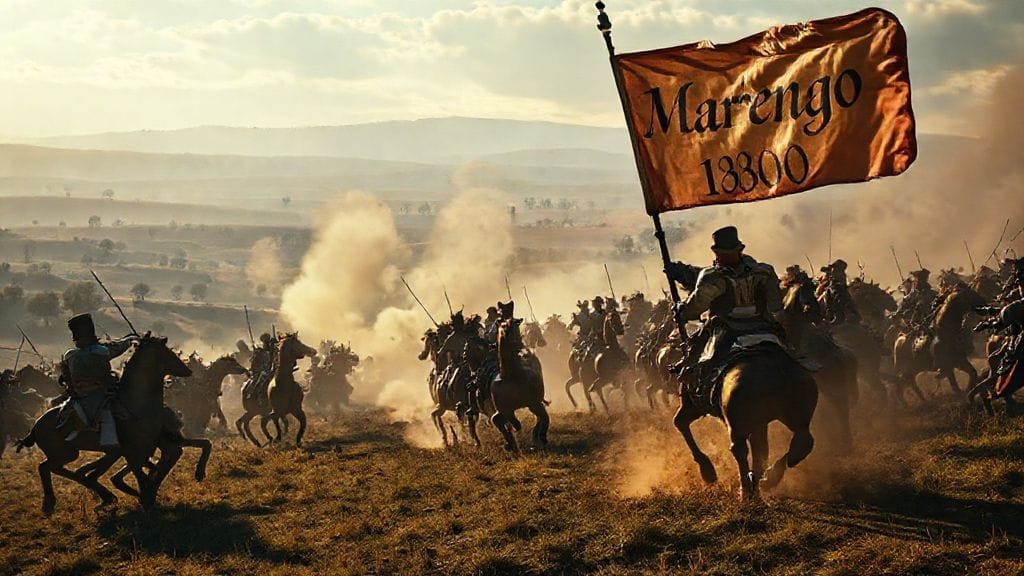
The march toward Beijing was hard-fought and bloody. Allied forces stormed fortresses and suppressed fierce resistance; meanwhile, the Qing court retreated inland, setting the stage for a momentous confrontation.
The arrest and mistreatment of British and French envoys, including the brutal execution of envoy Harry Parkes' secretary, further inflamed tensions and cast the Qing dynasty in a harsh light before the world. Diplomatic channels, once avenues of peaceful resolution, seemed irreparably broken.
It was within this charged context that the coalition forces advanced on the capital, intent on forcing compliance through military pressure.
The Fall of the Old Summer Palace: Destruction and Symbolism
Perhaps no event encapsulates the trauma of 1860 Beijing more vividly than the destruction of the Yuanmingyuan, the Old Summer Palace. This architectural marvel, a sprawling complex of gardens, palaces, and cultural treasures, symbolized the grandeur of the Qing dynasty.
In October 1860, in retaliation for the torture and execution of their envoys, British and French troops pillaged and set ablaze the palace, reducing it to smoldering ruins. The destruction was both a tactical reprisal and a psychological blow, designed to shatter Qing morale.
The ruins of Yuanmingyuan remain today a potent symbol of foreign humiliation and loss in Chinese memory—a stark reminder of imperial vulnerability.
The March to Beijing: Allied Forces and Qing Defenses
With the Old Summer Palace destroyed, the allied forces pressed deeper into the Beijing environs. The city’s defenses were overwhelmed after weeks of fighting, its ancient walls no match for modern artillery and coordinated assaults.
Emperor Xianfeng fled northward, seeking refuge beyond the mountain passes, leaving his court fragmented. The Chinese military was in disarray, torn between factions and unable to mount a coherent defense.
The fall of Beijing was inevitable, but the cost in blood and political capital was immense on all sides.
Negotiations Under Duress: The Road to the Convention
With the capital occupied and Qing leadership displaced, negotiations commenced in earnest. The allied powers presented their demands—territorial cessions, indemnities, diplomatic privileges—on terms that flouted Chinese sovereignty.
The Convention of Peking formalized these conditions. Signed on October 24, 1860, it ratified the previous Treaties of Tianjin with significant additions that favored the victors, reshaping East Asian geopolitics.
The Signing of the Convention of Peking: A Moment of Capitulation
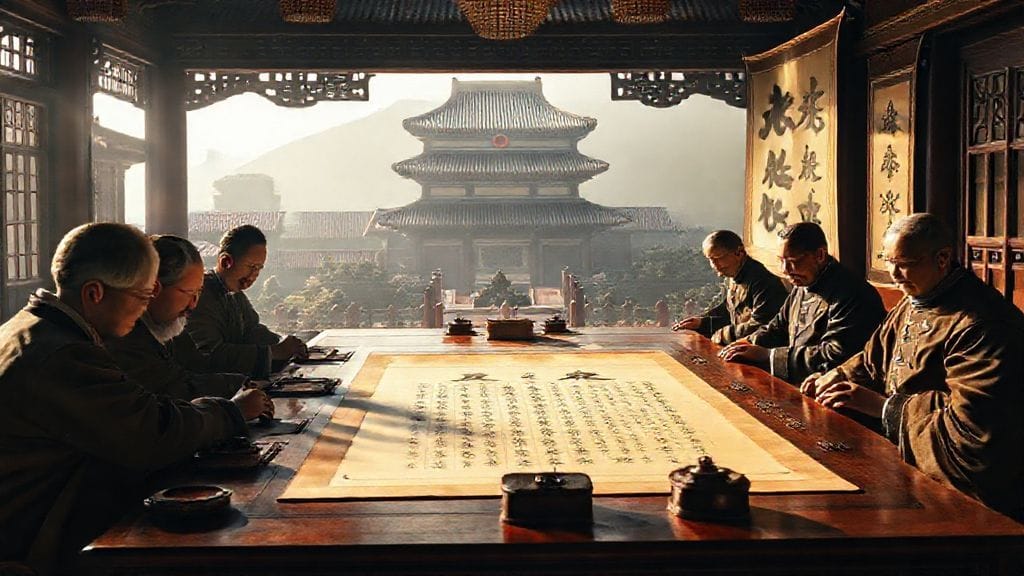
The ceremony was sober, charged with the weight of defeat. Qing representatives, under duress yet conscious of the dynasty’s precarious situation, affixed their seals to the treaty that irreparably altered their empire.
For Britain and France, the Convention was a diplomatic coup; for Russia, a strategic triumph; for China, a humiliating concession that underscored vulnerability.
Key Provisions Unearthed: Territory, Trade, and Sovereignty
Among the Convention’s critical provisions were:
- The cession of the Kowloon Peninsula from Qing China to Britain, significantly expanding Hong Kong’s territory.
- Russia’s acquisition of the territories east of the Ussuri River, solidifying its presence in the Far East.
- The opening of new ports to foreign trade, and the establishment of diplomatic legations in Beijing.
- The legalization of the opium trade and extraterritorial rights for Western nationals.
These clauses collectively undercut China’s sovereignty and further entrenched imperialist privileges.
The Treaty’s Impact on China’s Territorial Integrity
China’s borders were redrawn without its agency, a blow to the empire’s territorial cohesion. British control over Kowloon transformed Hong Kong into an even more influential colonial hub. Russian expansion brought Siberian frontiers into sharper contact with Chinese lands, setting the stage for future contests.
The Qing empire’s loss was not only geographic but psychological, as the “celestial kingdom” was forced to confront its declining might in a world dominated by industrial powers.
Russia’s Gains: Expansion through Diplomacy and Force
While Britain and France advanced militarily, Russia skillfully negotiated to gain the territories bordering Manchuria with minimal conflict. The Convention solidified Russian sovereignty over parts of the Amur and Ussuri regions, fostering the foundation for Vladivostok and other strategic outposts.
This expansion would shape the geopolitical dynamics of Northeast Asia well into the 20th century.
Britain and France’s Strategic Objectives and Rewards
Britain emerged with enhanced control over trade routes and territorial footholds in Hong Kong, as well as secured rights to send diplomats to the Qing court. France, meanwhile, strengthened its missionary protection and extended influence in southern China.
The allied victory emboldened Western powers, who now viewed China as a semi-colonial zone ripe for economic exploitation.
The Chinese Perspective: Humiliation and Resistance
For many in China, the Convention of Peking was a symbol of national humiliation, crystallizing what historians call the “Century of Humiliation”—a prolonged period marked by foreign domination and internal weaknesses.
But amidst the grief and anger came growing resistance movements and calls for reform, which would eventually sow the seeds for the twilight of the Qing dynasty and the birth of modern China.
The Convention’s Place in the Century of Humiliation
The Convention codified the subjugation of China to foreign powers, and yet paradoxically sparked a regeneration of national consciousness. It was a stark reminder of the perils of isolation and stagnation in an age of industrial empires.
China’s painful decade following 1860 would oscillate between reform and rebellion, tradition and transformation.
Economic Repercussions: Commerce and Indemnities
The treaty’s terms imposed heavy indemnities on the Qing government, depleting its treasury and weakening its administrative capabilities. The expanded trade rights of Western powers intensified the influx of foreign goods, undermining local industries.
However, it also forced China to integrate into the global economy more fully, an entry that was both disruptive and, in the long term, inescapable.
Social and Cultural Consequences within Qing Society
The influx of Western ideas, goods, and missionaries challenged traditional Confucian values and social order. Missionary activities increased dramatically, provoking tensions and sometimes violent resistance in rural areas.
The fracture between modernization and conservatism became ever more pronounced, contributing to the eventual fall of the Qing.
The Convention’s Role in Reshaping Sino-Western Relations
The treaty transformed how China and Western powers dealt with each other—not as equals, but as ruler and subjugated. Diplomatic legations established in Beijing brought constant foreign presence to the imperial heartland.
It marked the definitive shift from a Sino-centric world order to one dominated by global imperial competition.
Echoes Through Time: The Convention’s Legacy in Modern China
The legacy of the Convention of Peking is felt in contemporary China’s wariness of foreign interference and its emphasis on sovereignty and national pride. The destruction of the Summer Palace remains a touchstone in Chinese collective memory, symbolizing centuries of struggle and resurgence.
It serves as both a cautionary tale and a rallying cry for modern China’s modernization and global ambitions.
Revisiting the Summer Palace: Memory and Reconciliation
While once a site of tragic loss, the ruins of the Old Summer Palace have become a place of remembrance and education. Efforts to preserve the remnants highlight the importance of confronting history with honesty.
They stand as reminders of resilience amid adversity, allowing China to engage with its past and envision its future.
Lessons Learned: Imperialism, Diplomacy, and Power Dynamics
The Convention of Peking underscores the complexities of diplomacy under unequal power, and the devastating consequences when force supplants dialogue. It teaches how imperial ambitions can fracture states and reshape regions for generations.
This episode also highlights the enduring human cost behind geopolitical strategies and legal documents.
Conclusion
The Convention of Peking was a watershed moment, not only in the annals of 19th-century diplomacy but in the destiny of modern Asia. Signed amid the smoldering ruins of an empire's pride, it was a treaty written in fire and ink—a narrative of loss, endurance, and transformation.
For Qing China, the Convention symbolized the harsh realities of a world reordered by industrial powers armed with gunboats and treaties. Yet, from the ashes of the Summer Palace and the humiliation inflicted sprang a renewed awareness—a stirring resolve that would one day propel China onto the modern global stage.
Understanding this event is to confront the intersection of empire and resistance, coercion and adaptation, sovereignty and survival. It is a chapter that continues to echo, urging us to remember that history is never static but a living dialogue between the past and the future.
Frequently Asked Questions
1. What triggered the Second Opium War, leading to the Convention of Peking?
The Second Opium War was triggered by disputes over the enforcement of the Treaty of Tianjin, attacks on Western envoys, and China's reluctance to open itself to Western demands, culminating in renewed military conflict between Qing China and the Anglo-French alliance.
2. Which territories did China cede under the Convention of Peking?
China ceded the Kowloon Peninsula to Britain and territories east of the Ussuri River to Russia, significantly altering its northern and southern borders.
3. What were the main terms of the Convention for foreign powers?
The treaty legalized the opium trade, established new treaty ports, granted extraterritorial rights to foreign nationals, and allowed Britain and France to station diplomats permanently in Beijing.
4. How did the destruction of the Old Summer Palace symbolize Qing China's decline?
The demolition represented both a physical and symbolic devastation; it was a deliberate punitive act by the Anglo-French forces that shattered imperial prestige and embodied the dynasty’s vulnerability.
5. In what ways did the Convention of Peking influence China’s domestic and foreign policies afterward?
It accelerated internal calls for reform, intensified anti-foreign sentiment, and forced China to engage more openly with global powers, albeit from a weakened position.
6. Why is the Convention of Peking considered part of China’s “Century of Humiliation”?
Because it marked a significant loss of sovereignty and territorial integrity to foreign imperial powers, setting a pattern of subjugation that defined much of China's 19th and early 20th-century history.
7. How did Russia benefit from the Convention differently than Britain and France?
Russia gained substantial territory without engaging in direct military combat through skillful diplomacy, expanding its Far Eastern presence.
8. What lessons does the Convention of Peking offer about international diplomacy?
It illustrates the dangers of unequal treaties imposed by force and the importance of respecting sovereignty, while showing how diplomacy often reflects the realpolitik of the moment.