Table of Contents
- The Smoke Over Atlanta: A City on the Brink
- The Strategic Heart of the Confederacy
- The Long Road to 1864: The March of War
- General William Tecumseh Sherman: The Man Behind the March
- The Siege Begins: Atlanta Under Pressure
- Civilian Life in a City Encircled
- The Confederate Defense: Hood’s Gamble
- Breaking the Chains: Sherman’s Tightening Grip
- The Final Days Before the Fall
- September 2, 1864: The Fall of Atlanta
- The Smoke that Changed a Nation
- Lincoln’s Re-election and the War’s Turning Tide
- The Aftermath: Atlanta in Ruins
- Reconstruction and the Rebirth of a City
- Atlanta’s Legacy: Memory, Myth, and Meaning
- The Human Cost: Soldiers and Civilians Alike
- The Impact on the Civil War’s Outcome
- Sherman’s March Beyond Atlanta
- Atlanta in American Memory and Identity
- Lessons from the Fire: War and Urban Transformation
- Conclusion: From Ashes to Resurrection
- FAQs: Understanding Atlanta’s Capture
- External Resource
- Internal Link
The Smoke Over Atlanta: A City on the Brink
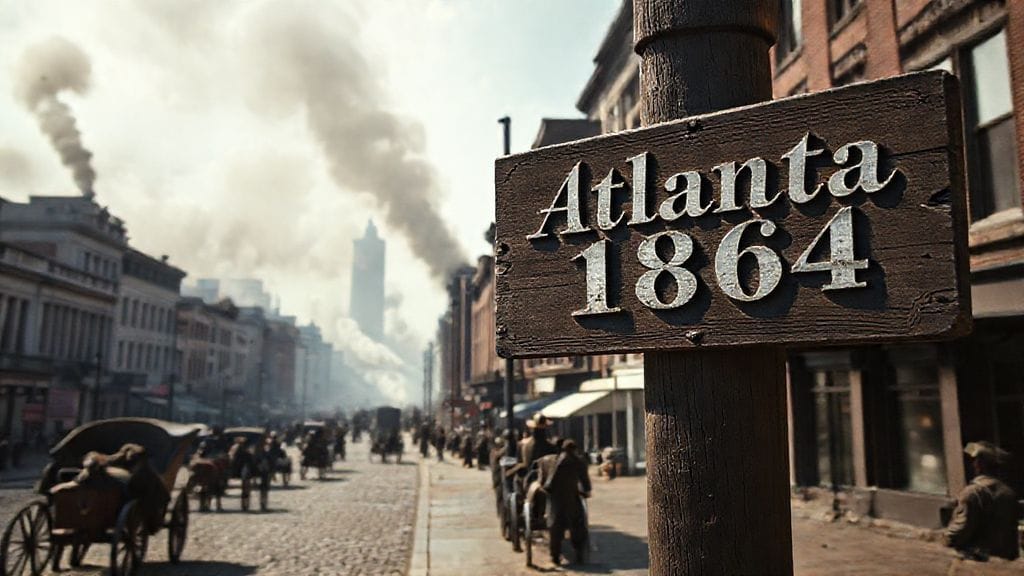
As the sun dipped below the horizon on a late summer evening in 1864, the skies above Atlanta were choked with smoke and scarred by the distant flash of artillery. The city, once a bustling hub of commerce and industry in the Deep South, faced a fate uncertain yet ominously certain. From the banks of the Chattahoochee River to the sprawling rail yards at its heart, Atlanta was preparing for a siege that would echo through history — a turning point in the American Civil War and a cruel symbol of destruction, resilience, and transformation.
The year was 1864, the month September, and the place — Atlanta, Georgia. The city was suffocating under the weight of Union forces tightening their grip, led by General William Tecumseh Sherman. For months, the clash of might between North and South had converged here, focused on this strategic jewel of the Confederacy. Civilians, soldiers, and politicians alike watched and waited as the inevitable approached — the capture of Atlanta.
But this was no mere military victory. The fall of Atlanta would ripple far beyond the battlefield, shaping the nation’s political destiny, the course of the war, and the soul of a divided America.
The Strategic Heart of the Confederacy
Atlanta in 1864 was more than a city. It was the beating heart of the Confederacy’s war effort — a complex nexus of railroads, factories, and supply depots fueling the Southern armies. Its rail lines connected vast stretches of the South, funneling troops and war materiel alike. Destroying Atlanta was not just a blow against a city, but a blow meant to fracture the Confederate military machine.
The Confederates recognized Atlanta’s vital importance. General Joseph E. Johnston, and later General John Bell Hood, understood that holding the city was essential to prolonging Southern resistance. Its loss would be catastrophic, and its defense would be fought with desperation.
The city landscape testified to its military significance; armories, foundries, and warehouses lined the streets, sometimes shrouded in the smoke of production, sometimes engulfed in thick fear. Civilians murmured about war, rationing, and inevitable siege, while politicians debated the war’s future and the high risks of losing Atlanta.
The Long Road to 1864: The March of War
The American Civil War, by the time September 1864 approached, had already stretched over three tumultuous years. From the first gunshot at Fort Sumter in April 1861 to the stunning battles of Shiloh and Antietam, the nation was irrevocably changed. The war had evolved into a grinding conflict that tested the limits of endurance for both North and South.
Atlanta became a focal point only after General Sherman’s capture of Chattanooga in November 1863 opened the door for his advance into Georgia. Marching through the rugged terrain, Sherman’s forces outmaneuvered several Confederate armies, pushing relentlessly toward Atlanta.
Sherman’s strategy was clear and unyielding: dismantle Southern infrastructure and morale by targeting logistics and cities crucial to the Confederate war effort. Yet, his adversary, General Hood, was no passive opponent. Hood’s daring offensives and defensive tactics aimed to delay Sherman’s progress and protect the city at all costs, setting the stage for a bitter and bloody campaign.
General William Tecumseh Sherman: The Man Behind the March
No narrative of Atlanta’s capture can bypass the towering figure of William Tecumseh Sherman. Once a respected West Point graduate and Civil War engineer, Sherman had grown into a general whose tactics revolutionized warfare in America. His “total war” philosophy — striking at economic and civilian centers to erode Southern capacity and will to fight — was controversial, brutal, but undeniably effective.
Sherman’s march was as much psychological warfare as military campaign. “War is cruelty,” Sherman once said, “there is no use trying to reform it. The crueler it is, the sooner it will be over.” His actions around Atlanta would confirm this, as soldiers tore through enemy lines and towns in a calculated effort to starve the Confederacy of resources.
Yet Sherman was not without humanity or complexity. Records show a leader aware of the immense suffering his tactics caused, a man torn between military necessity and moral considerations. Understanding Sherman is essential to unlocking the layered history of Atlanta’s fall.
The Siege Begins: Atlanta Under Pressure
By July 1864, Sherman’s forces had encircled Atlanta, cutting off its supply lines and bombarding its defenses. The city’s fortifications, built hurriedly but skillfully, bristled with cannons manned by desperate Confederate soldiers and local militia. For many inhabitants, the once vibrant city now echoed with the groans of artillery fire and the sounds of construction as trenches and earthworks shaped the urban landscape.
Sherman opted against a direct assault, instead adopting siege tactics designed to starve and demoralize. Day after day, artillery shells rained down; the city’s railroads were severed, and the chaos of siege warfare permeated every corner.
The civilian population, caught between fear and defiance, endured rationing, disease, and constant threat. Families barricaded homes; churches were turned into hospitals. The siege was not only a military contest but a battle for human endurance.
Civilian Life in a City Encircled
Behind the lines, life continued but transformed under the siege’s shadow. Women managed households alone, children learned to live with sudden blackouts, and stores turned sparse as supply trains halted. The stories of Atlanta’s citizens speak of resilience and heartbreak.
Mrs. Mary Ann Harris, a diarist during the siege, described the nights vibrating with the noise of cannonades and the morning skies “choked with smoke so thick you could barely see your hand.” Food shortages meant foraging in the streets and rationing cherished items like sugar and flour.
In this pressure cooker of fear and hope, social bonds both strained and strengthened. Slave populations, too, found new and complex roles amid the shifting conflict; many seized opportunities to escape or join Union lines.
The Confederate Defense: Hood’s Gamble
General John Bell Hood replaced Johnston at the helm of Atlanta’s defense in July 1864, bringing a bold, aggressive approach. Hood rejected Johnston’s methodical withdrawal tactics and instead launched several fierce counterattacks intended to break Sherman’s siege.
These battles — fought with tremendous energy near areas like Peachtree Creek and Ezra Church — inflicted casualties on both sides and briefly unsettled Union positions. However, Hood’s attacks ultimately failed to dislodge Sherman’s forces. His willingness to engage in costly frontal attacks drained the Confederates’ already depleted resources.
Hood’s gamble reflected the desperation and high stakes of defending Atlanta — the city was the Confederacy’s lifeline, and its loss would mean the unraveling of Southern hopes.
Breaking the Chains: Sherman’s Tightening Grip
Sherman responded to Hood’s offensives with strategic patience. Rather than rushing to bloody decisive battles, he fortified his lines and extended his siege. Union forces cut off the last rail line supplying Atlanta, tightening the noose around the city.
The Union siege artillery, including heavy rifled cannons and mortars, pounded the city relentlessly; fires sparked in warehouses, factories, and residential areas. Atlanta’s defenders, running dangerously low on ammunition and supplies, prepared for inevitable collapse, while the population braced for the worst.
Sherman’s methodical pressure demonstrated his military acumen and the brutal calculus of total war — prolong struggle or risk premature losses. His tightening grip was both physical and psychological.
The Final Days Before the Fall
Late August and early September 1864 saw Atlanta’s defenses crumble. Hood, recognizing the indefensibility of the city, evacuated Confederate forces under cover of darkness. The retreat was swift but muddled, leaving vast stores of supplies behind.
The Union army advanced cautiously, aware that the capture of Atlanta was not just a tactical victory but a moral and symbolic one. Soldiers marching into the city found themselves amid smoldering ruins, abandoned forts, and traumatized civilians.
Thousands of residents faced displacement; many fled to countryside or neighboring states. The capture was as much a humanitarian crisis as a military conquest.
September 2, 1864: The Fall of Atlanta
On September 2, 1864, Atlanta officially fell to Union forces. The city’s capture was a moment of jubilation and relief for the North. Sherman’s army marched in, and the Confederate flag was lowered, replaced by the Stars and Stripes.
That day marked not just a military milestone but a profound psychological blow to the Confederacy. Newspapers hailed the victory; President Abraham Lincoln’s political fortunes soared, directly influencing his re-election prospects.
Yet the city itself was scarred. Decades of growth and commerce lay in ruins, and the social fabric was torn. The battle for Atlanta had left indelible marks visible in charred buildings, hollowed eyes of survivors, and countless stories of loss.
The Smoke that Changed a Nation
Atlanta’s fall was more than a tactical win; it was a signal to the nation that the Confederacy's days were numbered. The Union’s ability to strike deep into Southern territory shattered illusions of invincibility and galvanized Northern resolve.
Sherman’s campaign, culminating in Atlanta’s capture, became a defining moment that helped turn the tide of the Civil War. It underscored the lethality of industrial-age warfare and the evolving notion that civilian infrastructure had become a legitimate target.
Politically, the victory strengthened Lincoln’s hand in a watershed election, reinforcing the Union cause and paving the way toward eventual Confederate surrender.
Lincoln’s Re-election and the War’s Turning Tide
The timing of Atlanta’s fall was critical. Occurring mere weeks before the 1864 presidential election, the victory dramatically influenced public perception. Before Atlanta’s capture, Lincoln’s prospects were shaky; war fatigue and political opposition threatened his continued leadership.
News of Sherman’s success breathed new hope into the Northern electorate. Lincoln’s campaign slogans, emphasizing preservation of the Union and emancipation, were buoyed by the tangible military progress. Voters saw in Atlanta a turning point that could bring the war to a just conclusion.
Historians argue that without Atlanta’s capture, Lincoln might have lost, potentially altering America’s course forever.
The Aftermath: Atlanta in Ruins
The immediate aftermath of the siege was bleak. Atlanta’s infrastructure lay smoldering; its population displaced or destitute. Fires, some accidental and others set deliberately, ravaged large swaths of the city.
Union forces, under Sherman’s direction, destroyed military facilities to prevent future Confederate use. But the destruction also devastated civilian homes, forcing thousands into homelessness and despair.
Reconstruction would be arduous. Atlanta became a symbol of both devastation and the potential for rebirth — a canvas upon which the post-war South would be reimagined.
Reconstruction and the Rebirth of a City
Despite its ruin, Atlanta’s story was far from over. In the years following the war, the city embarked on an ambitious path of reconstruction and growth.
Led by a mixture of local leaders, Northern investors, and freed African Americans, Atlanta transformed itself into a symbol of the New South. Railroads were rebuilt, industries restarted, and new citizens poured into the city seeking opportunities.
Atlanta’s rebirth reflected broader themes in American history: resilience in the face of destruction, the struggle for racial justice, and the complexities of rebuilding a fractured nation.
Atlanta’s Legacy: Memory, Myth, and Meaning
Over the decades, the capture of Atlanta has been embedded into the American psyche. It inspired songs, novels, and commemorations. Yet memory of the event remains complex — heroic for the Union, tragic for the South.
Monuments, museums, and annual remembrances seek to preserve the stories of those who suffered and fought. The event functions as a lens through which to examine questions of war’s morality, the cost of progress, and the human spirit.
The Human Cost: Soldiers and Civilians Alike
The siege and fall of Atlanta were not just strategic maneuvers; they were personal tragedies. Thousands of soldiers, both Union and Confederate, perished in the campaign. Wounded men filled hospitals, and death was a daily acquaintance.
Civilian casualties left families broken and futures uncertain. The siege’s psychological scars haunted survivors for generations, a testament to war’s brutal humanity.
The Impact on the Civil War’s Outcome
Atlanta’s capture hastened the Confederate demise. With its rail and supply lines severed, Southern armies grew weaker. Morale plummeted, and the South increasingly found itself encircled and isolated.
The loss forced Confederate command into defensive desperation, detracting from offensive options. Ultimately, Atlanta’s fall was a critical juncture tilting the balance irreversibly in favor of the Union.
Sherman’s March Beyond Atlanta
After Atlanta, Sherman launched his infamous March to the Sea, a destructive campaign that further devastated the South’s heartland. His path through Georgia was a continuation of the strategy first realized in Atlanta — total war, targeting both military and civilian infrastructure to cripple Confederate resistance.
The march deepened polarization but shortened the war, underscoring Atlanta’s capture as a prelude to a final reckoning.
Atlanta in American Memory and Identity
Today, Atlanta stands proud, a vibrant metroplex embodying progress and diversity. Yet, the echoes of 1864 remain woven into its identity.
From Civil War museums to educational programs, the city engages with its past with honesty and complexity, confronting the legacies of conflict, race, and reconstruction.
Atlanta’s story continues to inspire and caution — a reminder of the cost of division, but also of renewal.
Lessons from the Fire: War and Urban Transformation
Atlanta’s capture illuminates how urban warfare changed the nature of conflict. The siege showed that cities were not merely backdrops but strategic pillars. The destruction wrought by such battles forced nations to reconsider warfare’s ethics and logistics.
Modern military doctrine, humanitarian law, and urban planning all find roots in lessons learned amidst Atlanta’s fires and ruins.
Conclusion
The Capture of Atlanta in September 1864 was more than a military event; it was a defining crucible in the American Civil War’s epic narrative. As cannons thundered and the city smoldered, the future of a nation was being forged. It was a moment of profound loss, resilience, and transformation.
Sherman’s victory did not simply knock down walls; it shattered illusions and paved a path toward reunification and modern nationhood. The bravery of soldiers, the endurance of civilians, and the resolve of leaders intertwined in a story rich with tragedy and hope.
From the ashes rose a city and a country forever altered — a testament to the fires of war and the indomitable spirit of humanity striving to rebuild. Atlanta’s capture stands as a powerful reminder: even amid destruction, the seeds of renewal can grow.
FAQs
Q1: Why was Atlanta such a strategically important city during the Civil War?
Atlanta was a critical transportation and industrial hub, with multiple railroad lines converging there, supplying Confederate armies with weapons, food, and troop movements. Its capture disrupted Southern logistics severely.
Q2: Who was General William Tecumseh Sherman, and what was his strategy in Atlanta?
Sherman was a Union general known for his "total war" approach, aiming to destroy the South’s war capacity by targeting military and civilian infrastructure. In Atlanta, he conducted a siege to encircle and strangle the city rather than risking heavy casualties in a frontal assault.
Q3: How did the capture of Atlanta influence the 1864 U.S. presidential election?
The victory boosted Northern morale and strengthened support for President Abraham Lincoln's re-election campaign, helping to secure his mandate to continue the war until reunification and emancipation were achieved.
Q4: What happened to Atlanta immediately after its capture by Union forces?
The city suffered extensive damage as Confederate forces destroyed military facilities and fires raged uncontrollably. Many civilians were displaced, facing hardship amid the ruins.
Q5: What was General John Bell Hood’s role during the siege?
Hood commanded the Confederate defenses and attempted several aggressive counterattacks to break the siege, but ultimately failed, leading to the evacuation of the city.
Q6: How did the siege impact the civilian population of Atlanta?
Civilians endured extreme hardship — from food shortages and constant bombardment to displacement and loss of homes. Their resilience and suffering form essential parts of the siege’s human story.
Q7: In what ways did the capture of Atlanta change the course of the Civil War?
It signaled the weakening of the Confederacy, disrupted supply lines, and boosted Union momentum, making the eventual Southern surrender more likely.
Q8: How is the capture of Atlanta remembered today?
It is commemorated through museums, historical sites, and cultural memory as a pivotal event symbolizing both the devastation of war and the resilience of a city and nation recovering from division.