Table of Contents
- A Nation on the Brink: December 6, 1865, Washington D.C.
- The Long Road to Abolition: Origins of the Thirteenth Amendment
- From Proclamation to Amendment: Lincoln’s Emancipation Journey
- Political Storms and Social Earthquakes: The Civil War Context
- The Amendment’s Drafting: Voices and Visions
- Congressional Battles: Ratification’s Fierce Debates
- Southern Resistance and Northern Resolve
- The Final Vote: An Emancipatory Triumph
- Immediate Impact: Freedom for Four Million Americans
- Reconstruction Beginnings: A Fragile New Era
- Legacy in Law: The Thirteenth Amendment’s Enduring Power
- Social and Economic Ripples: Chains Broken, Systems Strained
- The Amendment in Culture: Art, Literature, and Memory
- International Echoes: America’s Abolition Inspires the World
- Continuing Struggles: Freedom’s Unfinished Business
- Historical Reflections: What Made December 6th So Pivotal?
- Modern Interpretation: Thirteenth Amendment in Today’s America
- Remembering the Forgotten: Unsung Heroes of Abolition
- The Amendment’s Legal Challenges and Interpretations Over Time
- The Human Stories Behind the Amendment
- Why December 6th Matters: A Moral Reckoning for the United States
- Conclusion: The Promise and the Challenge of Freedom
- FAQs: Clarifying the Thirteenth Amendment’s History and Impact
- External Resource
- Internal Link
A Nation on the Brink: December 6, 1865, Washington D.C.
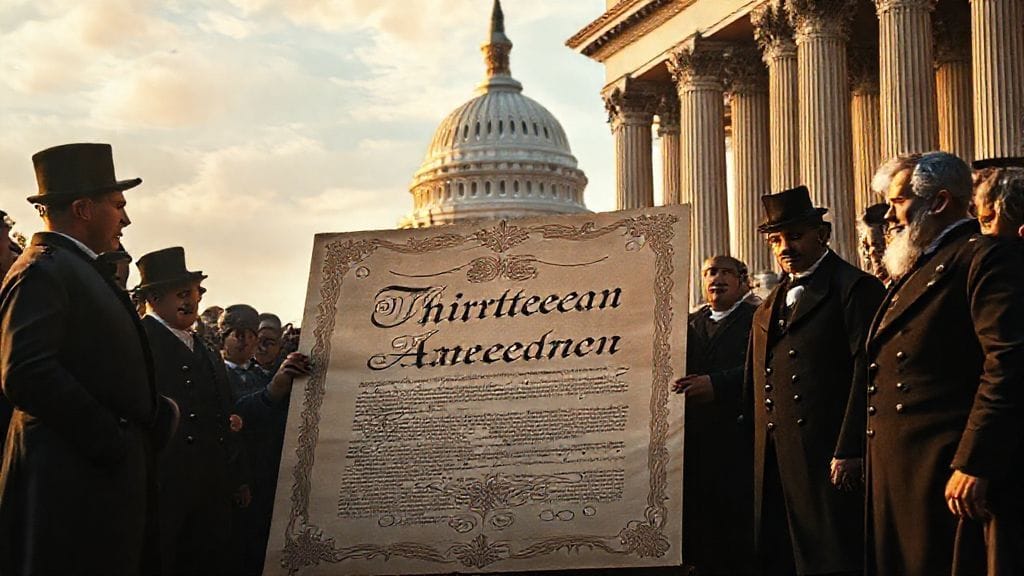
The chill of a Washington winter’s day enveloped the city on December 6, 1865. Snowflakes drifted silently past the towering marble pillars of the Capitol Building, the air heavy with anticipation and hope. Inside, in the hushed chambers that had witnessed some of the Republic’s most defining moments, a profound change was etched into the very foundation of American democracy. The ratification of the Thirteenth Amendment — the constitutional marker that irrevocably abolished slavery — represented not just the end of a brutal institution but the birth of a nation struggling to reimagine itself on the ashes of a bloody civil war.
This day was more than a political milestone; it was a living testament to the resilience of human spirit and the fraught journey toward justice. As the final states hastened their endorsements, the country held its breath. Would this radical promise of freedom truly take hold? Could four million formerly enslaved people now begin the long, painful path from bondage to citizenship?
But this ratification didn’t emerge from nowhere. It was the culmination of decades of struggle—moral, legal, and martial—that cracked open the chains of one of history’s most entrenched systems of oppression. To understand why December 6, 1865, shines so brightly in the tapestry of American history, we must delve into the deep currents that made abolition both an urgent necessity and a formidable challenge.
The Long Road to Abolition: Origins of the Thirteenth Amendment
Slavery in America was an institution woven into the economic, social, and political fabric since the first enslaved Africans were brought in chains to Jamestown in 1619. By the mid-19th century, the United States was a nation starkly divided: North and South stood on opposite poles over the morality, legality, and future of human bondage.
Abolitionists, from fiery orators like Frederick Douglass to radical politicians such as Thaddeus Stevens, had been fighting for emancipation with varying degrees of success. Their voices echoed in pulpits, newspapers, and congressional halls, but the political reality was arduous. Slavery’s defenders clung desperately to states’ rights and economic necessity, framing abolition as a threat to the Southern way of life.
The Constitution itself was a living paradox. Crafted with clauses that protected slavery indirectly, it became a battleground of interpretation and power. Yet, abolition movements steadily grew, and the moral arc began to bend under their relentless pressure. The idea of a constitutional amendment dedicated solely to eradicating slavery—absolute, unconditional freedom—was revolutionary and perilous.
From Proclamation to Amendment: Lincoln’s Emancipation Journey
President Abraham Lincoln, elected in 1860, initially tread carefully around the raging issue of slavery. His primary aim was preserving the Union, and he feared that an outright abolitionist stance might fracture the fragile coalition between Northern and Border States.
However, the tides of war and conscience shifted his position dramatically. On January 1, 1863, Lincoln issued the Emancipation Proclamation, declaring all enslaved people in Confederate-held territory “forever free.” Though monumental, the proclamation was limited by its wartime application—it did not abolish slavery nationwide.
It became painfully clear that only a constitutional amendment could guarantee the permanence of freedom. Lincoln ardently championed the Thirteenth Amendment, lobbying Congress with a combination of moral earnestness and political finesse. He envisioned a new birth of freedom, where liberty was not the privilege of a few but the right of all.
Lincoln’s assassination in April 1865 cast a shadow over the nation, but the cause immortalized itself in the amendment that followed. The body of work he left behind was more than ideology—it was a blueprint for justice.
Political Storms and Social Earthquakes: The Civil War Context
The Civil War (1861–1865) was the crucible that tested America’s soul and its commitment to liberty. The bloodiest conflict on its soil claimed more lives than any other war in American history. It was fought over the survival of the Union but also, fundamentally, over the future of slavery.
Battlefields such as Gettysburg and Antietam were not only strategic clashes but ethical battlegrounds where the question of human dignity was violently contested. As Union armies marched southward, they unwittingly became liberators to enslaved people, who seized these moments to escape bondage and aid the war effort.
Yet, beneath the surface of military confrontation simmered fierce political battles in Congress and the states. The idea of abolishing slavery outright challenged centuries-old social orders and economic interests. For every courageous advocate, there was an entrenched opponent, often wielding violence to silence dissent.
The Amendment’s Drafting: Voices and Visions
The text of the Thirteenth Amendment was concise but revolutionary. It read, simply and powerfully:
“Neither slavery nor involuntary servitude, except as a punishment for crime whereof the party shall have been duly convicted, shall exist within the United States, or any place subject to their jurisdiction.”
Crafted by Senator John B. Henderson of Missouri and others, this language was designed to be clear and far-reaching. But behind the drafting table were earnest debates about the precise wording, its implications, and exceptions.
A key figure in shaping this moment was Representative James Mitchell Ashley, ardent abolitionist and chair of the House Committee on Freedmen. His belief in the necessity of constitutional guarantees for freedom was unwavering.
The voices that contributed to this amendment were diverse—Black leaders like Frederick Douglass, whose unyielding advocacy demanded recognition of the enslaved as full citizens; Radical Republicans who pushed for sweeping reforms; and moderates concerned with national cohesion.
Congressional Battles: Ratification’s Fierce Debates
Passing the Thirteenth Amendment through Congress was anything but inevitable. When it was first introduced in the House of Representatives in 1864, it was defeated—a bitter blow that revealed the depth of division.
By early 1865, however, with the tide turning militarily and politically in favor of the Union, the balance shifted. On January 31, 1865, the House passed the amendment by a narrow margin—only by three votes.
Senator Lyman Trumbull of Illinois, chair of the Senate Judiciary Committee, guided the amendment through the Senate on April 8, 1864, with overwhelming support. Yet, on the ground, ratification by the states was a separate and daunting challenge.
Southern states, many still reeling from defeat and embittered by the war’s devastation, vehemently opposed the amendment. In contrast, Northern and Western states moved swiftly to ratify.
Southern Resistance and Northern Resolve
In the war’s immediate aftermath, the nation was a shattered landscape of bitterness and uncertainty. Southern legislatures, many dominated by ex-Confederates, refused to accept the amendment. Some states actively rejected ratification, clinging to vestiges of the old order.
Meanwhile, in the North and border states, ratification became more than a legal necessity—it was a moral imperative. The federal government employed a combination of political persuasion, military oversight, and legal mandates to secure the required three-fourths of states’ approval.
Maryland, Kentucky, Delaware, and others resisted for years, illuminating the unevenness of emancipation in practice. The path to ratification was thus marked by tension and compromise, reflecting the fragile tapestry of national reconciliation.
The Final Vote: An Emancipatory Triumph
On December 6, 1865, the last needed state ratified the amendment, officially enshrining abolition into the Constitution. The nation exhaled, confronting the monumental reality that slavery had been constitutionally outlawed.
The weight of this victory was immense yet bittersweet. Generations of enslaved people were now legally free, but the road ahead bristled with challenges. Freedom was not a single moment but an ongoing struggle for rights, dignity, and equality.
Yet, for the first time, the promise was explicit—slavery was forever banned in the United States. It was an idea so fundamental that it would guide and haunt the coming decades.
Immediate Impact: Freedom for Four Million Americans
The practical reality of abolition sent shockwaves across the country. Some four million enslaved people transitioned abruptly, in legal terms, from property to persons.
For emancipated men and women, this newfound freedom was exhilarating but fraught. Many faced hostile environments—poverty, illiteracy, violence, and systemic exclusion. Former plantation economies collapsed or transformed, destabilizing Southern society.
Freedom agencies and the Freedmen’s Bureau sprang up to alleviate suffering and assist with transitions. Schools were founded, families reunited, and new communities built. The cultural rebirth among freedpeople would reshape American identity.
Reconstruction Beginnings: A Fragile New Era
The ratification set the stage for Reconstruction, the tumultuous period of rebuilding and redefining nationhood from 1865 to 1877. Radical Republicans sought to use constitutional tools to guarantee rights and equality, including the Fourteenth and Fifteenth Amendments.
But Reconstruction was riddled with contested visions and resistant forces. White supremacists—through groups like the Ku Klux Klan—waged terror campaigns to maintain racial hierarchies.
Despite legal gains, African Americans faced violent oppression, voter suppression, and segregation laws that would ossify into Jim Crow by the century’s end. The promise of the Thirteenth Amendment, though vital, was not a panacea against centuries of inequality.
Legacy in Law: The Thirteenth Amendment’s Enduring Power
In the years since 1865, the Thirteenth Amendment has served as a constitutional foundation not only for abolition but for challenging various forms of involuntary servitude and forced labor.
Its language—especially the exception clause allowing involuntary servitude as punishment for crime—has sparked ongoing debates about mass incarceration and systemic injustice in modern America.
Judges and lawmakers have cited the amendment to strike down abuses reminiscent of slavery, affirming its central role in American jurisprudence.
Social and Economic Ripples: Chains Broken, Systems Strained
Abolition dismantled a vast economic edifice reliant on enslaved labor. Plantations, towns, and industries adapted, often painfully. Sharecropping and tenant farming became widespread, offering limited economic freedom but often trapping freedpeople in cycles of debt.
The South’s social order was destabilized, while the North grappled with integrating veterans and rebuilding industrial might. Nationwide, abolition catalyzed debates about labor, citizenship, and equality that resonate today.
The Amendment in Culture: Art, Literature, and Memory
The abolition of slavery inspired a flood of cultural expression. Poets, novelists, painters, and musicians grappled with the moral upheaval of emancipation.
Works such as Harriet Beecher Stowe’s Uncle Tom’s Cabin prepared white audiences emotionally for abolition, while Black writers like Douglass and later Langston Hughes articulated the complexity of freedom and racial identity.
Commemorations and controversies around monuments and public memory continue to engage with the Thirteenth Amendment’s legacy.
International Echoes: America’s Abolition Inspires the World
While the abolition of slavery in the United States was not the first globally, it sent ripples through international abolitionist movements and influenced constitutions elsewhere.
European abolitionists and anti-colonial leaders watched closely as America embarked on this constitutional experiment. The moral authority of the new amendment strengthened global human rights discourses.
Nevertheless, slavery and forced labor persisted worldwide, a reminder that the American victory was part of a broader, unfinished human journey toward liberty.
Continuing Struggles: Freedom’s Unfinished Business
Legal freedom did not eliminate racial discrimination, nor did it guarantee economic opportunity. The legacy of slavery continued in forms old and new: segregation, disenfranchisement, and systemic inequality.
Movements from the Civil Rights era to Black Lives Matter trace their lineage to the promise—and broken promises—of the Thirteenth Amendment.
Its language remains a rallying point for activists confronting mass incarceration, human trafficking, and labor exploitation—modern-day chains that echo America’s history.
Historical Reflections: What Made December 6th So Pivotal?
Looking back, December 6, 1865 stands as a moral marker more than a simple date. It is the day when the United States constitutionally repented of slavery and attempted to enshrine human dignity as inviolable.
The event crystallized immense political will, social upheaval, and visionary leadership. It was a legal thunderclap with human hearts pulsing beneath, shifting the course of American history.
Yet, it also serves as a reminder that freedom is hard-won, imperfect, and demands constant vigilance.
Modern Interpretation: Thirteenth Amendment in Today’s America
In contemporary society, the Thirteenth Amendment remains a core legal and symbolic touchstone. Courts have invoked it to challenge conditions tantamount to slavery in prisons and labor practices.
Public discourse increasingly scrutinizes the amendment’s exception clause, forcing Americans to confront uncomfortable truths about justice and inequality.
It is both a shield and a challenge—a law that protects freedom but calls for reflection on how far the nation has come and how far it still must go.
Remembering the Forgotten: Unsung Heroes of Abolition
While Lincoln and leading politicians are renowned, countless lesser-known figures shaped abolition’s victory. Enslaved people themselves orchestrated escapes and rebellions, roaring defiance against chains.
Women abolitionists—like Sojourner Truth and Harriet Tubman—risked everything for freedom’s cause. Their stories enrich our understanding beyond official records.
Recognizing these heroes challenges narratives of emancipation as solely the work of statesmen and places humanity at the amendment’s heart.
The Amendment’s Legal Challenges and Interpretations Over Time
Over the last century-and-a-half, the Thirteenth Amendment has faced legal scrutiny. Courts have debated the reach of involuntary servitude’s exception and its application.
Cases addressing peonage, forced labor, and prison conditions have expanded the amendment’s protective scope. Yet, tensions remain around enforcing its principles amid modern inequalities.
Legal scholars view this dynamic as an evolving testament to America’s complex legal and moral struggles.
The Human Stories Behind the Amendment
Beyond politics and law, the amendment encapsulates myriad personal narratives—those of enslaved mothers who hugged their children free for the first time, the soldier who fought for freedom’s cause, the legislator wrestling with conscience and compromise.
These human stories imbue dry constitutional text with vibrant emotion. They remind us that history’s true power lies in lived experience, in the triumphs and tragedies of ordinary people reaching for justice.
Why December 6th Matters: A Moral Reckoning for the United States
More than a date on a calendar, December 6 is a moral reckoning. It marks America’s attempt to reconcile its founding ideals with its original sins.
It is an annual call to remember the pain of slavery, honor the courage of abolition, and renew commitment to equality. The amendment’s ratification was a beginning — of hope, struggle, and the ongoing pursuit of true freedom.
Conclusion
The ratification of the Thirteenth Amendment on December 6, 1865, was a seismic moment that redefined the United States, legally and morally. It was the hard-won fruit of decades of activism, war, debate, and sacrifice—a monument not in granite but in principles. While the amendment abolished slavery within the Constitution’s text, it triggered a deeper, messier journey toward racial justice and equal citizenship.
Freedom is not a final destination but an evolving promise, lit by the courage of those who dared to dream it and achieved it against overwhelming odds. December 6 reminds us that history’s grandest transformations intertwine politics and humanity, law and lived truth, hope and determination. As the nation continues to wrestle with the legacies of its past, the Thirteenth Amendment remains a beacon—a reminder that even the darkest shadows can be dispelled by the light of justice.
FAQs
Q1: What exactly did the Thirteenth Amendment abolish?
A1: It abolished slavery and involuntary servitude in the United States except as punishment for a crime, making slavery illegal everywhere in the country.
Q2: Why was the Emancipation Proclamation not enough to end slavery?
A2: The proclamation applied only to Confederate territories still in rebellion during the Civil War, so it did not end slavery nationwide or guarantee permanent freedom.
Q3: Who were the main political figures behind the amendment?
A3: Leaders included President Abraham Lincoln, Senator John B. Henderson who helped draft the amendment, and Radical Republicans such as Thaddeus Stevens and James Mitchell Ashley.
Q4: How did Southern states react to the amendment?
A4: Many Southern states resisted ratification or rejected it outright initially, reflecting ongoing regional tensions and resistance to abolition.
Q5: What impact did the Thirteenth Amendment have immediately after ratification?
A5: It legally freed approximately four million enslaved people, setting the groundwork for Reconstruction but also confronting the nation with new social and economic challenges.
Q6: What is the significance of the exception clause in the amendment?
A6: The clause permits involuntary servitude as punishment for crime, which has led to controversy related to prison labor and mass incarceration.
Q7: How is the Thirteenth Amendment viewed in today’s society?
A7: It is seen both as a fundamental human rights milestone and a legal instrument to challenge modern forms of forced labor and systemic inequality.
Q8: Why is December 6th remembered as a pivotal date?
A8: Because it marks the official ratification of the amendment, symbolizing the formal constitutional end of slavery in the United States.