Table of Contents
- The Smoke over Dybbøl: Dawn of April 18, 1864
- Denmark on the Brink: A Kingdom’s Fragile Fate
- The Rise of Prussia and Austria: Architects of German Unity
- Clashing Ambitions: Causes Behind the War of 1864
- The Schleswig-Holstein Question: A Pandora’s Box
- The Danish Defense: Fortifying Dybbøl’s Earthworks
- The Opposing Forces: Commanders, Armies, and Strategies
- The Calm before the Storm: Days Leading to the Battle
- April 18, 1864: The Opening Barrage and Artillery Duel
- Infantry Assaults and the Human Fury of War
- The Fall of the Redoubts: Determination and Desperation
- The Danish Retreat: A Kingdom’s Sorrowful Hour
- Voices from the Trenches: Testimonies of Soldiers and Civilians
- The Aftermath: Casualties and Consequences on Danish Soil
- Political Reverberations: Shaping the Future of Scandinavia
- The Battle in Memory: Monuments, Myths, and National Identity
- Lessons from Dybbøl: Military Innovation and Tactical Analysis
- The Greater Conflict: How Dybbøl Paved the Way to German Unification
- International Reactions: Europe Watches a Kingdom Fall
- Literature and Art Inspired by Dybbøl’s Sacrifice
- The Battle’s Legacy in Modern Denmark
- Conclusion
- FAQs
- External Resource
- Internal Link
1. The Smoke over Dybbøl: Dawn of April 18, 1864
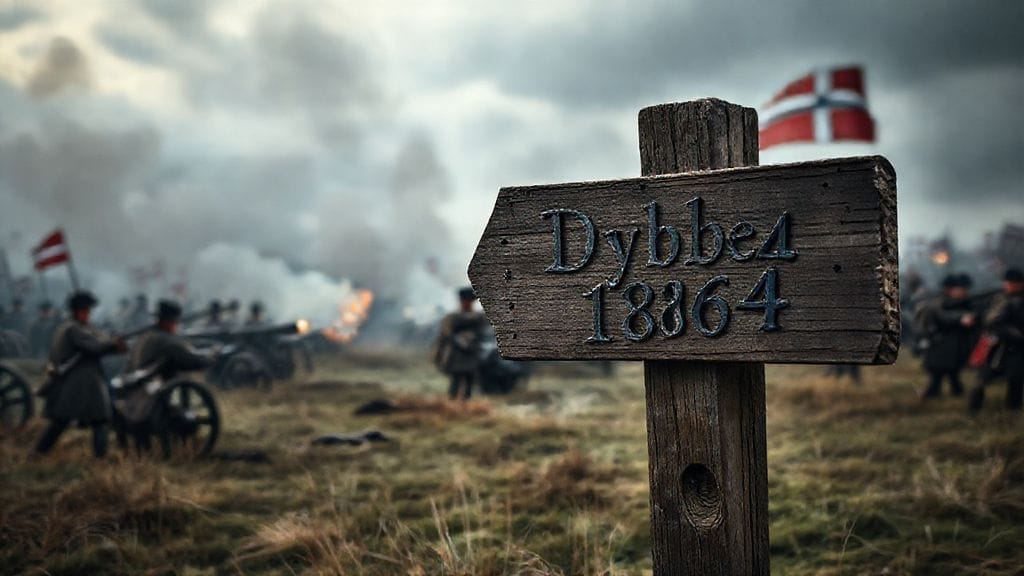
At the break of day on April 18, 1864, a thick veil of winter mist clung stubbornly to the rolling hills near Dybbøl, a small town perched in southern Denmark. The air was dense with an unnatural stillness, a tension that could be almost tasted. Somewhere in the distance, an ominous rumble stirred—the deep, thunderous roll of cannon fire. Smoke curled skyward from broken ramparts, darkening the pale light. On these battered fields, the fate of a nation was about to be decided in blood and iron.
For the Danish defenders entrenched within the redoubts, the coming hours were a crucible. They stood weary but unyielding, shadows flickering through trenches carved into the earth. Every heartbeat echoed the thundering march of Prussian and Austrian soldiers prepared to storm their lines. This was no ordinary battle; it was a trial of will and identity, where the future of a kingdom hung by the thinnest of threads.
2. Denmark on the Brink: A Kingdom’s Fragile Fate
The mid-19th century placed Denmark in a precarious position—not just geographically but politically. With a relatively small population and limited military resources, the country was locked in an existential struggle for survival. The Danish monarchy grappled with competing nationalisms, economic challenges, and the relentless tug of its larger neighbors.
Southern Denmark—particularly the duchies of Schleswig and Holstein—was a cauldron of competing claims and cultural tensions. These territories were home to both Danish and German-speaking populations, and their sovereignty was fiercely disputed. For Danes, maintaining control of Schleswig was a matter of national pride and survival; for Prussia and Austria, it was about consolidating power on the path to German unification.
3. The Rise of Prussia and Austria: Architects of German Unity
During this era, two rising German powers sought to redefine the map of Europe. Prussia, under the calculated and iron-willed Otto von Bismarck, aimed to unify the myriad German states under Prussian dominance. Austria, the aging but still formidable imperial force, was determined to maintain influence over the German Confederation.
These ambitions set the stage for conflict. The duchies of Schleswig and Holstein became prize territories in a chess game between these powers. A combination of nationalist fervor, political maneuvering, and diplomatic failures lit the fuse for what would erupt into the Second Schleswig War.
4. Clashing Ambitions: Causes Behind the War of 1864
The War of 1864 was far from a spontaneous outburst. It was the eruption of decades of tension fueled by nationalist ideologies clashing with dynastic claims. The root cause lay in the Schleswig-Holstein Question—a complex dispute over who legitimately ruled these duchies, which had long-standing ties to both Denmark and the German Confederation.
Denmark’s attempt in 1863 to integrate Schleswig more firmly into the Danish kingdom through the November Constitution was seen as a direct provocation by Prussia and Austria. This move violated previous agreements and threw diplomatic efforts into chaos, ultimately pushing the opposing powers towards military confrontation.
5. The Schleswig-Holstein Question: A Pandora’s Box
The history of Schleswig and Holstein is a labyrinthine saga in itself. Both duchies were under the Danish crown but possessed their particular legal status and strong German cultural presence. Holstein was a member of the German Confederation, while Schleswig was a Danish fiefdom—yet the borders and loyalties were blurred.
Nationalist movements flourished on both sides. The German-speaking population, backed by the Confederation, sought liberation from Danish rule, while Danish intellectuals and politicians viewed Schleswig as inseparable from Denmark’s national identity. This “question” was a Pandora’s box of ethnic rivalry, legal disputes, and conflicting allegiance, igniting the fires that would engulf Dybbøl.
6. The Danish Defense: Fortifying Dybbøl’s Earthworks
Recognizing the strategic importance of Dybbøl—a key defensive position just north of the city of Sønderborg—the Danes undertook intense fortifications. The battlefield was transformed with seven redoubts, strongholds of earth and timber surrounded by trenches and artillery placements.
General Georg Gerlach oversaw the Danish defense, preparing his troops for what he anticipated would be a brutal assault. Despite being outnumbered by the combined forces of Prussia and Austria, the Danes relied on their intimate knowledge of the terrain and the disorder sown by recent political decisions to mount a desperate stand.
7. The Opposing Forces: Commanders, Armies, and Strategies
On one side stood approximately 10,000 Danish soldiers, battle-hardened but limited in numbers. Their opponents were a coalition army of over 30,000 troops, led by Prussian General Friedrich von Wrangel and Austrian commanders, bolstered by the technological superiority of the Prussian needle gun and artillery.
The Prussian strategy emphasized a combination of sustained artillery bombardment followed by coordinated infantry assaults to overwhelm Danish defenses. In contrast, the Danish contingent intended to use their earthworks to blunt the enemy’s advance, making any attack a costly gamble.
8. The Calm before the Storm: Days Leading to the Battle
In the days leading to April 18, tension simmered palpably. Reconnaissance reports, intermittent skirmishes, and uneasy negotiations played out in the shadow of the impending conflict. Civilians in Dybbøl and surrounding villages evacuated or hunkered down, aware that violence loomed.
Meanwhile, soldiers exchanged nervous glances, shared whispered prayers, and wrote letters home that none believed they might read again. The harsh Danish spring winds carried an eerie sense of finality: the quiet before the thunder.
9. April 18, 1864: The Opening Barrage and Artillery Duel
At dawn, the battle ignited in a deafening crescendo. The Prussians unleashed a concentrated artillery barrage that pounded the Danish redoubts relentlessly. For hours, smoke and dust swallowed the landscape as grenades exploded and earth trembled.
Danish artillery tried to counter, but their guns were fewer; their ammunition, precious. The relentless shelling was designed not merely to inflict casualties but to weaken morale and dismantle the fortifications—eroding the physical and psychological defenses alike.
10. Infantry Assaults and the Human Fury of War
When the Prussian infantry stormed forward, the battlefield erupted into chaos. The crackling of rifles, cries of anguish, and the clash of bayonets broke the morning’s strange quiet. The defenders fought with desperation born of homeland protection and the dread of defeat.
Men clung to the redoubts with staggering courage. But faced with overwhelming numbers and firepower, the Danish defense began to stagger. Soldiers on both sides experienced the visceral horror of close combat—where every inch taken came at the price of human suffering.
11. The Fall of the Redoubts: Determination and Desperation
One by one, the Danish redoubts fell to the onslaught. The final bastion succumbed in the late afternoon, signaling the collapse of the Danish line. General Gerlach’s orders were clear: preserve what remained, retreat, and regroup.
The fall of Dybbøl was a shattering blow. The redoubts stood as symbols of Danish tenacity, and their loss was felt deeply not just on the battlefield but across a nation watching their country’s fate unravel.
12. The Danish Retreat: A Kingdom’s Sorrowful Hour
The chaotic withdrawal southward was marked by exhaustion and grief. Soldiers retreated over fields scarred by artillery craters and strewn with the fallen. The Danish command faced the grim reality that their kingdom’s hold on Schleswig was slipping beyond recovery.
The civilian population, having witnessed the devastation and experienced the occupation’s hardships, bore wounds that would linger long beyond the cessation of firing. The retreat was not just a military maneuver; it was a national trauma.
13. Voices from the Trenches: Testimonies of Soldiers and Civilians
Letters and diaries unearthed from that cold spring reveal the human dimension behind the battle’s dates and statistics. A young Danish soldier wrote, “I pressed my body against the frozen earth, prayers caught in my throat as the shells screamed overhead. We fought for every breath beneath the smoke.”
A local farmer’s wife recalled, “The earth shook, and my home was no longer safe. Yet, the courage of those men defending our soil filled us with bitter pride.”
These testimonies breathe life into the annals of history, reminding us that behind every cannon blast stood a heart beating with hope and fear.
14. The Aftermath: Casualties and Consequences on Danish Soil
The Battle of Dybbøl resulted in heavy casualties—estimates suggest about 3,000 Danish and nearly 3,600 Prussian and Austrian soldiers were killed, wounded, or missing. The battlefield was a somber graveyard strewn with the silent echoes of sacrifice.
More profoundly, the loss marked the decisive turning point in the Second Schleswig War, leading directly to Denmark’s relinquishment of Schleswig, Holstein, and Lauenburg. The Treaty of Vienna in October 1864 sealed this painful chapter, redrawing borders and rewriting destinies.
15. Political Reverberations: Shaping the Future of Scandinavia
The battle’s consequences rippled far beyond the fields of Dybbøl. Denmark’s defeat symbolized not only a loss of territory but a seismic political realignment in northern Europe. The Danish kingdom turned inward, beginning a long process of nation-building and redefining identity amid diminished borders.
For Prussia, Dybbøl was a step towards dominance, fueling confidence that would culminate in German unification under the Prussian crown just six years later. Austria, meanwhile, faced its own challenges, as the shifting landscape foreshadowed the Austro-Prussian War to come.
16. The Battle in Memory: Monuments, Myths, and National Identity
Dybbøl entered the Danish collective memory as a symbol of valor and tragic resistance. The Dybbøl Mølle (the Dybbøl Mill), partially destroyed during the battle, became an enduring monument to sacrifice.
Memorial ceremonies, poetry, and artworks nurtured a narrative of heroic defense against overwhelming odds. Yet, this mythologizing also preserved a somber lesson: the costs of national ambition and the fragility of sovereignty.
17. Lessons from Dybbøl: Military Innovation and Tactical Analysis
Military historians often revisit the Battle of Dybbøl as a study in industrial-age warfare. The Prussian use of the breech-loading needle gun and advanced artillery demonstrated the shift in battlefield technology and tactics.
The battle underscored the importance of logistics, coordinated artillery and infantry assaults, and the psychological impact of sustained bombardment. For Denmark, the defeat prompted a military reassessment and modernization effort that would shape future defense policies.
18. The Greater Conflict: How Dybbøl Paved the Way to German Unification
Dybbøl’s significance transcended regional conflict. It was a pivotal moment in the sweep of 19th-century European nationalism and statecraft.
By sidelining Denmark, Prussia and Austria consolidated their hold over the duchies, setting precedents for future acts of political dominance. The battle was a prelude to the eventual unification of Germany, the ascendance of Prussia as a continental power, and the reshaping of Europe’s balance of forces.
19. International Reactions: Europe Watches a Kingdom Fall
The world watched with a mixture of apprehension and fascination. Britain and France, traditionally interested in maintaining a balance of power, observed cautiously but refrained from direct intervention.
The conflict at Dybbøl was viewed as a test of emerging German ambitions, a bellwether of the 20th century’s great power struggles. Journalists of the time described the scene with a blend of sympathy and analysis, capturing public imagination across the continent.
20. Literature and Art Inspired by Dybbøl’s Sacrifice
Dybbøl’s dramatic story found expression in literature and art. Danish poets memorialized the courage of the fighters, while painters depicted the vivid chaos and grief of battle.
These cultural artifacts enriched the national narrative, transforming a military defeat into a poignant reminder of resilience and identity. The echoes of Dybbøl would inspire generations to reflect on the costs and meaning of nationhood.
21. The Battle’s Legacy in Modern Denmark
Today, Dybbøl is a cherished part of Denmark’s historical landscape. Museums, reenactments, and educational programs ensure that the story of April 18, 1864, remains alive.
The battle serves as a touchstone in conversations around patriotism, European conflicts, and the evolving nature of sovereignty. It also resonates with broader themes of courage in the face of overwhelming odds—a universal narrative of human endurance.
Conclusion
The Battle of Dybbøl is far more than a faded date in the annals of history. It was a defining moment when courage met catastrophe, a small nation’s heart was tested against the tides of empire and ambition. The thunderous roar of cannon fire that swept over the Danish hills in April 1864 carried the dreams and fears of thousands.
Though Denmark suffered defeat and territorial loss, the spirit forged on those embattled slopes endured, shaping the country’s identity and reminding the world of the human cost embedded in any nation’s quest for survival. Dybbøl teaches us that history is never merely about dates or borders—it is about people, passion, and the profound resilience of the human spirit.
FAQs
Q1: What was the primary cause of the Battle of Dybbøl?
A1: The battle was primarily caused by disputes over the duchies of Schleswig and Holstein, tensions inflamed by Denmark’s 1863 attempt to integrate Schleswig more closely, which provoked military intervention by Prussia and Austria.
Q2: Who were the main commanding officers during the battle?
A2: The Danish forces were led by General Georg Gerlach, while the Prussian army was commanded politically by Otto von Bismarck with field leadership from General Friedrich von Wrangel, alongside Austrian commanders.
Q3: How significant was technology in the outcome of the battle?
A3: Very significant. The Prussian’s use of the breech-loading needle gun and superior artillery gave them a crucial advantage in firepower and rate of fire over the Danish defenders.
Q4: What were the immediate political consequences for Denmark?
A4: The defeat led to the loss of Schleswig, Holstein, and Lauenburg, dealt a heavy blow to Danish sovereignty, and prompted a period of national re-evaluation and focus on internal development.
Q5: How did the battle influence German unification?
A5: By securing the duchies, Prussia solidified its position in northern Germany, setting the stage for the eventual unification of Germany under Prussian leadership in 1871.
Q6: Are there memorials dedicated to the Battle of Dybbøl?
A6: Yes, including the preserved Dybbøl Mill and multiple monuments and museums, which serve as focal points for remembrance and education.
Q7: How is the Battle of Dybbøl remembered in Danish culture?
A7: It is remembered as a symbol of national courage and sacrifice, commemorated through literature, art, and annual ceremonies reflecting on the cost of war and patriotism.
Q8: Did other European powers intervene during the conflict?
A8: No direct military intervention occurred, although Britain and France observed closely, concerned about the balance of power but ultimately refraining from involvement.