Table of Contents
- The Dawn of a New Era: July 1, 1867, Berlin
- The Legacy of Fragmented Germany: A Land Divided
- The Rise of Prussia: Ambitions of a Kingdom
- Bismarck’s Vision: Architect of German Unity
- The Austro-Prussian War: Redrawing the German Map
- Negotiating Power: From Confederation to Federation
- The Birth of the North German Confederation: Structures and Symbolism
- Berlin as the Political Heart: The Capital of Change
- The Constitution of 1867: Balancing Authority and Liberty
- Military and Economic Integration: Tools of Consolidation
- The Role of Smaller States: Allies or Pawns?
- Counterpoints and Opposition: Voices of Resistance
- Social and Cultural Underpinnings: A Shifting Identity
- The Confederation's International Significance
- Echoes of the Confederation in Future German Unification
- The Road to the German Empire: Prelude to 1871
- Economic Growth and Industrialization: Foundations of Power
- Political Repercussions Beyond German Borders
- Lessons in Diplomacy and Statecraft
- The Confederation’s Enduring Legacy in Modern Germany
On a crisp summer morning in Berlin, July 1, 1867, a new chapter in European history quietly unfolded. Beneath the growing shadow of great powers and within the imposing precincts of the Prussian capital, the North German Confederation was officially established—a bold experiment in uniting fragmented territories under a single political, military, and economic framework. The air was dense with anticipation, hope, and the latent tension of a continent redefining its future. Yet few could foresee that this relatively obscure confederation would set the stage for the emergence of a unified Germany, forever altering the political landscape of Europe.
The Dawn of a New Era: July 1, 1867, Berlin
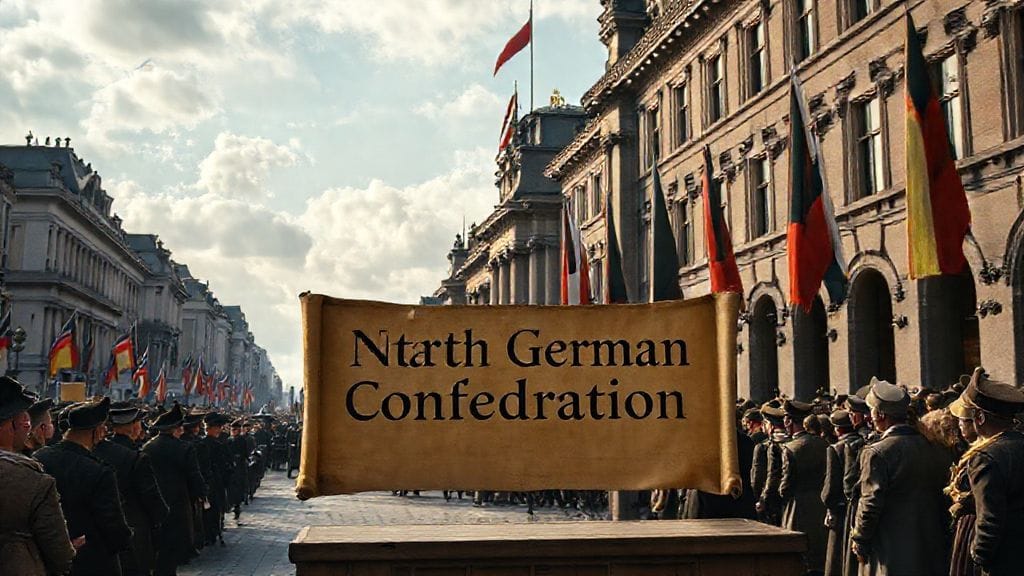
Imagine the scene in Berlin on that summer day: the clatter of horse-drawn carriages along Unter den Linden, the stately halls of the Reichstag preparing to host the representatives of northern German states. Delegates, diplomats, and soldiers from a patchwork of kingdoms, duchies, and free cities gathered with the shared aim of formalizing a collective destiny. The creation of the North German Confederation was a manifestation of political will steered by realpolitik and nationalistic fervor, with Otto von Bismarck at its epicenter. It was a moment thick with symbolism—of old rivalries put aside for a larger cause and of the nascent stirrings of German identity forging a new political reality.
The Legacy of Fragmented Germany: A Land Divided
For centuries, what we now know as Germany was not a single nation but a constellation of hundreds of semi-autonomous states, principalities, and free cities loosely bound under the Holy Roman Empire—and later under a diminishing German Confederation. The legacy of fragmentation was one of constant competition, overlapping loyalties, and disjointed economies. This medieval mosaic had languished under the pressures of nationalism bursting forth in the 19th century. Philosophers, poets, and politicians alike lamented the division while dreaming of unity. Yet the old order was deeply entrenched, guarded by traditional sovereignties wary of any centralizing force that might eclipse their authority.
The Rise of Prussia: Ambitions of a Kingdom
If unity was to be pursued, it would have to come from somewhere—and that place was Prussia. By the mid-19th century, Prussia had dramatically expanded both its territory and influence, standing as the most militarily powerful and economically robust among German states. Its disciplined army, efficient bureaucracy, and growing industrial base distinguished it from its competitors. Chancellor Otto von Bismarck, appointed in 1862, epitomized Prussian ambition—his relentless drive to consolidate power through shrewd diplomacy and calculated conflict would reforge Germany’s political map.
Bismarck’s Vision: Architect of German Unity
Bismarck’s approach to unity was unapologetically pragmatic, grounded in realpolitik with a firm hand on power and influence. He was not an idealist of romantic nationalism; instead, he operated at the intersection of power, pragmatism, and opportunism. By provoking conflicts selectively, he weakened rivals and coaxed—or coerced—smaller states into alliance. His vision was a German nation under Prussian hegemony, a federation binding northern states with shared interests and a collective military front. He famously declared that “the great questions of the day will not be settled by speeches and majority decisions… but by blood and iron.”
The Austro-Prussian War: Redrawing the German Map
In 1866, Bismarck made his move. The Austro-Prussian War was brief but decisive, lasting just seven weeks. It dismantled Austria’s influence over German affairs and paved the way for Prussian dominance. The Treaty of Prague not only excluded Austria from German political structures but also allowed Prussia to absorb or bind several northern German states under its wing. This military and diplomatic victory was both a turning point and a necessary prelude for the establishment of the North German Confederation.
Negotiating Power: From Confederation to Federation
In the aftermath of conflict, it was clear that a new political structure was needed—one that could balance the sovereignty of member states with effective centralized authority. The North German Confederation was conceived as a federal state with a constitution, a common parliament (the Reichstag), and a Bundesrat representing the member states’ governments. Prussia held a dominant voice but needed the cooperation of smaller states to maintain stability. The negotiations were intricate and tense, reflecting centuries-old mistrust and competing ambitions. Yet through careful diplomacy, compromise, and political acumen, Bismarck engineered a constitutional framework that allowed the confederation to take shape.
The Birth of the North German Confederation: Structures and Symbolism
The constitution of 1867 created a unique political entity—a confederation that was more than a mere alliance but less than a fully unified nation-state. It centralized military command and foreign policy while preserving state autonomy in many internal matters. This new framework reflected a hybrid political reality: federalism blended with strong central leadership, largely orchestrated by Prussia. Symbols of unity, such as a standardized currency and postal service, began knitting together the economic and administrative fabric of the new confederation. Though many viewed this as merely a stepping stone, it was in many ways a revolutionary reordering of power.
Berlin as the Political Heart: The Capital of Change
The choice of Berlin as the capital was no accident. It represented Prussia’s ambition and set the tone for the confederation’s future. The city became a nerve center of political strategy and power consolidation. As parliamentarians convened and statesmen negotiated, Berlin transformed itself from a regional metropolis into the focal point of German political life. The Prussian palace, government ministries, and burgeoning media all converged to herald a new era, casting shadows over centuries-old rivalries and aspirations.
The Constitution of 1867: Balancing Authority and Liberty
The constitution established the Reichstag, a parliament elected by universal male suffrage—a significant modernizing feature—even as real power remained largely in the hands of the Bundesrat and the Confederation’s president (the King of Prussia). This delicate balance reflected Bismarck’s understanding of power: he sought legitimacy through representative institutions to placate popular demands, while ensuring control remained firmly in the hands of the monarchy and its military. This tension between democratic expression and authoritarian command would characterize German politics for decades to come.
Military and Economic Integration: Tools of Consolidation
Key to the confederation’s strength was the integration of military forces and economic systems. The military alliance guaranteed a unified defense strategy, allowing for coordinated mobilization and command under Prussian leadership. Meanwhile, economic unification—specifically through Zollverein customs union and standardized currency—fueled industrial expansion and facilitated internal trade. This economic cohesion created one of Europe’s largest markets, attracting investment, innovation, and rapid urbanization.
The Role of Smaller States: Allies or Pawns?
While Prussia dominated, the smaller northern German states found in the Confederation both protection and limitation. Some embraced the confederation as a means to elevate their international status, others feared the loss of sovereignty. Kingdoms like Saxony and the grand duchy of Mecklenburg maintained their own courts and traditions but had to navigate the realities of Prussian hegemony. Their participation was essential for legitimacy, yet their autonomy was circumscribed—a dynamic that bred both cooperation and resentment.
Counterpoints and Opposition: Voices of Resistance
Not all welcomed the confederation’s rise. Austria, excluded from German affairs, nursed bitter grievances and sought to undermine Prussia’s ascendancy. Within the member states, liberal nationalists, conservatives, and socialists debated the direction of German unity, often sharply withering Bismarck’s authoritarian tendencies. Catholic states to the south watched warily, fearing the Protestant-dominated north would subsume their identities. This opposition underscored the fragility of the new order and hinted at future conflicts awaiting Germany.
Social and Cultural Underpinnings: A Shifting Identity
Beyond politics and economics, the North German Confederation fostered a new sense of German identity. Print culture flourished; newspapers, pamphlets, and literature disseminated ideas of nationhood and modern citizenship. Public rituals, military parades, and symbols of unity entwined with everyday life. Yet, this emergent identity was still evolving, contested by regional dialects, religious divides, and class disparities. The confederation acted as a crucible forging national consciousness—sometimes unevenly, sometimes painfully.
The Confederation's International Significance
The formation of the North German Confederation did not occur in isolation. Europe's conservative monarchies, liberal republics, and emerging empires watched closely. France, under Napoleon III, perceived a growing German power as a threat. Britain regarded the evolving political map with a mix of concern and opportunism. The Confederation signaled a shift in the balance of power—a step toward German dominance that would reverberate across alliances and diplomatic relations.
Echoes of the Confederation in Future German Unification
Though the North German Confederation was short-lived—it lasted only until 1871—it was a critical precursor to the German Empire. Its frameworks, experiences, and personnel would be directly embedded into the imperial constitution after the southern German states joined following victory in the Franco-Prussian War. The confederation was a proving ground for governance, diplomacy, and military cooperation that laid the groundwork for unity on a national scale.
The Road to the German Empire: Prelude to 1871
The years following 1867 saw the Confederation navigate a path from a regional federation to a nation-state. The Franco-Prussian War (1870-1871) became the catalyst for the final unification of Germany. Victorious and emboldened, the German princes proclaimed the German Empire in the Hall of Mirrors at Versailles, enshrining the political work begun in Berlin four years earlier. The Confederation’s establishment was therefore not an endpoint but a vital milestone on the road toward empire.
Economic Growth and Industrialization: Foundations of Power
The Confederation coincided with—and helped accelerate—the industrial revolution in northern Germany. Railroads linked the myriad states, factories burgeoned in Essen and Mannheim, and new technologies transformed daily life. This economic dynamism fueled the Confederation’s political stability and military prowess. The economic integration fostered within its borders set the stage for Germany’s emergence as a global industrial power by the dawn of the 20th century.
Political Repercussions Beyond German Borders
The new order tested old alliances and rivalries. Austria’s exclusion reconfigured Central Europe; Russia watched for opportunities and threats; France’s defeat realigned its strategy for decades. The Confederation’s very existence demonstrated the potency of nationalism combined with military modernization. It forced other powers to reconsider their diplomatic postures and foreshadowed the dramatic conflicts to come that would engulf the continent.
Lessons in Diplomacy and Statecraft
Bismarck’s orchestration of the Confederation remains a masterclass in 19th-century diplomacy. His ability to manipulate alliances, provoke wars, and engineer political structures combined idealism for national unity with ruthless pragmatism. The Confederation showed how constitutions could be crafted as tools of power, how military might could anchor political ambition, and how shared economic interests could bind diverse polities. These lessons resonate in the study of nation-building even today.
The Confederation’s Enduring Legacy in Modern Germany
Though the Confederation dissolved officially with the proclamation of the German Empire, its imprint is indelible. It introduced political structures, legal frameworks, and national symbolism that continue to influence Germany’s governance. The nuanced balance it struck between federalism and centralization echoes in the Federal Republic of Germany’s modern constitution. Above all, the Confederation marked a decisive moment where fragmented Germany took a definitive step towards unity, modernity, and global significance.
Conclusion
The establishment of the North German Confederation on July 1, 1867, was far more than an administrative restructuring; it was the crucible of German unity—the moment when a fragmented collection of states began transforming into a cohesive political entity. Amid the grandeur of Berlin’s palaces and the quiet determination of its statesmen, a vision was realized that would ripple across time. This confederation carved the path toward the German Empire and ushered Germany into the modern era, setting the stage for triumphs and tragedies alike. Reflecting on this pivotal event invites us to appreciate the complexity of nation-building—the interplay of power, identity, conflict, and compromise woven into the tapestry of history.
FAQs
Q1: What was the North German Confederation, and why was it established?
The North German Confederation was a federal political entity formed in 1867, uniting northern German states under Prussian leadership. It was established following Prussia’s victory over Austria to consolidate power, coordinate defense, and lay the groundwork for German unification.
Q2: Who was the key figure behind the creation of the Confederation?
Otto von Bismarck, the Prussian Chancellor, was the architect of the Confederation. His strategic diplomacy and realpolitik approach enabled the formation of a unified northern German state.
Q3: How did the Austro-Prussian War influence the Confederation’s creation?
The war decisively ended Austrian influence in German affairs. Following Prussia’s victory, Prussia was able to assert dominance over northern German states, facilitating their union into the Confederation.
Q4: What powers did the North German Confederation hold compared to its member states?
The Confederation centralized military command, foreign policy, and economic integration, while member states retained authority over local governance, education, and internal matters, creating a federal system.
Q5: Why was Berlin chosen as the capital of the Confederation?
Berlin, as Prussia’s capital, was the political and symbolic center of power. Choosing it underscored Prussia’s dominant role and provided an established administrative infrastructure.
Q6: How did the Confederation pave the way for the German Empire?
The Confederation’s political and military structures were incorporated into the later German Empire, created in 1871 after southern German states joined following the Franco-Prussian War.
Q7: What opposition did the Confederation face?
Austria opposed being excluded; some smaller German states feared loss of autonomy; socialists and liberals challenged Bismarck’s authoritarian style; southern German Catholic states remained cautious.
Q8: What was the international impact of the North German Confederation?
It altered the European balance of power, challenged French supremacy, diminished Austrian influence, and alerted other powers to the rising strength of a united Germany.