Table of Contents
- Dawn of a New Era: The Proclamation of the Meiji Restoration
- The Last Days of the Tokugawa Shogunate
- The Ideals Behind the Restoration: Sonnō jōi and Imperial Reverence
- The Players in the Shadows: Key Figures of the Meiji Restoration
- Kyoto, January 3rd, 1868: A City Ablaze with Change
- The Imperial Court’s Role: Symbol and Catalyst
- The Fall of Edo and the Shogun’s Retreat
- From Feudal Fragmentation to Centralized Power: Political Transformations
- The Challenge of Modernization: Dismantling the Old Order
- The Role of the Samurai in Transition: Relevance and Resistance
- Foreign Pressure and the Urgency for Reform
- Economic Realities and the Push for Industrialization
- Social Upheavals: From Rigid Class Systems to National Unity
- The Charter Oath: Vision of the New Japan
- The Military Revolution: From Swords to Rifles
- Cultural Renaissance Amidst Political Upheaval
- The Human Cost: Conflicts, Loyalties, and Lost Ways
- Consequences for Asia and the World: A Rising Power Awakens
- Preservation and Erasure: Memory of the Tokugawa Era
- The Meiji Restoration’s Legacy in Modern Japan
- Reflections on Revolution: Lessons from 1868
- Conclusion
- Frequently Asked Questions (FAQs)
- External Resource
- Internal Link
Dawn of a New Era: The Proclamation of the Meiji Restoration
The cold winds of January 3rd, 1868, carried more than the bitter chill of a Kyoto winter. On that day, amid the flickering torchlight and whispered incantations within the ancient imperial palace, the stones of a thousand-year-old city bore silent witness to the birth of modern Japan. The Meiji Restoration was proclaimed—an event whose reverberations would tear through the fabric of society, politics, and culture, upending centuries of feudal order and setting forth Japan on an unprecedented journey toward transformation and power.
Kyoto, once the serene heart of imperial authority, now found itself at the epicenter of a tempestuous upheaval. Courtiers, samurai, and emissaries gathered with trembling anticipation, aware that the proclamation was more than words—it was a rupture, a commitment to the assertion of the emperor's restored sovereignty after over two centuries of Tokugawa shogunate rule. The silent corridors echoed with uncertainty, hope, and fear. This was no mere declaration but the clarion call that Japan’s fate would be irrevocably altered.
But this proclamation—brief, ceremonial, powerful—was the culmination of complex forces, ideologies, and struggles that had been building for decades. To understand this watershed moment is to trace its roots in the twilight of the shogunate, the external shocks from Western powers, and the fiery ambitions of reformers determined to wrest Japan free from its past.
The Last Days of the Tokugawa Shogunate
By the mid-19th century, the Tokugawa bakufu, the military government established in 1603, ruled with strict order and a rigid social hierarchy known as the shinokosho system. For over 250 years, peace—Pax Tokugawa—was maintained through isolation and internal control. Yet beneath this calm veneer simmered contradictions: economic strain, dissatisfaction among samurai, peasant unrest, and a rigid system increasingly at odds with the needs of an evolving world.
The arrival of Commodore Matthew Perry’s “Black Ships” in 1853 shattered Japan’s isolation. The unequal treaties that followed exposed Japan’s vulnerability and humiliation, serving as a brutal wake-up call. The Tokugawa shogun, Tokugawa Yoshinobu, faced dilemmas beyond any challenge before: how to modernize without destabilizing the social order, how to confront foreign imperialists without losing sovereignty.
The bakufu’s weakening grip was exacerbated by factions within the samurai class. Provinces such as Satsuma, Chōshū, and Tosa began to form alliances, fueled by a potent mixture of patriotism, resentment, and reformist zeal. Their slogan “Sonnō jōi” — “Revere the Emperor, Expel the Barbarians”—crystallized into a rallying cry for change. Yet, ironically, many reformers would come to embrace Western technology and ideas to strengthen Japan under imperial rule.
The Ideals Behind the Restoration: Sonnō jōi and Imperial Reverence
At the spiritual core of the Restoration sat the emperor—not just a political figurehead but a divine descendant of the sun goddess Amaterasu. The mythology surrounding the emperor was intertwined with the very identity of Japan. However, the emperor had been relegated to a ceremonial role for centuries, as real power rested with the shogunate in Edo (modern Tokyo).
The Restoration was fundamentally a struggle to reclaim the emperor’s sovereignty and dignity. “Sonnō jōi” was both a nationalist and a reactionary ideology. It invoked Japan’s proud history to reject the foreign influence and corruption represented by the Tokugawa regime, claiming the need to “expel the barbarians.” Yet this ideological purity masked an emerging pragmatism as leaders realized Japan’s survival required mastery of Western science, industry, and government.
The tension between tradition and modernity, purity and practicality, would drive the Reformers to unleash profound transformations that redefined what it meant to be Japanese.
The Players in the Shadows: Key Figures of the Meiji Restoration
Behind closed doors and across hidden meetings, extraordinary individuals shaped the trajectory of the Restoration. Figures such as:
- Emperor Meiji (Mutsuhito): The young emperor, barely 15 at proclamation, imbued with symbolic power that reformers harnessed to unify Japan’s disparate forces.
- Saigō Takamori: The samurai from Satsuma, emblematic of the old warrior spirit but open to reform, whose leadership would be immortalized as both revolutionary and tragic.
- Kido Takayoshi: From Chōshū, a skilled strategist and diplomat who pushed for the overthrow of the bakufu and modernization alongside loyalty to the emperor.
- Ōkubo Toshimichi: Visionary statesman and reformer determined to dismantle feudal structures and impose centralized rule.
- Tokugawa Yoshinobu: The last shogun, whose decision to resign power would shape the peaceful yet momentous transition.
These men, among others, navigated treacherous political waters, often balancing ideals, personal ambitions, and the urgent demands of survival.
Kyoto, January 3rd, 1868: A City Ablaze with Change
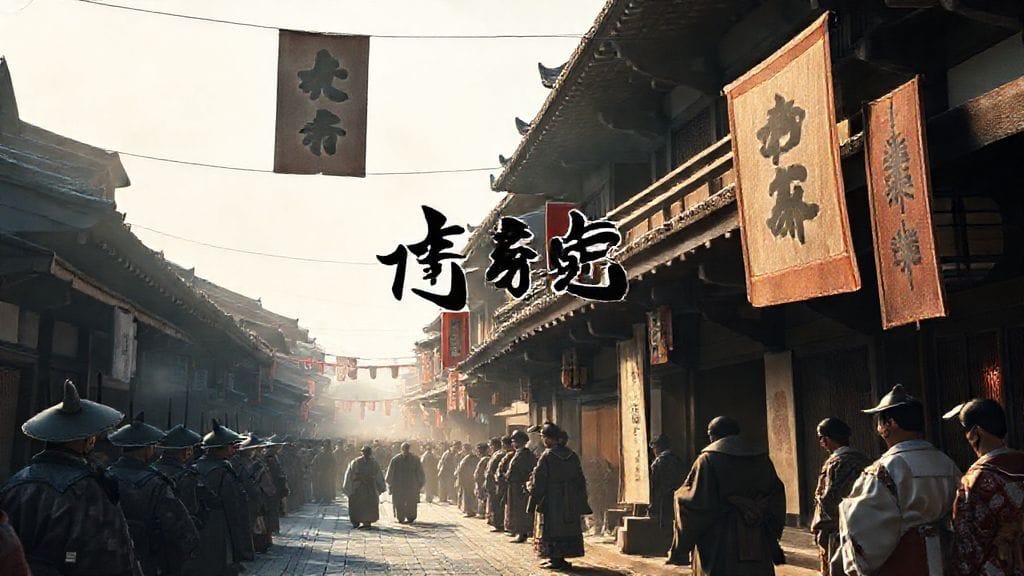
Kyoto’s ancient temples and narrow streets, normally hushed with reverence, buzzed with a markedly different energy on January 3rd. On this day, the Imperial Restoration was formally proclaimed from the imperial court, declaring the restoration of imperial rule and signaling the end of the Tokugawa shogunate’s decades-long dominance.
This proclamation was not a mere ceremony; it was a declaration of intent that cut through decades of political inertia and set into motion a cascade of events: mobilization of armies, alliances forged and broken, the eventual capture of Edo, and the march of reforms that would carve the modern Japanese state.
The visual symbolism—the emperor’s edict, the samurai bearing silent witness, the hopeful eyes of nobles and commoners alike—stirred deep emotions. For many, this moment was a promise of renewal and national pride; for others, it was a foreboding sign of irrevocable turmoil.
The Imperial Court’s Role: Symbol and Catalyst
Though largely sidelined for centuries, the imperial court in Kyoto remained the revered heart of Japan’s identity. This restored authority was double-edged. The emperor functioned as a unifying symbol but also as a tool wielded by reformers to legitimize their power grabs.
Court officials, often powerless and impoverished, found themselves thrusted into the limelight. The restoration sought to reanimate the traditional legitimacy of the emperor but tied it firmly to the vision of a centralized modern state.
Yet the court itself was conservative, fragmented, and slow to adapt, realizing that the real forces driving change lay with regional clans and Western-inspired politicians.
The Fall of Edo and the Shogun’s Retreat
Following the proclamation, pressure mounted for the Tokugawa shogun to relinquish control. Tokugawa Yoshinobu, facing superior military forces and political isolation, resigned in November 1867. His withdrawal marked a dramatic but relatively peaceful transfer of power.
Yet the capture of Edo in mid-1868—amidst battles and sieges—was less tranquil. Clashes such as the Battle of Toba–Fushimi saw pro-imperial forces decisively defeat Tokugawa loyalists, marking the end of samurai dominance and heralding the dawn of a new era.
With Edo renamed Tokyo—meaning “Eastern Capital”—the emperor’s seat and Japan’s political center irrevocably shifted.
From Feudal Fragmentation to Centralized Power: Political Transformations
The Restoration toppled a decentralized feudal structure composed of semi-autonomous domains (han) ruled by daimyo. Instead, a modern centralized government was established, uniting Japan under a single authority.
This brought the abolition of the han system, replaced by prefectures administered by centrally appointed governors. A national bureaucracy emerged, inspired by European models. The political landscape tilted toward meritocracy and efficiency, leaving many lords powerless or co-opted.
The emperor, previously a figurehead, became the constitutional sovereign through the Meiji Constitution of 1889, although real power often rested with the oligarchy behind the throne.
The Challenge of Modernization: Dismantling the Old Order
The Meiji government embarked on a whirlwind program of reforms. From education and infrastructure to military and industry, no aspect of society escaped. The samurai class was disbanded, official rank abolished, and swords banned—a dramatic cultural rupture.
Yet modernization bore difficulties. Resistance simmered, especially in rural areas; many samurai felt betrayed and disenfranchised. Still, the government pressed forward, balancing tradition and innovation to consolidate power and foster unity.
The Role of the Samurai in Transition: Relevance and Resistance
The samurai, once the bedrock of Japanese society, found their raison d’être crumbling. The new government’s insistence on conscription and Western military methods challenged their martial monopoly.
While many samurai embraced new roles as bureaucrats, educators, or industrialists, others—like Saigō Takamori—led armed rebellions, most famously the Satsuma Rebellion in 1877. Their downfall symbolized the complete transformation of Japanese society from feudal to modern.
Foreign Pressure and the Urgency for Reform
The Restoration was as much a defensive reaction as an internal revolution. Western powers continued to demand trade and concessions. Japan’s survival hinged on becoming not only independent but capable of standing toe-to-toe with foreign empires.
The government’s embrace of foreign advisors, schools, and technologies brought profound changes but also cultural anxieties. Adopting Western ways while preserving Japanese identity proved a delicate balance.
Economic Realities and the Push for Industrialization
The government launched ambitious programs to build infrastructure—railways, shipyards, telegraph lines—laying the foundations of industrial capitalism. Factories rose, and Zaibatsu financial conglomerates emerged.
Economic prosperity began taking root, drawing peasants and former samurai into new social roles. Yet regional disparities and social tensions remained, and modernization was rarely smooth or egalitarian.
Social Upheavals: From Rigid Class Systems to National Unity
Feudal Japan’s strict hierarchy—samurai, farmers, artisans, merchants—was dismantled. New social classes emerged; mobility increased but often unevenly.
Education reforms promoted literacy and nationalism. The government promoted Shintoism as a unifying ideology, linking emperor worship to national identity. Such changes contributed to a common sense of belonging but also suppressed dissent.
The Charter Oath: Vision of the New Japan
Issued in 1868, the Charter Oath succinctly articulated the Restoration’s aspirations: to establish deliberative assemblies, merit-based governance, open trade, and knowledge acquisition worldwide.
Its visionary, if idealistic, language laid a philosophical framework guiding Japan’s modernization—a promise to open the doors to the world while preserving the nation’s soul.
The Military Revolution: From Swords to Rifles
The newly formed Imperial Japanese Army was based on conscription and modeled after Western armies, particularly Prussia’s. This marked a radical shift from samurai-led militias.
Military modernization played a decisive role in consolidating the Restoration, defending sovereignty, and projecting power. Over decades, Japan grew capable of challenging not only internal rebels but foreign powers.
Cultural Renaissance Amidst Political Upheaval
Despite rapid change, the Meiji era witnessed a flowering of arts and culture. Writers, painters, and intellectuals grappled with the collision of East and West, producing works that questioned identity and modernity.
New educational institutions nurtured a generation both rooted in tradition and conversant with global ideas—a distinctively modern Japanese cultural identity was born.
The Human Cost: Conflicts, Loyalties, and Lost Ways
Beneath triumphant rhetoric lay profound human suffering. Clashes like the Boshin War left thousands dead; traditional ways were lost; entire classes marginalized.
Many samurai faced poverty and disillusionment. Peasants bore new taxes and conscription. Urban workers toiled in factories under harsh conditions.
The Restoration’s promise came at an immense cost borne by people whose stories flicker often at the margins of history.
Consequences for Asia and the World: A Rising Power Awakens
Japan’s rapid modernization stunned neighbors and the West alike. By the turn of the century, the “sleeping giant” had awakened—defeating China in 1895 and Russia in 1905, altering the balance of power in East Asia.
The Meiji Restoration thus was not only Japan’s rebirth but a moment that reshaped global geopolitics, ushering a new era of imperialism, nationalism, and conflict.
Preservation and Erasure: Memory of the Tokugawa Era
The Restoration did not entirely obliterate the past. Many Tokugawa institutions persisted in altered form, and nostalgia for the samurai era endured, expressed in literature and popular culture.
Japan’s memory of the Restoration remains complex: a heroic national founding myth intertwined with loss, sacrifice, and ambivalence about rapid change.
The Meiji Restoration’s Legacy in Modern Japan
More than a century and a half later, the Restoration’s legacy thrives in Japan’s political systems, cultural identity, and international role. The national motto of industriousness, unity, and adaptability hearkens back to Meiji ideals.
Yet debates continue over how modernization balanced tradition and innovation—a question still relevant in Japan’s evolving society.
Reflections on Revolution: Lessons from 1868
The Meiji Restoration demonstrates that revolutions are rarely neat or bloodless. They are complex, laden with contradictions, and shaped by human ambition and emotion.
It illuminates how nations confront crisis: reinterpreting identity, mobilizing heritage, and embracing change while mourning what must be left behind.
Conclusion
The proclamation of the Meiji Restoration on that frigid January day in Kyoto was a moment charged with symbolism, hope, and the roar of impending change. It stands as a testament to the power of visionaries capable of harnessing an ancient identity to forge a new future. Japan’s transformation from a fractured feudal society to a unified modern state was neither inevitable nor smooth but a profound journey marked by courage, compromise, and conviction.
In the rise and fall of the shogunate, in the trumpeting of the emperor’s renewed sovereignty, and in the social upheavals that followed, we witness not just a national rebirth but a human story about resilience, adaptation, and the ceaseless quest for meaning in times of crisis.
The Meiji Restoration remains a beacon—not because it erased the past but because it acknowledged that preserving culture and propelling society forward need not be mutually exclusive. It is a reminder that the future is built on the foundations laid by those who dare to imagine it differently.
Frequently Asked Questions (FAQs)
Q1: What triggered the Meiji Restoration?
The restoration was triggered by internal discontent with the Tokugawa shogunate’s inability to resist Western powers and modernize Japan, combined with rising nationalist movements advocating for the restoration of imperial power as a symbol of unity and reform.
Q2: Who were the main leaders behind the restoration?
Key figureheads include Emperor Meiji, Saigō Takamori, Kido Takayoshi, and Ōkubo Toshimichi, among others from powerful domains like Satsuma and Chōshū, who united to orchestrate political change.
Q3: How did the Restoration affect Japan’s social structure?
It dismantled the rigid class system, abolished the samurai's privileges, and introduced more social mobility. The government promoted national unity through education, military conscription, and shared ideology.
Q4: What role did foreign influence play in the Restoration?
Foreign pressures exposed Japan’s weaknesses, compelling leaders to adopt Western technologies, political concepts, and industrial methods to ensure sovereignty and national survival.
Q5: What were the political outcomes of the Meiji Restoration?
It centralized power under the emperor, abolished feudal domains, established a constitution by 1889, and set Japan on a path to becoming a modern nation-state.
Q6: How is the Meiji Restoration remembered in Japan today?
It is celebrated as a founding moment of modern Japan, symbolizing national resilience and progress, though the complexities and sacrifices of the era are also acknowledged.
Q7: Did the Restoration lead directly to Japan’s imperial expansion?
Indirectly, yes. The modernization and militarization during and after the Restoration laid the groundwork for Japan’s eventual imperial ambitions in Asia.
Q8: What was the significance of the Charter Oath?
The Charter Oath laid out the ideological framework for reform, promoting openness, deliberative governance, equality, and knowledge acquisition to guide Japan’s modernization.