Table of Contents
- The Roar of the Plains: Setting the Stage for Little Bighorn
- A Clash of Worlds: Tensions Brewing in the American West
- The Native Resistances: Sioux, Cheyenne, and Arapaho Spirits Unite
- The U.S. Government’s Campaign: The Push for Control and Settlement
- General George Armstrong Custer: The Man at the Center of the Storm
- The Summer of 1876: March to the Battlefield
- June 25, 1876: The Clash Begins at the Little Bighorn River
- Outnumbered and Surrounded: The Fighting and the Fall of Custer
- Voices from the Camp: Eyewitness Accounts and Native Perspectives
- The Aftermath: Shockwaves Across a Divided Nation
- Political Fallout: Consequences for U.S. Military and Policy
- Myth and Memory: The Battle in American Popular Culture
- The Native American View: A Symbol of Courage and Resistance
- Archeology and Forensics: Decoding the Battlefield’s Secrets
- Little Bighorn in Modern Reflection: Reconciliation and Remembrance
- Conclusion
- FAQs
- External Resource
- Internal Link
The Roar of the Plains: Setting the Stage for Little Bighorn
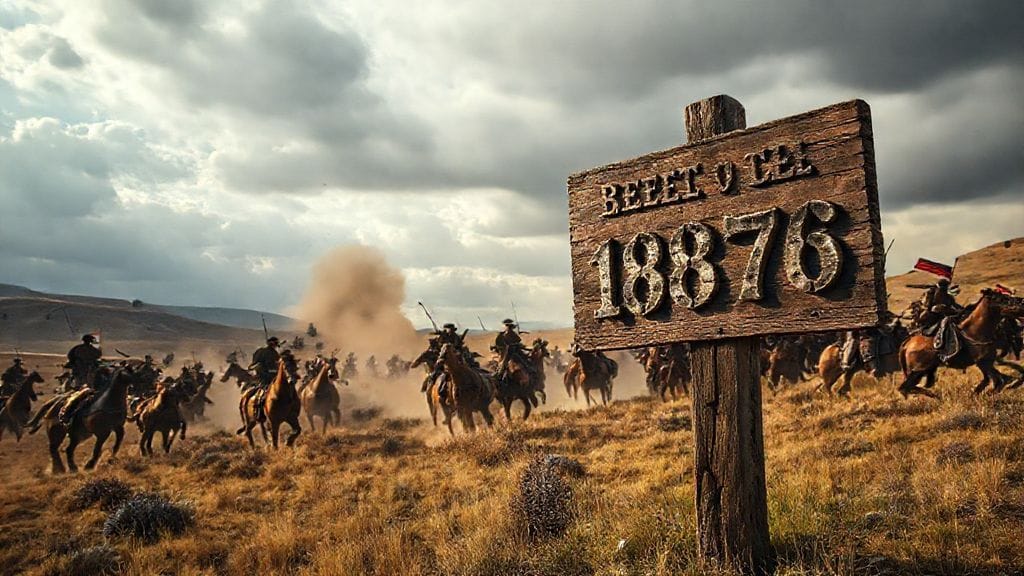
On the morning of June 25, 1876, the vast and rolling plains along the Little Bighorn River in Montana Territory were alive with a tension that seemed to vibrate through the air itself. A river that had long witnessed the passage of buffalo herds, the migration of Native tribes, and the slow, relentless advance of the white settlers now became the stage for one of the most dramatic and fateful moments in the history of the American West. The blare of bugles, the pounding of hooves, and the crack of rifle fire shattered the silence as U.S. cavalrymen under Lieutenant Colonel George Armstrong Custer encountered a coalition of Lakota Sioux, Northern Cheyenne, and Arapaho warriors.
The air was thick with dust and adrenaline; a moment pregnant with destiny unfolding beneath an unforgiving sun. For many of those present—Custer and his men, as well as the Native defenders—it was a crucible that would burn its story indelibly into the pages of history.
A Clash of Worlds: Tensions Brewing in the American West
The Battle of Little Bighorn was not a spontaneous eruption of violence but a cataclysm born of decades of gathering storm. Since the early 19th century, waves of settlers, miners, and soldiers had pressed westward, driven by the promises of new lands and riches. The discovery of gold in the Black Hills in the mid-1870s ignited a particularly volatile fire.
The Black Hills held profound spiritual significance to the Lakota Sioux, described by many as the heart of their universe. Yet, the U.S. government, eyeing the gold deposits and the expansion of railroads, sought to enforce treaties that would confine Indigenous tribes to reservations, robbing them of autonomy, land, and their way of life.
Tensions ranged from diplomatic breakdowns and forced relocations to open hostility. The Native American tribes, fiercely protective of their sacred territory, faced the stark choice between accommodation and resistance.
The Native Resistances: Sioux, Cheyenne, and Arapaho Spirits Unite
Under leaders like Sitting Bull, Crazy Horse, and Rain-in-the-Face, the Sioux, Cheyenne, and Arapaho formed a formidable alliance. Their histories were marked by resilience and an unyielding connection to the land.
Sitting Bull, a holy man and visionary, had long foreseen the violent upheaval ahead and was resolute in protecting his people’s sovereignty. Crazy Horse, a warrior renowned for both his courage and tactical acumen, embodied the martial spirit of the Plains tribes.
Together, they gathered in 1876, drawing strength in numbers and determination at the Little Bighorn valley. The alliance represented more than military might; it was a profound expression of cultural survival.
The U.S. Government’s Campaign: The Push for Control and Settlement
The U.S. government’s military campaign in 1876 was a clear message: enforce order and open the West for settlement at almost any cost. The driving force behind the campaign was the War Department’s belief that decisive military action could quell Native resistance quickly.
Three columns of troops moved in coordinated operations across Montana and Wyoming territories to encircle and subdue the “hostile” tribes. The largest and most famous of these was Custer’s 7th Cavalry, spearheading the northern column.
But the campaign was plagued with miscommunication, underestimation of the Native coalition’s strength, and overconfidence in behind-the-lines intelligence. These miscalculations would prove fatal.
General George Armstrong Custer: The Man at the Center of the Storm
Few figures in American military history are as polarizing or mythologized as George Armstrong Custer. A Civil War veteran, flamboyant and ambitious, Custer carried both admiration and criticism in equal measure.
By 1876, he was eager to prove his mettle. Some saw him as reckless, others as a bold hero. His personal ambition often clashed with the cautious strategies of his commanders. Custer’s decision-making during the campaign—especially his choice to split his regiment—is still debated today.
Whether viewed as a tragic hero or a hubristic fool, his presence underscored the drama of Little Bighorn.
The Summer of 1876: March to the Battlefield
As summer descended upon the Northern Plains, a fierce sun beat down on parched earth. Custer’s regiment moved with urgency. Messages trickled in about large Native encampments along the Little Bighorn River, far larger than intelligence had predicted.
While Custer marched toward what he saw as a decisive engagement, Native warriors, aware of the army’s advance, prepared for confrontation. The movement of both forces was a complex dance of reconnaissance, strategy, and survival.
For Custer’s troops, fatigue, heat, and unfamiliar terrain added layers of difficulty; for the Native coalition, it was a call to defend their families and way of life.
June 25, 1876: The Clash Begins at the Little Bighorn River
In the pre-dawn light, the battle erupted with an impact that stunned both sides. Custer divided his forces into several detachments, intent on surrounding the Native camp. But vastly outnumbered and overwhelmed, his men were plunged into a desperate struggle.
The fighting was brutal and chaotic. Traditional close combat mixing with rifle fire. The Native warriors, fighting on home ground with extraordinary coordination, used guerrilla tactics that left the cavalry fragmented.
Within hours, Custer and nearly 210 of his men were killed; the highest number of casualties for an army unit in a single engagement since the Civil War. The battle was a profound tactical defeat for the U.S. and a haunting victory for Native resistance.
Outnumbered and Surrounded: The Fighting and the Fall of Custer
Custer’s last stand has become legendary. But it was, above all, a narrative of desperation. Isolated on a ridge known today as “Last Stand Hill,” Custer’s forces were encircled by overwhelming numbers.
Survivors recounted scenes of intense combat, courage, fear, and fatal chaos. Native warriors recalled the determination of their enemies but also valued the victory as a defense of their homeland.
The loss devastated U.S. military forces and shocked a nation plunged suddenly into grief and introspection.
Voices from the Camp: Eyewitness Accounts and Native Perspectives
Accounts from survivors—the cavalry troopers, scouts, Native warriors—offer a fragmented but vivid tapestry. Sergeant Major Marcus Reno and Captain Frederick Benteen were among those who escaped the slaughter, their testimonies both poignant and controversial.
Native leaders like Gall and One Bull recalled the battle as a fulfillment of spiritual prophecies and a necessary stand. The voices of women and children, who often came through in oral histories, added layers of human experience to the event—stories of suffering, hope, and resilience.
The Aftermath: Shockwaves Across a Divided Nation
The news of the massacre sent shockwaves across the United States. Newspapers ran sensational headlines; mourning for the fallen mingled with outrage and calls for retribution.
Politically, the battle intensified pressures on the government to suppress Native resistance once and for all. Several tribes who had remained neutral joined the fight, while others faced starvation and exile.
For many Americans, Custer became a martyr; for Native peoples, a symbol both of victory and the continued struggle that lay ahead.
Political Fallout: Consequences for U.S. Military and Policy
In the wake of Little Bighorn, the U.S. military mobilized additional forces and tightened campaigns against the Plains tribes. The Battle became a catalyst for harsh policies, including forced relocation and broken treaties.
Public debate raged over the causes of the defeat, including criticism aimed at military leadership beyond Custer. The tragedy reshaped Indian policy, entrenching attitudes of domination rather than negotiation.
The ramifications extended beyond the battlefield, influencing American expansionism and indigenous relations for decades.
Myth and Memory: The Battle in American Popular Culture
Throughout American history, Little Bighorn has been both romanticized and contested. Custer’s last stand has inspired countless books, films, paintings, and memorials, often blurring fact with myth.
The battle has become a symbol of rugged individualism and frontier bravery in U.S. culture, but also a site of painful reflection about colonialism and injustice.
As historians continue to unpack evidence, the narrative grows richer and more complex, challenging simplistic heroism.
The Native American View: A Symbol of Courage and Resistance
For many Native Americans, especially the Lakota, Little Bighorn endures as a testament to defiance against overwhelming odds. Annual commemorations honor those who fought, embedding the battle deep in cultural memory.
The struggle at Little Bighorn is a living story of identity and survival, reminding new generations of tribal resilience and the high cost of their ancestors’ resistance.
It remains a sacred chapter, intertwined with stories of loss and hope.
Archeology and Forensics: Decoding the Battlefield’s Secrets
In the modern era, scientific research has brought new insights to the 1876 conflict. Archeological digs have uncovered artifacts, bullet casings, and skeletal remains that help reconstruct the battle’s choreography.
Forensic studies challenge earlier assumptions about troop movements, weaponry, and the sequence of events. This evidence breathes fresh life into historical debate, providing a more nuanced picture of the horrors and heroics at Little Bighorn.
Little Bighorn in Modern Reflection: Reconciliation and Remembrance
Today, Little Bighorn stands as a monument not only to conflict but to reconciliation. The site, now a National Monument, serves as a place where descendants of both sides come to remember and reflect.
Educational initiatives, tribal storytelling, and collaborative memorials work towards healing historical wounds. The battle inspires conversations about justice, land rights, and cultural respect.
Its legacy challenges the nation to confront its past honestly and strive for a more inclusive future.
Conclusion
The Battle of Little Bighorn remains one of the most poignant and powerful episodes in American history—a story of clash and courage woven into the vast tapestry of the West. It captures the collision between cultures and the fierce determination of those who fought to defend what they held sacred.
Through the voices of warriors and soldiers, through the dust and gunfire, emerges a deeply human tale: of hopes shattered and dreams burning bright in defiance. It is a reminder that history is never simple, that every triumph carries a shadow, and every loss echoes across generations.
In remembering Little Bighorn, we grasp a moment when destiny hung in the balance—and the spirit of the Plains roared louder than ever.
FAQs
1. What were the main causes of the Battle of Little Bighorn?
The battle stemmed primarily from increasing tensions over U.S. expansion into Native American territories, especially the Black Hills, sacred to the Lakota Sioux. The discovery of gold and broken treaties intensified these conflicts, culminating in armed resistance by the Native coalition.
2. Who were the key Native American leaders at Little Bighorn?
Prominent leaders included Sitting Bull, a spiritual leader; Crazy Horse, a brilliant warrior; and Rain-in-the-Face. Their leadership was instrumental in uniting various tribes and orchestrating the resistance against U.S. forces.
3. Why did General Custer divide his forces during the battle?
Custer split his regiment to flank and encircle the large Native encampment. However, this decision has been widely debated because it left his forces vulnerable to being isolated and overwhelmed by superior numbers.
4. What were the immediate consequences for the U.S. government after the battle?
The defeat shocked the nation and led to increased military campaigns against Native tribes. It also hardened federal policies, resulting in further displacement and attempts to crush indigenous resistance.
5. How is the Battle of Little Bighorn remembered differently by Native Americans and mainstream American culture?
While mainstream culture has often mythologized Custer as a heroic figure, Native Americans view the battle as a significant victory and symbol of resistance. The narratives emphasize cultural survival and honor those who fought to protect their homelands.
6. What recent findings have archeologists made about the battle?
Modern archeological work has uncovered detailed evidence about troop movements, weapon types, and the battle timeline, refining historical understanding and correcting some earlier misconceptions.
7. Is the Little Bighorn Battlefield accessible today?
Yes, the site is preserved as the Little Bighorn Battlefield National Monument, open to visitors for education, reflection, and commemoration.
8. What lessons does the Battle of Little Bighorn offer contemporary society?
The battle teaches the complexities of cultural conflict, the costs of expansionism, and the importance of respecting indigenous sovereignty and history. It encourages dialogue on reconciliation and historical justice.