Table of Contents
- The Dawn of War: April 24, 1877, Bucharest Awakens to Conflict
- The Legacy of Rivalry: Russo-Turkish Tensions in the 19th Century
- The Eastern Question: European Powers and the Ottoman Decline
- Romania’s Precarious Position: Between Empires and Independence
- The Spark Ignites: Russia’s Declaration of War on the Ottoman Empire
- Mobilization and Alliances: The Gathering Storm
- Siege and Strategy: Early Battles Along the Danube
- The Role of Romanian Forces: Determined Allies or Pawns?
- The Ottoman Defenses: Fortresses, Commanders, and Morale
- The Human Cost: Soldiers, Civilians, and the Toll of War
- International Observers and Media Sensation
- The War’s Progression: A Clash of Modernity and Tradition
- The Siege of Pleven: A Turning Point in the Campaign
- Diplomacy in Flux: European Powers Wrestle with the Conflict
- The War’s Endgame: Towards the Treaty of San Stefano
- Consequences for Romania: A Nation Born in Fire
- The Ottoman Empire’s Waning Influence in Europe
- Russia’s Gain and Its Limits: Ambitions vs. Reality
- Cultural Impressions: How the War Shaped Memories and Art
- The Russo-Turkish War’s Legacy in Contemporary Geopolitics
1. The Dawn of War: April 24, 1877, Bucharest Awakens to Conflict
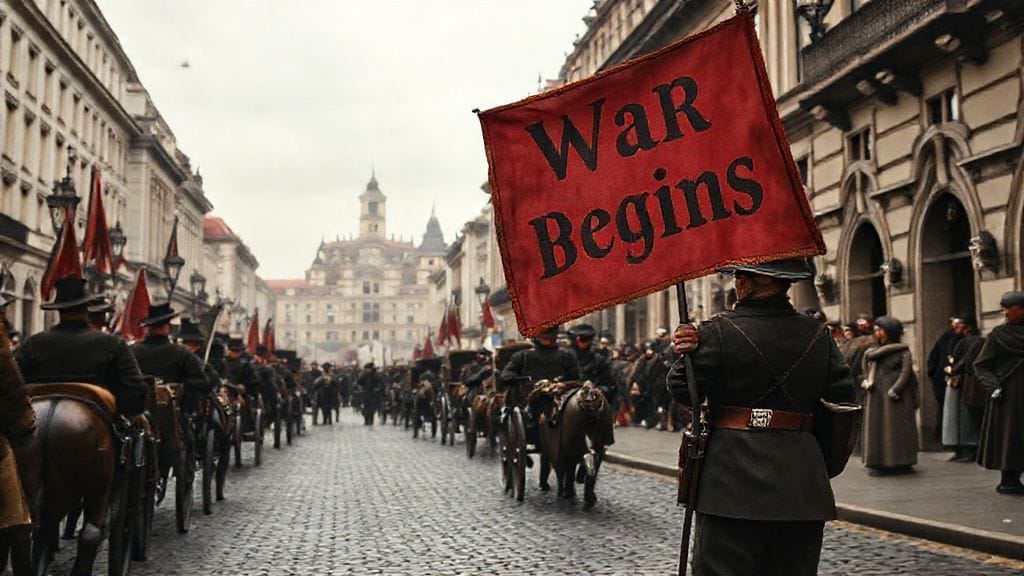
On the morning of April 24, 1877, the city of Bucharest, bathed in early spring light, was thrust irrevocably into the maelstrom of history. As distant cannonades echoed faintly, a palpable tension gripped the cobbled streets and merchant squares—a tension pregnant with the fears and hopes of a region perched uneasily on the edge of transformation. The Russo-Turkish War, a brutal and decisive conflict, was officially underway, forever altering the destinies of empires and nations alike.
This dawn was not merely the beginning of a military campaign—it was the ignition of a long-standing struggle for power, identity, and survival in the Balkans, a crucible of ethnicities and ambitions. For Bucharest, the war’s start meant more than state declarations or treaties—it heralded an era of upheaval whose repercussions would reverberate for decades, touching the lives of soldiers, civilians, and rulers.
2. The Legacy of Rivalry: Russo-Turkish Tensions in the 19th Century
The Russo-Turkish War of 1877-1878 was far from an isolated incident; it was the latest episode in a centuries-old rivalry between the Russian Empire and the Ottoman Turks. Since the reign of Peter the Great, Russia had nursed ambitions for access to warm-water ports and protected the Orthodox Christian populations under Ottoman rule. The Turks, meanwhile, struggled to preserve their sprawling, multi-ethnic empire amid internal decay and nationalist uprisings.
By the mid-1800s, the "Sick Man of Europe," as the Ottoman Empire was disparagingly called, seemed increasingly vulnerable. The Russo-Turkish tensions were sharpened by the Crimean War (1853-1856), which had exposed the vulnerabilities of both empires and deepened European anxieties. The stage was set for a renewed confrontation, fueled by Russia’s vision of Slavic unity and Ottoman determination to resist disintegration.
3. The Eastern Question: European Powers and the Ottoman Decline
Europe watched the reshaping of the Ottoman Balkans with a mixture of intrigue and dread, encapsulated in the phrase “The Eastern Question.” The possible collapse of Ottoman dominion threatened to destabilize the delicate balance of power. Britain, Austria-Hungary, and France each held their stake: Britain sought to protect its Mediterranean routes; Austria-Hungary eyed territorial ambitions; France weighed political alliances.
Yet, despite diplomatic dances and secret treaties, the great powers ultimately struggled to contain the bubbling conflicts. The Russo-Turkish War emerged as a flashpoint that eventually forced the continent to wrestle with the realities of empire, nationalism, and shifting allegiances.
4. Romania’s Precarious Position: Between Empires and Independence
Nestled on the edge of empires, Romania’s status was one of delicate ambiguity in 1877. Officially an autonomous principality under Ottoman suzerainty since 1859’s union of Wallachia and Moldavia, Romania yearned for full independence. The region’s strategic position between the Danube and the Carpathians made it a pivotal stage for conflict.
Romanian leaders, aware of their nation's precarious situation, delicately balanced diplomacy and military preparation. Prince Carol I was a cautious but determined figure, guiding his people through a storm of competing pressures. While technically neutral, Romania’s sympathy leaned towards Russia, the self-styled protector of Orthodox Christians in the Balkans—a sympathy that would soon become a crucial alliance.
5. The Spark Ignites: Russia’s Declaration of War on the Ottoman Empire
The war ignited when Russia, frustrated by Ottoman intransigence over Slavic Christians in the Balkans, especially after rebellious revolts in Bosnia and Herzegovina, declared war on April 24, 1877. This formal declaration marked the collision of strategic interests, nationalistic passions, and great power machinations.
Russian Czar Alexander II framed the war as a just cause for liberation—the defense of oppressed Orthodox brotherhoods. His army crossed the Danube, engaging Ottoman forces stationed in the Balkan provinces. It was a bold gamble, one which Russia hoped would both assert its influence and redraw the map of the region.
6. Mobilization and Alliances: The Gathering Storm
The weeks before the crossing were tense and methodical. Russia amassed one of its largest armies of the century, a testament to logistical prowess and imperial resolve. Concurrently, Romania shifted from hesitant observer to active participant, signing a military alliance with Russia.
Alongside Romanian volunteers and soldiers, Russian forces prepared to advance through the dense forests and rugged terrain, aware they faced a better equipped but numerically inferior Ottoman army. This alliance, rooted in mutual benefit, would prove decisive, though it came with its own perilous uncertainties.
7. Siege and Strategy: Early Battles Along the Danube
The initial battles unfolded with dramatic intensity along the Danube’s banks. Russian and Romanian forces executed complex river crossings under fire, while Ottoman troops defended fortified positions with fierce tenacity. The crossing was fraught with losses and heroic deeds alike.
One cannot overlook the brutal reality of these engagements—the muddy riverbanks turned into quagmires; officers led charges on horseback; cries of orders and pain mingled in the spring air. The struggle for control over the vital river crossings dictated the pace and scope of the campaign.
8. The Role of Romanian Forces: Determined Allies or Pawns?
Romania’s military role was both significant and poignant. Despite doubts about their readiness, Romanian soldiers fought valiantly alongside Russian comrades. Their knowledge of the landscape was invaluable, while their motivation was intertwined with national aspirations.
Yet, this alliance came with difficult choices—Romanian forces bore the brunt of Ottoman counterattacks and suffered heavy casualties. The alliance also stirred debates among Romanians about sovereignty and dependence on a greater power. As war advanced, the Romanian national identity was both forged and tested on the battlefield.
9. The Ottoman Defenses: Fortresses, Commanders, and Morale
The Ottoman military, though often portrayed in European accounts as decaying, exhibited pockets of impressive resilience. Commanders such as Osman Nuri Pasha orchestrated stiff defenses, particularly in critical strongholds like Pleven.
Ottoman troops were a mosaic of multiple ethnicities and religions, sometimes fraught with divided loyalties yet bound by a sense of duty to the empire. Their fortifications, siege tactics, and ability to counterattack kept the conflict intense and unpredictable, delaying Russian advances despite material disadvantages.
10. The Human Cost: Soldiers, Civilians, and the Toll of War
The Russo-Turkish War was not only about strategy and statecraft; it unfolded on a human scale that was heartbreaking and profound. Soldiers faced freezing conditions, hunger, disease, and the relentless trauma of combat.
Meanwhile, civilians in villages and towns—caught between opposing armies—endured looting, displacement, and the collapse of daily life. Families were torn apart; children orphaned; communities forever scarred. The emotional toll seeped into art, literature, and folk memory, painting a grim portrait of 19th-century warfare’s true price.
11. International Observers and Media Sensation
What makes the Russo-Turkish War particularly notable was the burgeoning role of international observers and the press. Newspapers in London, Paris, and Vienna dispatched correspondents, turning battles into global news stories.
Technological advancements in communication, from telegraph wires to illustrated journals, brought vivid images and reports to European drawing rooms. This war became a spectacle that shaped public opinion, influenced diplomatic postures, and underscored the growing interconnection of military and media spheres.
12. The War’s Progression: A Clash of Modernity and Tradition
Throughout the campaign, one could perceive a larger clash—not just between empires but between eras. The Russian army, modernizing with railways and new artillery, faced the Ottoman forces, which mixed traditional warfare with attempts at reform.
This war symbolized a world in transition. Cavalry charges still held their place; yet, rifled muskets and trenches foreshadowed the mechanized slaughter of the future. Both sides grappled with adapting old tactics to new realities—sometimes successfully, often tragically.
13. The Siege of Pleven: A Turning Point in the Campaign
Few episodes capture the war’s drama as the Siege of Pleven (July-December 1877). Pleven was a fortress city whose fall became synonymous with Russian and Romanian perseverance.
The defenders’ skillful resistance drained Russian resources and tested the patience of commanders. Yet, the eventual encirclement and capture of Pleven marked a decisive blow to the Ottomans. It lifted the morale of the allies and signaled a turning tide, moving the war toward its eventual conclusion.
14. Diplomacy in Flux: European Powers Wrestle with the Conflict
Behind the battle lines, diplomacy churned relentlessly. European powers feared that a total Ottoman collapse would upset the continental equilibrium. Britain, in particular, was wary of Russian expansionism towards the Mediterranean.
Negotiations, secret meetings, and threats of intervention punctuated the conflict’s middle years. The war exposed fault lines among allies and adversaries alike, forcing new alliances and rifts. Ultimately, diplomacy and battlefield victories would converge at San Stefano—the treaty that sought to conclude hostilities and redraw borders.
15. The War’s Endgame: Towards the Treaty of San Stefano
By early 1878, exhaustion and attrition dictated the war’s swift resolution. Russia’s victories, bolstered by Romanian fervor and Ottoman exhaustion, gave Moscow leverage in peace talks.
The Treaty of San Stefano, signed in March 1878, proposed sweeping territorial changes favoring Russian influence and the creation of an autonomous Bulgarian principality. Yet, these terms alarmed other European powers and sowed the seeds for further disputes later that year at the Congress of Berlin.
16. Consequences for Romania: A Nation Born in Fire
For Romania, the war’s aftermath was transformative. Its participation and sacrifice earned international recognition and independence from the Ottoman Empire, formally acknowledged in the Treaty of Berlin.
The cost had been monumental—militarily and socially—but it birthed a modern nation-state with aspirations for self-determination and regional influence. The experience forged a collective memory of resilience and unity, laying the foundation for Romania’s 20th-century ambitions.
17. The Ottoman Empire’s Waning Influence in Europe
The war starkly underscored Ottoman decline. The loss of territories and prestige precipitated internal crises and reform attempts in the empire.
Though it survived, the empire’s grip on the Balkans was irreversibly loosened. The seeds of nationalism, ethnic unrest, and external intervention that were scattered by the conflict would flower disastrously in decades to come, culminating in the empire’s eventual dissolution after World War I.
18. Russia’s Gain and Its Limits: Ambitions vs. Reality
While Russia achieved significant territorial and political gains, including influence over Bulgaria and access to the Black Sea, the war also revealed limitations.
European opposition forced a rollback on some ambitions; the Treaty of Berlin curtailed Russian advances, maintaining a balance and demonstrating that even victorious empires must navigate great power politics with caution. The war was a reminder that empire-building was as fragile as it was bold.
19. Cultural Impressions: How the War Shaped Memories and Art
The Russo-Turkish War rippled beyond politics and battlefields into culture and collective memory. Paintings, poems, and folk songs immortalized heroism and tragedy.
In Russia and Romania, the war entered national mythologies, reflecting ideals of sacrifice and liberation. Meanwhile, Ottoman narratives grappled with loss and transformation. These cultural artifacts provide a human dimension to historical analysis, connecting us to the emotional landscape of those tumultuous years.
20. The Russo-Turkish War’s Legacy in Contemporary Geopolitics
The echoes of the Russo-Turkish War persist today. The Balkan states created or reshaped by the conflict still navigate complex ethnic and political challenges rooted in these 19th-century upheavals.
Moreover, the war exemplifies the dangers and dynamics of interventionism, nationalism, and great power rivalry—lessons that resonate in contemporary conflicts worldwide. Understanding this war is essential to grasping not just the past, but the ongoing saga of identity, sovereignty, and power on the Eurasian stage.
Conclusion
The Russo-Turkish War of 1877-1878 began quietly on a spring day in Bucharest but would roar across the Balkans as a momentous chapter of empire, nationalism, and transformation. It was a war of contradictions—a clash of fading empires and rising nations, of old strategies and modern realities, of brutal suffering and hopeful emergence.
From the muddy banks of the Danube to the halls of European diplomacy, this conflict reshaped borders and identities, leaving scars and legacies that reach into our modern world. More than a military campaign, it was a crucible in which the future of southeastern Europe was forged, with human stories etched into every step of its turbulent path.
In remembering the Russo-Turkish War, we glimpse not only the grand sweep of history but the intimate truths of courage, loss, and the ceaseless quest for freedom.
FAQs
Q1: What were the primary causes of the Russo-Turkish War of 1877-1878?
The war stemmed from long-standing Russian ambitions to protect Orthodox Christians and expand influence in the Balkans, combined with Ottoman decline and nationalist uprisings. The immediate cause was the failure of peace after the 1875-1876 Balkan revolts and diplomatic breakdowns.
Q2: How did Romania’s involvement impact its national trajectory?
Romania’s alliance with Russia and active military participation earned it recognition as an independent nation after centuries of Ottoman suzerainty. The war united Romanian society around a cause and laid foundations for its modern statehood.
Q3: What was the significance of the Siege of Pleven?
The prolonged Siege of Pleven was pivotal, demonstrating Ottoman resilience and the determination of Russian-Romanian forces. Its fall marked a turning point that hastened the war’s end and showcased the importance of coordinated siege warfare.
Q4: How did European powers react to the conflict?
While Britain and Austria-Hungary were wary of Russian expansion, they also feared Ottoman collapse’s consequences. The war forced diplomatic negotiations, culminating in the Treaty of Berlin, which balanced interests but also sowed future tensions.
Q5: What were the main outcomes for the Ottoman Empire?
The empire lost significant Balkan territories and saw its influence wane dramatically. The war accelerated internal crises and reform efforts but also foreshadowed eventual dissolution.
Q6: How did this war influence military tactics or technology?
The Russo-Turkish War showcased a mix of traditional cavalry and infantry tactics with emerging technologies such as rifled artillery and telegraphic communications, highlighting an era on the cusp of modern warfare.
Q7: Are there lasting cultural memories of the war?
Yes, especially in Russia, Romania, and the Balkans, the war inspired literature, art, and national folklore, reflecting themes of liberation, sacrifice, and the complexity of imperial decline.
Q8: Why is the Russo-Turkish War important to study today?
It provides insights into how national aspirations clash with imperial ambitions, how localized conflicts can entangle global powers, and how history’s legacies shape present-day geopolitics.