Table of Contents
- The Dawn of a New Nation: Bulgaria’s Birth in Berlin
- The Great Eastern Question: European Powers at a Crossroads
- The Russo-Turkish War and the Collapse of Ottoman Authority
- The Congress of Berlin: A Diplomatic Dance of Competing Interests
- The Role of Bismarck: The Honest Broker and the Architect of the Treaty
- Bulgaria on the Map: From Ottoman Province to Principality
- The Borders Drawn: Geography’s Role in Shaping Bulgaria’s Future
- The Autonomy Clause: Between Independence and Vassalage
- The Reactions of the Powers: Russia, Britain, Austria-Hungary, and the Balkans
- The Bulgarian People: Dreams, Disillusionments, and National Aspirations
- The Treaty’s Ambiguous Terms: Seeds of Future Conflict
- The Establishment of the Bulgarian Principality: Early Days and Foundations
- Alexander of Battenberg: The First Prince and His Challenges
- The Legacy of Ottoman Rule: Society, Religion, and Reform
- The Aftermath: Bulgaria’s Struggle for Full Sovereignty
- Regional Reverberations: How the Treaty Reshaped the Balkans
- The Road to Independence: From Principality to Kingdom
- International Impact: The Congress as a Precursor to 20th Century Alliances
- The Human Cost: Populations Displaced and Divided
- Historiographical Debates: Interpretation of the Berlin Treaty Over Time
- Memory and Identity: Bulgaria’s National Narrative
- Conclusion: The Treaty that Forged a Nation but Divided a Region
- FAQs: Unraveling Common Questions about Bulgaria’s Principality
- External Resource: Deepening Knowledge on the Berlin Treaty
- Internal Link: Explore More with History Sphere
The Dawn of a New Nation: Bulgaria’s Birth in Berlin
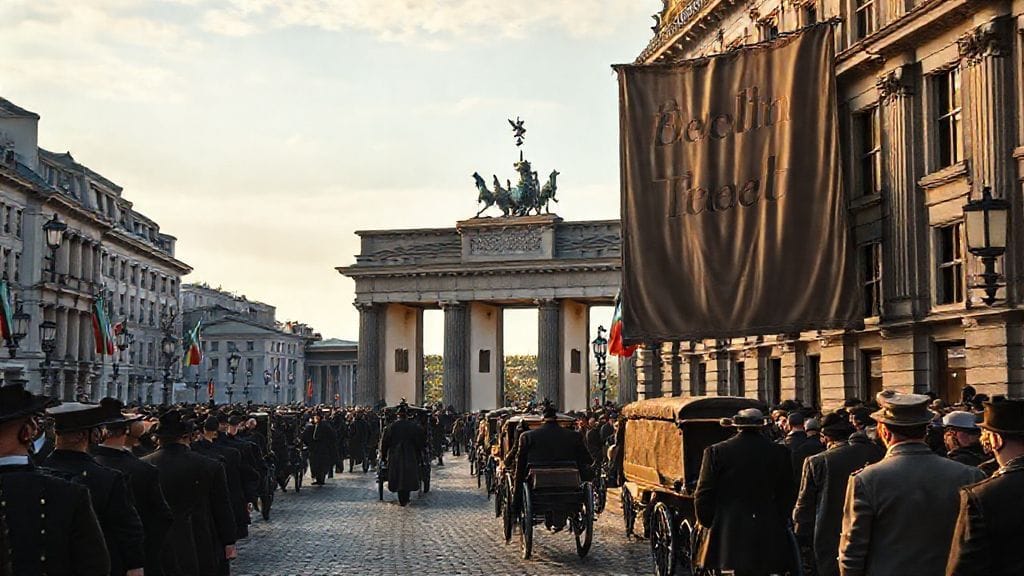
On a hot July day in 1878, within the ornately frescoed chamber of the German Reichstag in Berlin, a string of whispered negotiations and firm diplomatic strokes culminated in a momentous decision: the formal establishment of the Principality of Bulgaria. For centuries, this land, cradled by the Balkan Mountains and warmed by the Black Sea, had languished beneath the heavy yoke of Ottoman rule. Now, in the smoky air thick with the scent of cigars and polished wood, amid the pomp and protocol of crowned heads and prime ministers, Bulgaria was reborn—not fully sovereign, but autonomous enough to start charting its own course.
This was not merely a political act; it was the birth of a dream long held by a people bound by language, history, and a fierce sense of identity. But it was also a decision laden with tension, compromise, and uncertainty—a chessboard move in the larger game of empires. It heralded hope, but also sowed seeds of discord that would ripple through the Balkans for decades to come.
The Great Eastern Question: European Powers at a Crossroads
At the core of the Treaty of Berlin and the establishment of Bulgaria lay the geopolitical conundrum known since the 18th century as the “Eastern Question”: What would become of the weakening Ottoman Empire’s vast territories in southeastern Europe? For centuries, the Ottoman dominion had served as a kind of buffer between rising European powers, yet by the late nineteenth century, its grip was loosening. The advancing forces of nationalism within the Balkans collided with the strategic aspirations of Russia, Austria-Hungary, Britain, and others.
The Eastern Question was thus not simply about territory, but about the balance of power in Europe. Would the Slavic peoples of the Balkans fall under Russian influence? Would the Habsburgs extend their reach? Could Britain control the vital maritime routes through the Dardanelles and the Bosphorus? These queries animated the great capitals and framed every diplomatic encounter leading up to the Congress of Berlin.
The Russo-Turkish War and the Collapse of Ottoman Authority
The immediate spark that forced Europe to confront the fate of the Balkans was the Russo-Turkish War of 1877–1878. Russia, playing the self-declared protector of Slavic and Orthodox Christian peoples under Ottoman rule, waged war with a drive to weaken the Ottomans and expand its influence. The war swept through the Balkans with ferocity—cities fell, empires crumbled, and the old order teetered.
For Bulgaria, this war was both liberation and tragedy. The Russian army was welcomed as a liberator, but the devastation wrought on towns and villages left deep scars. The siege of Plevna, the harsh winters, the movement of refugees—all pointed to the high human cost. Yet, by war’s end, the Ottoman Empire was militarily broken and diplomatically exposed.
The Congress of Berlin: A Diplomatic Dance of Competing Interests
With the Treaty of San Stefano in March 1878, handed down after Ottoman defeat, Russia had outlined a large Bulgarian state that would stretch deep into Macedonia and Thrace, essentially under Russian influence. This alarmed the other European powers, especially Britain and Austria-Hungary, who feared Russian dominance in the Balkans.
Under the stewardship of German Chancellor Otto von Bismarck, a congress was convened in June–July 1878: the Congress of Berlin. The assembly gathered an array of monarchs, diplomats, and ministers who engaged in intense bargaining, often behind closed doors, balancing pretenses of diplomatic decorum with sharp realpolitik. Bismarck styled himself as the “honest broker,” mediating among rivals, but no one truly left satisfied.
The Role of Bismarck: The Honest Broker and the Architect of the Treaty
Otto von Bismarck’s role was unique and crucial. Germany, recently unified under his leadership, sought to avoid entanglement while positioning itself as a central player in European diplomacy. Bismarck skillfully managed to achieve a temporary peace by redrawing the map to limit Russian influence, placate Austria-Hungary’s ambitions, and maintain Britain’s strategic interests.
His approach, often characterized by a detached pragmatism, masked the underlying fragility of the agreements. While the Treaty was hailed as a diplomatic success at the time, Bismarck himself foresaw its imperfections and the grinding cycles of unrest it could provoke.
Bulgaria on the Map: From Ottoman Province to Principality
The Treaty carved Bulgaria from Ottoman lands but did not grant full independence. Instead, it created an autonomous Principality of Bulgaria under nominal Ottoman suzerainty—a peculiar status allowing internal self-rule but requiring the Prince to owe allegiance to the Ottoman Sultan. The Principality covered the majority of northern Bulgaria, with southern regions such as Macedonia and parts of Thrace left outside, fueling immediate dissatisfaction among Bulgarians who identified with these regions culturally and historically.
The map was a patchwork of hope and unresolved claims, a snapshot of political expediency more than ethnic reality.
The Borders Drawn: Geography’s Role in Shaping Bulgaria’s Future
Geography was destiny in the Balkans. The Principality was bound by natural borders—the Danube River to the north, the Balkan Mountains running roughly west-east, and the ridges leading down to the Black Sea. Yet, the borderlines drawn by diplomats often ignored ethnic realities, leaving Bulgarian populations outside the Principality and incorporating non-Bulgarian minorities within.
This selective drawing of borders sowed the seeds for future conflicts, as nationalists in Macedonia, Thrace, and other regions chafed under foreign rule or contested loyalties.
The Autonomy Clause: Between Independence and Vassalage
The treaty’s ambiguous language reflected the delicate balance of power. Bulgaria was autonomous but still a vassal state of the Ottoman Empire, paying symbolic tribute and recognizing the Sultan’s suzerainty. This legal fiction allowed European powers to claim the Ottoman Empire was being preserved while simultaneously carving it up.
For Bulgarians, this half-independence was both a triumph and a provocation—a stepping stone toward full sovereignty but a reminder of continued foreign domination.
The Reactions of the Powers: Russia, Britain, Austria-Hungary, and the Balkans
Russia, though victorious in war, felt betrayed by the Congress’s reduction of Bulgarian territory and influence. Britain and Austria-Hungary welcomed limits on Russian expansion but also saw opportunities to spread their own influence.
The Balkan states, each juggling their own nationalist aspirations, viewed the Treaty with suspicion and agitation. Serbia and Montenegro gained territories, while Greece was left largely out of gains, intensifying regional rivalries.
The Bulgarian People: Dreams, Disillusionments, and National Aspirations
Among the Bulgarian population, the Congress of Berlin was a mixture of jubilation and bitter disappointment. The long-awaited recognition of Bulgaria's autonomy was a moment of pride, promising a revival of culture, language, and self-rule.
Yet, the exclusion of Macedonia and Thrace left many yearning, fueling continued nationalist movements and resistance. The gap between diplomatic compromises and popular aspirations underscored many of the tensions to come.
The Treaty’s Ambiguous Terms: Seeds of Future Conflict
The Treaty of Berlin was celebrated but fundamentally flawed. Its ambiguous terms on sovereignty, borders, and minority protections ensured that the Balkan quagmire was not resolved, but postponed. The Principality’s limited powers and constrained independence sparked political struggles internally, while internationally the Treaty became a source of rivalry and mistrust.
The “Eastern Question” remained unsolved, and the Treaty’s compromises set a stage for the Balkan Wars and ultimately contributed to the broader tensions leading to World War I.
The Establishment of the Bulgarian Principality: Early Days and Foundations
Following the Treaty, the Bulgarian Assembly took form, and Prince Alexander of Battenberg was elected as ruler. His tenure signaled the start of modern state-building, confronting challenges including administrative reforms, military organization, and international diplomacy.
The nascent principality sought to assert authority, balance external pressures, and nurture a Bulgarian national identity still emerging from centuries of foreign rule.
Alexander of Battenberg: The First Prince and His Challenges
Alexander of Battenberg, a German prince relative of the Russian Tsar, was an emblematic yet controversial figure. His reign was marked by political intrigue, tensions with the Ottoman Empire, and delicate relations with Russia, which both supported and resented him.
He faced internal factions ranging from pro-Russian conservatives to nationalist liberals, the rising communist ideas, and the persistent question of Bulgaria’s further independence and territorial ambitions.
The Legacy of Ottoman Rule: Society, Religion, and Reform
Despite political upheavals, the cultural and societal fabric of Bulgaria bore the marks of Ottoman centuries—religious structures, legal frameworks, and social hierarchies were rooted in that past.
Post-Treaty efforts grappled with modernizing the state, secularizing authority, and reconciling diverse religious communities into a coherent national whole.
The Aftermath: Bulgaria’s Struggle for Full Sovereignty
The Principality’s ambiguous status fostered continual efforts to assert full independence. Over the ensuing decades, Bulgaria navigated a complex path, achieving de facto independence in 1908 but wrestling with internal reforms and external recognition.
The Treaty of Berlin’s legacy was a foundation, but an unstable one.
Regional Reverberations: How the Treaty Reshaped the Balkans
Beyond Bulgaria, the Treaty redrew Balkan realities. Serbia and Montenegro expanded, Austria-Hungary annexed Bosnia-Herzegovina, and the Ottoman Empire was further diminished—setting off waves of nationalism, territorial disputes, and alliances.
The region became a powder keg, a small spark away from broader warfare.
The Road to Independence: From Principality to Kingdom
Bulgaria transitioned from a Principality to a Kingdom in 1908, a symbolic and political assertion of full sovereignty. This evolution was the culmination of the ambitions kindled by the Treaty of Berlin but foreshadowed by the compromises it entailed.
Yet, this independence came amid great tension with neighbors and great powers.
International Impact: The Congress as a Precursor to 20th Century Alliances
The Congress of Berlin and the Treaty established patterns of alliance, enmity, and diplomacy that echoed into the 20th century. The Balkan conflicts that followed were entangled with the Great Powers’ rivalries, foreshadowing the alliances that would define World War I.
Bulgaria and its neighbors' trajectories were deeply influenced by this diplomatic moment.
The Human Cost: Populations Displaced and Divided
Beyond treaties and borders, the human cost was profound. Thousands were displaced, communities split, and ethnic tensions exacerbated. Minorities trapped inside new boundaries faced oppression or flight, while nationalist fervor deepened divisions.
The Treaty’s human consequences remain a stark reminder of the limits of diplomacy detached from peoples’ realities.
Historiographical Debates: Interpretation of the Berlin Treaty Over Time
Historians have long debated whether the Treaty was a pragmatic necessity or a shortsighted failure. Some praise its temporary peacekeeping, others condemn its imperialist biases and disregard for ethnic realities.
This historiographical struggle mirrors ongoing questions about how empires manage decline and how new nations arise.
Memory and Identity: Bulgaria’s National Narrative
For Bulgaria, the Treaty of Berlin occupies a complex place in national memory—at once a foundation of statehood and a symbol of incomplete liberation. It shaped educational narratives, political discourse, and cultural identity, reflecting ongoing tensions about sovereignty, identity, and historical justice.
Conclusion: The Treaty that Forged a Nation but Divided a Region
The establishment of the Principality of Bulgaria through the Treaty of Berlin was a milestone of nation-building ensconced within the tangled web of European diplomacy and imperial rivalry. It was a moment of hope and brutal compromise, craftsmanship and contradiction.
While it laid the groundwork for Bulgaria’s emergence on the world stage, it left a legacy of division, tension, and unresolved national aspirations that would echo painfully through the next decades.
In that summer of 1878, amidst formal declarations and diplomatic handshakes, a new nation was born—shaped by the interplay of history, ambition, and human yearning. And yet, the story of Bulgaria, like the Balkans as a whole, was far from over.
Conclusion
The Treaty of Berlin and the establishment of the Bulgarian Principality stand as a testament to the complexities of diplomacy in an era of imperial decline and nationalist awakening. It was a hard-won compromise that recognized Bulgarian autonomy but left deep questions unanswered.
The Principality’s creation symbolized hope for liberation and self-determination after centuries of Ottoman domination, yet marked the beginning of a challenging path toward full independence and national consolidation. The interplay of great power politics, local aspirations, and the relentless tide of history made Bulgaria’s journey emblematic of the wider Balkan saga—a tale of dreams forged and frustrated, borders drawn and disputed, peoples divided yet enduring.
Today, reflecting on the Treaty is to engage with the enduring questions of sovereignty, identity, and the price of peace, reminding us that nationhood is rarely born without sacrifice and struggle.
FAQs
Q1: Why was the Principality of Bulgaria established and not a fully independent kingdom in 1878?
A1: The Principality was a compromise, balancing the decline of Ottoman control with the interests of European powers who sought to limit Russian influence and maintain a semblance of Ottoman sovereignty in the region. Full independence was delayed to avoid destabilizing the balance of power.
Q2: What role did Otto von Bismarck play in the Treaty of Berlin?
A2: Bismarck acted as the “honest broker” during the Congress, mediating between rival powers and aiming to preserve European peace. His pragmatic approach led to compromises that temporarily eased tensions but left many issues unresolved.
Q3: How did the Treaty impact the territorial boundaries of Bulgaria?
A3: The Treaty established Bulgaria’s northern borders and autonomy but confined it largely to northern Bulgaria. Key regions with Bulgarian populations, like Macedonia and southern Thrace, remained under Ottoman control, causing tensions.
Q4: What were the immediate reactions to the Treaty within Bulgaria and the Balkans?
A4: While Bulgarians welcomed the autonomy, many were disappointed by territorial losses. Neighboring Balkan states had mixed reactions based on their own ambitions, contributing to ongoing regional instability.
Q5: How did the Treaty of Berlin influence future conflicts in the Balkans?
A5: The ambiguous borders and unresolved ethnic claims led to nationalist movements, territorial disputes, and wars, including the Balkan Wars and tensions that contributed to World War I.
Q6: Who was Alexander of Battenberg and why was he significant?
A6: Alexander was the first Prince of Bulgaria, appointed following the Treaty. His leadership helped establish Bulgaria’s state institutions but was marked by internal divisions and complex foreign relations.
Q7: What was the “Eastern Question” and how did it relate to the Treaty?
A7: The Eastern Question concerned the fate of the declining Ottoman Empire’s European territories. The Treaty of Berlin sought to manage this decline and prevent a power vacuum that would disrupt European balance.
Q8: What is the historical legacy of the Treaty of Berlin for modern Bulgaria?
A8: The Treaty is seen as the foundational moment for Bulgaria’s modern statehood but also as a starting point for unresolved disputes and challenges that shaped the nation’s trajectory well into the 20th century.