Table of Contents
- The Calm Before the Storm: South America on the Eve of Conflict
- Forgotten Ambitions: Chile and Peru’s Tangled Histories
- The War of the Pacific Ignites: Prelude to the March on Lima
- January 1881: The Dawn of the Chilean Capture of Lima
- The March to the Capital: Triumphs and Tribulations on the Road
- Lima Under Siege: Fear, Defiance, and Uncertainty
- The Chilean Forces Enter Lima: Victory Shrouded in Complexity
- The Civilian Experience: Lives Altered Amidst Occupation
- The Role of the Peruvian Army: Resistance and Retreat
- International Observers and Reactions: A War That Echoed Beyond Borders
- The Political Chessboard: Leadership, Strategy, and Negotiations
- Economic Impact: Lima’s Wealth, Devastation, and Recovery
- Cultural Shifts: Identity, Memory, and Nationalism after Occupation
- The Legacy of the Chilean Occupation of Lima: From Humiliation to Resilience
- Reflections on War and Humanity: Lessons from the Capture of Lima
The Calm Before the Storm: South America on the Eve of Conflict
In the twilight of the 19th century, the vast and diverse landscapes of South America were simmering beneath a fragile peace. The saltpeter-rich deserts of the Atacama Strip had attracted more than just the curious gaze of traders and geologists—they had become the heart of national ambitions. On January 17, 1881, this simmering tension erupted with the capture of Lima, the proud capital of Peru, by Chilean forces. Yet, this was not simply a military conquest; it was a profound human drama unfolding amidst the clash of nations.
Imagine Lima in those early days of January: majestic colonial buildings adorned the sunlit plazas, the hum of daily life vibrated through the stone-paved streets, and the scent of the Pacific mingled with the distant calls to prayer and the clanging bells of the cathedral. Few could predict that this vibrant city was about to be engulfed by a conflict that would not only change borders but redefine identities.
Forgotten Ambitions: Chile and Peru’s Tangled Histories
The roots of the conflict that led to the Chilean capture of Lima lie far deeper than the visible skirmishes and declarations of war. For decades, Chile and Peru had been neighbors bound by shared cultural threads and contested claims over the mineral-rich territories of the Atacama Desert.
Chile’s northern stretch was long coveted for its deposits of saltpeter—a vital component in fertilizers and explosives—making this seemingly barren desert a treasure chest. Peruvian and Bolivian sovereignty over this land had been widely disputed, with diplomatic tensions simmering under fragile treaties and shifting alliances.
The War of the Pacific, which erupted in 1879, was a direct consequence of these frictions. Bolstered by a complex web of economic interests and national pride, Chile launched a military campaign designed to not only break Bolivian control but to also challenge Peru’s dominance.
Underlying this geopolitical struggle were ideologies of nation-building, sovereignty, and the relentless pursuit of resources—a classical tale of nations wrestling for survival and supremacy on a vast and untamed continent.
The War of the Pacific Ignites: Prelude to the March on Lima
When Chile declared war on Peru and Bolivia in April 1879, a conflict that would last more than three years was set into motion. Early battles raged in desert landscapes, where harsh climates compounded the brutality of combat.
Chile’s military was meticulously organized, benefiting from better naval capabilities and modern weaponry. Against this, Peru struggled with internal political divisions, logistical hardships, and uneven command structures.
The war’s naval phase was crucial. Chile's dominance of the seas severed vital supply lines and isolated Peruvian forces. By 1880, Chilean troops had progressively moved inland, capturing key cities and infamous battlefields alike.
The stage was thus set for the ultimate showdown: the march to Lima. Chile’s strategy was clear—a decisive blow to Peru’s political and symbolic heart to force a favorable peace.
January 1881: The Dawn of the Chilean Capture of Lima
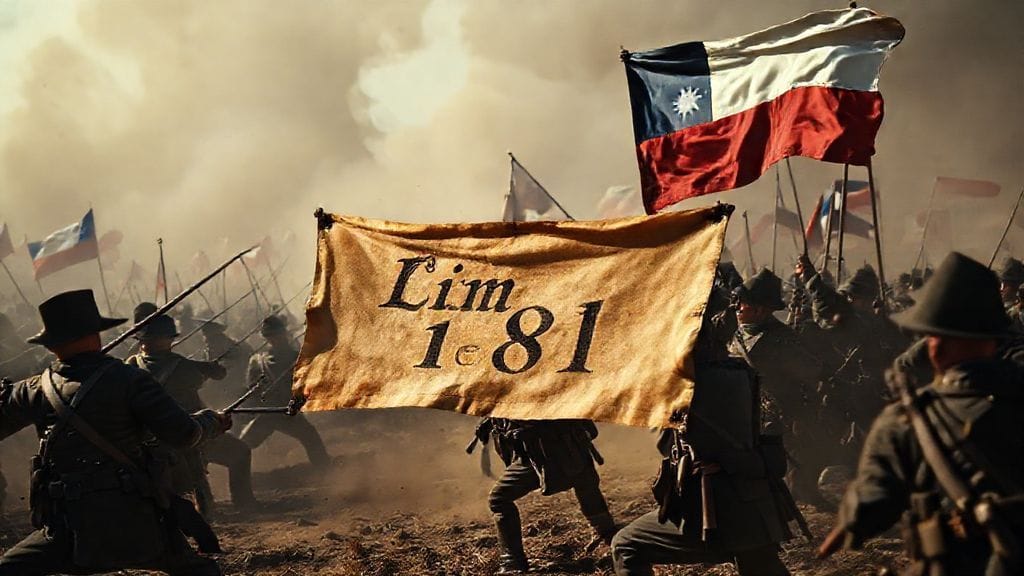
The morning of January 17, 1881, dawned cold and gray over the Peruvian capital. Rumors swirled among the citizenry, alternating between hope for a miraculous defense and dread for occupation.
The Chilean army, weary yet steeled by months of grueling campaigns, approached Lima after a difficult march across the coastal deserts and ravines. Commanded by General Manuel Baquedano, they moved with precision backed by overwhelming firepower.
The battle for Lima was not a singular event but a series of engagements, culminating in the breach of the city’s defenses. Peruvian defenders, led by General Andrés Avelino Cáceres and supported by local militias, fought tenaciously but were ultimately overwhelmed by the numerical and technological edge of the Chilean forces.
What followed was a bitter blend of military triumph and civilian despair.
The March to the Capital: Triumphs and Tribulations on the Road
The path to Lima was as much a test of human endurance as of military tactics. The Chilean army faced not only the resistance of Peruvian guerrillas and regular troops but also the unforgiving environment—arid landscapes, limited water sources, and scorching sun by day, sharp cold by night.
One cannot overlook the human stories embedded in this arduous march. Soldiers, many conscripts drawn from impoverished backgrounds, suffered from starvation, illness, and exhaustion. Letters home, preserved in Chilean military archives, reveal a poignant image of men striving to maintain hope amid hardship.
For the Peruvian defenders, the retreat toward Lima was marked by desperation. Civilians fled their homes, entire families uprooted by the encroaching armies, and cries of loss echoed in mountain valleys and coastal towns.
Lima Under Siege: Fear, Defiance, and Uncertainty
As the Chilean forces surrounded Lima, the city transformed overnight. Markets emptied, public gatherings grew scarce, and the once-bustling streets echoed a haunting silence.
The Peruvian government, under President Nicolás de Piérola, fled, leaving a power vacuum that fostered chaos and confusion. Yet, among Lima’s people, a quiet resistance persisted. Secret meetings in shadowed salons, underground newspaper presses, and whispered plans for rebellion created an undercurrent of defiance.
Local leaders and ordinary citizens were torn between resignation and the urge to defend their heritage. Stories from women who hid ammunition in their homes or messengers who risked capture paint a vivid picture of resilience.
The Chilean Forces Enter Lima: Victory Shrouded in Complexity
On January 17, 1881, Chilean troops formally entered Lima—a moment both triumphant and fraught with complexity. The occupation was not merely a military victory; it was a confrontation of cultures, beliefs, and national pride.
The Chilean commanders imposed martial law, disarming citizens and commandeering resources. Reports from foreign correspondents highlight instances of both discipline and disorder among the troops. Pilfering, clashes with locals, and attempts to maintain order coexisted uneasily.
One Chilean soldier recorded in his diary: "We have won the city but not its heart." This phrase encapsulates the bittersweet nature of the conquest—not a jubilation, but a somber acknowledgment of the cost.
The Civilian Experience: Lives Altered Amidst Occupation
Behind the lines of military strategy and diplomatic negotiations lay the lived experiences of Lima’s inhabitants. Homes were requisitioned, businesses shuttered, and the rhythms of daily life disrupted.
Families grappled with hunger as supply chains faltered. Traditional festivals gave way to enforced curfews. Education and cultural institutions suffered under uncertain control.
Yet within this darkness, humanity flickered. Community kitchens emerged, local musicians played songs of hope, and clandestine schools operated to preserve Peruvian identity.
Personal diaries from this period reveal not only fear but astonishing courage—stories of neighbors sharing scarce food, of children playing amid ruins, of elders recounting their history to prevent forgetfulness.
The Role of the Peruvian Army: Resistance and Retreat
Though Lima fell, the Peruvian military did not vanish. Instead, bands of soldiers and partisan groups retreated to the Andean highlands, where they waged a protracted guerrilla war.
General Cáceres became a legendary figure, leading guerrilla operations that disrupted Chilean supply lines and kept the spirit of resistance alive.
This phase of the conflict—less visible but equally vital—exemplifies the resilience of a humiliated nation striving not to surrender but to survive.
Cáceres’ campaigns would inspire future generations, emblematic of patriotism woven with the harsh realities of warfare.
International Observers and Reactions: A War That Echoed Beyond Borders
The War of the Pacific, and especially the capture of Lima, attracted the gaze of nations well beyond South America.
British and American newspapers reported the conflict with a mix of fascination and cautious diplomatic analysis. European powers watched how resource-rich regions fell into new hands, anticipating repercussions in global markets.
Foreign diplomats in Lima faced difficult choices—balancing neutrality with protecting their nationals amid the chaos.
In the United States, the event stirred debates about imperialism and the fate of hemispheric neighbors—issues resonating with the emerging doctrine of influence in the Americas.
The Political Chessboard: Leadership, Strategy, and Negotiations
The capture of Lima did not end the war overnight. It opened a new phase of political maneuvering both within Peru and on the international stage.
Inside Peru, factions vied for legitimacy. The Chilean government sought to install puppet administrations or negotiate peace under terms favorable to its interests.
President Piérola’s absence left space for rival leaders, while Chile debated occupation policies and long-term governance.
Diplomatic efforts, sometimes clandestine, attempted to broker peace—a process complicated by national pride, shifting alliances, and the wounded dignity of a defeated Peru.
Economic Impact: Lima’s Wealth, Devastation, and Recovery
Lima had long been a commercial hub, vibrant with trade, mining profits, and cultural wealth. The occupation disrupted this prosperity profoundly.
Chile’s control of the Atacama mineral wealth had already shifted economic power, but the capture of Lima dealt a blow to Peruvian economic infrastructure.
Factories closed, trade stalled, and countless workers lost livelihoods. The city’s port, once bustling, saw diminished activity.
Yet, resilience sparked recovery efforts. Reconstruction began even as occupation persisted—local entrepreneurs, craftspeople, and farmers adapted, laying foundations for Peru’s eventual renaissance.
Cultural Shifts: Identity, Memory, and Nationalism after Occupation
The trauma of occupation etched deep marks on Peruvian consciousness. Art, literature, and folklore began to reflect themes of loss and resistance.
Monuments and commemorations arose to honor heroes and mourn victims. National curricula incorporated the war as a defining moment.
The capture of Lima thus became a crucible in which Peruvian identity was reforged—imbued with a fierce patriotism and a determination never to repeat defeat.
Chile, too, grappled with the costs and morality of its expansion, setting narratives of glory alongside somber reflections.
The Legacy of the Chilean Occupation of Lima: From Humiliation to Resilience
In the decades that followed, the Chilean occupation of Lima took on emblematic importance in Andean history.
It was more than a military episode; it was a turning point that influenced geopolitics, economics, and collective memory.
Chile’s victory reshaped borders and resource control; Peru’s response laid groundwork for national unity and reform.
The war highlighted the complexity of imperial ambition on a regional scale—how resource riches can both empower and destroy.
Reflections on War and Humanity: Lessons from the Capture of Lima
The capture of Lima is a powerful reminder that war is not just about territory or spoils—it is about people enduring suffering, hope, and endurance.
Through stories of soldiers, civilians, leaders, and children, we grasp the profound human cost behind historical dates.
The event invites us to consider how nations cope with trauma, rebuild identity, and find paths towards reconciliation.
More than a past event, it remains a mirror reflecting the perennial challenges of sovereignty, justice, and human dignity.
Conclusion
The Chilean capture of Lima on January 17, 1881, stands as a moment of profound transformation in South American history. It marked the culmination of a brutal war rooted in economic ambitions and national pride, yet its true significance lies in the human stories interwoven with the clashing of armies.
Lima, a city of colonial grandeur and cultural vibrancy, found itself caught in the storm of conflict and occupation—its people faced devastation but also demonstrated resilience that would shape Peru’s future.
Chile’s military triumph, while decisive, was shadowed by the complexities of occupation and the enduring resistance of a humiliated neighbor.
This episode is a testament to the duality of war: the pain of loss contrasted with the strength of survival. Today, reflecting on the capture of Lima invites us to remember not only the clash of nations but the indomitable spirit that follows in the aftermath of upheaval.
FAQs
1. What were the main causes of the Chilean capture of Lima during the War of the Pacific?
The capture stemmed from competing territorial claims over the Atacama Desert’s rich mineral resources, especially saltpeter. Chile sought to secure these resources against Peruvian and Bolivian control, leading to a conflict fueled by economic interests and national pride.
2. Who were the key military leaders involved in the capture of Lima?
Chile’s General Manuel Baquedano commanded the invading forces, while Peru’s defenders included Generals Andrés Avelino Cáceres and Nicolás de Piérola. Their strategies and leadership shaped the battle’s course and aftermath.
3. How did the capture of Lima impact the civilians living in the city?
Civilians faced displacement, hunger, and disruptions to daily life. Many took part in clandestine resistance efforts while coping with occupation’s harsh realities, including curfews, requisitions, and social upheaval.
4. What role did international powers play during the War of the Pacific and the capture of Lima?
International observers, including British and American diplomats, monitored the conflict due to economic interests and geopolitical implications. Though mostly neutral, their presence influenced diplomatic negotiations and global awareness.
5. How did the occupation influence Peru’s national identity and culture?
The trauma of occupation fueled nationalist sentiments, inspiring literature, art, and political movements centered on resistance and recovery. The event became a key part of Peru’s collective memory and identity.
6. What were the long-term consequences of the Chilean occupation for both Peru and Chile?
Chile gained control over valuable territories, enhancing its economic position, while Peru underwent political and social reforms. The war’s legacy influenced future regional relations, national policies, and historical narratives.
7. Were there significant acts of resistance after the capture of Lima?
Yes. Peruvian forces and guerrilla fighters, led by figures like General Cáceres, continued to resist from the Andean highlands, maintaining a prolonged struggle that prevented full Chilean dominance.
8. How is the Chilean capture of Lima remembered today in South America?
It is remembered as a pivotal yet painful chapter—marked by both military prowess and human suffering. Commemorations and historical scholarship continue to explore its complex legacy.