Table of Contents
- The Dawn of a New Era: May 12, 1881 in Bardo
- Tunisia on the Brink: The Political Climate Before the Treaty
- The French Ambition: Imperialism and Mediterranean Strategy
- The Beylik of Tunis: A Kingdom Under Pressure
- The Prelude to Protectorship: Friction and Conflict
- Negotiations in Bardo: The Weight of Diplomacy and Coercion
- The Signing Ceremony: A Quiet Surrender or a Calculated Move?
- The Treaty’s Clauses: Reading Between the Lines
- The Reaction in Tunis: Shock, Resentment, and Silent Resistance
- French Military Presence and Administrative Overhaul
- Economic Transformations: Railways, Ports, and Cash Crops
- Social Upheaval: Elites, Tribes, and the Common People
- The Role of European Powers: Britain, Italy, and the Great Game
- Cultural Impact: Between Assimilation and Identity
- The Legacy of the Treaty: Seeds of Nationalism and Future Struggles
- Tunisia’s Path to Independence: From Protectorate to Republic
- Reflections on Colonialism: Global Context and Consequences
- Conclusion: Remembering the Treaty of Bardo’s Lasting Shadow
- FAQs: Understanding the Treaty and Its Impact
- External Resource
- Internal Link
On a sultry May day in 1881, within the ornate halls of the Bardo Palace, a quiet yet monumental event unfolded—a moment that would irrevocably alter the destiny not only of Tunisia but resonate through the larger currents of Mediterranean and colonial history. The Treaty of Bardo was signed on May 12, establishing the French protectorate over Tunisia, a watershed that marked the end of the country’s fleeting independence and the beginning of an era shadowed by foreign domination. One can almost hear the rustle of silk robes, the murmurs of anxious emissaries, and the heavy silence that followed—the calm before a storm of profound transformation.
Tunisia on the Brink: The Political Climate Before the Treaty
To understand the gravity of that May afternoon, one must first peer into the late nineteenth-century Tunisia—a land of paradoxes and precarious balances. The Beylik of Tunis, under the nominal rule of the Husainid dynasty since the early eighteenth century, found itself increasingly vulnerable amidst a web of internal weaknesses and external pressures. Bonded by tradition and Islamic law but pressured by modern realities, its institutions were fraying, and its rulers were grappling to preserve sovereignty in a volatile era.
Tunisia was not isolated. Europe’s great powers—France, Britain, and Italy—scrambled for influence along the Mediterranean’s southern shores. The decline of the once-mighty Ottoman Empire left a vacuum that imperialist ambitions were eager to fill. Within Tunisia, financial indebtedness and political factionalism compounded the crisis, making the country ripe for intervention.
The French Ambition: Imperialism and Mediterranean Strategy
The French expansionist vision was ambitious and multifaceted. Beyond the romantic allure of bringing “civilization” and “modern administration” to North Africa, Tunisia held immense strategic value. Nestled at the gateway to the Mediterranean, controlling Tunisia promised France dominance over critical maritime routes and an extended reach into sub-Saharan Africa.
France’s conquest of Algeria in 1830 had been a brutal but effective foothold, and the move towards Tunisia became the next logical step in consolidating a North African empire. Industrial capitalism’s insatiable appetite for new markets, coupled with nationalism at home, pushed French officials to secure Tunisia not only for geo-strategic leverage but economic expansion as well.
The Beylik of Tunis: A Kingdom Under Pressure
The Husainid Beys, heirs to a dynasty that combined Ottoman sovereignty with local autonomy, were caught in an impossible position. Their rule was marked by attempts to modernize the military and administrative system, but reform was sluggish and under-resourced. They faced opposition from entrenched elites who feared losing privileges, and from rising nationalist sentiments brewed among merchants and clergy alike.
Financial crises deepened after costly wars and extravagant court expenses. Loans from European banks led to mounting debts, furthering France’s influence over Tunisian politics. Mimicking the Ottoman model of nominal sovereignty under suzerainty, the Beys found their independence steadily compromised, culminating tragically in the concessions of 1881.
The Prelude to Protectorship: Friction and Conflict
The 1870s had been a decade of increasing French pressure. Tunisia’s strategic ports such as La Goulette and Bizerta became focal points in Franco-Tunisian rivalries. Border skirmishes with neighboring tribes, sometimes armed or instigated by European agents, created justifications for French intervention. France cited “restoring order” and “protecting European lives and properties” as pretexts to claim control.
At the same time, Italy, with historic and cultural ties to Tunisia’s Italian community, contested French moves, making Tunisian politics tense and tense. International diplomacy danced on a knife-edge, with Britain largely acquiescing to French ambitions in exchange for stability against Russian advances elsewhere.
Negotiations in Bardo: The Weight of Diplomacy and Coercion
The negotiation process in Bardo Palace was far from a balanced dialogue. The French delegation arrived armed with overwhelming political and military leverage; the Bey and his ministers faced little choice but capitulation. Officially, it was presented as a treaty of “protectorate,” meaning Tunisian sovereignty would be “preserved under French guidance”—a euphemism that thinly veiled the new political reality.
Witnesses describe the hushed corridors where debates were stifled, decisions lingered on the edge of force, and subtle threats masked as “advice” hung in the air. French representative Paul Cambon, skilled and resolute, orchestrated the signing with an astute blend of diplomacy and intimidation.
The Signing Ceremony: A Quiet Surrender or a Calculated Move?
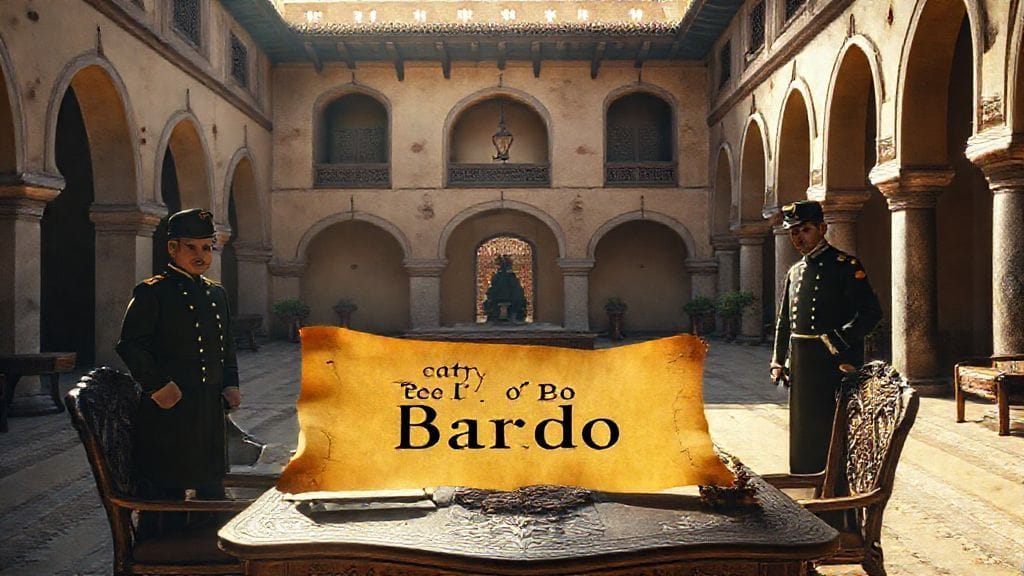
On May 12, the ceremony was austere compared to the stakes unfolding. The Bey signed the treaty under duress but perhaps with an eye toward ensuring Tunisia’s survival under new circumstances. For him and the court, resistance seemed hopeless, and accepting French oversight was a survival strategy—painful and humiliating, but pragmatic.
It was a moment heavy with symbolism: a small, sovereign state voluntarily submitting, yet losing everything in effect. The palace walls witnessed the end of centuries-old self-rule and the dawn of foreign control, wrapped in diplomatic formalities.
The Treaty’s Clauses: Reading Between the Lines
The treaty itself was deceptively technical. It promised protection from foreign aggression and assistance in administration but gave France sweeping powers to control Tunisia's military, customs, foreign relations, and financial policy. The Bey retained nominal authority, but actual governance passed to the French Resident-General.
Key clauses permitted French troops to be stationed throughout the country and allowed French officials to oversee reforms—effectively erasing Tunisian agency in decisions affecting their future. The treaty thus became a legal instrument of colonial subjugation.
The Reaction in Tunis: Shock, Resentment, and Silent Resistance
News of the treaty rippled across Tunisian society like a stone thrown into calm waters. The urban elites expressed mixed feelings: some sought accommodation and advantage under French rule; others seethed with resentment and despair. Rural populations—tribes, peasants, artisans—felt betrayed by their own leaders’ acquiescence.
Spiritual leaders, merchants, and intellectuals began whispering about resistance, laying the early groundwork for nationalist sentiment. Though overt rebellion was stifled by French military presence, underground movements and cultural revivalism stirred in quiet defiance.
French Military Presence and Administrative Overhaul
France swiftly deployed troops and reorganized administrative structures. The Resident-General wielded unprecedented control, appointing French officials to key positions and restructuring governmental organs. Modern institutions of law, education, and infrastructure were introduced—but through a colonial lens that marginalized indigenous practices and elites.
The army was professionalized with French officers, and local forces were incorporated or disbanded as needed. The new regime justified its presence as “pacification,” yet employed coercion and repression to quell dissent.
Economic Transformations: Railways, Ports, and Cash Crops
Under the protectorate, Tunisia underwent rapid economic transformation designed to serve French interests. Railways connected resource-rich regions to ports like La Goulette, facilitating export of olive oil, cereals, and phosphates. Land policies dispossessed peasants and redirected agriculture towards cash crops for export.
French investment poured into infrastructure—but often benefited settlers and foreign companies more than the local population. Tunisian laborers faced harsh conditions, while traditional economic networks suffered disruption.
Social Upheaval: Elites, Tribes, and the Common People
The protectorate exacerbated social divides. French settlers acquired land and privileges, while Tunisian elites adapted to new hierarchies or resisted covertly. Tribal structures faced legal and political challenges as France imposed centralized control.
Common people—farmers, artisans, women—experienced profound changes in daily life and social order. Education reforms introduced French language and curricula, underpinning cultural assimilation policies that would leave lasting scars and identity conflicts.
The Role of European Powers: Britain, Italy, and the Great Game
The establishment of the French protectorate did not go unchallenged internationally. Italy, with its Italian-Tunisian community and colonial aspirations, protested vehemently, seeing France as a rival. Britain, prioritizing stability and its colonial interests, tacitly approved France’s expansion but watched Mediterranean dynamics carefully.
The Treaty of Bardo thus was not only a bilateral issue but a chess move in the great imperial “Game” where alliances, rivalries, and strategic calculations dictated power balance.
Cultural Impact: Between Assimilation and Identity
French cultural policies sought to imprint a “civilizing mission” ideology, promoting French language and customs. Schools taught French history and values, often marginalizing Arab and Berber traditions. This cultural imperialism sparked intellectual awakening amid Tunisian youth and clergy, who began redefining national identity within and against colonial frameworks.
The protectorate period became an incubator for cultural debate—between assimilation, resistance, and the revival of indigenous heritage—that continues shaping Tunisia today.
The Legacy of the Treaty: Seeds of Nationalism and Future Struggles
The protectorate system sowed seeds of nationalist movements that burgeoned in the early twentieth century. While Tunisia was ruled from afar, from the ground emerged political parties, intellectual circles, and popular leaders who sought to reclaim sovereignty.
Figures like Habib Bourguiba later embodied these struggles, mobilizing for independence during the mid-century wave of decolonization. Yet the shadow of the Treaty of Bardo lingered—a reminder of humiliation and resilience intertwined.
Tunisia’s Path to Independence: From Protectorate to Republic
It took nearly 75 years, two world wars, and profound social change before Tunisia’s independence was finally restored in 1956. The protectorate period, defined by French control beginning with the Treaty of Bardo, was an era of painful sacrifices and negotiations.
Post-independence Tunisia embarked on ambitious reforms to build a modern nation-state, often wrestling with the colonial legacy left behind in its political, social, and economic fabric.
Reflections on Colonialism: Global Context and Consequences
The Treaty of Bardo is a singular chapter within the larger epics of European imperialism and colonialism. Tunisia’s experience reflects the complexities of domination masked by legal instruments and “protectorates” framed as partnerships.
The consequences went beyond Tunisia—feeding into resistance movements across Africa, influencing colonial theory, and challenging universal human ideals about sovereignty and self-determination.
Conclusion: Remembering the Treaty of Bardo’s Lasting Shadow
The Treaty of Bardo remains a stark reminder of how fragile sovereignty can be in the face of imperial power. What began on that May day in Bardo was not merely an agreement but a turning point—ushering in decades of foreign rule, economic upheaval, cultural clashes, and political awakenings.
Yet, within this painful history lies a human story of endurance, adaptation, and eventual triumph over subjugation. Tunisia’s journey from 1881 to independence encapsulates the complex dance between oppression and liberation, between external forces and internal hopes.
As time passes, the echoes of Bardo invite reflection—not only on colonial pasts but on the enduring quest for justice, identity, and dignity.
FAQs
1. What prompted France to establish the protectorate over Tunisia?
The primary motivations were strategic control of Mediterranean routes, economic interests in expanding markets, and the desire to preempt rival European powers. Tunisia’s financial weakness and political instability made it vulnerable to French intervention.
2. Who were the main Tunisian actors involved in the treaty negotiation?
The Husainid Bey Muhammad III as-Sadiq represented Tunisia, supported by his ministers. French diplomat Paul Cambon led the French delegation, wielding considerable pressure during talks.
3. Was the Treaty of Bardo seen as legitimate in Tunisia?
Many Tunisians viewed it as an imposed and humiliating surrender. While some elites accepted or collaborated, widespread resentment and silent resistance spread among the population.
4. How did the treaty affect Tunisia’s sovereignty?
It effectively ended Tunisian self-rule, as France controlled key state functions including military, finance, and foreign affairs. The Bey remained a figurehead under French oversight.
5. What role did Italy play in response to the French protectorate?
Italy protested the French occupation due to cultural ties and colonial ambitions but was largely sidelined diplomatically. This rivalry foreshadowed future tensions in the region.
6. How did the French administration impact Tunisian society economically and culturally?
Economically, French policies restructured agriculture and infrastructure to serve colonial interests, often disadvantaging locals. Culturally, assimilation efforts challenged Tunisian traditions, sparking nationalist awareness.
7. When did Tunisia regain independence?
Tunisia achieved independence on March 20, 1956, ending the protectorate period and marking the beginning of self-governed nationhood under President Habib Bourguiba.
8. What is the Treaty of Bardo's significance in the broader history of colonialism?
It exemplifies the methodical establishment of colonial control through legal and diplomatic means rather than outright conquest and reflects the complexities of imperial domination in the late 19th century.