Table of Contents
- A City on the Brink: The Siege of Khartoum Begins
- The Mahdist Movement: Rise of a Religious Revolution
- British Imperial Ambitions and the Sudanese Quagmire
- General Charles Gordon: The Man Chosen to Defend Khartoum
- The Mahdi’s Call to Arms: Mobilizing the Faithful
- Siege Tactics and Harsh Realities: Life Inside Khartoum’s Walls
- Communications Cut: Isolation and Desperation
- The British Government’s Hesitation and Delayed Relief Expedition
- The Final Days: Death and Defiance in the Governor’s Palace
- The Fall of Khartoum: January 26, 1885, a City Lost
- Mahdist Victory and the Dark Aftermath
- The Human Cost: Civilians, Soldiers, and the Forgotten Dead
- The Mahdist State: Consolidation and Rule After Khartoum
- Imperial Reverberations: Impact on British Policy and Colonial Strategy
- The Legacy of Khartoum: Memory, Myth, and Misconceptions
- Revisiting General Gordon: Hero or Tragic Pawn?
- Khartoum’s Capture in Global Context: Religion, Empire, and Resistance
- Echoes in Modern Sudan: How 1885 Shapes Today’s Conflicts
- Lessons Learned: The Siege’s Place in Military and Political Thought
- Conclusion: The Fall of Khartoum as a Turning Point in African History
- FAQs: Clarifying the Siege and Its Consequences
- External Resource: Mahdist War on Wikipedia
- Internal Link: Visit History Sphere
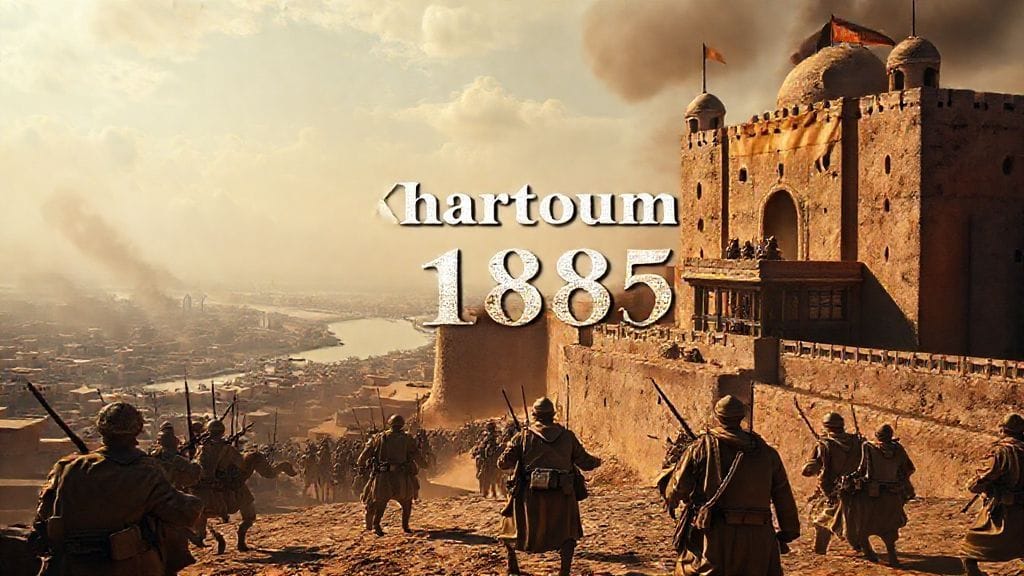
The winter sun cast a cold, merciless light over the swollen banks of the Nile as the city of Khartoum braced for its fate. Inside its crumbling walls, the atmosphere was thick with despair, determination, and the chilling certainty that history itself was about to be rewritten. From the distant deserts and riverine plains, the sound of war drums and the relentless advance of a fanatical army echoed ever closer. January 26, 1885, was no ordinary winter day—it was the day the Mahdist forces captured Khartoum. The city, a vital British colonial outpost and symbol of imperial power in Northeast Africa, fell after a grueling siege that captivated the world, shattered illusions of colonial invincibility, and carved the Mahdi’s name into the annals of history.
1. A City on the Brink: The Siege of Khartoum Begins
To understand the fall of Khartoum, one must first grasp the simmering tensions that brought the city—and an empire—to the edge of collapse. In early 1884, Khartoum stood as a defiant gateway between the colonial ambitions of Britain and Egypt, and the fierce aspirations of Sudanese religious and political revolt. The city was besieged not merely by an army but by a wave of fervent religious zealotry that challenged not only rulers but the very idea of imperial domination.
2. The Mahdist Movement: Rise of a Religious Revolution
At the heart of this drama was Muhammad Ahmad ibn Abd Allah, who proclaimed himself the Mahdi—the “Guided One” destined to purify Islam and lead Sudan to salvation. His movement was a potent blend of Sufi mysticism, anti-colonial resistance, and social reform. Drawing followers from diverse tribal and regional backgrounds, the Mahdist uprising tapped deep wells of resentment against Egyptian-Turkish rule, corruption, and foreign interference.
The Mahdi’s call to jihad ignited Sudan with a revolutionary firestorm. His forces, known as the Ansar, fought not just with weapons but with unshakable faith. Their mission transcended mere politics—it was a battle for the soul of Sudan.
3. British Imperial Ambitions and the Sudanese Quagmire
Khartoum was more than a city; it was a British imperial chess piece. The British Empire, having established control over Egypt, sought to stabilize Sudan as part of the greater “Egyptian” sphere of influence. To London, Khartoum represented the last bastion against complete Mahdist domination of the Sudanese Nile Valley—and beyond into the strategic Horn of Africa.
However, British involvement was hesitant and cautious. Official attitudes vacillated between intervention and withdrawal, constrained by political debates over imperial commitments and the costs of African campaigns. This indecision played a crucial role in shaping the siege’s outcome.
4. General Charles Gordon: The Man Chosen to Defend Khartoum
Into this cauldron stepped General Charles Gordon—“Chinese Gordon” to his admirers—an enigmatic figure of British military fame, known for his valor in China and his unorthodox methods. When appointed Governor-General of Sudan, Gordon arrived in Khartoum charged with the near-impossible mission of containing the Mahdi uprising.
Gordon’s personality was marked by a blend of courage and obstinacy, conviction and controversy. He defied orders, acted on his own moral compass, and promised to hold the city “at all costs.” His presence infused Khartoum with a tense hope but also sealed its fate as a fortress surrounded and ultimately overwhelmed.
5. The Mahdi’s Call to Arms: Mobilizing the Faithful
Back in the desert, the Mahdist forces grew in strength and numbers. From disparate clans and desert tribes, men poured into the cause, united by the religious fervor that Muhammad Ahmad inspired and the promise of sweeping social justice. Their ranks swelled to tens of thousands, dwarfing Gordon’s few defenders.
Mahdist armies moved with ruthless efficiency, laying waste to Egyptian garrisons and cutting off Khartoum from reinforcements. Their strategy was not only military but psychological—aiming to break the city’s will and prove the inevitability of divine justice.
6. Siege Tactics and Harsh Realities: Life Inside Khartoum’s Walls
Inside Khartoum, the siege became a thousand-day ordeal marked by dwindling supplies, disease, and relentless anxiety. Civilians and soldiers alike endured starvation, cholera, and desperation. Gordon’s efforts to organize defenses, ration supplies, and maintain morale were heroic but increasingly futile.
Letters smuggled out of the city described the slow erosion of hope, while diplomatic channels in London buzzed with indecision and public pressure. For the people within Khartoum, every day was a fight to survive—and to dignify their resistance.
7. Communications Cut: Isolation and Desperation
By mid-1884, the Mahdist grip grew tighter; telegraph lines were severed, and the city entered a deadly isolation. Messages ceased, reinforcements never arrived, and external relief efforts faltered amid the desert’s unforgiving vastness.
Gordon’s correspondence, once a lifeline of information and encouragement, fell silent. Without clear news or directives, panic and uncertainty spread among the city’s defenders and the British government alike.
8. The British Government’s Hesitation and Delayed Relief Expedition
In London, debates raged intensely. The specter of costly, unpopular colonial wars clashed with the public’s emotional swell in favor of rescuing Gordon, who had become a romantic symbol of duty and sacrifice. Political bickering delayed the dispatch of a relief force led by General Wolseley, whose expedition faced logistical and environmental nightmares.
Each day of delay tightened the noose around Khartoum. Critics lambasted the government’s indecision, while others warned of imperial overreach. The clock ran out, and with it the city’s slim hope.
9. The Final Days: Death and Defiance in the Governor’s Palace
January 1885 arrived with the Mahdist forces closing in. Inside the Governor’s Palace, Gordon prepared to make his last stand. Accounts tell of a man calm yet fiercely resolute, accepting the inevitability of death but refusing to surrender the city’s honor.
When Mahdist warriors stormed Khartoum’s defenses, street fighting turned savage. Gordon was killed within the palace walls, a tragic and symbolic end to the siege. His death shattered the remaining defenders’ morale and sealed the city’s downfall.
10. The Fall of Khartoum: January 26, 1885, a City Lost
The capture of Khartoum was a triumph of faith and will over colonial power and technology. The city’s fall shocked the British Empire and reverberated across the globe. For the Mahdi’s followers, it was divine vindication; for the British, a humiliating retreat.
The streets ran with blood, the palace burned, and thousands were taken captive or slaughtered. This dramatic moment marked the apex of the Mahdist revolution and a major turning point in colonial Africa.
11. Mahdist Victory and the Dark Aftermath
The victory unleashed a period of Mahdist rule over Sudan that lasted until 1898. The movement’s initial religious idealism gave way to authoritarian control, internecine conflict, and economic hardship. Yet the Mahdist state represented a rare and potent indigenous resistance to imperialism.
For Britain, the defeat provoked soul-searching, led to military reform, and set the stage for a return invasion that would retake Sudan more than a decade later. The painful lessons of Khartoum shaped imperial policies well into the 20th century.
12. The Human Cost: Civilians, Soldiers, and the Forgotten Dead
Beyond leaders and battlefields lay the untold stories of civilians caught in the siege’s crossfire—families starved, communities uprooted, and soldiers sacrificed on both sides. The human cost was staggering, yet often overshadowed by grand narratives of empire and rebellion.
Memoirs and reports from survivors capture moments of kindness, terror, and endurance that highlight the siege’s tragic complexity. Khartoum’s fall was not just a military event but a human catastrophe.
13. The Mahdist State: Consolidation and Rule After Khartoum
After the city’s capture, Muhammad Ahmad’s successors sought to consolidate power, balancing militancy with governance. The Mahdist regime fused religious law with tribal alliances, confronting internal dissent and external threats.
Despite its initial promise, the state struggled with economic isolation, administrative challenges, and mounting military pressures, setting a fate tied intimately to Khartoum’s symbolic rise and fall.
14. Imperial Reverberations: Impact on British Policy and Colonial Strategy
The shocking fall of a key imperial outpost altered British colonial doctrine. The delay and failure exposed the vulnerabilities of overextension and the perils of disengagement. It accelerated reforms in military logistics, intelligence, and communication.
Additionally, Khartoum’s fate injected caution and pragmatism into British expansionist ventures, influencing policies in Africa and beyond for decades to come.
15. The Legacy of Khartoum: Memory, Myth, and Misconceptions
Khartoum’s siege has been mythologized in British and Sudanese memory alike. Gordon became a martyr-hero in Britain, celebrated in statue and song, while the Mahdi symbolizes both liberation and repression in Sudan’s complicated national narrative.
These layered memories underscore how historic events evolve into powerful symbols that shape identity, politics, and cultural consciousness.
16. Revisiting General Gordon: Hero or Tragic Pawn?
Gordon’s legacy invites debate: was he a visionary hero who stood for principle or a tragic figure blinded by hubris and romance? His complex character defies simple categorization, reflecting the ambiguities of empire and morality.
His martyrdom inspired loyalty and critique, painting a man at the intersection of courage, stubbornness, and imperial destiny.
17. Khartoum’s Capture in Global Context: Religion, Empire, and Resistance
The siege fits within broader 19th-century dynamics—religious insurgencies challenging colonial rule, the contest for Africa’s resources, and the clash between indigenous worldviews and imperial ideologies.
Khartoum was not an isolated event but part of a global drama of resistance and domination during the Age of Empire.
18. Echoes in Modern Sudan: How 1885 Shapes Today’s Conflicts
Sudan’s contemporary struggles cannot be wholly understood without the shadow of the Mahdist revolution and Khartoum’s fall. Issues of religion, ethnicity, and governance trace deep roots to this era.
The siege’s legacy continues to influence Sudanese identity, politics, and regional dynamics over a century later.
19. Lessons Learned: The Siege’s Place in Military and Political Thought
Military historians analyze Khartoum’s siege as a cautionary tale of underestimation, political indecision, and the power of ideological movements. It challenges ideas of technological superiority and conventional warfare.
Strategists and policy makers draw from its story when confronting insurgencies and the limits of foreign intervention.
20. Conclusion: The Fall of Khartoum as a Turning Point in African History
When Mahdist forces breached Khartoum’s defenses on that cold January day, they toppled an empire’s symbol and heralded a new era. The siege was more than a battle; it was a fulcrum where faith, empire, and identity collided with irrepressible force.
Its echoes still resonate—not just in the sands of Sudan but in how we understand courage, resistance, and the tragic costs of empire.
Conclusion
The capture of Khartoum stands as a monumental episode woven into the fabric of history—a story of conviction against oppression, of empire’s fragility amid rising tides of faith and rebellion. As we reflect today, the siege reminds us that history is written not only in grand strategies or imperial decrees but through the lives disrupted, the sacrifices endured, and the unyielding spirit of those who dare to resist. It compels us to listen to the voices lost amidst the smoke of battle and to comprehend the tangled legacies that shape nations and civilizations. When we remember January 26, 1885, we face the complex interplay of human belief, political ambition, and the sometimes devastating costs of both.
FAQs
Q1: What sparked the Mahdist uprising in Sudan?
The Mahdist uprising was rooted in widespread dissatisfaction with oppressive Egyptian-Turkish rule, combined with Muhammad Ahmad’s religious proclamation as the Mahdi, which galvanized a diverse set of Sudanese groups into a unified resistance.
Q2: Why was General Charles Gordon sent to Khartoum?
Gordon was appointed to oversee the evacuation of Egyptian forces and civilians and to restore order, but he defied orders and instead chose to defend Khartoum against the Mahdist forces, which ultimately led to the prolonged siege.
Q3: How long did the siege of Khartoum last?
The siege officially began in March 1884 and lasted until January 26, 1885, spanning roughly ten months of encirclement and hardship.
Q4: Why did the British government delay sending relief to Khartoum?
Internal political debates, concerns over costs and imperial commitments, and logistical challenges all contributed to the delay in deploying a relief expedition, which tragically arrived too late.
Q5: What were the consequences of Khartoum’s fall?
The fall led to Mahdist control over Sudan for more than a decade, shook British imperial confidence, prompted military reforms, and influenced future colonial policies in Africa.
Q6: How is General Gordon remembered today?
Opinions vary; he is remembered as a heroic martyr by some and as a tragic, flawed figure raised up by imperial fantasy by others. His legacy remains controversial yet deeply impactful.
Q7: What was the Mahdist state like after Khartoum?
The Mahdist state established a theocratic regime that struggled with internal divisions and economic hardships but represented a significant indigenous government resisting colonial domination.
Q8: Does the siege of Khartoum still affect Sudan’s modern history?
Yes, the legacy of this conflict influences Sudanese national identity, sectarian tensions, and political dynamics even today, reflecting its enduring historical significance.